Jaw Pain with Dental Implants: Bruxism Risks and Relief
Explore how bruxism affects jaw pain with dental implants, which symptoms need attention, and how bite guards and dental care can protect your smile.

In “Bruxism and dental implants: A systematic review and meta-analysis,” Häggman-Henrikson and colleagues (2024) found that probable bruxism was associated with a higher risk of implant failure. If you have jaw pain with dental implants, that finding deserves attention, but it is not a diagnosis. The review did not establish a clear difference in bone changes around implants, and an association does not mean your implant will fail.
Grinding or clenching could contribute to your discomfort. So could sore chewing muscles, a jaw joint problem, a loose restoration, or inflammation around the implant. The useful question is not simply, “Do I grind?” It is, “What hurts, why does it hurt, and what needs attention?”
The best plan starts by finding the source of pain. From there, your dental team can address damaged components, manage muscle symptoms, and decide whether a protective appliance makes sense.
Jaw pain with dental implants: What bruxism can and cannot explain
Why implants handle pressure differently from natural teeth
Your natural teeth have a periodontal ligament, a thin layer of tissue between each root and the surrounding bone. This tissue allows slight movement and helps you sense pressure when you bite. A healed implant connects directly with bone. It does not have the same ligament-based cushioning or sensory feedback.
That difference affects how your dentist plans and checks your bite. Repeated heavy loading may put stress on an implant-supported crown, its connecting parts, or surrounding structures.
Still, not every grinding episode causes damage. The amount and direction of force, the restoration’s design, and your oral health all matter. Your implant is strong, not indestructible.
Mechanical complications versus implant failure
Problems with an implant-supported restoration are not all the same. A chipped crown, fractured material, or loose connecting screw is a mechanical complication. Implant failure means the implant itself has been lost or cannot remain in service, rather than simply needing a crown repair.
A chipped crown may need repair while the implant remains firmly attached to bone. A loose screw needs professional attention, but it does not automatically mean that the implant has lost its attachment.
As Stilwell’s “Occlusal considerations in maintaining health of implants and their restorations” (2024) explains, managing bite forces is part of ongoing implant care. The practical lesson is to identify which part has a problem before deciding how to treat it.
Why pain does not automatically mean your implant is failing
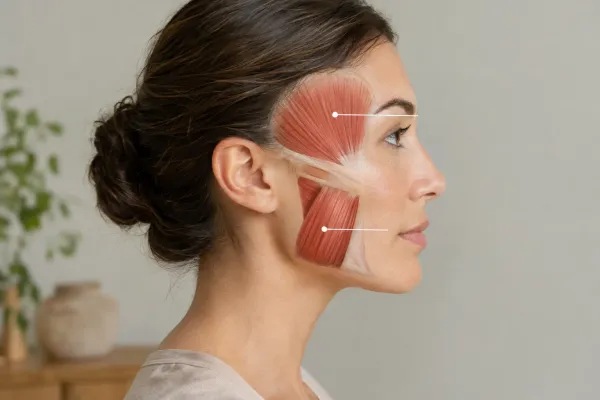
Pain can come from chewing muscles, jaw joints, gums, bone, or a restoration problem. Where you feel it does not reliably identify the source. Muscle pain, for example, can feel as though it comes from a nearby tooth or implant.
The Häggman-Henrikson review also cannot prove that bruxism caused any individual implant failure. Studies differ in how they identify bruxism, and other risks can overlap. “Probable bruxism” reflects an assessment category, not necessarily activity confirmed during an overnight sleep recording.
Take pain seriously, but do not treat it as a verdict on your implant. An examination is more useful than a worst-case search result.
Dental implants and jaw pain: Find the source before treating it
Clues that point to grinding or clenching
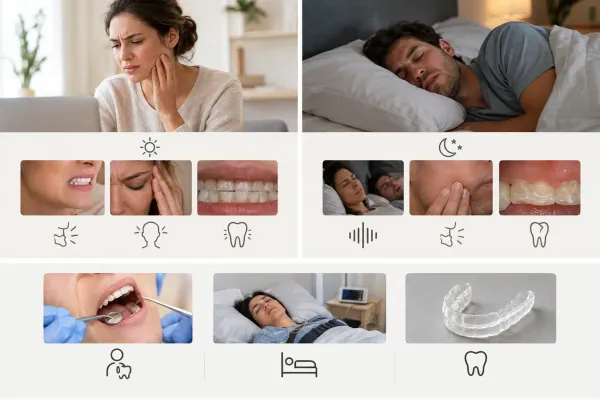
Morning jaw fatigue, temple headaches, tender chewing muscles, and worn or chipped restorations can raise suspicion of bruxism. A partner hearing you grind is another clue. None of these findings proves that grinding is causing your pain.
Awake bruxism includes repeated or sustained tooth contact, clenching, or jaw bracing while you are awake. Sleep bruxism involves jaw-muscle activity during sleep. You may experience one, both, or neither.
The “International consensus on the assessment of bruxism: Report of a work in progress,” by Lobbezoo and colleagues (2018), treats awake and sleep bruxism as distinct behaviors. In plain language, daytime clenching and nighttime grinding should not automatically receive the same explanation or treatment.
Early soreness after implant surgery also differs from pain that starts months or years later. Some postoperative discomfort is expected, but it should generally improve. There is no universal recovery deadline for every procedure. Follow your surgeon’s instructions and call if pain is new, persistent, or worsening.
What your dentist should check
A useful assessment starts with when the pain began, what triggers it, and whether it is worse on waking or chewing. Your dentist should also ask about recent dental work, grinding reports, medicines, and sleep symptoms.
The examination may include:
- Checking chewing muscles and jaw joints for tenderness or movement problems.
- Assessing bite contacts, including whether one restoration meets too heavily.
- Checking the stability of the implant, crown, and connecting components.
- Examining surrounding gums for bleeding, swelling, drainage, and other signs of disease.
- Taking appropriate imaging when symptoms or examination findings justify it.
A high bite contact, loose crown or screw, infection, or temporomandibular disorder may explain the pain better than bruxism. Temporomandibular disorders, often called TMDs, affect the jaw joints, chewing muscles, or both.
If your history suggests a sleep disorder, your dentist may recommend medical or sleep-clinic assessment. A sleep study is not automatically necessary for everyone who grinds.
Symptoms that need prompt or emergency care
Arrange prompt dental review for persistent pain, pain when biting, pus, new numbness, swelling, or any sense that the crown or implant moves. The FDA’s dental implant guidance advises contacting your dental provider about pain or apparent looseness.
Do not repeatedly wiggle the area to “check” it, chew hard foods on that side, or try tightening components yourself. Your mouth is not a weekend hardware project.
Seek emergency medical care for rapidly spreading facial or neck swelling, difficulty breathing, or difficulty swallowing. Fever with worsening swelling or feeling very unwell also needs urgent assessment. Do not wait for a routine cleaning appointment.
Protect your dental implants with a tailored bite and night guard plan
Once your dentist has identified the likely source of pain, treatment can target the actual problem. A loose screw needs a different response from sore muscles or inflamed tissues. A night guard cannot do every job on that list.
Stilwell’s review, “Occlusal considerations in maintaining health of implants and their restorations,” supports careful attention to bite forces and restoration maintenance. Your plan should account for your contacts, restoration design, and signs of wear rather than defaulting to the same appliance for everyone.
What a custom night guard can realistically do
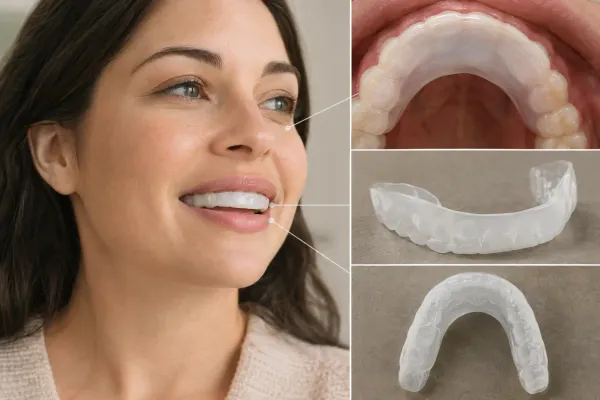
An individually fitted occlusal appliance, often called a night guard, may provide a protective surface between opposing teeth and restorations. Depending on its design, it can also change how your teeth and restorations contact while you wear it.
It is not a guaranteed way to stop sleep bruxism, eliminate jaw pain, or prevent implant failure. Reducing wear on a restoration is a different outcome from proving that an appliance improves implant survival. Those benefits should not be treated as interchangeable.
Appliance selection depends on your remaining teeth, implant locations, bite, restorations, and symptoms. No single material or design is best for everyone.
A poorly fitting over-the-counter guard is not a substitute for assessment, especially if it increases pain, rocks over your teeth, or leaves your bite feeling different. If a new appliance causes these problems, contact the clinician who fitted it rather than pushing through the discomfort.

When your bite or implant restoration needs attention
Your dentist may check contacts when you close your mouth and when your jaw moves sideways or forward. They may also assess whether the restoration’s shape, support, or existing damage contributes to repeated heavy loading.
A confirmed high contact, damaged crown, or loose component may need adjustment, repair, or replacement. That differs from routinely grinding down healthy teeth to “cure” bruxism. Permanent bite changes should not be presented as a dependable treatment for the underlying muscle activity.
Repeated loosening also deserves more than another quick tightening. Your dentist may need to investigate the component fit, restoration design, bite forces, or another contributing problem.
Why follow-up matters as much as the appliance
Bring your guard to appointments so your dentist can check its fit, contact pattern, cracks, and wear. Follow cleaning instructions for its material, and report new soreness or changes in how your teeth meet.
A guard that fitted before a crown was repaired or replaced may no longer fit correctly. Do not force it into place or reshape it yourself unless your dental team has given specific instructions.
A protective stabilization appliance is also different from a mandibular advancement device prescribed for obstructive sleep apnea. The latter holds your lower jaw forward to help keep your airway open. These devices have different purposes and need appropriate selection and monitoring.
Bruxism, dental implants, and sleep: Manage more than the hardware
Protecting a restoration is only one part of care. If your chewing muscles hurt, daytime clenching is frequent, or sleep symptoms are present, those concerns deserve their own assessment. Replacing a crown will not resolve every source of jaw pain.
Reduce daytime clenching without chasing a perfect jaw position
If you catch yourself clenching during emails, traffic, or concentrated work, brief reminders may help you notice the pattern. Let your jaw relax and your teeth separate when you are not eating. You do not need to monitor your mouth every waking minute.
Cut back on prolonged gum chewing if it aggravates tenderness. Stress-management techniques may help you reduce awake clenching or cope with pain. Still, sleep bruxism is not simply a bad habit or proof that you have failed to relax.
The National Institute of Dental and Craniofacial Research’s bruxism guidance describes an individualized approach based on symptoms and contributing factors. A regular sleep routine and a review of evening caffeine, alcohol, and nicotine use are reasonable supportive steps. They are not established cures for implant complications.
Some medicines may contribute to grinding or clenching. If symptoms started after a prescription or dose change, discuss the timing with your prescriber. Do not stop or adjust prescribed medicine on your own.
Know when snoring and sleepiness deserve assessment
Loud snoring, witnessed breathing pauses, and excessive daytime sleepiness warrant medical or sleep-clinic assessment. The National Heart, Lung, and Blood Institute’s sleep apnea guidance identifies these as important symptoms of a possible sleep-related breathing disorder.
Bruxism does not prove that you have obstructive sleep apnea. Likewise, treating apnea does not reliably stop grinding in everyone. These conditions can overlap without being the same problem.
If you need an oral appliance for either condition, make sure your dental and sleep teams know about your implants and current devices. Do not assume one appliance will do both jobs. A standard night guard is not a treatment for sleep apnea.
Where physical therapy and botulinum toxin fit
Once concerning dental causes have been assessed, clinician-guided physical therapy may help muscle-related jaw pain. Depending on your diagnosis, short-term comfort measures may include gentle heat, temporarily avoiding hard foods, and reducing activities that make the pain worse.
The NIDCR’s temporomandibular disorders guidance favors conservative, reversible approaches before treatments that permanently alter the bite or jaw joint. Avoid forceful jaw stretches or exercises borrowed from social media without advice suited to your symptoms.
Botulinum toxin injections are sometimes considered for selected patients with persistent jaw-muscle symptoms. They may reduce muscle activity or pain, but the evidence has limitations. They should not be presented as a proven way to prevent dental implant failure.
Before treatment, discuss expected benefits, how long they may last, and possible adverse effects. Chewing weakness can occur, effects wear off, and repeat treatment may be needed. Long-term safety and benefit for repeated bruxism treatment remain uncertain.
Regulatory approval varies by location and indication. Using botulinum toxin for bruxism may be off-label, meaning it is used for a purpose not specifically included in its regulatory approval. Ask why it is being recommended and what alternatives remain.
Build a long-term plan for jaw pain and dental implant care
Set a follow-up schedule based on your risk
Your maintenance schedule should reflect your gum health, restoration complexity, history of complications, and other health risks. There is no single review interval that suits every person with implants.
Mechanical loading and disease around an implant are related concerns, but they are not interchangeable. Current evidence does not justify saying that bruxism alone causes peri-implantitis, an inflammatory condition involving loss of the bone supporting an implant.
Managing bite forces does not replace plaque control. Cleaning, smoking cessation support, diabetes management, and treatment of inflammation remain separate priorities. A well-fitted guard cannot make up for untreated disease around an implant.
Ask your dental team what they are monitoring and what would change your follow-up schedule. Understanding the plan makes it easier to recognize when a new symptom needs an earlier visit.
Track symptoms, guard wear, and restoration changes
Use this maintenance checklist between appointments:
- Attend dental reviews at the interval recommended for your individual risk.
- Clean around implants with the brushing and between-teeth tools your team recommends.
- Bring your guard so its fit and wear can be checked.
- Report repeated chipping, loosening, or changes in your bite.
- Record when pain occurs, how long it lasts, and what makes it worse.
A short symptom record is enough. Note whether discomfort appears on waking, during meals, or after a demanding workday. Include swelling, headaches, and any change in jaw movement. You do not need an elaborate tracking system to provide useful information.
Repeated repairs should trigger reassessment rather than endless patching. Your dentist may need to revisit the restoration, loading pattern, appliance, or original diagnosis. This is part of the ongoing maintenance approach discussed in Stilwell’s implant occlusion review.

Discuss medicines and other factors that change your care
Bring an up-to-date medication list rather than assuming your dentist already has it. Include prescription medicines, over-the-counter products, and relevant changes since your last visit.
Tell your dental team if you take antiresorptive medicines, such as bisphosphonates or denosumab, or medicines that affect blood vessel growth. Certain drugs in these groups are associated with medication-related osteonecrosis of the jaw, a condition involving damaged or exposed jawbone that does not heal normally.
Your risk depends on the specific medicine, dose, reason for treatment, and other factors. This is a separate risk assessment, not evidence that grinding routinely causes jawbone necrosis.
Medication history can affect decisions about implant treatment, symptoms, and further procedures. Do not stop a prescribed medicine on your own. Your dentist and treating clinician should coordinate any changes when needed.
Conclusion: Address jaw pain, protect your dental implants, and follow up
Jaw pain with dental implants deserves assessment, not an automatic diagnosis of grinding or implant failure. “Bruxism and dental implants: A systematic review and meta-analysis” links probable bruxism with higher implant failure risk, but it does not predict what will happen to your implant.
Focus on three steps: identify the source of pain, protect the restoration with an individualized plan, and address muscle symptoms or sleep concerns when relevant. A guard may help protect dental work without stopping the muscle activity that loads it.
For your appointment, bring:
- A note of when the pain started and whether it is changing.
- Details about whether pain is worse on waking, chewing, or both.
- Information about clicking, chipping, swelling, or any sense of movement.
- Your current medication list.
- Your current guard or other oral appliance.
Seek prompt review for worsening pain, swelling, or suspected movement. Breathing or swallowing problems require emergency care. Getting the cause checked gives you a clearer path forward than trying to grind through it.