Cannabis Bruxism Relief: What Research Says vs. the Hype
Can cannabis relieve bruxism? Explore the evidence on CBD, teeth grinding, jaw clenching, and the risks behind the relief claims.
A small study offers a reason to investigate cannabis bruxism relief, but not a reason to call it a proven treatment. In “Myorelaxant Effect of Transdermal Cannabidiol Application in Patients with TMD: A Randomized, Double-Blind Trial,” researchers studied a CBD preparation applied over the jaw muscles. They reported improvements in pain and jaw-muscle activity. That is promising, but it does not establish that cannabis stops teeth grinding during sleep.
The distinction matters. Less jaw pain, better perceived sleep, and fewer grinding episodes are different outcomes. Each could matter to you, but evidence for one does not automatically establish the others. Before you trust a cannabis claim, check what researchers actually measured.
Cannabis Bruxism Relief: Start With What You Are Treating
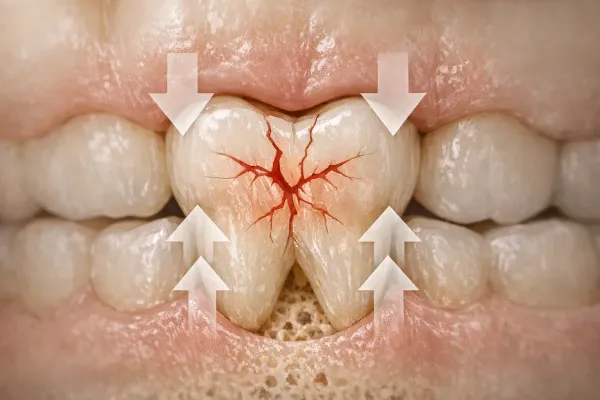
Bruxism involves repeated jaw-muscle activity, including clenching or grinding your teeth. It can also involve bracing or pushing your jaw without obvious tooth contact. You can have this activity while awake, asleep, or both.
The “International consensus on the assessment of bruxism: Report of a work in progress” explains that bruxism is not automatically a disorder in otherwise healthy people. What matters is whether the activity contributes to problems, such as tooth damage or pain, and whether another condition needs attention.
You might notice a sore jaw, hear about grinding from a sleep partner, or learn about tooth wear during a dental examination. Those clues deserve attention. None, by itself, tells you exactly how much grinding happened last night.
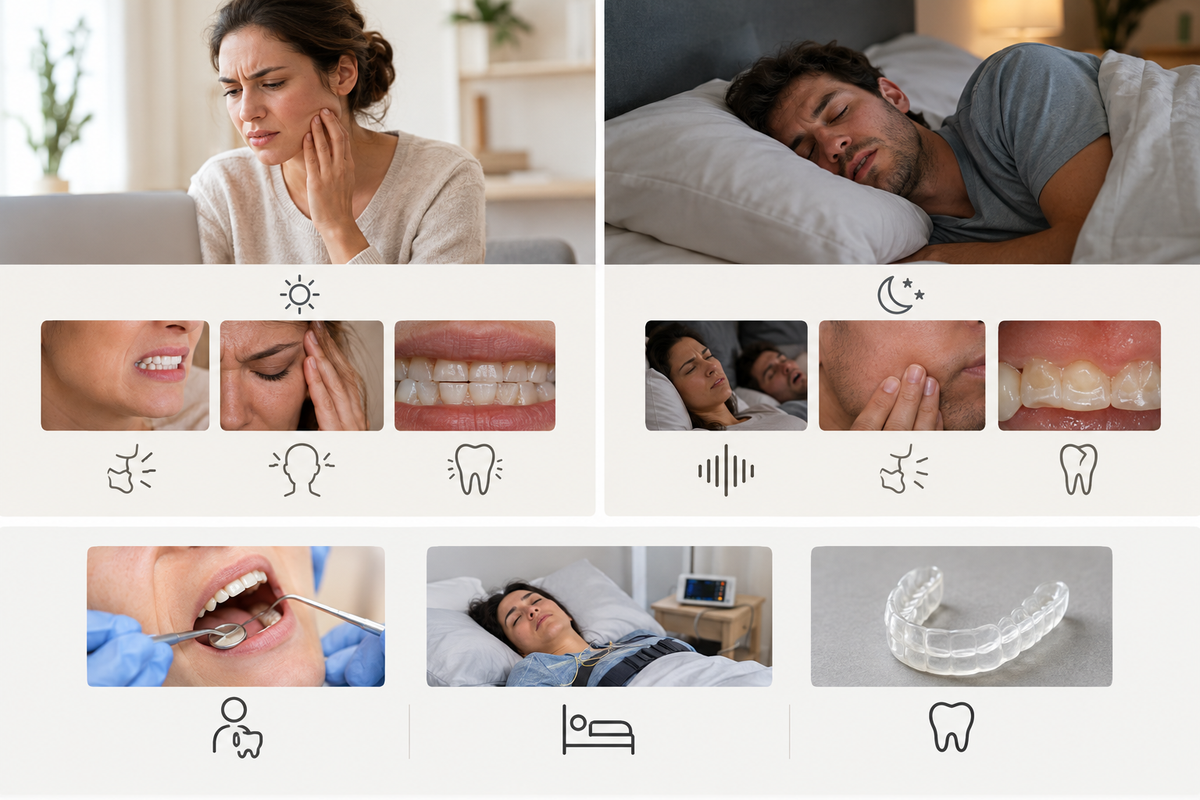
Sleep bruxism and awake bruxism are different
Sleep bruxism happens while you are asleep. Awake bruxism happens during waking hours and can include sustained clenching or jaw bracing. You may notice it when concentrating, feeling stressed, or working through a demanding task.
This difference changes how you assess and manage the problem. You can learn to notice daytime clenching and interrupt it. You cannot simply remind yourself to stop grinding while asleep.
Depending on your symptoms, assessment may include a dental examination, a medication review, questions about sleep, or specialized testing. Not everyone needs an overnight sleep study. The right approach depends on what your clinician needs to find out.
Less jaw pain does not always mean less grinding
Temporomandibular disorders, usually shortened to TMD, affect your jaw joints, chewing muscles, or related structures. TMD and bruxism can overlap, but they are not interchangeable diagnoses. Jaw pain does not automatically mean grinding caused it.
Researchers also use different tools to measure different problems. A pain scale records how much something hurts. A sleep questionnaire records your experience of sleep. Surface electromyography, or EMG, records electrical activity from muscles through sensors placed on the skin.
For sleep bruxism, recordings made during sleep can provide more direct information about jaw-muscle events. Audio, video, and other sleep measurements can help distinguish grinding from movements such as swallowing.
Feeling better is worthwhile. It does not, by itself, prove that your teeth are grinding less or that your risk of tooth damage has fallen.
CBD Teeth Grinding Research: What the Studies Actually Show
The most useful question is not whether a study mentions CBD and the jaw in the same sentence. It is whether its methods and results support the specific claim you are considering.
A trial involving jaw-muscle pain may help answer a pain question. It may leave the sleep-grinding question largely open. That is where much of the gap between research and marketing begins.
The randomized trial: encouraging results, narrow conclusions
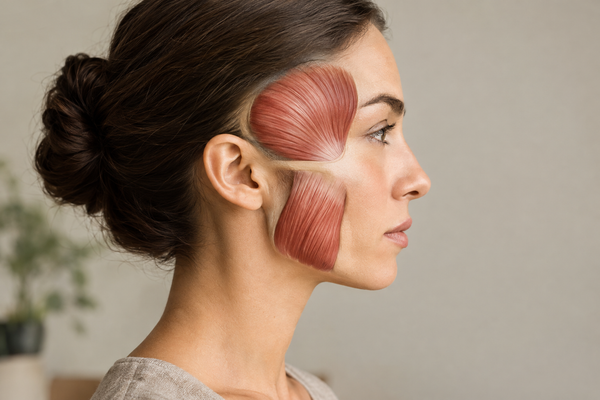
In the 2019 trial “Myorelaxant Effect of Transdermal Cannabidiol Application in Patients with TMD,” Nitecka-Buchta and colleagues studied 60 people with muscle-related TMD. Participants received either a CBD preparation applied to the skin over the masseter muscles or a placebo preparation. The masseters are major chewing muscles at the sides of your jaw.
The study lasted two weeks. Researchers assessed pain and masseter muscle activity using surface EMG. They reported greater improvements in the CBD group than in the placebo group.
Those findings support further research into that preparation for jaw-muscle symptoms. They do not establish that CBD reduces grinding episodes during sleep. The trial did not provide overnight sleep-study evidence showing fewer sleep-bruxism events.
Its short duration also limits what you can conclude about lasting benefits, tooth protection, and longer-term safety. A two-week improvement cannot tell you whether a treatment prevents years of dental wear.
“Randomized” means participants are assigned to groups by chance. “Double-blind” means treatment assignments are concealed from participants and relevant researchers during the study. These features help reduce bias, but they cannot turn a pain study into proof of a different outcome.
When you assess a CBD teeth grinding claim, ask:
- Did participants have sleep bruxism, awake bruxism, muscle-related TMD, or a combination?
- What exact CBD preparation did they receive?
- Was there an appropriate comparison group?
- Did researchers measure pain, daytime muscle activity, sleep-related grinding, or several outcomes?
- Did the benefits last, and were side effects assessed?
Topical CBD research is not evidence for every cannabis product
The product in this trial was applied to the skin. That matters because the way you use a substance affects where it goes, how much your body absorbs, and what risks it carries.
A result involving a particular skin preparation does not validate a THC edible, a vape, a retail CBD oil, or another cream with a similar label. Even two topical products can differ in concentration, ingredients, and absorption.
The study title uses the word “transdermal.” Do not assume that every retail product labeled topical or transdermal delivers CBD in the same way. Matching a marketing term is not the same as matching the tested formulation.
The same caution applies to claims about sleep quality or migraine-related disability. An improvement in those areas would not automatically show fewer grinding episodes. Researchers need to measure that outcome directly.
You should also check whether apparently separate papers use the same participants. Two reports from one trial can answer different questions, but they are not two independent confirmations.

Why one unusual case cannot settle the question
You may encounter case reports describing cannabinoid use for bruxism in people with neurological conditions. These reports can raise useful research questions, but their findings do not automatically apply to typical sleep grinding.
For example, bruxism in someone with a condition that affects behavior or movement may have different causes and treatment needs from yours. Other medications and changes in the underlying condition can also affect the result.
A case report describes an observation without the safeguards of a controlled trial. It cannot reliably separate a treatment effect from natural symptom changes, other treatments, or expectations.
A convincing personal story can be worth investigating. It is still not a treatment guideline. Your jaw deserves better evidence than “it worked for someone on the internet.”
Myth vs. Reality: Can Cannabis Calm Your Jaw?
The research becomes easier to judge when you separate plausible explanations from demonstrated benefits. A treatment can make biological sense and still fail to deliver a meaningful result.
Myth: a plausible brain mechanism proves a treatment works
Reality: a mechanism gives researchers a reason to investigate, not a reason to declare victory.
Your endocannabinoid system is a network of signaling molecules and receptors involved in functions such as pain processing, stress responses, and movement. Cannabinoids can influence this system, although different compounds act in different ways.
That makes jaw symptoms a reasonable research topic. It does not tell you whether a particular product reduces harmful jaw activity at a dose you can tolerate.
To establish that, researchers need clinical studies with suitable comparison groups and clearly defined outcomes. Your jaw does not care how polished the explanation sounds.
Myth: better sleep automatically means less bruxism
Reality: feeling sleepy, sleeping longer, and having fewer grinding episodes are separate outcomes.
Sleep bruxism can occur around brief arousals, which are short shifts toward wakefulness that you may not remember. A product that makes you feel sedated has not necessarily reduced those jaw-muscle events.
It is also important not to confuse different sleep conditions. The American Academy of Sleep Medicine position statement, “Medical Cannabis and the Treatment of Obstructive Sleep Apnea,” advises against using medical cannabis to treat obstructive sleep apnea because of concerns about effectiveness, tolerability, and safety.
That statement is about sleep apnea, not a trial of bruxism treatment. Its practical lesson is narrower: a general claim that cannabis “helps sleep” cannot establish that it treats a specific sleep-related condition.
Myth: CBD and THC are interchangeable
Reality: cannabis is not one standardized intervention.
Cannabidiol, or CBD, does not produce the characteristic high associated with tetrahydrocannabinol, or THC. That does not make CBD free of side effects. Whole-plant cannabis contains multiple compounds, and products can vary widely in their proportions.
Route of use matters too. Applying a preparation to your skin is different from swallowing an oil or inhaling smoke or vapor. The potential benefits and risks cannot simply be carried over from one route to another.
The available jaw-muscle trial gives you a specific research finding to consider. It does not establish cannabis, as a broad category, as a proven bruxism treatment.
Marijuana Jaw Clenching: Risks, Side Effects, and Unanswered Questions
Potential relief is only half the decision. You also need to consider whether a product could create new problems, interact with your medications, or make existing symptoms harder to assess.
Could cannabis make your symptoms feel worse?
If you are searching for “marijuana jaw clenching,” you may have noticed tightness after using cannabis. That timing is worth discussing with a clinician, but it does not prove that cannabis caused the symptom.
Stress, other substances, medication changes, and ordinary symptom variation may also contribute. Keeping a brief record of symptoms, product use, and other possible triggers can make the conversation more useful.
THC can cause anxiety or unpleasant psychological effects in some people. If you feel more anxious after using it, the jaw-relaxing effect you expected may not happen. That is different from proving a direct effect on bruxism.
The evidence discussed here does not establish how often cannabis causes, worsens, or relieves clenching. Promising universal relaxation would be misleading. So would blaming every tight jaw on cannabis.
Dry mouth, impairment, and medication interactions
Cannabis-related dry mouth matters even if your jaw feels better. Saliva helps protect your teeth and oral tissues. Persistent dryness can increase oral-health problems, including the risk of decay. Pain relief does not cancel that out.
THC can impair attention, coordination, and judgment. Do not drive or operate machinery while impaired. Repeated cannabis use can also lead to cannabis use disorder, in which use becomes difficult to control despite harmful consequences.
CBD has its own safety concerns. “Adverse effects of cannabidiol: a systematic review and meta-analysis of randomized clinical trials” examined adverse effects across clinical trials. The review identified concerns including diarrhea, sleepiness, and liver-related abnormalities in some treatment settings.
Many of those trials involved prescription-style oral dosing and conditions unlike jaw pain. Their risks cannot be transferred directly to a small amount of a skin preparation. They do, however, challenge the idea that CBD is automatically harmless.
Discuss your medications, alcohol use, and other sedating substances with a clinician or pharmacist before adding cannabinoid products. Interactions can matter, especially with products taken by mouth. Do not stop or adjust a prescription on your own.
Why product labels are not clinical trial results
Retail products may differ in CBD content, THC content, other ingredients, and labeling accuracy. A study of one preparation does not certify whatever happens to be on a shop shelf.
In “Labeling Accuracy of Cannabidiol Extracts Sold Online,” researchers found that many tested products did not contain the labeled amount of CBD. Some also contained THC. The study examined a particular set of online products, not every product available today, but it demonstrates why label claims deserve scrutiny.
Independent testing can help you assess product contents. It does not establish that a product treats bruxism, and it does not replace an interaction check.
Smoking or vaping should not be presented as an evidence-based bruxism treatment. The jaw-muscle study discussed above did not test either route.
What You Can Do Before Trying Cannabis for Bruxism
You do not need to wait for better cannabinoid trials to address tooth damage, jaw pain, or possible sleep problems. Start by identifying the outcome that matters most and choosing an assessment that fits it.
Protect your teeth and check the likely contributors
Arrange a dental assessment if you have tooth wear, fractures, sensitivity, ongoing jaw pain, or concerns about grinding. Your dentist can look for damage and consider other explanations for your symptoms.
Tooth wear can reflect past grinding as well as other causes, including acid erosion. It is not a precise meter of current nightly activity.
A professionally selected oral appliance may help protect your teeth without necessarily stopping the underlying muscle activity. Protection and elimination of grinding are different goals. Ask which goal your appliance is intended to address and how your dentist will check its fit and effect.
Review medications, caffeine, alcohol, stress, and sleep habits with your clinician. These factors may be relevant, but their role varies between people. A careful review is more useful than assuming one lifestyle change will switch bruxism off.
If jaw pain is your main problem, ask whether you need a separate TMD assessment. Treating every sore jaw as a grinding problem can send you down the wrong path.
Match treatment to daytime clenching or sleep grinding
For awake bruxism, awareness training and habit-focused approaches may help you notice when you are clenching or bracing. Your clinician can help you identify triggers and practice a comfortable resting jaw position.
The aim is a repeatable skill, not another reason to monitor yourself anxiously all day. Constantly testing your bite or forcing your jaw into position can become its own distraction.
For sleep-related symptoms, consider whether a sleep assessment is appropriate. Loud snoring, witnessed breathing pauses, and marked daytime sleepiness are reasons to discuss possible sleep apnea.
Those symptoms do not prove that you have apnea, and grinding alone does not diagnose it. They do mean that a relaxing substance should not substitute for an assessment of your breathing during sleep.

Bring better questions to your dentist or sleep clinician
If you are considering cannabinoids, bring the actual product label and your medication list. Include supplements and nonprescription products, not just prescriptions.
Useful questions include:
- What are you trying to improve: pain, tooth protection, daytime clenching, sleep quality, or measured grinding?
- Was the relevant study done in people with the same problem?
- Does the product match the preparation and route used in the study?
- Did researchers measure grinding directly, or only pain and muscle activity outside sleep?
- What interactions or side effects matter for you?
- How will you track benefits, problems, and reasons to stop?
There is no established cannabis dosing protocol for bruxism supported by the evidence discussed here. A dose from a testimonial is not a substitute for one.
If your clinician agrees that a monitored trial is reasonable, define success before starting. A pain diary may help assess pain. It cannot prove that sleep grinding has stopped. Keep dental follow-up focused on tooth health rather than relying only on how relaxed your jaw feels.
The Bottom Line on Cannabis Bruxism Relief
Cannabis bruxism relief remains a research question, not an established treatment claim. The named randomized trial offers preliminary evidence that a specific CBD skin preparation may help pain and measured muscle activity in people with muscle-related TMD. It does not prove that cannabis prevents sleep grinding or protects your teeth.
A case report, a proposed brain mechanism, and a randomized trial provide different kinds of evidence. Even a well-designed trial must be read for what it actually measures. Less pain is not the same as fewer grinding episodes, and better perceived sleep is not proof of less tooth damage.
Stronger conclusions require larger, independent trials using clearly defined products, suitable controls, direct sleep-bruxism measurements, and longer safety follow-up. Research also needs to establish whether any benefits last and which patients are most likely to benefit.
For now, your next steps are more practical than glamorous: protect your teeth, assess persistent pain, investigate possible sleep problems, and review cannabinoid use with a qualified clinician.
Your symptoms deserve to be taken seriously. So does the difference between relief and treatment success. A relaxed feeling is not a dental outcome.