How to Choose the Right Bruxism Mouth Guard: A Comprehensive Guide
Explore how to choose bruxism mouth guards with our guide, offering evidence-based comparisons.
You wake up, open your jaw, and feel that dull, familiar ache. Maybe your partner teases you about the “nighttime wood-chipper” noise you make. Those are the everyday signs of bruxism, which is unconscious teeth grinding and clenching. It can quietly wreck your smile and sabotage your sleep. Before you shell out cash for a fancy plastic tray, you deserve a clear, research-backed roadmap. This guide breaks down what the science says, compares the gadgets, and helps you pick a bruxism mouth guard that actually fits your life.
We will pull data from randomized trials, systematic reviews, and trusted dental organizations. We will also sprinkle in real-world feedback from people who have tried these guards, warts and all. Ready to protect those molars? Let’s dig in.
Understanding Bruxism and Its Impact
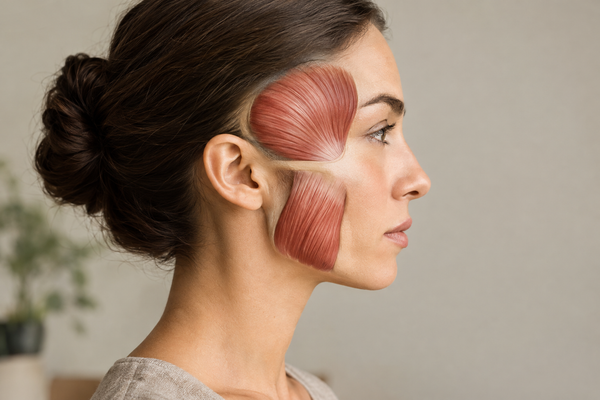
Bruxism is a catch-all term for repetitive jaw muscle activity that shows up as grinding, clenching, or gnashing of the teeth. It comes in two main flavors:
- Sleep bruxism – happens while you snooze, usually without any clue you are doing it. Learn more about preventing nighttime teeth clenching.
- Awake bruxism – daytime clenching, often tied to stress or focus.
Researchers still debate the exact cause, but it is likely a mix of factors: genetic traits, stress, caffeine, alcohol, sleep disorders, and some medications. The American Dental Association notes that common symptoms include tooth wear, jaw pain, headaches, and disrupted sleep.
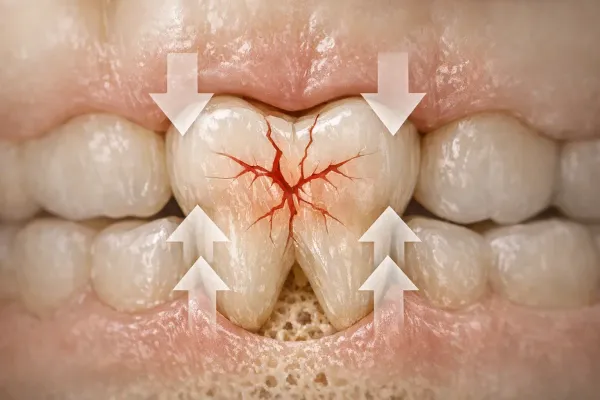
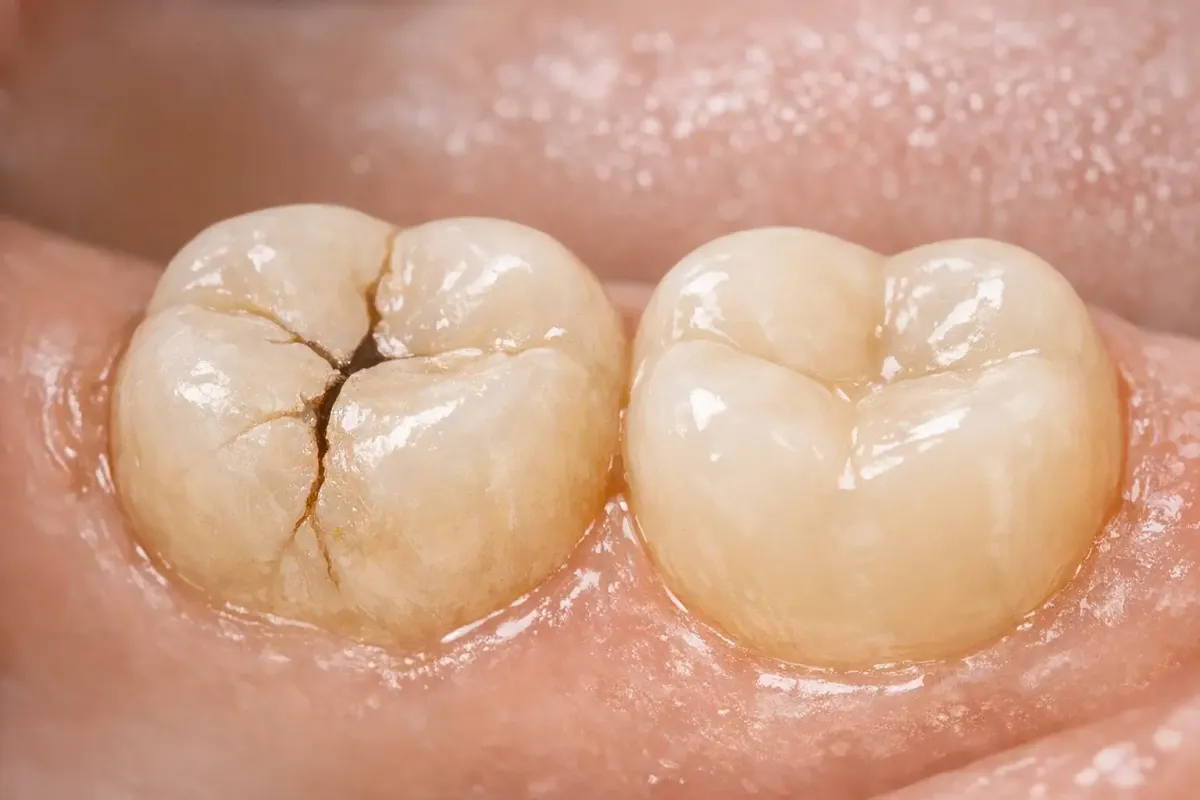
Left unchecked, bruxism can chip enamel, flatten biting surfaces, loosen fillings, and strain the temporomandibular joints (TMJ). A 2023 systematic review by Senff et al. found that even children show measurable enamel loss within months of intense grinding. It's not just a smile issue either. Chronic pain, poor sleep quality, and even tinnitus have been linked to severe cases. Understanding the connection between sleep disorders and bruxism can help identify contributing factors.
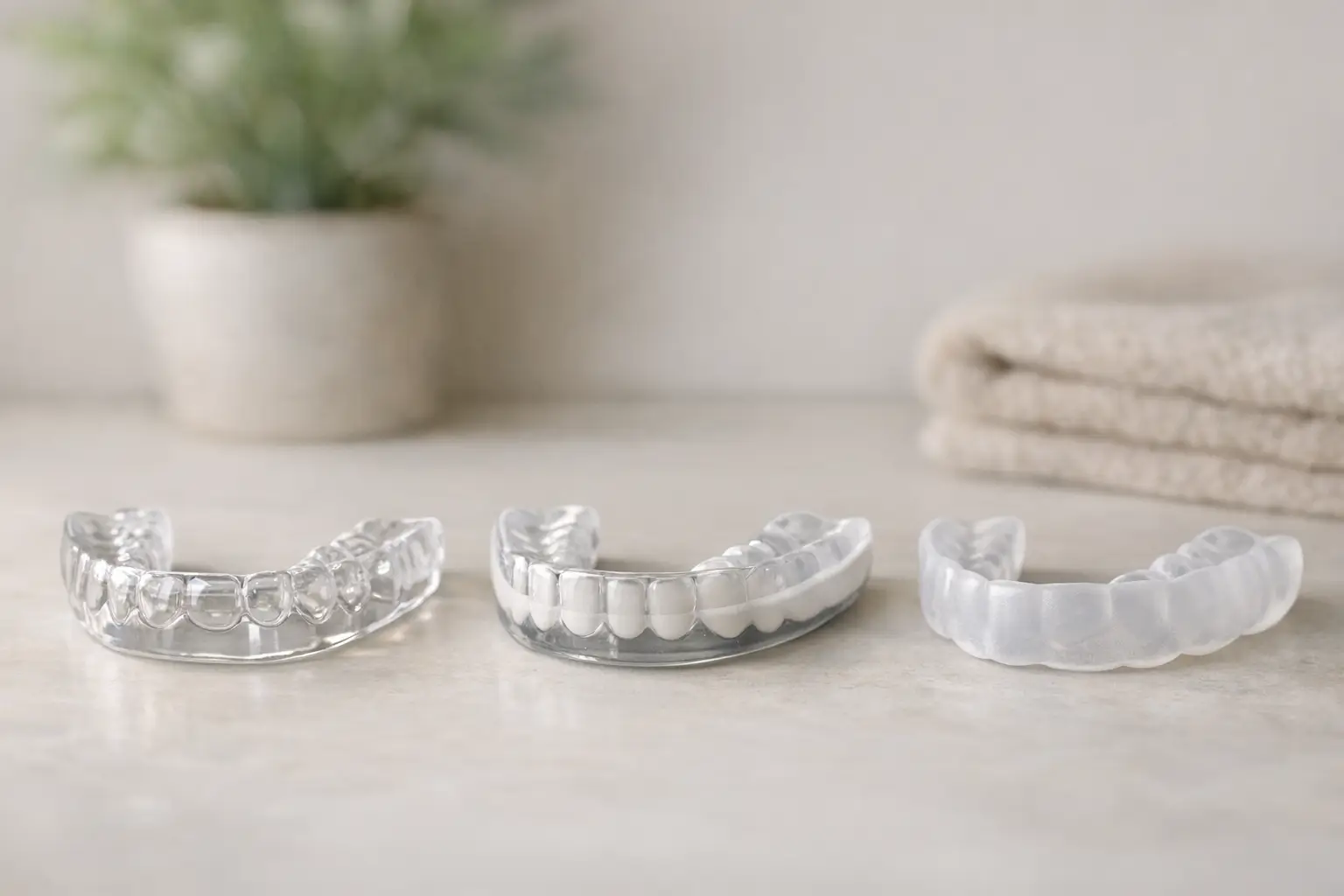
Mouth guards—also called occlusal splints or night guards—work by placing a protective barrier between your upper and lower teeth. They redistribute bite forces, cut down on friction, and can relax overactive jaw muscles. Guards do not treat the root cause, such as stress or a misaligned bite, but they give your teeth and joints some much-needed time off. To explore alternative solutions, you might consider natural bruxism solutions.
Picture a typical week for “Sarah,” a 34-year-old graphic designer: deadlines spike, coffee intake doubles, and by Friday she wakes up with temples throbbing. Her dentist spots little flat spots on her canines—the early warning lights of bruxism. Within a month of wearing a custom hard-acrylic splint, her headaches shrink and her morning jaw mobility returns. The takeaway is simple: even subtle enamel changes can snowball quickly, so early intervention pays dividends.
Types of Bruxism Mouth Guards
Walk into any pharmacy or scroll through dental supply sites and you will see at least three categories of mouth guards. Let’s decode them, starting with the ones molded in a lab and ending with the ones you boil in the kitchen.
Custom-Made vs. Over-the-Counter
Custom-made guards are designed by your dentist. They take an impression or a digital scan, send it to a dental lab, and a technician creates a device that hugs every bump of your dentition. A 2025 review by Fiamengui et al. showed that personalized guards reduce nocturnal clenching episodes by up to 50 percent compared with generic store-bought trays. They also last longer—often several years if cleaned properly. For a deeper dive into the benefits of custom guards, check out our guide on custom mouth guards.
Over-the-counter (OTC) guards arrive in a standard shape. The most common variant is the “boil-and-bite” thermoplastic tray: dunk it in hot water, bite down, and pray you lined up your bite correctly before it cools. Pre-formed stock guards skip the boil step but usually fit poorly. OTC guards cost less and land on your porch faster, but they might feel bulky or loosen overnight, which can annoy light sleepers or pop out entirely. For a comparison of OTC and custom options, you can read more about OTC night guards vs custom-fitted night guards.
Material Considerations
Different plastics mean different comfort levels and durability:
- Hard acrylic – Rigid, provides precise occlusion, great for heavy grinders, but can feel like biting on a hockey puck at first.
- Dual-laminate – Soft inner layer for comfort, hard outer shield for bite force. Popular middle-ground option.
- Thermoplastic EVA – Flexible, easy to remold, common in OTC guards, but wears down faster.
- Medical-grade silicone – Cushiony, hypoallergenic, often used in pediatric guards.
According to the Sleep Foundation, the stiffness of hard acrylic can stabilize the TMJ in some patients, while soft materials may trigger more chewing if the brain treats the guard like gum. Picking the right feel matters as much as fit. Another under-the-radar spec is thickness: a 2 mm guard feels almost invisible, but anything over 4 mm can strain lip seal and speech, especially if you have a small arch. Always ask your dentist or mail-order lab what millimeter profile they plan to use. For those considering different materials, our guide on night guard materials offers a detailed breakdown.
Effectiveness of Occlusal Splints
So do these pricey trays actually work? Three solid papers give us a clear picture.
Comparing Occlusal Splints and Other Treatments
A 2025 meta-analysis by Zhang et al. pooled data from 16 randomized controlled trials on temporomandibular disorders (TMD) in bruxers. Occlusal splints cut pain scores by an average of 30 percent over eight weeks, outperforming drugs, counseling, and self-exercises. The authors noted that splints had “medium-to-large” effect sizes for reducing masseter muscle activity. For an overview of treatment options, you might find our guide on choosing the right bruxism treatment helpful.
Next, a 2025 trial by Qin et al. stacked digital 3D-printed splints against conventional laboratory acrylic versions. Both lowered clenching frequency, but the 3D units reached peak comfort scores two weeks sooner, likely because they used thinner layers and smoother edges fresh off the printer.
Still, guards are not magic shields. A 2025 randomized controlled study by Karabıcak et al. pitted jaw exercise protocols (with and without posture training) against occlusal splints. After three months, splints reduced electromyography signals by 27 percent, while exercise plus posture tweaks managed 22 percent. Translation: a guard alone can help, but pairing it with muscle training closes the gap. For those interested in alternative therapies, our exploration of biofeedback therapy for bruxism might be of interest.
An overlooked but useful metric is sleep-stage disruption. Small pilot studies using home polysomnography show that bruxers wearing a well-adjusted splint transition from REM to lighter sleep stages up to 15 percent less often, suggesting fewer micro-arousals. That stability may explain why many users wake up feeling more rested beyond the dental benefits.
Bottom line? Splints remain the gold standard first-line defense for most adult bruxers, especially if you grind hard enough to chip teeth. But do not ignore lifestyle tweaks like stress management, caffeine limits, and physical therapy. Our guide on lifestyle changes offers additional natural solutions for bruxism management.
Innovations in Mouth Guard Technology
If your mental image of a night guard is a chunky 90s retainer in a neon case, prepare for an upgrade. The dental tech wave is hitting occlusal splints hard. Two trends shine: 3D-printing and sensor-laden “smart” guards.
3D-Printed Solutions
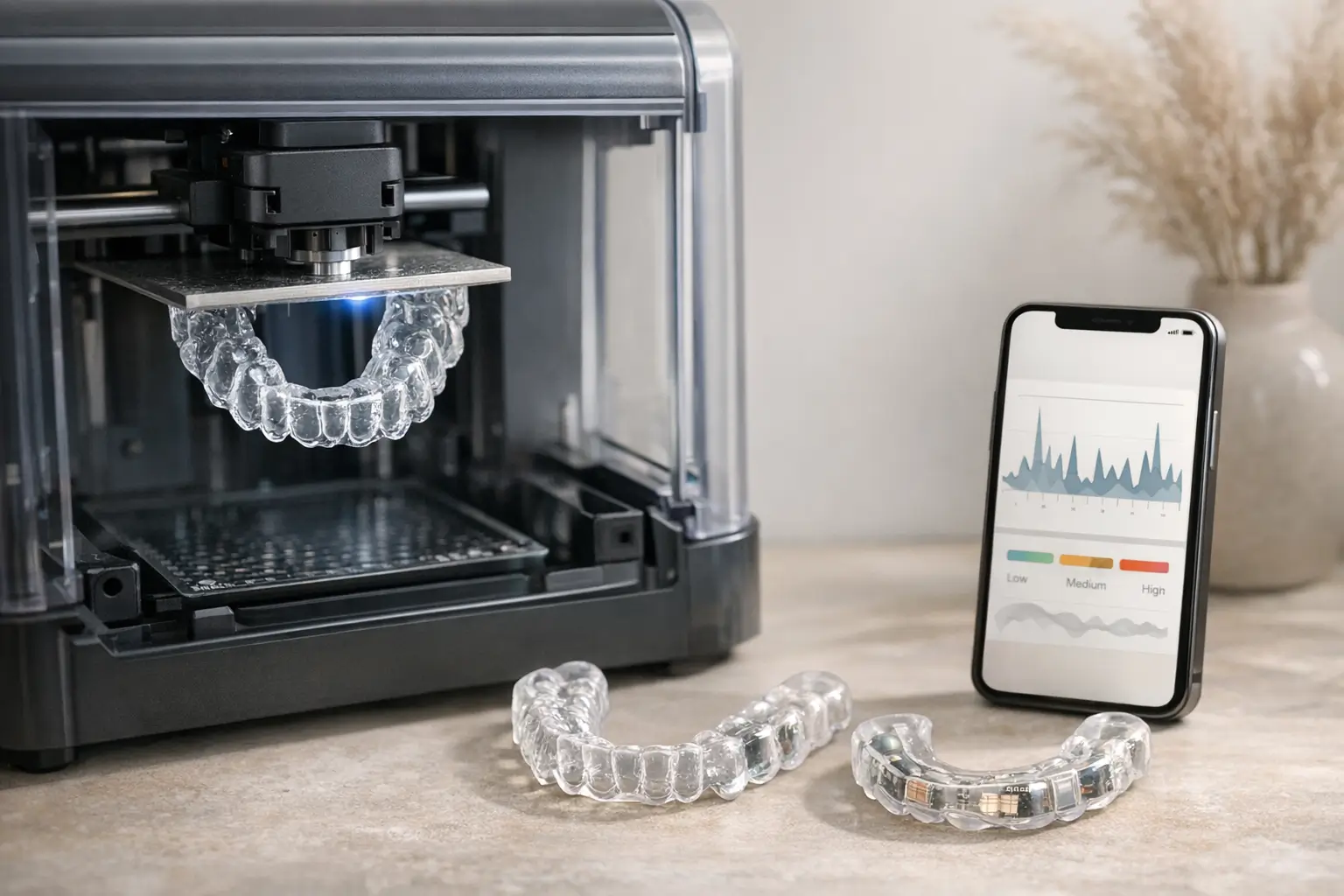
Using intraoral scanners, your dentist can now capture your bite in minutes. Software then maps the occlusal surface and prints a guard layer by layer in biocompatible resin. The earlier study by Qin et al. found that 3D-printed splints cut manufacturing time by 60 percent and required fewer adjustment visits. Patients reported smoother edges and better speech clarity because printers can thin the guard where there is extra room. For a look at the latest designs, explore our guide on innovative mouth guards.
Potential drawbacks? Resin microcracks from printer layering could shorten lifespan. Also, not every dental office owns a high-precision printer, so you might still wait if the scan ships off-site. One workaround is chairside milling, where a compact mill carves the splint from a solid puck while you Netflix in the dental chair—no second appointment needed.
Instrumented Mouthguards
Engineers are stuffing tiny pressure sensors and accelerometers into guards to track bite forces in real time. In sports, these “instrumented” devices measure head impacts. For bruxism, the goal is to log how often and how hard you grind so your dentist can tweak treatment.
A 2025 comparative study by Gellner et al. looked at post-processing methods for mouth guard sensor data. They showed that high-fidelity filtering could pinpoint individual clench events with 95 percent accuracy. Imagine syncing the data to a phone app that buzzes you the next day with a clench-count report—nerd heaven. But these guards run pricey and still live mostly in research labs.
Factors to Consider When Choosing a Mouth Guard
Enough lab talk. You want to know what matters when your credit card comes out. Let’s break down the four big pillars: fit, comfort, durability, and cost.
Fit and Comfort
Custom guards win hands down for fit, but you still need to verify that:
- The guard seats fully without rocking or clicking.
- You can close your lips and breathe through your nose without drooling like a Saint Bernard.
- Your bite feels balanced; one side should not touch sooner than the other.
If any of these fail, your dentist can adjust high spots or remake the tray. With OTC products, follow the boil-time instructions to the second. Too short and the material stays stiff. Too long and it shrinks. If you cannot get a decent mold after two tries, consider that 20-dollar plastic a sunk cost and move on.
Pro tip: travel a lot? Ask for a duplicate guard. Labs often discount a second copy made from the same digital file. Lose one in a hotel bathroom, and you are not back to square one.
Durability
Hard acrylic lasts longest—often two to five years—thanks to high resistance to abrasion. Soft EVA can wear through in six months if you grind like a coffee grinder. Check for thinning, cracks, or yellow discoloration every week. Clean with non-abrasive soap, not toothpaste, which scratches the surface and breeds bacteria. For cleaning tips, see our definitive guide on night guard cleaning.
Once a week, soak the guard in a denture-cleaning tablet solution for five minutes. Skip mouthwash soaks containing alcohol; they can leach plasticizers and warp the fit. If you have orthodontic wires, tell your dentist—the guard edge can be flared slightly to avoid catching brackets.
Cost
Sticker shock is real. Expect:
- $15 to $40 for a basic OTC boil-and-bite.
- $100 to $200 for mail-order “custom” kits where you mail impressions to a lab.
- $300 to $800 for dentist-fabricated guards, 3D-printed or traditional.
Insurance sometimes covers part of the cost if the claim codes tie bruxism to TMD or migraine therapy. Call ahead and ask. For more on the financial aspects of treatment, our bruxism treatment cost guide provides detailed insights.
Financial quick tip: If you grind lightly or you’re testing the waters, start with a mid-priced mail-order kit. If you break that in three months, you know a pro-grade guard is worth it.
Real-Life Efficacy: User Experiences
Comparative Studies on User Experiences
Lab numbers matter, but how do users feel the morning after? Two studies shine light on satisfaction.
A 2025 study by Saracutu et al. tracked healthy adults wearing hard versus soft guards. Participants kept sleep diaries for two weeks. Hard-guard wearers logged a 35 percent dip in morning jaw soreness, while soft-guard users saw only 18 percent. However, hard guards scored lower for “initial comfort,” showing that some muscle adaptation time is needed. For tips on jaw relaxation, see our guide on jaw relaxation techniques.
In another piece, Saracutu, Manfredini, and Bracci (2024) compared ecological momentary assessment (smartphone prompts) with self-report questionnaires on awake bruxism. They found that users underestimated clench events by roughly 40 percent on paper forms. Translation: your guard might be working even if you think you hardly grind, because your memory is fuzzy. Real-time data from sensor guards or wearables could bridge that gap.
Across both papers, the single biggest predictor of sticking with a guard was nighttime comfort. A cheap guard in your nightstand does nothing. A well-fitted one that you forget is even there? That saves enamel. One user in an online support forum summed it up: “I’d rather replace a hundred-dollar guard once a year than replace a thousand-dollar crown once a decade.” Spoken like a true grinder.
If you have decided on custom
Once you have worked out which type you need, the only question left is where to buy it. Pro Teeth Guard is a San Diego dental lab that has made guards for dental offices for over 20 years and also sells direct.
You choose soft, hybrid, hard, or ultra-thin based on how hard you grind, take the impression at home in about 15 minutes, and get the finished guard back in 7 to 11 business days. Free adjustments, one free warranty replacement in the first year, and a 60-day 110% money-back guarantee.
See all four Pro Teeth Guard options
Affiliate link. If you buy through it we earn a commission, at no extra cost to you. How this works.
Conclusion: Making an Informed Decision
Picking a bruxism mouth guard is part science, part personal trial. Custom-made acrylic guards still rule for serious grinders thanks to solid evidence that they reduce muscle activity and protect teeth. OTC trays offer a budget-friendly entry point but sacrifice longevity and precision. New tech like 3D-printing and sensor-equipped guards promises better comfort and data tracking, though wider availability and lower prices will take time.
Your action plan:
- Confirm bruxism with a dental exam or sleep study if needed.
- Weigh your grind severity against your budget.
- Start with the best guard you can afford that still lets you sleep comfortably.
- Monitor wear and track symptoms every month.
- Combine the guard with stress management, jaw exercises, or posture work for full-court press protection. Explore our guide on TMJ exercises for effective techniques.
Your teeth are a lifelong asset. A small piece of plastic each night can shield them from the silent grind. Choose wisely and sleep easier.