Exploring the Link Between Sleep Disorders and Teeth Grinding: Uncovering the Causes of Sleep Bruxism
Discover how sleep disorders may trigger teeth grinding, backed by recent research.
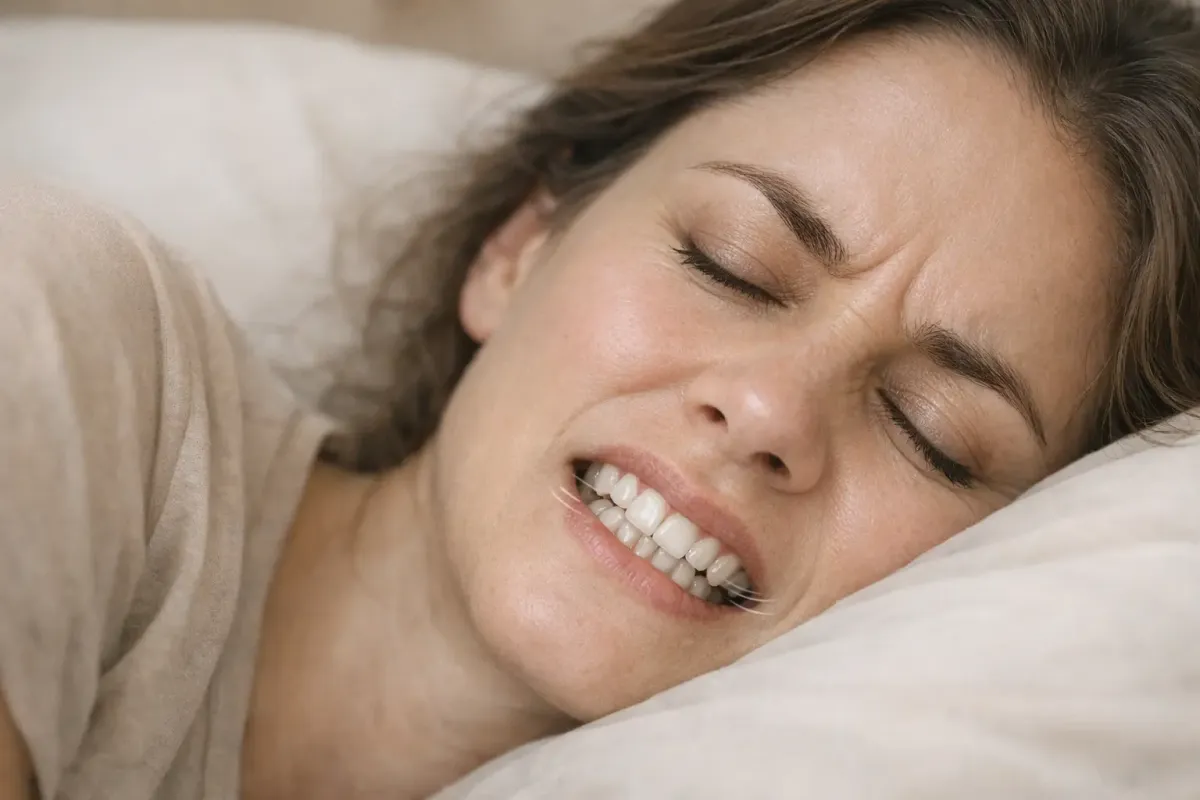
If you have ever woken up with a sore jaw, a dull headache, or tooth marks on the sides of your tongue, you might be one of the millions who grind their teeth while asleep. This nighttime habit, formally known as sleep bruxism, is often dismissed as harmless stress relief. But the reality is more complex. Research suggests this problem is closely linked to your sleep patterns, the conditions that disrupt it, and even what happens in your gut or brain.
This article unpacks that evidence. Discover how disorders such as insomnia, obstructive sleep apnea, gastroesophageal reflux disease (GERD), and chronic migraine can set the stage for tooth-on-tooth warfare. You will also learn why children grind for different reasons than adults and which treatments are effective in calming the grind.
Understanding Sleep Bruxism: What You Need to Know
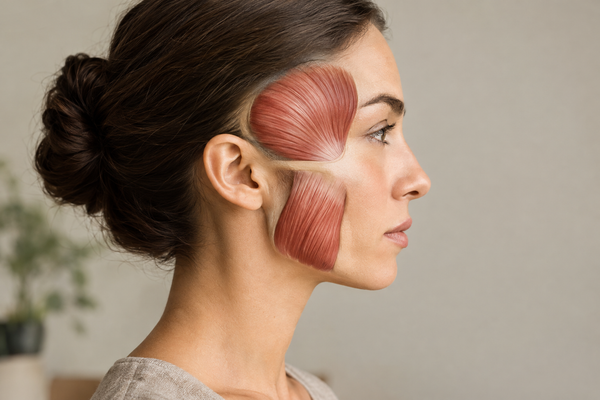
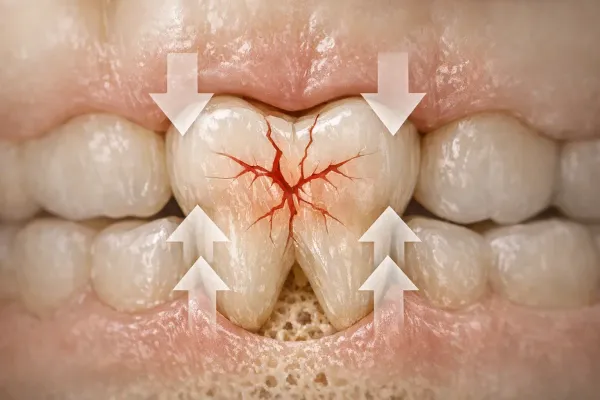
Sleep bruxism involves repetitive jaw-muscle activity, clenching, or grinding of the teeth during sleep. Dentists often spot it first due to worn or cracked enamel, yet many people remain unaware until a partner complains about the noise.
Prevalence estimates vary, partly because studies use different definitions or measuring tools. A large ecological momentary assessment of more than 1,000 adults reported that roughly 13 percent self-identified as grinders when asked multiple times a day over two weeks. When measured in a sleep lab with electrodes on jaw muscles, the rate drops to about 6–8 percent in the general population, according to the Standardised Tool for the Assessment of Bruxism. Either way, that's a lot of nighttime noise.
Clinically, sleep bruxism can be both a symptom and a standalone condition. You might grind to compensate for an obstructed airway or indigestion, or you could have a primary bruxism pattern that chips teeth even when your sleep seems healthy. Because of this dual identity, professional guidelines now classify sleep bruxism as a sleep-related movement disorder that can be comorbid with other sleep conditions or exist independently. If you are researching a teeth grinding sleep disorder, keep that nuance in mind.
Common symptoms include:
- Audible grinding reported by a bed partner
- Morning jaw muscle fatigue or stiffness
- Fractured or worn tooth surfaces
- Tension-type headaches after waking
- Sensitivity to cold, hot, or sweet foods
The good news is that occasional bruxism episodes rarely cause major issues. The bad news is that chronic nightly grinding can accelerate tooth wear and amplify other health problems. To tackle it effectively, you first need to understand its root causes — many of which lie in broader sleep disorders.
The Connection Between Sleep Disorders and Bruxism
Scientists have long suspected that disordered sleep and tooth grinding are linked. Advances in polysomnography and wearable sensors have documented how fractured sleep seems to provoke jaw-muscle bursts. Below, you'll find the strongest links identified to date, as well as emerging theories.

Sleep Architecture and Bruxism
Sleep cycles through light non-REM, deep non-REM, and REM stages roughly every 90 minutes. These transitions are managed by brainstem arousal mechanisms that briefly increase heart rate, breathing, and muscle tone. These micro-arousals are prime times for bruxism.
A polysomnographic study focused on chronic migraine patients examined 42 adults overnight. Researchers found that 85 percent of bruxism episodes occurred within seconds of a cortical arousal, particularly during transitions from stage 2 non-REM to lighter sleep. Grinding was less frequent in sustained deep sleep and rare during REM, supporting the idea that bruxism is a by-product of nervous system activity.
Disorders that fragment sleep — insomnia, obstructive sleep apnea (OSA), restless legs syndrome — increase the number of arousals. More arousals mean more opportunities for jaw muscles to misfire. People with moderate to severe OSA show a bruxism prevalence that is two to three times higher than in healthy sleepers, according to multiple sleep-lab cohort studies summarized by the Sleep Foundation. The mechanism appears to involve airway obstruction leading to a brief surge in sympathetic activity, which includes an uptick in jaw-closing muscle tone.
Grinding and snoring? Rule out sleep apnea first
Daybreak at-home sleep test, $159.95. If you grind and also snore, wake up gasping, or feel wiped out after a full night in bed, check for obstructive sleep apnea before treating the grinding on its own. Daybreak's test is a finger sensor you wear for two nights in your own bed. A doctor reviews the data and gives you a diagnosis, with no sleep lab visit, and the test is FSA eligible.
If it does come back as apnea, their treatment is an FDA-cleared, custom-fit oral appliance that holds the lower jaw forward to keep the airway open, an alternative to CPAP. A standard night guard does not do that job, and in some people a flat hard guard can make apnea worse, which is why this question comes first.
Know the full cost before you start. Daybreak says most insurance covers the device, but the $995 Treatment Essentials fee is not covered and is paid out of pocket.
Affiliate link. If you buy through it we earn a commission, at no extra cost to you. How this works.
Role of Anxiety and Depression
Mental health is another key piece of the puzzle. Anxiety and major depressive disorder can produce hyperarousal traits that carry into the night. A cross-sectional study of 120 psychiatric outpatients taking SSRIs or SNRIs showed that 64 percent met criteria for sleep bruxism, nearly double the general population rate. The researchers noted that antidepressant dose did not fully explain the grinding, pointing instead to baseline anxiety levels and sleep-stage instability.
Correlation is not causation, but neurobiological overlap is plausible. Anxiety ramps up activity in the locus coeruleus, a brainstem structure that deploys norepinephrine during stress. That same area modulates muscle tone during micro-arousals. Depression often disrupts REM latency and slow-wave sleep, adding more frequent stage changes that can trigger bruxism bursts.
So if you're chasing down sleep bruxism causes, keep a wide lens. Your stress levels, medication list, and sleep-stage stability might be conspiring to produce that nightly grind.
Gastroesophageal Reflux Disease (GERD) and Sleep Bruxism
Move south from the brain to the esophagus, and another surprising connection surfaces. GERD sends stomach acid washing back into your throat, especially when you lie flat. That fiery splash can wake you up or keep you in lighter stages of sleep, and the irritation might set off reflexes involving the jaw.
A population-based survey of 1,174 adults found that self-reported nocturnal reflux doubled the odds of diagnosed sleep bruxism, even after adjusting for age, BMI, and alcohol use. The authors proposed a “sensory buffering” hypothesis: clenching the teeth increases saliva flow, which in turn neutralizes acid lingering in the mouth and upper esophagus.
Polysomnography has bolstered the claim. Reflux events often precede rhythmic masticatory muscle activity by 30–60 seconds, hinting that the body is indeed trying to soothe its own burn. Chronic GERD patients also experience more micro-arousals, further opening the door to grinding episodes.
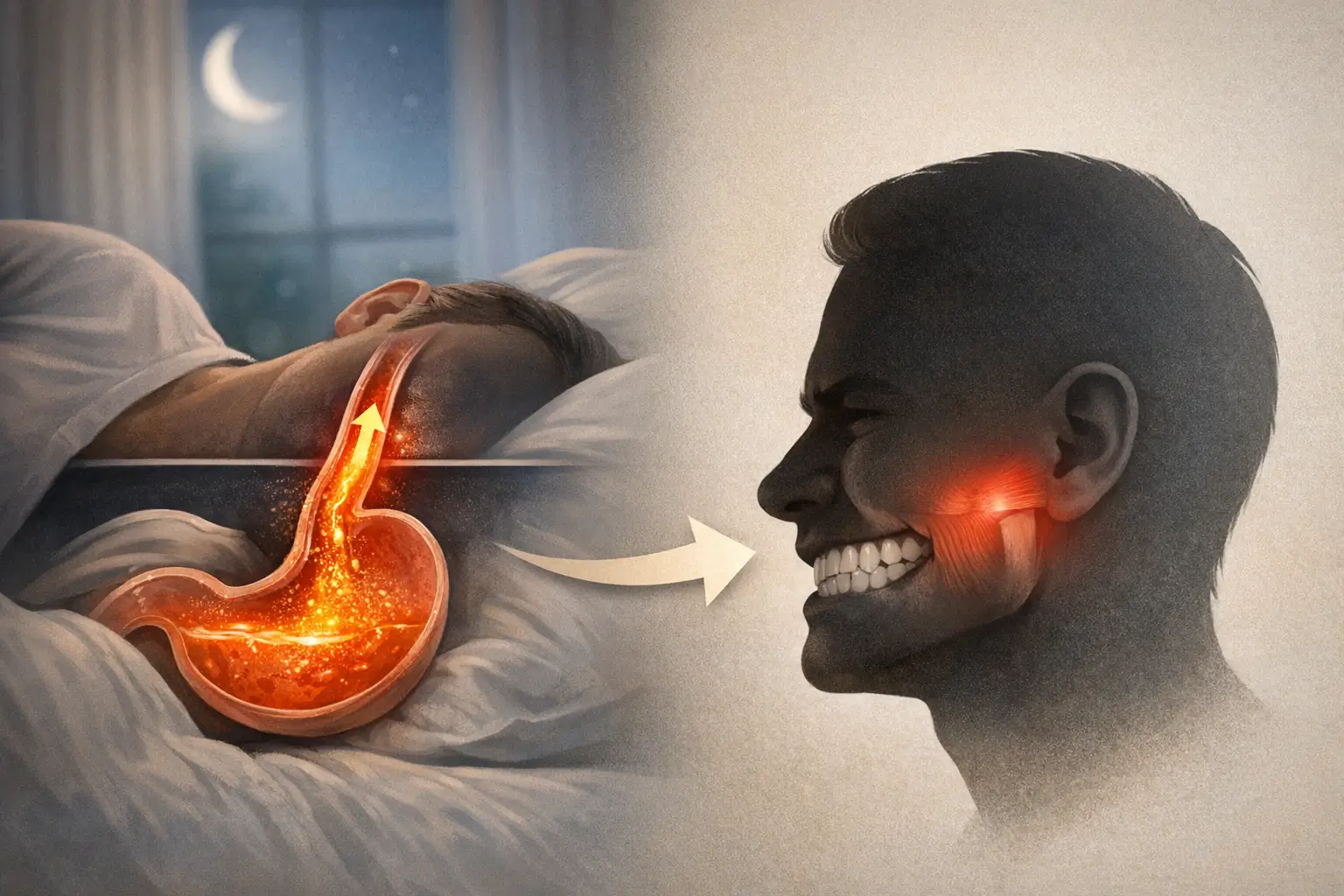
If you battle both reflux and tooth wear, ask your clinician about treating the GERD first. Proton pump inhibitors, positional therapy like head-of-bed elevation, and late-night meal timing can cut down on acid events and, by extension, the jaw gymnastics triggered by them.
Chronic Migraine and Its Impact on Sleep Bruxism
Migraine is more than a bad headache; it's a neurological disorder marked by sensory hypersensitivity, altered pain processing, and disturbed sleep patterns. Anyone living with chronic migraine knows that nights are rarely restful.
The same polysomnographic investigation revealed that migraineurs experience almost twice as many bruxism episodes per hour of sleep compared with healthy controls. The uptick was most evident during the night before a migraine attack, suggesting a possible prodromal marker.
Why the overlap? Researchers point to the trigeminovascular system, which governs both migraine pain and jaw-muscle activity. Cortical spreading depolarization, the wave of electrical silence thought to underlie aura, might lower the threshold for motor-unit firing in the masseter muscle. Add in fragmented sleep common in migraine, and you get a perfect storm.
Interestingly, treating the migraine can indirectly tame the grind. Beta-blockers and certain anti-seizure medications used for migraine prophylaxis have been associated with fewer bruxism bursts, though controlled trials are sparse. That said, aggressive night-guard use without addressing migraine triggers often yields limited relief. In other words, you cannot mouthpiece your way out of a neurologically driven problem.
Children, Adolescents, and Sleep Bruxism
Kids grind, too — sometimes louder than adults. Prevalence peaks between ages 6 and 11, with estimates ranging from 14 to 20 percent depending on the study design. A scoping review of 52 pediatric trials confirmed that bruxism in children is common yet under-recognized by caregivers.
Unlike adults, younger grinders often have developing craniofacial structures, mixed dentition, and changing airways. Enlarged tonsils, nasal obstruction, and habitual mouth-breathing are significant contributors. A separate narrative review emphasized the role of attention-deficit hyperactivity disorder (ADHD) and parasomnias like sleep talking, which complicate nightly motor output.
Signs that your child might have sleep bruxism include:
- Audible grinding heard outside the bedroom
- Complaints of morning jaw soreness or ear pain
- Fractured baby teeth or premature enamel wear
- Unexplained facial pain or headaches
- Behavioral changes tied to poor sleep quality
Pediatric dentists often recommend watchful waiting because many children outgrow the habit as their airway and bite mature. Still, if grinding coexists with snoring, mouth-breathing, or attention issues at school, a sleep study might reveal underlying obstructive events that need early intervention.
Treatment and Management of Sleep Bruxism
No single therapy stops bruxism for everyone. Management requires a layered approach targeting contributing sleep disorders, jaw-muscle overactivity, and tooth preservation. Below is a snapshot of evidence-based options.
- Sleep disorder treatment: If polysomnography uncovers OSA, continuous positive airway pressure (CPAP) or mandibular advancement devices can lower both apnea index and bruxism burst frequency.
- Cognitive behavioral therapy for insomnia (CBT-I): Reducing sleep latency and nighttime awakenings indirectly curbs grinding triggers.
- Night guards (occlusal splints): These protect enamel but do not always reduce muscle activity. Soft guards may even increase clenching in some users. For a deep dive into different types of guards and their effectiveness, explore our guide on night guards.
- Medication review: Adjusting or switching antidepressants can sometimes lower bruxism incidence in anxious or depressed patients.
- Stress-reduction techniques: Biofeedback, meditation, and progressive muscle relaxation can reduce daytime jaw tension that spills into sleep. Learn more about these techniques in our article on jaw tension relief from stress.
Botulinum Toxin and Other Approaches
When conservative methods fall short, injections of botulinum toxin type A have emerged as a viable option. A retrospective analysis of 118 patients reported a 73 percent reduction in electromyographic bruxism episodes three months after bilateral masseter injections. Pain scores and headache frequency also improved.
Safety profiles are encouraging, with mild chewing weakness as the most common side effect. Repeat dosing is needed every 3–6 months. Insurance coverage varies, so ask your provider about out-of-pocket costs versus long-term dental repairs.
Other emerging therapies include:
- Biofeedback splints that vibrate gently when jaw muscles activate, teaching the brain to relax.
- Low-level laser therapy aimed at reducing masseter hyperactivity, though studies are small.
- Neuromodulation devices worn on the forehead to alter trigeminal nerve excitability.
- Behavioral coaching apps that prompt tongue-up, lips-together, teeth-apart posture during the day, minimizing habit carryover at night. A broader overview of multimodal strategies is provided in recent literature, including practical solutions for night clenching.
Whatever path you choose, remember that bruxism rarely exists in a vacuum. A full work-up by a sleep physician and a dentist trained in orofacial pain will give you the best odds of grinding less and sleeping more.
Conclusion
Teeth do not grind by themselves. They respond to a network of signals spanning your airway, stomach, brain, and emotions. Sleep disorders like apnea, GERD, chronic migraine, and mental health conditions elevate those signals, turning a manageable quirk into a daily dental threat. Treating the underlying disorders often calms the bruxism storm; ignoring them keeps the cycle alive.
If you suspect you have sleep bruxism, ask for a comprehensive evaluation that looks beyond your mouth. Fix the sleep, soothe the gut, steady the mind, and your jaw will likely follow suit. The grind is not destiny; it is a symptom, and symptoms are meant to be solved.