Botox for Bruxism: Research, Relief, Risks, and New Developments
Considering Botox for bruxism? Explore the research on jaw clenching relief, side effects, newer techniques, and how injections compare with night guards.
Botox for Bruxism: Research, Relief, Risks, and New Developments
Research on Botox for bruxism points to an important distinction: weaker jaw contractions do not necessarily mean less grinding. In “Botulinum Toxin Therapy for Managing Sleep Bruxism: A Randomized and Placebo-Controlled Trial,” Shim and colleagues found that injections reduced the intensity of contractions in the treated masseter muscles, but did not prevent sleep bruxism episodes. If you are considering injections for jaw clenching, that difference matters. Reducing the force of a squeeze is not the same as switching off what triggers it.
Botulinum toxin may help selected people manage jaw-muscle symptoms. But questions remain about who benefits most, how it compares with other treatments, and what repeated injections mean for muscle and bone health. Here is how to weigh the research without mistaking a quieter muscle for a cure.
Botox for Bruxism: What the Research Actually Shows
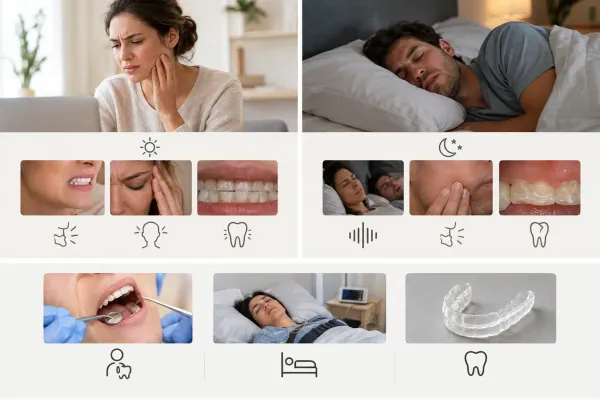
Bruxism is jaw-muscle activity that may involve clenching, grinding, bracing, or thrusting your jaw. Awake bruxism happens while you are awake, sometimes without your noticing. Sleep bruxism involves rhythmic or sustained jaw-muscle activity during sleep. You can have either pattern or both.
Bruxism is not automatically a disease that needs treatment. Your clinician should consider whether it contributes to pain, damaged teeth, trouble chewing, or other problems. As the National Institute of Dental and Craniofacial Research’s bruxism overview explains, care depends on your symptoms and their consequences, not simply the presence of grinding.
Botulinum toxin type A blocks the release of a chemical signal that tells a muscle to contract. Injections into selected jaw muscles temporarily reduce their ability to squeeze.
Botox is one brand, not the name of every botulinum toxin product. When you read research, check which product was used. Results and doses should not be treated as interchangeable across brands.
Less muscle force is not the same as less grinding
When you judge whether treatment works, separate these outcomes:
- Pain: Does your jaw hurt less, and does the improvement matter in daily life?
- Bite force: Does your jaw close with less force, and can you still chew comfortably?
- Muscle activity: Are recorded contractions weaker, shorter, or otherwise different?
- Grinding frequency: Are you having fewer episodes, rather than merely weaker ones?
- Quality of life: Are eating, sleeping, working, and social activities easier?
In the trial by Shim and colleagues, researchers used sleep recordings to assess muscle activity. The findings support a reduction in contraction intensity in the injected muscles, not elimination of the sleep-related activity itself.
That does not make weaker contractions meaningless. Less force could be useful when excessive muscle loading contributes to symptoms. But a lower muscle signal alone does not prove that you will have less pain, avoid tooth damage, or sleep better. Each outcome needs its own evidence.
How strong is the evidence for relief?
Some clinical trials report improvements in pain or patient-rated symptoms after botulinum toxin injections. For example, Ondo and colleagues’ study, “Onabotulinum toxin-A injections for sleep bruxism: A double-blind, placebo-controlled study,” reported benefits on some patient-rated outcomes. It was a small study, so its findings do not establish a standard treatment plan for everyone who grinds.
You also should not read “systematic review” as a guarantee of certainty. A review organizes existing studies. Its conclusions still depend on how those studies diagnosed bruxism, measured improvement, and tracked harms.
Small samples can produce uncertain estimates. Different products, injection sites, comparison treatments, and follow-up periods make findings harder to combine. Studies of jaw pain also may not answer the same question as studies of sleep-recorded grinding.
For related temporomandibular disorders, NIDCR describes the evidence for botulinum toxin as limited and its effectiveness as uncertain. TMD and bruxism are not interchangeable, but this guidance reinforces the need for caution when injections are offered for jaw pain.
The practical takeaway: you can discuss possible symptom relief without accepting a promise that Botox stops bruxism or prevents its long-term dental effects.
Botox for Jaw Clenching vs. Other Bruxism Treatment Options
What Botox-versus-splint trials can tell you
Comparing injections with an occlusal splint, often called a night guard, sounds straightforward. It is not. The treatments have different main purposes, and the answer depends on what a trial measures.
A study of jaw-muscle pain in people with probable sleep bruxism may help you understand pain relief. It cannot automatically tell you which treatment better prevents cracked teeth, reduces grinding episodes, or helps people with awake clenching.
Look for the actual results, follow-up period, side effects, and reasons people stopped treatment. Also check whether participants had a clinical diagnosis or sleep testing. Those details affect how closely a study matches your situation.
Be wary of claims that two treatments are “equally effective” simply because a small trial found no statistically significant difference. That can mean the study did not detect a difference. Proving equivalence requires a study designed for that purpose.
Your night guard and your jaw injections do not have the same job. A properly fitted splint can separate and help protect vulnerable teeth. It does not reliably switch off the signals behind sleep bruxism. Injections aim to reduce selected muscle contractions, which may be relevant when muscle force or pain is the main concern.
Here is how common bruxism treatment options compare:
- Clinician-fitted splint. The goal is to protect teeth and, in some cases, help manage symptoms. It does not necessarily stop bruxism. Fit, comfort, and regular checks matter, and you may need adjustments or replacement.
- Awake-clenching awareness and habit strategies. The goal is to help you notice and interrupt unnecessary daytime jaw activity. These approaches take practice and do not directly control activity during sleep. Reminders or coaching may help.
- Physical therapy when appropriate. The goal is to improve jaw movement, muscle comfort, and function. Treatment should match your diagnosis. Exercises and hands-on care are not guaranteed grinding cures.
- Botulinum toxin injections. The goal is to temporarily reduce targeted muscle force and potentially relieve muscle-related symptoms. Limits include off-label use, side effects, cost, and uncertain long-term benefit. Further injections should depend on reassessment, not a preset sales package.
Why your treatment plan may need more than injections
Your assessment may include stress, sleep quality, caffeine or alcohol use, and medicines that could contribute to symptoms. Do not stop a prescribed medicine yourself. Ask your prescriber whether its timing, dose, or alternatives deserve review.
For awake clenching, learning to notice jaw tension can be useful. Your clinician may suggest reminders to let your jaw rest rather than holding your teeth together. The aim is less unnecessary muscle activity, not constant monitoring that makes you more tense.
If you snore loudly, have witnessed breathing pauses, or feel unusually sleepy during the day, ask about evaluation for a sleep disorder. Botox does not treat obstructive sleep apnea. Treating apnea matters for your health, but it should not be presented as a guaranteed way to eliminate bruxism.
The Mayo Clinic’s bruxism treatment guidance places injections among options that may help selected people with severe symptoms who have not responded to other approaches. That is a more useful position than “everyone who clenches needs Botox.”
What to Expect Before and After Botox for Bruxism
Your assessment and injection appointment
Your appointment should start with a diagnosis and a goal, not a sales pitch about a slimmer jaw. Expect questions about morning soreness, daytime clenching, headaches, chewing difficulty, cracked teeth, and reports of grinding from a sleep partner.
Your clinician should also ask what you have already tried. Be specific about what would make treatment worthwhile: eating without pain, fewer painful mornings, or less muscle fatigue. A clear goal makes follow-up more useful.
Your examination may include dental wear, damaged restorations, jaw tenderness, movement, and signs of joint problems. Tooth wear alone cannot establish current sleep bruxism. Your teeth carry a record of past wear, and wear can have more than one cause.
You do not automatically need a sleep study. Testing may be appropriate when the diagnosis is unclear, another sleep disorder is suspected, or the result would change your care. Your medical history, medicines, previous toxin exposure, and current chewing ability also belong in the assessment.
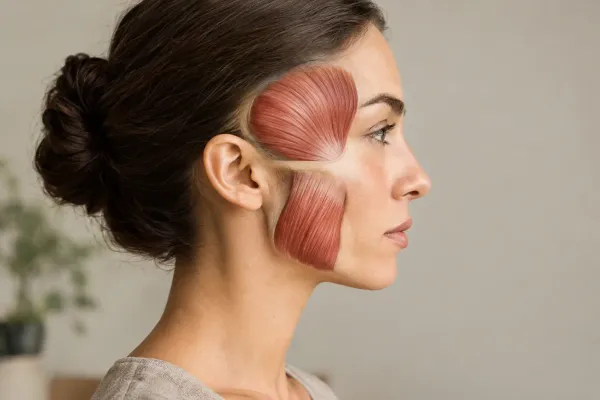
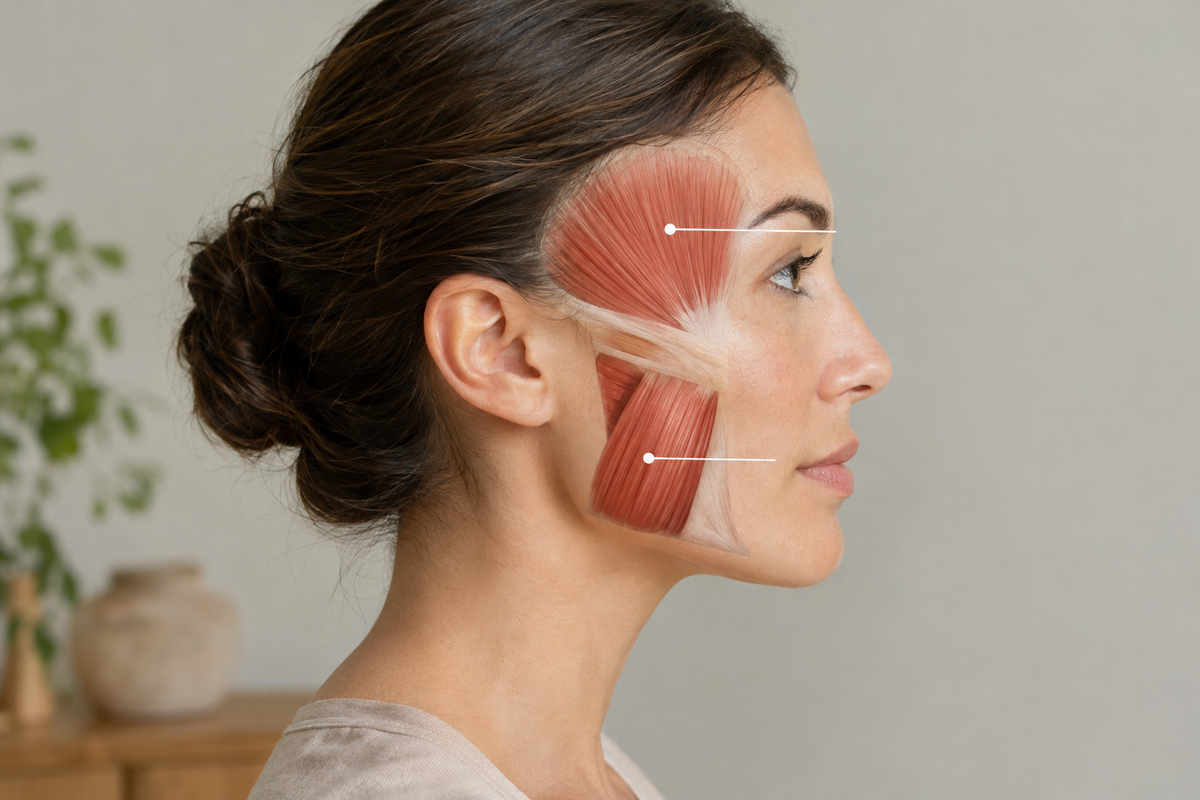
If you proceed, your clinician selects muscles and injection sites based on your anatomy and treatment goals. The masseter is a common target. Other jaw-closing muscles, including the temporalis, may be considered. There is no universal injection map that suits every face or every pain problem.
The Botox prescribing information states that its units are not interchangeable with those of other botulinum toxin products. You cannot compare doses across brands as though they were identical measurements. Product choice, muscle function, anatomy, and clinical judgment all matter.

When relief may start and how follow-up works
Botulinum toxin does not work instantly. Muscle effects develop after treatment, and the timing varies with the product, muscle, dose, and your response. Changes in muscle strength and changes in pain may not follow the same schedule.
The effects are temporary, but a standard repeat-treatment interval should not be sold as a guaranteed bruxism timeline. Ask when your clinician expects to assess the result and how you should report problems before that visit.
Follow-up should focus on pain, chewing comfort, daily function, and side effects. A change in facial shape is not enough to show that treatment helped your health.
A short symptom diary can make the comparison less dependent on memory. Before and after treatment, note morning soreness, daytime pain, foods you struggle to chew, and any change in pain medicine use. Keep it simple enough to maintain.
Repeat treatment may be reasonable if you had meaningful benefit without unacceptable effects. It should not be an automatic subscription. Ask what would lead your clinician to wait, adjust the plan, or stop.
Costs can vary by product, dose, clinician, location, and follow-up arrangements. Insurance coverage for off-label treatment varies, and cosmetic services may be excluded. Before booking, ask for the total expected cost, what reassessment includes, and whether your insurer requires prior authorization.
Botox for Bruxism Side Effects, Long-Term Risks, and Precautions
Chewing weakness, facial changes, and serious warning signs
You may have injection-site pain, tenderness, or bruising. Because treatment weakens muscle, you may also notice chewing fatigue or difficulty with foods that require sustained force. This is especially important to discuss if chewing is already difficult.
Facial asymmetry, smile changes, and a different jaw contour are possible. A change that is welcome during cosmetic treatment may be unwelcome when your goal is simply to eat without pain.
Your clinician also needs to identify the source of your pain. Bruxism and temporomandibular disorders overlap, but they are not the same diagnosis. Pain from a jaw joint, tooth, nerve, or another condition may not respond as muscle-related pain would.
Treating the wrong target is not precision medicine, however small the needle.
The MedlinePlus information on onabotulinumtoxinA and Botox prescribing information warn that toxin effects can spread beyond the injection area. New trouble swallowing, speaking, or breathing after treatment requires urgent medical attention. Do not wait for a routine follow-up appointment. Severe breathing difficulty is an emergency.
Before treatment, tell your clinician about:
- Neuromuscular conditions or existing muscle weakness.
- Problems with swallowing or breathing.
- Previous reactions to botulinum toxin products.
- Infection near any proposed injection site.
- All medicines and supplements you use, including recent toxin injections elsewhere.
- Pregnancy, plans for pregnancy, or breastfeeding.
These issues do not all carry the same level of risk. Infection at a proposed injection site and known hypersensitivity to the product or its components are contraindications in prescribing information. Other circumstances require individual assessment.
Some medicines can increase the effects of treatment on muscle function. Safety information during pregnancy and breastfeeding is limited. Your clinician needs your full history, not just a checked box on a booking form.
What remains uncertain with repeated treatment
Muscle thinning can follow reduced muscle activity. With repeated treatment, discuss whether changes in muscle size and function could affect your chewing or appearance. You also deserve a clear explanation of the uncertainty surrounding jawbone changes.
Animal research has raised concerns about bone changes after jaw-muscle injections. Those findings do not directly establish what will happen to your jaw. Human studies are harder to interpret because doses, treatment frequency, imaging methods, and underlying conditions differ.
You should not be told that permanent jaw damage is established for every patient, or that long-term harm is impossible. Small studies and short follow-up cannot reliably rule out uncommon or delayed problems.
This uncertainty matters most when you are considering repeated treatment over years. Ask how your clinician will monitor chewing function, review the need for further injections, and respond if the benefits fade. More treatment is not automatically better treatment.
In the United States, bruxism is not an FDA-approved indication for Botox. Use for this purpose is off-label. That does not automatically mean ineffective or inappropriate, but it makes informed consent especially important. Elsewhere, ask about current local approval and professional requirements.
Questions to ask before you consent
- What training do you have in orofacial pain, jaw anatomy, and managing injection complications?
- Which symptom are you treating, and how will we measure improvement?
- What alternatives fit my diagnosis, including less invasive options?
- Which product will you use, and why is it appropriate for me?
- What are my particular risks for chewing weakness or facial changes?
- Who should I contact if I develop a problem after treatment?
- What benefit would justify repeating treatment, and what would make us stop?
A useful consent discussion includes the possibility that treatment will not help. It should also explain what comes next if you get less pain but more chewing difficulty, or a cosmetic change without meaningful symptom relief.
New Developments in Botox for Bruxism: More Precision, Better Evidence?
Ultrasound guidance and individualized treatment
Ultrasound can help your clinician see muscle boundaries, thickness, and nearby structures while planning or performing an injection. That information may be useful when anatomy is less straightforward or a specific muscle region needs closer assessment.
But seeing a target more clearly and improving your health are different claims. To show that ultrasound guidance produces better bruxism relief or fewer complications, you need comparative clinical research that measures those outcomes.
A technical report can show how an injection was performed. It cannot, by itself, establish that the method works better than another approach. A clearer image is useful information, not proof of a breakthrough.
Individualized treatment should also mean more than changing injection points. It should account for your diagnosis, existing weakness, chewing needs, previous response, and reasons for seeking treatment. Precision starts with choosing an appropriate patient and goal.
You also need to separate treatment of enlarged masseter muscles from treatment of bruxism symptoms. Your jaw can look slimmer because a muscle has become smaller without your sleep grinding having stopped.
Before-and-after photographs do not measure grinding episodes, dental protection, or comfortable chewing. A narrower jawline is not a sleep-study result.
Why adoption is not the same as proof
Surveys of dentists and surgeons can describe how often clinicians report using botulinum toxin and which techniques they prefer. That helps researchers understand practice patterns. It does not show how much benefit you should expect.
Popularity may reflect clinical experience, patient demand, training, marketing, or a mix of factors. It cannot replace a controlled comparison of benefits and harms.
Likewise, a recent review is an evidence update, not automatically stronger evidence. Its publication date does not repair weaknesses in the studies it includes. Check whether the review separates sleep bruxism from awake bruxism and muscle pain from other jaw disorders.
A research protocol is another category entirely. It describes planned methods, not completed findings. A registered trial may be recruiting, unfinished, or completed without publicly available results. None of those stages should be presented as proof that treatment works.

What future studies need to measure
Better research should answer practical questions, not merely confirm that an injected muscle becomes weaker. Priorities include:
- Consistent diagnosis that separates awake bruxism, sleep bruxism, and other causes of jaw pain.
- Separate measurements of contraction strength, episode frequency, tooth damage, and pain.
- Patient-centered outcomes, including comfortable eating, sleep-related concerns, and daily function.
- Fair comparisons with splints, appropriate physical therapy, and other conservative care.
- Clear reporting of products, injection methods, adverse effects, and reasons for stopping treatment.
- Longer follow-up on muscle function, bone findings, and repeated treatment strategies.
Studies also need to establish what counts as a worthwhile improvement. A small change on a pain scale may be statistically detectable without making dinner, work, or sleep any easier.
For repeated treatment, researchers need to track whether benefits last across treatment cycles and whether side effects accumulate. That requires more than a single appointment and a short follow-up visit.
If you follow emerging research through ClinicalTrials.gov, check study status and whether results have been posted. A promising plan is still a plan.
The Bottom Line: Is Botox for Bruxism Worth Discussing?
Botox for bruxism may be worth discussing if you have persistent jaw-muscle symptoms despite appropriate conservative care. That possibility is not a guaranteed cure, a promise of lasting relief, or a replacement for protecting vulnerable teeth.
The central finding from research such as Shim and colleagues’ randomized trial remains important: reducing the intensity of muscle contractions does not necessarily stop the activity that triggers them. Your treatment needs to match your diagnosis and the problem you want to solve.
Start with a qualified clinician experienced in orofacial pain and jaw anatomy. Discuss realistic benefits, alternatives, off-label status, costs, and the uncertainties of repeated treatment. If injections are proposed, agree on how you will judge success before you begin.
Track pain, chewing comfort, and daily function. Keep relevant dental, medication, and sleep issues in the plan. If treatment changes your jawline but does not improve your symptoms, that is a reason to reassess, not automatically rebook.
The goal is a jaw that works comfortably, not a subscription to injections.