Botox for Jaw Clenching: What Research Says About Safety
Considering Botox for jaw clenching? Explore the research on relief, side effects, long-term safety, and alternatives before you book treatment.
Research on Botox for jaw clenching points to an important distinction: weaker contractions do not necessarily mean fewer clenching episodes. In Shim and colleagues’ “Botulinum Toxin Therapy for Managing Sleep Bruxism: A Randomized and Placebo-Controlled Trial,” injections reduced the intensity of contractions in treated jaw muscles, but did not prevent the activity that generates sleep bruxism. That is a more useful starting point than a promise of a slimmer jawline.
Before choosing treatment, you need to know which problem you are trying to solve. Less forceful clenching, less pain, fewer nighttime episodes, and better sleep are different goals. Botox should not get credit for all four just because it can affect one.
You also need to weigh possible relief against chewing weakness, facial changes, and unanswered questions about repeated treatment. Here is what the research can tell you, where it falls short, and what to discuss before booking injections.
Botox for Jaw Clenching: What It Does and What It Cannot Fix
How Botox reduces muscle force
Botox is a brand of onabotulinumtoxinA, a prescription botulinum toxin product. It temporarily blocks the release of a chemical messenger that tells muscles to contract. When selected jaw muscles receive treatment, they may contract less strongly.
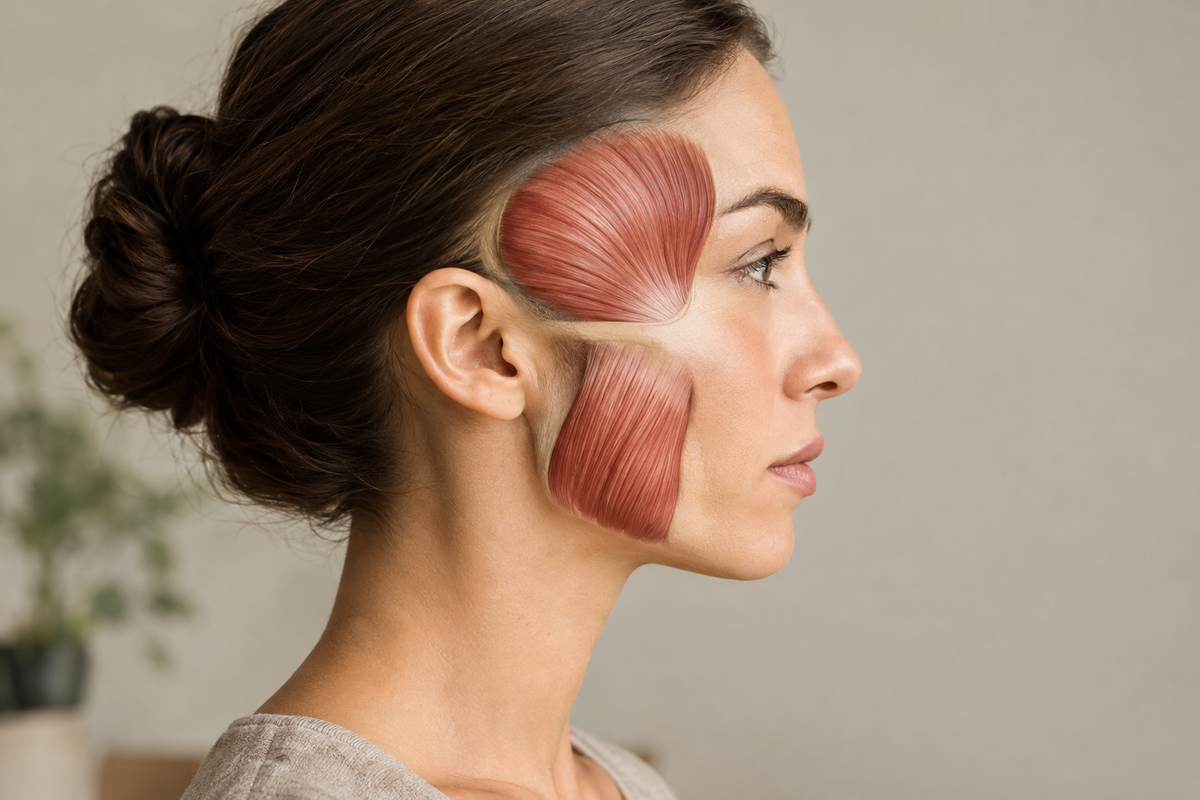
The masseters, the thick muscles along the sides of your lower jaw, are common treatment targets for Botox in bruxism. Depending on your symptoms and assessment, a clinician may consider other chewing muscles, such as the temporalis muscles at your temples.
That mechanism explains why injections can reduce muscle force. It does not establish that they correct whatever is prompting you to clench. Your jaw muscles carry out the activity, but they are not necessarily the source of the signal.
Changes in muscle size are another separate outcome. A treated masseter may become smaller as its workload decreases. A cosmetic change in your jawline does not, by itself, show that bruxism, pain, or disrupted sleep has improved. Your face is not a sleep-study result.
Why awake clenching and sleep bruxism need different approaches
Awake bruxism means repetitive or sustained jaw-muscle activity while you are awake. You might clench your teeth, brace your jaw, or push your lower jaw forward without noticing. Your teeth do not have to touch for jaw bracing to strain your muscles.
Sleep bruxism is jaw-muscle activity during sleep, which can include grinding or clenching. You cannot simply remind yourself to stop while asleep. Strategies that help you notice daytime habits therefore do not automatically address nighttime activity.
Temporomandibular disorders, or TMDs, involve your jaw joints, chewing muscles, and related structures. They can cause pain, stiffness, or difficulty moving your jaw. You can have bruxism without a painful TMD, and you can have TMD pain without bruxism.
The National Institute of Dental and Craniofacial Research’s TMD guidance explains why assessment matters. Jaw pain is a symptom to investigate, not proof that you need a particular injection.
Less force does not necessarily mean fewer episodes
If your muscles contract less forcefully, your clenching activity may become weaker without disappearing. A lower muscle-activity reading does not automatically mean fewer episodes, particularly when the measurement itself depends on contraction strength.
This distinction is central to the Shim trial. Its findings support reduced contraction intensity in treated muscles, rather than a claim that injections switch off sleep bruxism. Whether that change improves your pain, eating comfort, or dental health needs separate assessment.
In the United States, bruxism is not an FDA-approved indication for Botox. Its use for that purpose is off-label. NIDCR also notes that botulinum toxin is not FDA-approved for TMD.
Off-label prescribing is permitted, but approval for another condition does not establish effectiveness or safety for your jaw symptoms. Your clinician should explain the evidence and check the current label for the exact product being used.
Does Botox Work for Jaw Clenching? What the Studies Show
Pain relief, bite force, and clenching episodes are different outcomes
Two placebo-controlled studies help frame the discussion. Shim and colleagues examined sleep bruxism using overnight recordings of sleep and muscle activity. Ondo and colleagues’ “Onabotulinum toxin-A injections for sleep bruxism: A double-blind, placebo-controlled study” reported improvements in some patient-rated outcomes in a small trial.
Together, these studies suggest that botulinum toxin may help selected patients. They do not establish that every symptom improves, that every injection approach works equally well, or that repeated treatment is safe over many years.
The distinction between measured muscle activity and how you feel matters. You could have weaker contractions without meaningful pain relief. You could also feel better while some nighttime activity continues.
When you read a treatment claim, ask which outcome changed:
- Pain ratings: These tell you whether participants felt better, but expectations and other treatments can affect the scores.
- Muscle recordings: These measure electrical activity, not pain relief or tooth protection directly.
- Bite force: This shows how strongly you can bite. A reduction may come with unwanted chewing weakness.
- Episode counts: These address how often activity occurs, but depend on how researchers define and detect an episode.
- Sleep quality: This is another outcome entirely. A quieter jaw does not automatically mean more restorative sleep.
What systematic reviews add to the picture
A systematic review gathers studies using a defined search and selection process. A meta-analysis may combine their results statistically. These methods can reveal patterns, but they cannot turn weak or poorly matched studies into strong evidence.
For example, a review of painful TMD may include people whose main problem is muscle pain, not confirmed sleep bruxism. Its findings cannot automatically answer whether Botox reduces nighttime grinding.
Your confidence should also depend on study size, comparison groups, and follow-up. Small trials may miss uncommon harms. Short studies cannot establish safety over years. Comparing injections with saline answers a different question from comparing them with a fitted oral appliance or another active treatment.
Protocols matter too. Studies may use different toxin products, muscles, amounts, treatment schedules, and diagnostic criteria. Botulinum toxin products are not interchangeable, and their labeled units are not directly interchangeable either.
Even a statistically significant result may not produce a noticeable improvement for you. The practical question is whether the change is large enough to improve comfort, eating, or daily function without creating a bigger problem.
Why TMD research does not answer every bruxism question
If a study enrolls people with painful chewing muscles, its findings may be relevant to your muscle pain. They do not necessarily tell you whether nighttime grinding stops, whether your teeth are protected, or whether your sleep improves.
NIDCR describes the evidence for botulinum toxin in TMD as limited. That supports caution, not a blanket verdict that treatment always works or never helps.
A useful consultation connects the research to your diagnosis. If your main concern is tooth wear, ask what evidence supports tooth protection. If your main concern is pain, ask how pain and function will be measured. “It relaxes the muscle” is a mechanism, not a complete treatment plan.
Botox Safety for Jaw Clenching: Side Effects and Long-Term Unknowns
Local reactions, chewing weakness, and changes to your smile
Your most immediate concerns are usually local. Injections can cause discomfort, tenderness, swelling, or bruising. Because treatment deliberately weakens muscle activity, you may also notice chewing fatigue or difficulty managing harder foods.
A lower bite-force measurement is not necessarily good news if dinner becomes a workout. Before treatment, discuss whether you already have trouble chewing, avoid certain foods, or experience jaw fatigue.
Nearby facial muscles can also be affected unintentionally. Depending on the muscles involved, you could notice asymmetry or a change in your smile. These possibilities belong in informed consent, not in a hurried conversation after treatment.
Some effects improve as the medicine wears off, but you should not assume that an unwanted result can be immediately reversed. Ask whom to contact if eating becomes difficult or your facial movement changes.
A small trial reporting few adverse events cannot prove that complications are rare across all patients. Reliable safety estimates require enough participants, clear reporting, and sufficient follow-up.
Rare symptoms that need urgent medical attention
The warnings for the medicine itself are distinct from findings in jaw-clenching studies. MedlinePlus’s onabotulinumtoxinA information describes the boxed warning that toxin effects can spread beyond the injection area and cause serious symptoms.
This is product-safety information, not a complication rate established specifically for bruxism treatment. You should still know the warning signs before receiving an injection.
Seek immediate medical attention if you develop trouble swallowing, speaking, or breathing, or new generalized weakness after treatment. Tell the medical team that you received a botulinum toxin injection. Do not assume these symptoms are ordinary jaw soreness or wait for a routine follow-up appointment.
Your clinician should review the latest official prescribing information with you, including warnings relevant to your health conditions and the selected product.
What muscle and jawbone findings mean for repeated treatment
Repeatedly reducing a muscle’s workload can reduce its size, a process called atrophy. That may contribute to a slimmer appearance, but your chewing muscles have a job beyond shaping your face. Function deserves at least as much attention as appearance.
Researchers have also studied whether weakening chewing muscles changes the jawbone. Balanta-Melo and colleagues’ “Botulinum Toxin-Induced Mandibular Bone Loss: A Literature Review from Basic Research to Clinical Findings” discusses findings from animal research and the more limited human evidence.
These findings raise a reasonable safety question: if muscles place less load on bone, could repeated treatment affect bone structure? Animal studies can help explore that mechanism. They cannot establish the likelihood, severity, or clinical importance of the same effect in humans.
The evidence does not justify telling you that repeated injections definitely damage human jawbones. Equally, an incomplete long-term answer is not proof of indefinite safety.
Better human research needs to track repeated treatment, chewing function, muscle changes, and relevant bone outcomes over time. Until then, automatic repeat injections deserve more scrutiny than a standing calendar reminder.

Who Should Consider Botox for Jaw Clenching, and What Makes Treatment Safer?
Start with a diagnosis, not an injection appointment
If persistent clenching is painful or interferes with daily life despite conservative care, discussing injections with a qualified clinician may be reasonable. That is not a universal eligibility rule.
You first need to know whether the main problem is tooth damage, muscle pain, joint disease, awake bracing, sleep-related activity, or a combination. Those problems can overlap, but they do not all call for the same treatment.
A useful assessment includes your dental condition, jaw movement, pain history, medications, and sleep symptoms. Some medicines, including SSRIs, can contribute to grinding or clenching. Do not stop a prescribed medicine yourself, but ask whether a medication review is appropriate.
Snoring, witnessed breathing pauses, or daytime sleepiness are reasons to discuss a sleep evaluation. They are not evidence that Botox treats sleep apnea. A smaller jaw is not the same thing as a solved sleep problem.
Mayo Clinic’s bruxism treatment guidance places Botox among options that may help people with severe bruxism who have not responded to other treatments. That context matters more than a package deal at an aesthetic clinic.
Health conditions and medicines your clinician needs to review
Formal contraindications are different from situations requiring extra caution. For Botox, contraindications include infection at a proposed injection site and known hypersensitivity to a botulinum toxin preparation or its components. Your clinician must confirm the details against the current product label.
Neuromuscular conditions and existing swallowing or breathing difficulties require particular attention. So do medicines that affect communication between nerves and muscles.
According to MedlinePlus, you should discuss all medicines and supplements, including certain antibiotics, muscle relaxants, and other botulinum toxin treatments. Tell your clinician about recent injections elsewhere, even if they were for a different condition.
If you are pregnant, planning pregnancy, or breastfeeding, say so before treatment. Limited safety information does not amount to reassurance. These circumstances call for an individualized discussion rather than an automatic assumption that treatment is suitable.
Provider qualifications, targeting, and follow-up
Look for a licensed clinician with training in facial anatomy, experience assessing jaw disorders, and a plan for managing complications. Ask who will establish your diagnosis, perform treatment, and handle concerns afterward.
Ultrasound can help a clinician visualize anatomy in some settings. It does not make injections risk-free, and the availability of a device is not a substitute for clinical judgment. Ask why a particular approach is appropriate for you rather than assuming newer equipment guarantees better results.
Before treatment, record your baseline symptoms. A brief pain diary, notes about eating, and an account of daytime clenching can make follow-up more useful. Your clinician may recommend other measures based on your diagnosis.
Before any repeat treatment, review chewing function, pain, facial changes, and whether your agreed goal was met. Do not judge success by jawline photographs alone. Adult research also should not be used to assume routine safety in children.
How Botox Compares With Other Jaw Clenching Treatments
Night guards protect teeth but may not stop clenching
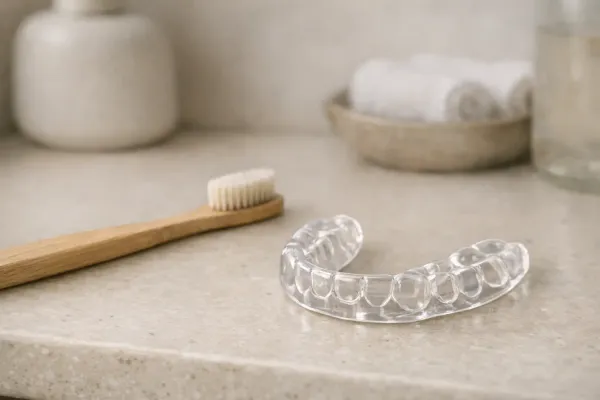
Your best option depends on what you need treatment to accomplish. A professionally assessed oral appliance may protect your teeth from grinding-related wear, but it does not necessarily eliminate the activity producing that wear.
Tooth protection and reducing clenching are different goals. You may still need an appliance even if another treatment reduces pain or muscle force. Conversely, an appliance that protects your teeth may not relieve every jaw symptom.
You also need a device that fits your situation. If an appliance increases pain or changes how your bite feels, seek reassessment rather than assuming discomfort means it is working.
NIDCR recommends starting with simple, conservative approaches for TMD and cautions against treatments that permanently change your teeth or bite without a clear reason. More invasive does not automatically mean more effective.

Biofeedback and habit changes for awake bruxism
If you clench while awake, awareness strategies can help you notice patterns. Reminders, tracking situations that trigger jaw bracing, and practicing a relaxed resting position may be part of your plan.
Biofeedback uses information about muscle activity to help you recognize and change it. Its purpose differs from an injection: you are learning to respond to a pattern rather than directly weakening the muscle.
Ask what evidence supports a particular biofeedback device or program. Results for awake bruxism do not automatically apply to sleep bruxism, and an app notification cannot coach you through every stage of sleep.
Selected physical therapy approaches may address jaw movement, muscle discomfort, and function. Your diagnosis should guide the exercises or manual treatment. More stretching or harder exercise is not always better for an irritated jaw.
Stress-management strategies may help when stress contributes to your pattern, but stress is not the sole explanation for all bruxism. Treating a coexisting sleep disorder may also be important without guaranteeing that clenching stops.
Questions to ask before choosing injections
Use your consultation to agree on a measurable goal, not just a procedure. Bring these questions:
- What is my diagnosis, and how confident are you about it?
- Which research is most relevant to my symptoms?
- What improvement should we measure: pain, eating comfort, muscle activity, or something else?
- Will I still need a separate plan to protect my teeth?
- What are my personal risks, including chewing weakness or facial changes?
- Which alternatives have I tried, and were they used appropriately?
- When will we reassess, and what would make us stop?
- Who should I contact if I develop a problem?
- What will treatment, follow-up, and possible repeat visits cost?
Repeat-visit costs matter because an initial improvement is not a promise of a permanent solution. Ask about the financial plan alongside the medical one, without committing to an automatic series before you know how you respond.
You should also know what counts as an unsuccessful trial. If pain does not improve, chewing becomes harder, or the benefit does not justify the trade-offs, repeating the same treatment should not be the default.
Conclusion: Weigh Botox Relief Against the Safety Gaps
Botox for jaw clenching may be an option for selected adults, particularly when persistent symptoms have not responded adequately to conservative care. Placebo-controlled research suggests possible benefits, including reduced contraction intensity and improvement in some reported symptoms. It does not establish a cure or settle long-term safety.
Weakening your jaw muscles is not the same as treating the drivers of clenching. You may still need tooth protection, help with awake habits, assessment of jaw pain, or evaluation of sleep symptoms.
Chewing weakness and facial changes are meaningful trade-offs. Repeated long-term treatment also leaves unanswered questions. Animal jawbone findings raise research concerns rather than proving equivalent harm in humans.
Your next step is a diagnosis-led appointment with a qualified dental or medical professional. Bring a medication list, a brief symptom record, and any observations about snoring or sleep. Agree on what improvement would count, which alternatives make sense, and when treatment should be reassessed before you book injections.