DIY Night Guard: Can Homemade Options Be Safe and Effective?
Is a DIY night guard safe? Compare homemade, store-bought, and custom options, explore the evidence, and learn when to see your dentist.
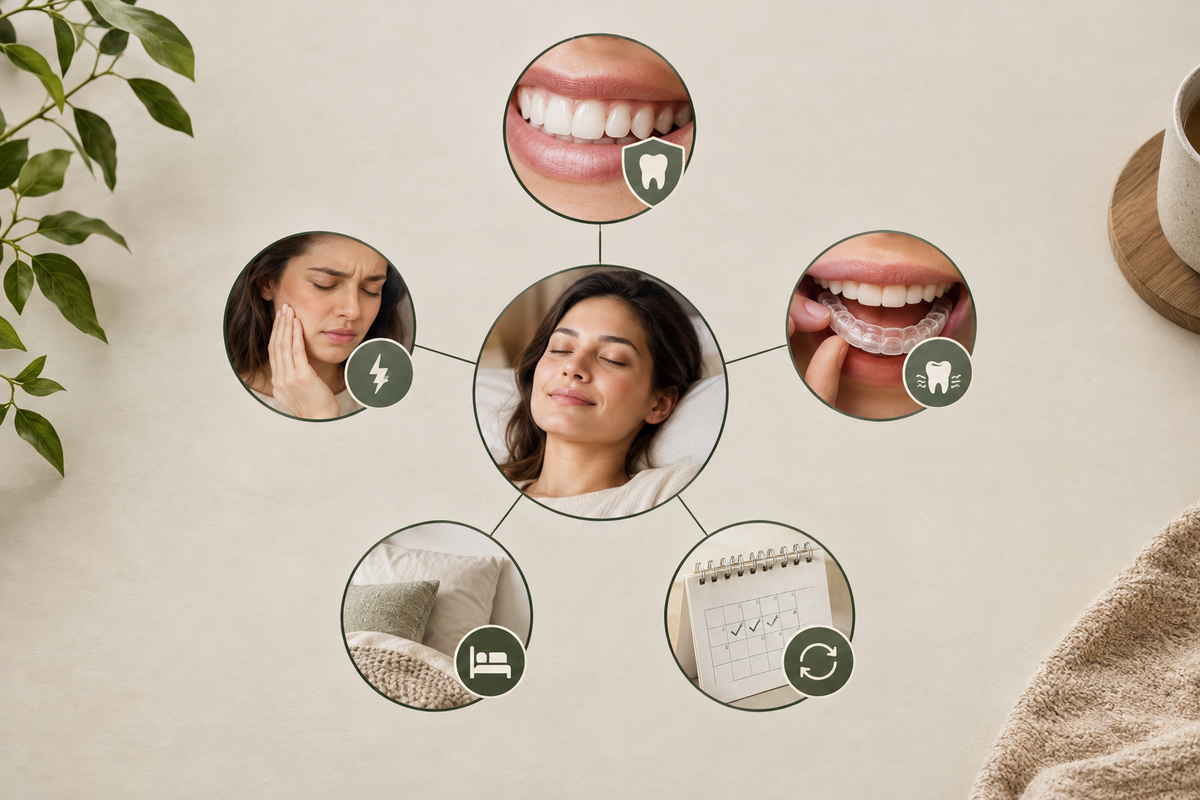
Research on a DIY night guard starts with an important distinction. “Over-the-counter bite splints: A randomized controlled trial of compliance and efficacy” studied manufactured appliances, not objects made from household materials. The Cochrane review “Occlusal splints for treating sleep bruxism (tooth grinding)” also examined dental appliances. Neither establishes that a homemade substitute is safe to sleep with.
The short answer: an improvised homemade guard is not an evidence-supported alternative to a manufactured appliance. A commercial guard fitted at home is a separate category. Whether one suits you depends on its design, fit, and your dental health, not simply whether the package says “custom fit.”
Before you compare prices or heat up a boil-and-bite product, it helps to know what a guard can realistically do. Protecting your teeth, easing jaw pain, and stopping grinding are different goals. One mouthpiece does not automatically deliver all three.
What Counts as a DIY Night Guard, and Is It Safe?
Homemade materials are not the same as an at-home fitting kit
“DIY night guard” can mean several different things. That makes online advice confusing, especially when a dental product and a craft-table experiment appear in the same search results.
- Improvised homemade guards: Objects shaped from household plastics, craft materials, adhesives, or other materials not intended for nighttime dental use.
- Manufactured over-the-counter guards: Purpose-made products you buy without an individualized dental prescription. Some are ready-made. Boil-and-bite versions are fitted at home according to their instructions.
- Dentist-supervised custom guards: Appliances made for your teeth after a professional assessment, with opportunities to check tooth contact, adjust the fit, and monitor problems.
Mail-order impression kits add another category. You take an impression at home, then a company makes an appliance. That is different from molding a boil-and-bite guard yourself.
The level of professional oversight varies by service. Ask whether a licensed dental professional reviews your dental health, impression, and final fit. Your teeth are not a craft project, and “made for you” does not necessarily mean “clinically checked.”
Why tooth protection is different from treating bruxism
Sleep bruxism is jaw-muscle activity during sleep that can involve grinding or clenching your teeth. You may not notice it until a partner hears grinding or your dentist spots possible damage. Worn teeth alone do not show how much grinding is happening now or identify its cause.
A guard puts a barrier between your upper and lower teeth while you wear it. That does not necessarily stop the muscle activity or address contributing factors.
The review “Sleep bruxism: an overview for clinicians” explains why assessment and management involve more than choosing a mouthpiece. You need to distinguish managing possible consequences, such as tooth damage, from reducing grinding itself.
What Research Says About Night Guard Effectiveness
The evidence does not support a simple promise that every night guard stops grinding. In “Occlusal splints for treating sleep bruxism (tooth grinding),” the Cochrane reviewers found insufficient evidence to establish that splints effectively treat sleep bruxism. They also noted a possible role in protecting teeth, while calling for better research.
That review is older, so it should not stand alone. The later review “Managements of sleep bruxism in adult: A systematic review” examined several treatment approaches and highlighted limitations in the evidence. Differences in appliances, measurements, and follow-up make broad comparisons difficult.
In plain language: ask “effective for what?” before accepting “clinically proven” as an answer.
Protecting teeth, easing pain, and reducing grinding are different outcomes
When you read a claim about night guard effectiveness, separate these five outcomes:
- Tooth wear or damage: Does the appliance reduce further wear, chips, or damage to fillings and crowns? Reliable answers need suitable measurements and enough follow-up.
- Jaw pain: Does your discomfort improve? Pain relief matters, but it does not prove that nighttime grinding has decreased.
- Measured grinding activity: Do recordings show changes in jaw-muscle activity during sleep? That is different from asking whether you feel better.
- Comfort: Can you tolerate the appliance without new symptoms?
- Consistent use: Do you actually wear it as advised? An appliance left in a drawer cannot provide a physical barrier.
These outcomes can change independently. You could feel less sore without a clear reduction in muscle activity. You could also find a guard comfortable without having evidence that it prevents long-term tooth damage.
This does not make guards pointless. It means your expectations should match the outcome being measured, and your dentist should help define what success looks like for you.
What over-the-counter guard research can tell you
Gerstner and colleagues’ “Over-the-counter bite splints: A randomized controlled trial of compliance and efficacy” is relevant because it specifically studied manufactured OTC appliances. It is not a test of everything sold online, much less homemade substitutes.
Its findings need to stay tied to the tested products, fitting process, participants, outcomes, and follow-up. A result for one appliance cannot establish that another product with different tooth coverage or retention works the same way.
For shopping decisions, the practical lesson is to look beyond a generic “research-backed” label. Ask which product was studied, what improved, and whether the findings apply to the appliance you are considering.
Why homemade mouth guard claims outrun the evidence
The research discussed here does not establish the safety or effectiveness of improvised household-material guards. Evidence about a manufactured splint cannot simply be transferred to a different material and shape.
Personal testimonials do not close that gap. “I slept with it and felt fine” tells you little about repeated exposure, tooth movement, bite changes, or whether grinding continued.
Studies of temporomandibular disorders, or TMD, also answer a partly different question. TMD includes conditions affecting the jaw joints and chewing muscles. An improvement in jaw pain does not automatically demonstrate reduced sleep bruxism.
DIY Mouth Guard Safety: Where Homemade Options Can Go Wrong
Materials intended for crafts are not intended for overnight oral use
The central issue in DIY mouth guard safety is intended use. An object worn overnight faces saliva, warmth, repeated biting forces, and prolonged contact with your mouth.
Household plastics, craft resins, adhesives, and improvised molding compounds are not necessarily tested or manufactured for those conditions. Their ingredients, surfaces, and strength may be unsuitable for use as a dental appliance.
That does not mean every non-dental material has been proved toxic. It means you cannot assume it is appropriate. “Food safe” is not the same claim as suitable for hours of overnight use under biting pressure.
Smell, appearance, and a few comfortable minutes in your mouth cannot establish safety either. An online fabrication video is not a substitute for material testing and a dental assessment.
Poor fit can mean pressure, irritation, or a loose appliance
Fit is more than whether a guard stays in your mouth. It includes how the appliance contacts your teeth, whether it presses on your gums, and whether your teeth meet it evenly.
Possible problems include:
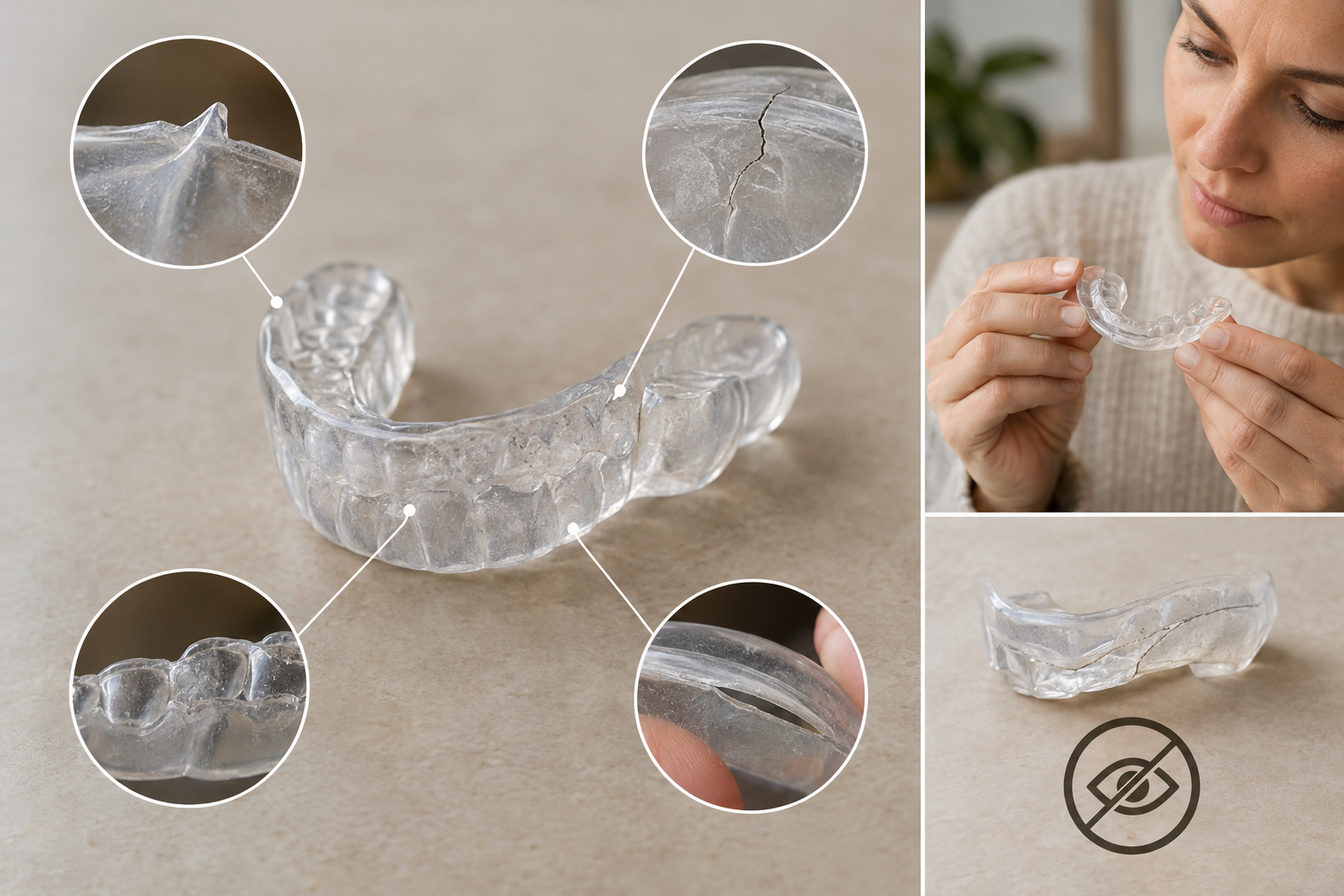
- Gum or cheek irritation from rough surfaces, sharp edges, or excess pressure.
- Uneven pressure that makes particular teeth or jaw muscles uncomfortable.
- New or worsening jaw pain.
- Changes in how your teeth meet, especially with unsuitable designs or prolonged use without monitoring.
- Loosening, cracks, or breakage that make continued wear unsafe.
Partial-coverage appliances deserve particular caution. When a device covers only some teeth, unwanted tooth movement or bite changes can occur, especially with prolonged use. Some partial-coverage designs have professional uses, but that does not make them suitable for unsupervised nighttime wear.
A loose appliance or broken fragment may also pose a swallowing or airway hazard. The studies discussed here do not quantify those risks for homemade guards. Attaching a percentage would be guesswork. The practical advice is simpler: do not sleep with something unstable or damaged.
Cleaning cannot fix an unsafe design
A clean appliance can still fit badly. Cleaning cannot correct uneven contact, repair cracks, make unsuitable materials appropriate, or prove that a guard will stay secure.
For a manufactured appliance, follow its specific care instructions. Do not assume that hot water, cleaning tablets, or household cleaners are suitable for every material. Some methods can damage or distort a guard.
Ask about replacement if the appliance becomes damaged or its fit changes. Avoid trimming, reheating, or reshaping it beyond what the manufacturer permits. If you are trying to fix pain or a bite problem, contact a dentist rather than repeatedly modifying the guard.
Homemade vs. Store-Bought vs. Custom Night Guards
Once you separate material safety from fit and clinical care, the options become easier to compare. Focus on what you receive: the appliance, the assessment, fitting help, adjustments, and follow-up.
- Improvised homemade guard: The materials are not established as suitable for this use. Fitting and alterations are self-directed, with no built-in professional assessment or monitoring. The apparent upfront cost may be low, but it does not account for problems or delayed care.
- OTC boil-and-bite guard: This is a manufactured product fitted at home. Check that its stated purpose includes nighttime grinding. An individual dental examination is generally not included. Adjustments are limited to what the instructions allow, and dental follow-up usually needs to be arranged separately. Upfront cost is generally lower than dentist-supervised custom care.
- Mail-order custom guard: A company makes the appliance from your impression or scan. Professional review, adjustment services, and follow-up vary. Prices may fall between OTC products and office-based care, but compare the included services rather than the plastic alone.
- Dentist-supervised custom appliance: The design and materials are selected after a professional assessment. Impressions or scans guide fabrication, and clinical adjustments and follow-up can be included or arranged. Upfront cost is generally higher because you are paying for assessment and care as well as an appliance.
Boil-and-bite guards: accessible, but fit still matters
A manufactured OTC guard may be an option to discuss with your dentist, but manufactured does not automatically mean suitable for you. Read the intended use, warnings, and fitting instructions before buying.
Sports mouthguards are designed primarily for impact protection. They are not automatically interchangeable with appliances intended for nighttime grinding.
Material softness alone also cannot tell you whether a guard will help. It is not accurate to claim that every soft guard worsens grinding. Design, fit, symptoms, and individual response matter.
If you cannot achieve a secure, comfortable fit within the product’s instructions, do not improvise a workaround. Ask the manufacturer about its return policy and seek dental advice before sleeping with it.
Mail-order guards: check who reviews your fit
Ask whether a licensed dental professional evaluates your teeth and bite, rather than only checking whether your impression can be used to manufacture a guard.
Before ordering, find out:
- What dental information the service reviews and who reviews it.
- Whether your existing dental work or orthodontic treatment affects eligibility.
- How the finished appliance’s fit and tooth contact will be checked.
- What happens if it feels uneven, causes pain, or is difficult to remove.
- Whether adjustments, remakes, refunds, and follow-up have separate costs.
A remake policy can be useful. It is not the same thing as a clinical examination.
Dentist-made guards: assessment, adjustment, and follow-up
Professional assessment allows a dentist to check existing dental work, loose teeth, gum disease, jaw symptoms, and ongoing orthodontic treatment before recommending an appliance. These situations make individualized advice especially important.
You can also ask what the proposed design is meant to achieve. Is the main goal to limit tooth-to-tooth contact, manage symptoms, or address another diagnosed problem? Clear goals make follow-up more useful.
Custom does not automatically mean symptom-free, and it does not mean bruxism is cured. The research does not justify declaring one category best for every person and every outcome.
Still, a lower sticker price is not a saving if a poorly fitting product delays needed care. Compare the full plan, not just the object in the case.

How to Choose a Safer Night Guard and Know When to Get Help
Ask what your symptoms actually need
Start with the problem, not the shopping cart. Morning soreness, worn teeth, and headaches do not by themselves identify one cause or one best appliance.
A dental assessment can help distinguish possible grinding damage from other causes of pain or wear. Tell your dentist when symptoms began, whether they are changing, and whether you clench while awake. Bring any guard you already use so its fit and condition can be reviewed.
Use this checklist to make your next step practical:
- Arrange an assessment if symptoms persist or you notice tooth damage.
- Ask whether an OTC option is reasonable for your teeth, dental work, and symptoms.
- Clarify how fit will be checked, including retention and contact between your teeth and the appliance.
- Agree on follow-up. Find out when to return and whom to contact if problems develop.
- Discuss access and cost. Dental school clinics, community clinics, or payment options may help, although availability and eligibility vary.
Regular sleep routines, support for stress, and awareness of daytime clenching may belong in a broader management plan. They are not established cures for sleep bruxism.
If you think symptoms started after a medication change, tell the prescriber. Do not stop prescribed medicine on your own. The review “Managements of sleep bruxism in adult: A systematic review” reinforces why appliance choice is only one part of the discussion.
Stop wearing a guard that causes new problems
Stop using the appliance and contact a dentist if you develop new bite changes, worsening jaw pain, sores, instability, or difficulty removing it. Do not keep wearing it in the hope that your teeth will “get used to” a bad fit.
A guard should not require forceful removal. If it becomes stuck, seek dental help rather than pulling hard or using sharp tools.
A suspected cracked tooth, significant swelling, or severe pain calls for prompt dental care rather than another guard purchase. Difficulty breathing or swallowing requires emergency medical attention.
Do not overlook possible sleep apnea
Loud snoring, witnessed breathing pauses, or marked daytime sleepiness warrant a medical or sleep evaluation. Mention these symptoms even if grinding is what first caught your attention.
A standard night guard does not diagnose or treat obstructive sleep apnea. It is not the same as a prescribed mandibular advancement device, which positions the jaw as part of sleep-apnea treatment.
If you already use a sleep-apnea appliance or positive airway pressure therapy, discuss any additional mouthpiece with your treating clinician. Do not replace prescribed treatment with a grinding guard.
As “Sleep bruxism: an overview for clinicians” explains, grinding belongs within a wider clinical picture. A one-size-fits-all mouthpiece is not a one-size-fits-all solution.
Conclusion: Skip the Homemade DIY Night Guard, Not the Evaluation
The research discussed here does not establish improvised homemade guards as safe or effective substitutes for manufactured appliances. Fitting a purpose-made product at home is different from making one out of household materials.
The Cochrane review “Occlusal splints for treating sleep bruxism (tooth grinding)” and later research also support a key distinction: putting a barrier between your teeth is not the same outcome as stopping grinding. Neither a low price nor a custom label answers every question about effectiveness.
You do not need a craft experiment or a blanket rule against every OTC guard. Get persistent symptoms and tooth damage assessed, choose an appropriate appliance, and arrange suitable follow-up.
Stop using anything that causes pain, instability, or changes in your bite. The goal is sensible protection and appropriate care, not simply putting something between your teeth.