Why Do My Teeth and Jaw Hurt After Wearing a Night Guard?
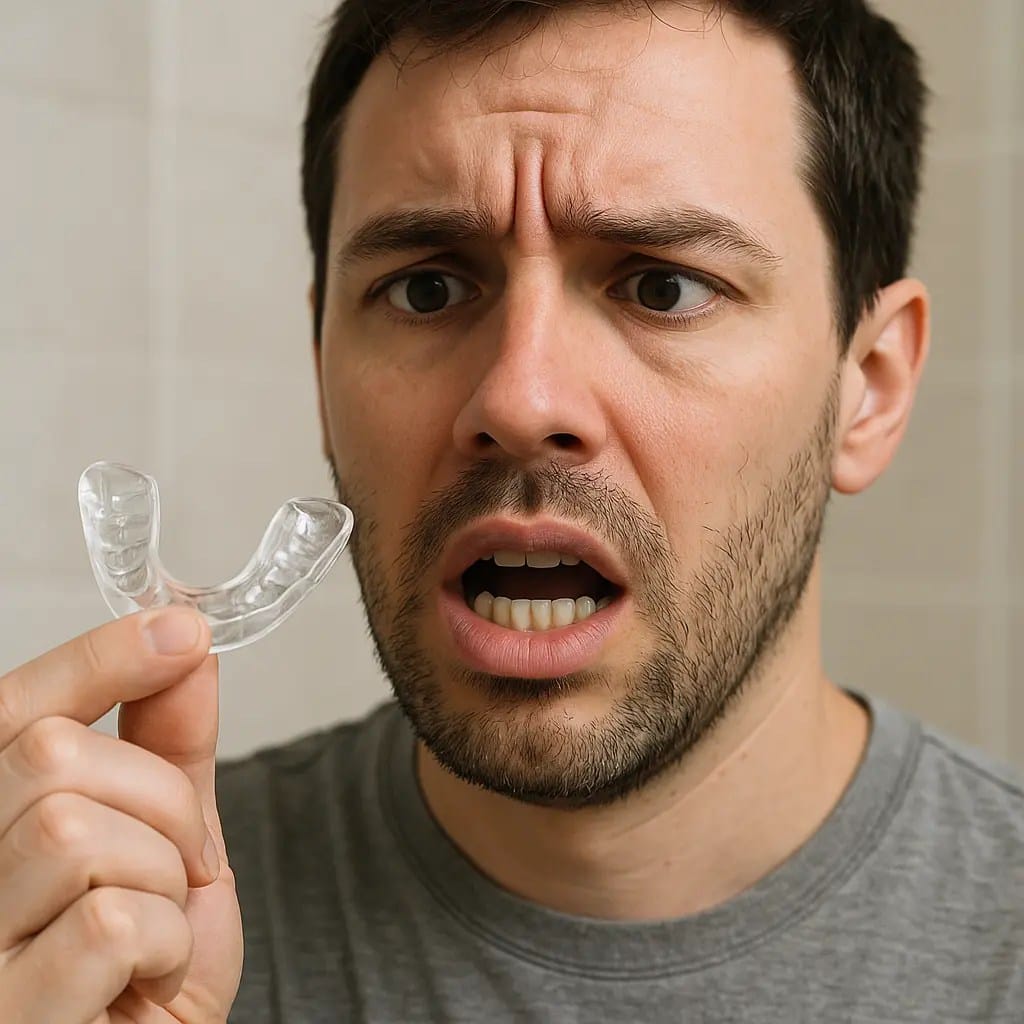
A night guard should feel like nothing. Slightly odd for the first few nights, then unremarkable. If you are waking up in more pain than you went to bed with, something is wrong, and in most cases it is the guard rather than you.
Almost every page on this subject gives you a list of ten possible causes and leaves you to guess. That is not much use at 6am with an aching jaw. So this one is organised the way you would actually work it out: where it hurts, and when. Those two answers narrow it to one or two causes almost every time.
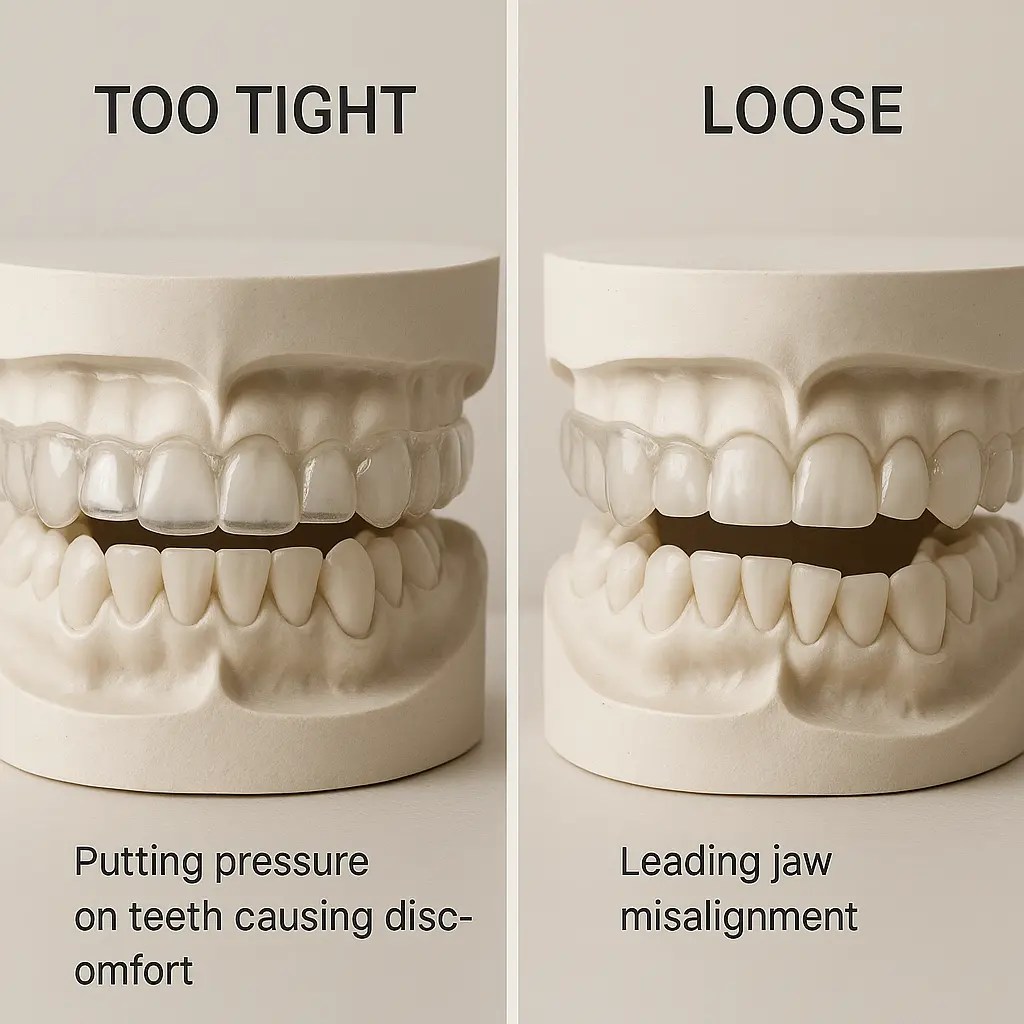
Start here: where does it hurt?
| Where it hurts | Most likely cause | What fixes it |
|---|---|---|
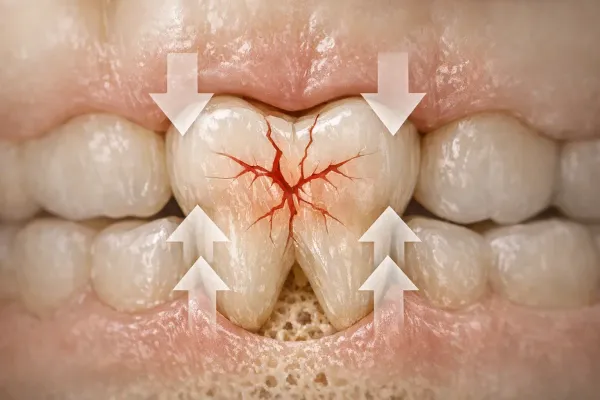
| One specific tooth, sharp | A high spot. The guard contacts that tooth first and it takes the whole load | A lab adjustment. Do not file it yourself |
| Front teeth, dull and achy | Guard too short at the back, so the front takes the force | Remake with full-arch coverage |
| All teeth, general tenderness | Normal adaptation, if it is fading week on week | Time, usually 1 to 2 weeks |
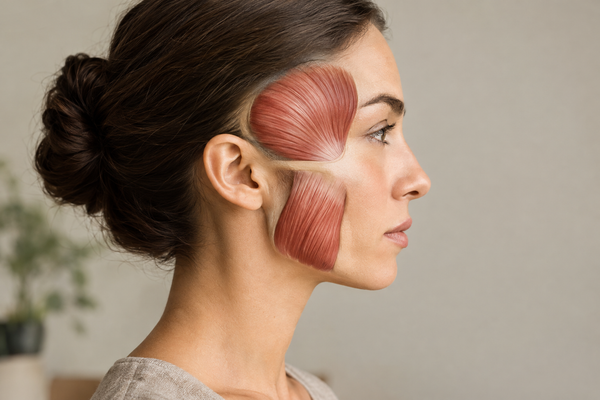
| Jaw muscles, sides of the face | Often a soft guard giving the muscles something to chew against | Switch to hard or dual laminate |
| The joint itself, in front of the ear | Bite being repositioned, or an existing joint problem | See a dentist, not a shop |
| Gums, sore or cut | Edges too long or rough | Trim by the lab |
Then: when does it hurt?
- Worse in the first week, improving after: adaptation. Your jaw is adjusting to a new resting position and the ligaments around the teeth are unused to the contact. This is the one kind of pain that is genuinely normal.
- Same every morning, not improving after two weeks: a fit problem. Adaptation plateaus. Persistent identical pain does not.
- Started suddenly after months of comfort: something changed. New dental work is the usual culprit, because a crown or filling alters the shape the guard was molded to. So is a guard that has worn thin or distorted.
- Worse on nights you are stressed: you are clenching harder, and the guard is doing its job. That is muscle fatigue rather than a fault.
If your pain started after dental work, that is its own situation: the guard no longer matches your teeth and will load them unevenly. Same if the guard is simply old, which we cover in how long a night guard should last.
Can a night guard make TMJ worse?
Yes, the wrong one can. This deserves a straight answer because the internet mostly offers two bad ones, either "guards are miracle devices" or "guards ruined my bite".
The mechanisms that are actually plausible:
- Soft guards and muscle activity. There is reasonable evidence that soft, chewy material invites some people to grind against it, increasing muscle activity rather than reducing it. If your jaw muscles ache more since starting a soft guard, that is the first thing to change.
- Partial coverage. A guard covering only some teeth lets the uncovered ones keep contacting and, over long periods, move. Full-arch coverage avoids this, which is why most dentists prefer it.
- A poor fit loading unevenly. A guard that rocks concentrates force somewhere it was never meant to go.
What this does not mean is that guards are bad. It means material and fit are not details. A hard or dual laminate guard covering the full arch, made from an accurate impression, is a very different object from a $20 boil-and-bite that has been reshaped by six months of chewing.
We should say plainly: we are not dentists and this is not dental advice. If your jaw locks, clicks painfully, or is getting worse rather than better, that is a professional appointment, not a purchase.
What to do about it, in order
- Give it two weeks, but only if the pain is getting better rather than staying level. Track it, because memory is unreliable at 6am.
- Look at the guard in daylight. Thin patches, a hole, rough edges or a surface that has gone chalky all mean the guard is finished rather than misbehaving.
- Check it seats properly. It should click into place and stay put when you tug gently. If it rocks, the fit is gone.
- Ask for an adjustment. Any decent lab will relieve a high spot, and most will do it free inside a set window. This single step fixes a large share of night guard pain.
- Change material before you give up. Soft to dual laminate, or dual laminate to hard, is the most common successful fix for muscle pain.
- See a dentist if the pain is in the joint, if it is worsening, or if your bite feels different during the day.
Two things not to do: never file, sand or trim a guard yourself, because you will change how it loads in ways that are hard to undo, and never reheat a custom guard to remold it, which destroys the fit you paid for.
When a new guard is the answer
If the guard is worn through, badly fitted from the start, made of the wrong material for how hard you grind, or predates dental work you have had since, adjustment will not save it.
What we would replace it with
Pro Teeth Guard is a real dental lab selling direct, at roughly a third of what a dentist charges. The reason we point people here specifically for a pain problem is the risk profile: four thicknesses so you can match the material to how hard you actually grind, free adjustments if the fit is off, and a 60-day 110% money-back guarantee.
That last part matters when you have already paid for one guard that hurt. If the replacement is no better, you get back more than you paid.
Check current pricing at Pro Teeth Guard
Affiliate link. If you buy through it we earn a commission, at no extra cost to you. How this works.
Frequently asked questions
Is it normal for a night guard to hurt at first?
Mild, general tenderness across the teeth for the first week or two is normal adaptation. Sharp pain in one tooth, cut gums or joint pain are not, at any stage.
How long should it take to get used to a night guard?
Most people adapt within one to two weeks. If you are at three weeks with no improvement, stop waiting and get it looked at.
Why do my front teeth hurt after wearing a night guard?
Usually because the guard does not extend far enough back, so the front teeth absorb force meant to be spread across the whole arch. That is a coverage problem and needs a remake rather than an adjustment.
My bite feels different during the day. Should I worry?
Raise it with a dentist reasonably promptly. A transient odd feeling for the first half hour after removing the guard is common. A bite that still feels wrong hours later, or is changing over weeks, is worth a professional look.
Can I file down the sore spot myself?
Please do not. You cannot see where the guard is contacting first, and removing material in the wrong place makes the loading worse while voiding any remake terms you had.
Should I switch to a softer guard if it hurts?
Counter-intuitively, usually the opposite. Soft material is more comfortable to bite into, which is precisely the problem for some grinders. If your pain is muscular, harder material is more often the fix. See our comparison of guard types.