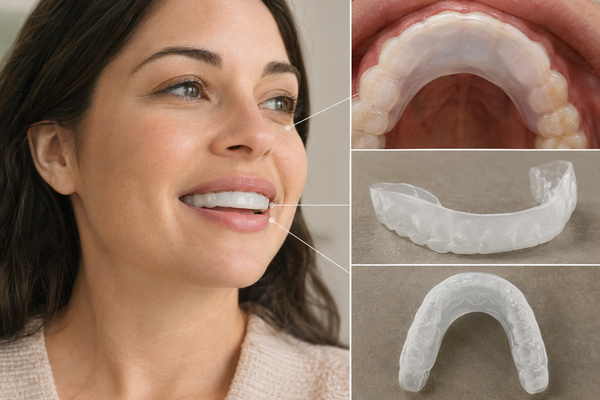
Night Guard Microplastics: Are You Ingesting Them?
Could your night guard shed microplastics? Explore what research shows, what remains unknown, and practical ways to care for your dental appliance.

Research on night guard microplastics raises a fair question: could the plastic appliance protecting your teeth also release tiny particles into your mouth? The review “Plastic and Human Health: A Micro Issue?” by Stephanie Wright and Frank Kelly explains why particle size, exposure, and movement through the body matter when studying potential health effects. It does not test night guards or establish that wearing one causes illness.
The direct answer is qualified: wear could release particles from a plastic dental appliance, but that possibility does not tell you how much you swallow or whether it affects your health. You deserve an explanation that separates a plausible concern from a measured risk, without turning your bedside appliance into a horror movie prop.
Night Guard Microplastics: What Does the Research Actually Show?
Three questions guide a useful assessment: does an appliance release plastic particles, how much reaches your body, and does that exposure cause harm? Evidence answering one question does not automatically answer the others.
The sources discussed here provide context on plastic exposure and dental treatment. They do not establish a typical nightly dose of microplastics from a night guard. They also do not support ranking all guard materials from safest to riskiest.
What researchers have studied in dental appliances
Dental-material research can examine surface wear, chemical release, strength, and biological responses. These are related topics, but they measure different things. A study showing that a material becomes rougher does not necessarily identify or count plastic particles released from it.
Laboratory experiments can help explain how materials behave under controlled conditions. Researchers may expose samples to repeated loading, temperature changes, or liquids designed to mimic parts of the oral environment. These tests are useful, but they cannot reproduce every feature of months spent in your mouth.
A systematic review collects and evaluates existing studies using a defined search and selection process. Its conclusions depend on the quality and relevance of those studies. A review focused on clear aligners, for example, cannot replace direct testing of night guards.
Studies involving actual users could help establish real-world exposure. Linking that exposure to health outcomes would require further work, including suitable comparison groups and attention to other sources of plastic particles.
Why aligner findings do not automatically apply to your night guard
Clear aligners and night guards share a location, not necessarily a material or a job description. Aligners move teeth. Night guards generally provide a barrier between them. Their thickness, manufacturing methods, surface finishing, and wear schedules can differ substantially.
A result involving one thin aligner material cannot establish the shedding rate of a thicker acrylic-type splint. Nor can it establish what happens with a soft or layered guard.
Your grinding forces, cleaning habits, appliance age, and fit may also affect wear. Before applying an aligner finding to your guard, you need to know whether the materials and conditions are meaningfully similar.
What we still cannot measure with confidence
A useful particle measurement must distinguish plastic from other debris, account for contamination during testing, and identify the sizes the method can detect. Otherwise, researchers may count background contamination or miss smaller particles.
Studies also need to report results in comparable ways. A particle count, total particle mass, and percentage of surface damage are not interchangeable measurements.
The evidence discussed here does not provide a reliable nightly ingestion estimate for night-guard users. That uncertainty is not proof of zero exposure. It means a precise number would suggest more confidence than these sources support.
How Could Microplastics in Dental Appliances Reach Your Mouth?
Grinding, saliva, and everyday material wear
Microplastics are generally described as plastic particles smaller than 5 millimeters. Lower size boundaries vary across studies. Nanoplastics are smaller still, although their definitions also vary. Those differences matter because a test that detects larger fragments may miss much smaller particles.
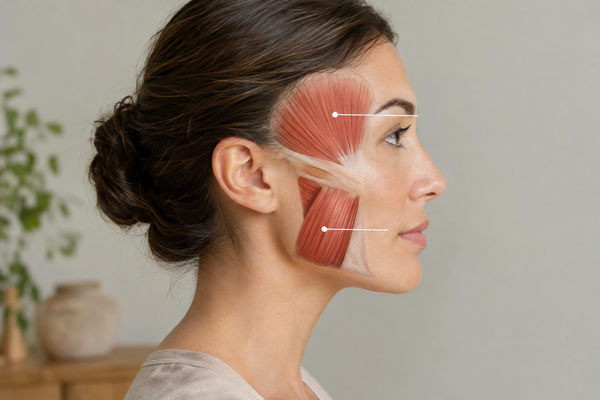
Your mouth is a demanding environment for an appliance. Teeth apply repeated loads, and opposing surfaces rub together. Saliva keeps materials wet. Temperature and acidity can change, particularly if you eat or drink while wearing an appliance against its instructions.
These conditions can affect a polymer's surface over time. They offer plausible explanations for wear, not proof that every guard releases the same amount or type of plastic.
Even visible material loss does not reveal exactly where that material went. Measuring exposure requires collecting and identifying released particles, rather than estimating ingestion from a worn patch alone.
Particle shedding is not the same as chemical leaching
Solid plastic particles and dissolved chemicals are different forms of exposure. Shedding means fragments separate from a material. Leaching means substances, such as residual building blocks or additives, move out of a material into surrounding fluid.
A study detecting a dissolved chemical does not automatically demonstrate microplastic release. Finding particles also does not tell you which chemicals, if any, dissolved from them.
Researchers need suitable methods for each question. Lumping both processes together under “plastic toxins” may sound dramatic, but it hides the details you need to judge the evidence.
Swallowing particles is not the same as absorbing them
If your appliance releases particles into saliva, some may be swallowed. That is a possible route of exposure, not a measured nightly dose. Swallowing also does not mean every particle crosses your gut lining and enters your tissues.
Wright and Kelly's “Plastic and Human Health: A Micro Issue?” discusses why particle properties and biological barriers matter. It provides background for understanding exposure, not a calculation of your night guard's risk.
Release, ingestion, absorption, and illness are separate steps. Each requires evidence. Skipping those steps can make a laboratory finding sound much more conclusive than it is.
What Do These Findings Mean for Night Guard Safety?
What inflammation findings can and cannot tell you
Researchers studying particles may examine immune cells, inflammation, or changes in cell function. Such experiments can identify possible ways that particles affect living systems. They do not, on their own, show that wearing a night guard causes disease.
Macrophages, for example, are immune cells that help defend your body and clear damaged tissue and debris. Watching how these cells respond to particles can help researchers investigate potential hazards.
Inflammation is part of your body's response to injury or a perceived threat. Oxidative stress occurs when reactive molecules overwhelm cellular defenses. Both are meaningful biological processes, but mentioning them is not evidence that your appliance triggers them.
The key question is whether an experiment's conditions resemble the exposure you could actually receive. Without that connection, a cell response cannot be converted into a personal health forecast.
Why dose, particle size, and study conditions matter
Before interpreting an experiment, look at its model, exposure route, dose, and duration. Were researchers examining isolated cells, animals, or people? Were particles placed directly onto cells, swallowed, or delivered another way?
Particle size, shape, composition, and preparation also matter. A concentrated dose of specially prepared particles may answer a useful scientific question without representing what reaches your mouth overnight.
Human studies require caution, too. For example, “Microplastics and Nanoplastics in Atheromas and Cardiovascular Events” reported an association between plastics detected in carotid artery plaque and later cardiovascular events in a selected patient group. It did not identify night guards as the source or prove that the detected plastics caused those events.
That distinction matters: an association can raise an important research question without establishing cause. None of the studies cited here establishes a safe ingestion threshold specifically for night-guard particles.
Balancing uncertain exposure against tooth protection
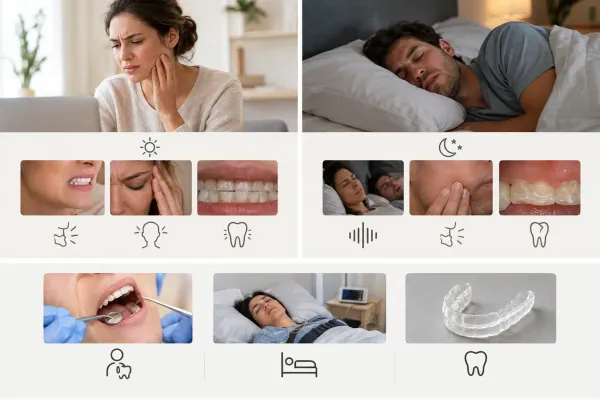
A dentist may recommend a guard to separate your teeth and help protect them from grinding-related damage. That purpose is different from stopping bruxism itself.
The Cochrane review “Occlusal splints for treating sleep bruxism (tooth grinding)” found insufficient evidence to establish effectiveness for treating sleep bruxism, while noting a possible role in protecting against tooth wear. The review is older, so it should not be treated as a complete account of current care. It does highlight an important distinction: protecting teeth is not the same as eliminating grinding.
Do not abandon prescribed treatment solely because of preliminary particle research. Discuss your tooth wear, symptoms, appliance condition, and alternatives with your dentist.
If you snore, gasp during sleep, or remain persistently sleepy, ask about a sleep evaluation. An ordinary night guard is not sleep apnea therapy. A mandibular advancement device prescribed for sleep-disordered breathing has a different clinical purpose.
Are Some Night Guard Materials Less Likely to Shed Microplastics?
Hard, soft, and dual-layer guards
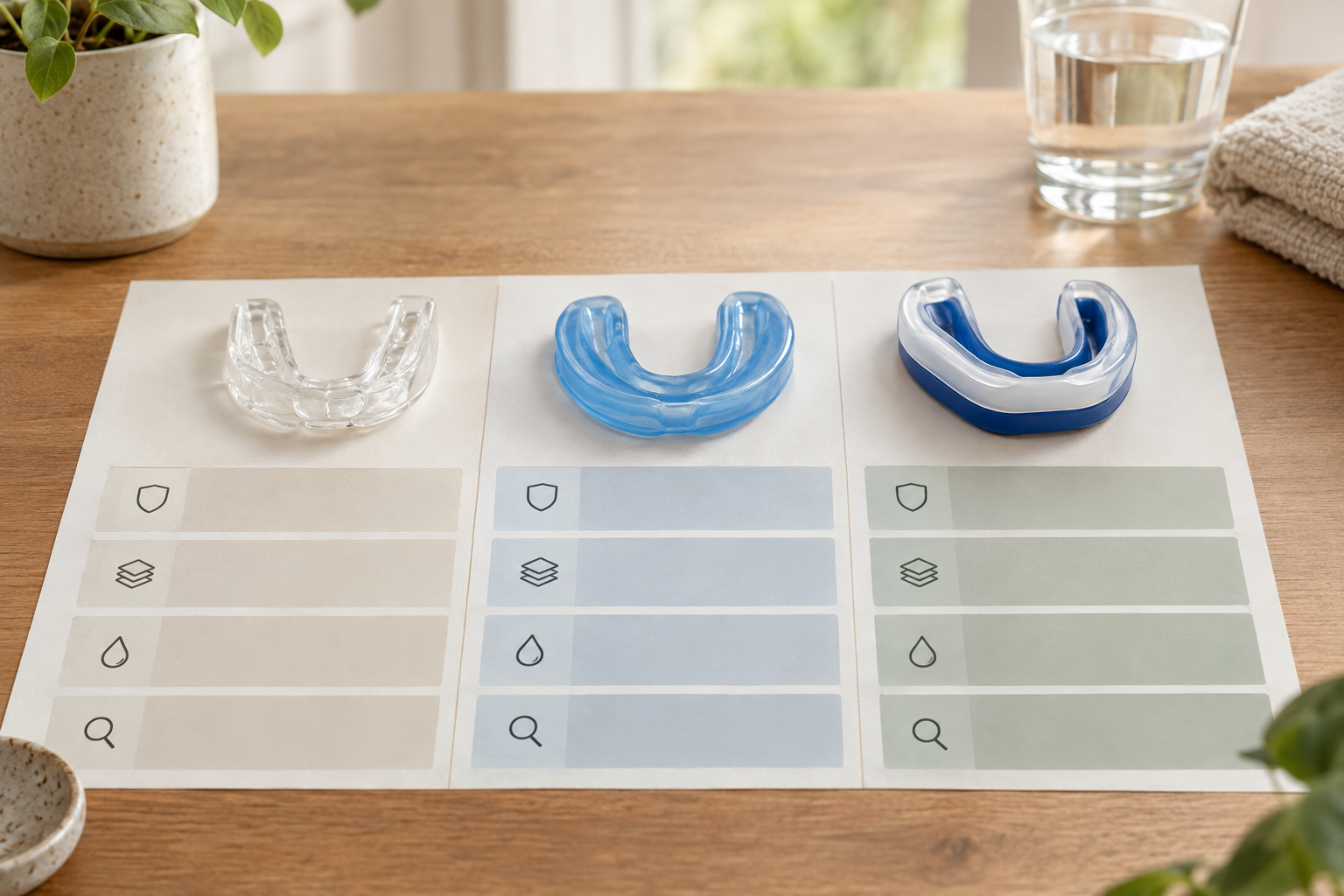
Night guards use different polymers and constructions. Hard acrylic-type appliances may contain polymethyl methacrylate, often called PMMA, or other rigid materials. Softer guards can use flexible thermoplastics. Layered designs combine materials to provide different properties at the tooth-facing and biting surfaces.
These categories are starting points, not complete ingredient lists. Two products described as “hard guards” may differ in formulation, processing, finishing, and intended use. You cannot reliably predict particle release from firmness alone.
A material that resists one type of laboratory wear may behave differently under another loading or cleaning condition. “Harder” does not automatically mean “lower exposure,” just as “softer” does not automatically mean “safer.”
The sources cited here do not establish a night-guard-specific safety ranking. Choosing a material should include its clinical suitability, not just an unsupported claim about particles.
Custom, boil-and-bite, and 3D-printed appliances
“Custom” describes how an appliance is fitted to your teeth. It is not proof of lower microplastic release. Likewise, “boil-and-bite,” “3D-printed,” and “thermoformed” describe aspects of fitting or manufacturing, not a universal health verdict.
For a printed appliance, the exact resin and processing steps matter. For a thermoformed appliance, the starting material and forming process matter. Results from one product should not be stretched to cover an entire manufacturing category.
Fit still deserves attention. A poorly fitting appliance can cause discomfort or affect how your teeth meet, regardless of any particle question. An inexpensive guard that does not work for your bite is not a bargain simply because its packaging sounds reassuring.
Questions to ask before buying a replacement
Instead of chasing an unsupported “microplastic-free” label, ask for information you and your dentist can evaluate:
- What is the exact material and product name?
- Is this appliance intended for long-term overnight use?
- What biocompatibility and wear testing supports that use?
- Does any particle-release testing involve this exact finished product?
- What cleaning methods are approved for this material?
- What changes should trigger a fit check or replacement?
“BPA-free” does not mean plastic-free or particle-free. It addresses a different question about a particular chemical.
Biocompatibility testing can provide useful information about specified biological effects under defined conditions. It does not automatically establish zero shedding or answer every question about long-term particle ingestion. Ask what was tested rather than treating a label as the whole safety file.
How to Care for Your Night Guard Without Adding Unnecessary Wear
Follow cleaning instructions, not internet chemistry
Good care helps you maintain an appliance as intended. It has not been established as a way to eliminate microplastic ingestion. Start with the manufacturer's instructions and your dentist's advice on how to clean your night guard, because suitable methods differ by material.
Avoid heat, abrasive products, and chemical soaks that are not approved for your specific appliance. Do not assume that boiling, aggressive scrubbing, bleach, alcohol, or a strong homemade mixture will make it safer. Your guard does not need a DIY chemistry experiment.
Some products require different care during initial fitting than during everyday cleaning. Instructions to heat a boil-and-bite guard for fitting, for example, are not permission to boil it every morning.
Ask what to use for routine cleaning, whether a soaking product is appropriate, and how to store the appliance. If instructions are missing or contradictory, contact the manufacturer or dental office rather than improvising.
Ordinary cleaning should not be described as removing all microplastics or nanoplastics. Neither a visibly clean surface nor a fresh smell proves the absence of particles. Hygiene and particle exposure are related concerns, but they are not interchangeable.
Check for cracks, rough edges, and changes in fit
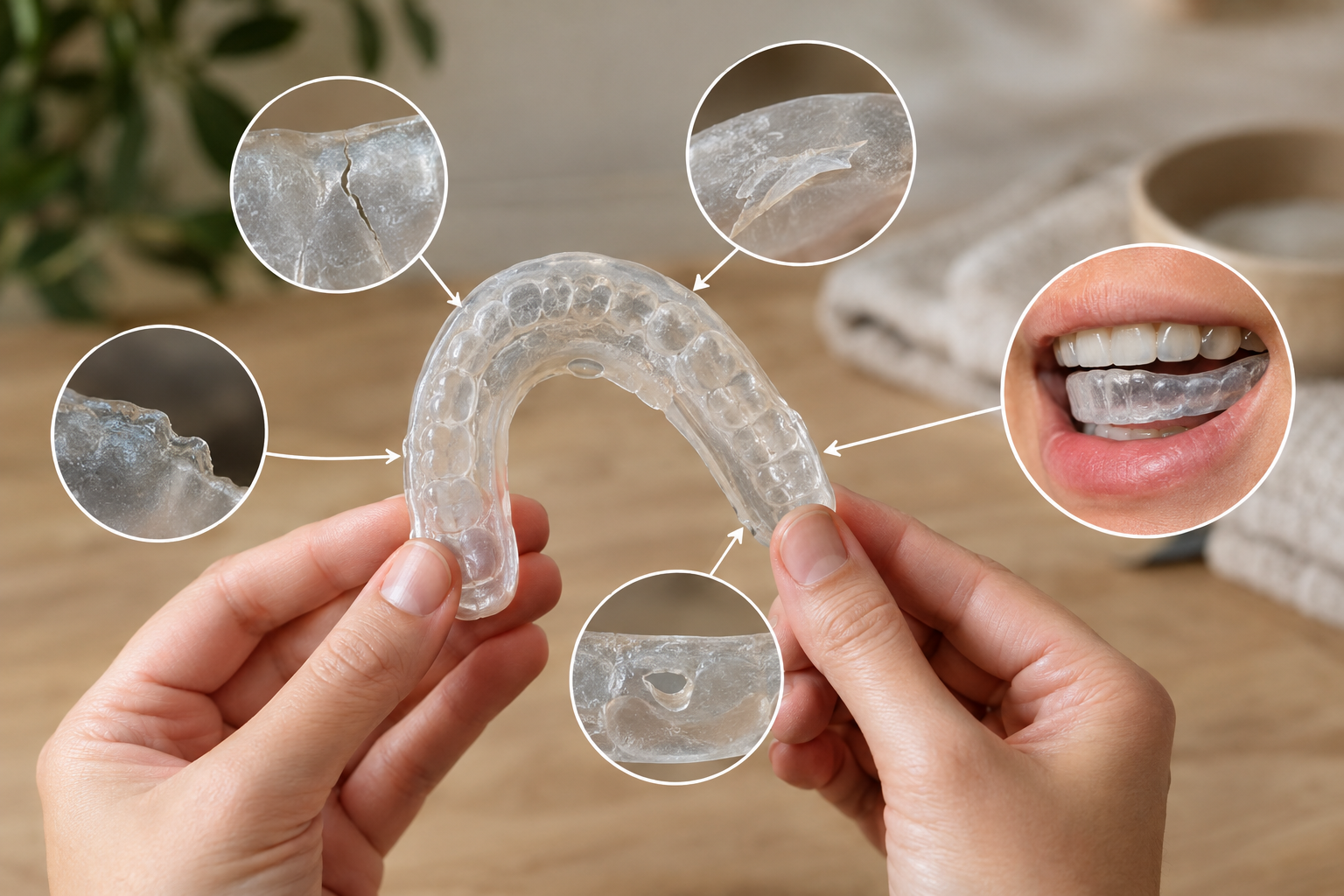
Inspect your guard regularly in good light. Look for cracks, peeling layers, rough areas, thinning, or missing material. Notice whether it feels loose, rocks on your teeth, presses differently, or has become uncomfortable.
Visible damage deserves professional attention because it may affect fit, durability, or tooth protection. It is not, by itself, a measurement of microplastic ingestion. The reverse is also true: a smooth-looking guard is not proof of zero particle release.
If part of the guard is breaking away or the appliance no longer seats properly, contact your dentist promptly for advice about continued use. Do not keep wearing a damaged appliance simply to follow your usual routine.
Do not sand, glue, trim, or otherwise repair it yourself unless your dentist specifically directs you. Changing the surface or bite contacts can create a different problem while leaving the original one unresolved.
When to ask your dentist about replacement
There is no universal replacement schedule that fits every material, grinding pattern, and appliance design. Decisions should consider condition, fit, performance, and manufacturer guidance.
More frequent replacement has not been established as a way to lower total particle exposure. Replacing an otherwise suitable guard every few months solely out of fear may add cost without a demonstrated health benefit.
Bring your guard to appointments and use this checklist:
- Material: Confirm the exact product and construction.
- Wear pattern: Ask whether the damage matches your grinding forces.
- Care routine: Review your cleaning products and storage habits.
- Fit: Report pressure, looseness, pain, or bite changes.
- Ongoing need: Reassess what the appliance is intended to accomplish.
New pain or a lasting change in your bite deserves a clinical review. Do not assume discomfort is something you must tolerate for the guard to work. Your dentist can assess whether adjustment, replacement, or a different approach is appropriate.
Bottom Line: Protect Your Teeth Without Ignoring Night Guard Microplastics
You may swallow particles if your night guard sheds them into saliva. However, the research cited here does not establish a typical ingestion dose or the resulting health risk for night-guard users. Broader findings about microplastics are not proof that every guard is dangerous.
Your next steps are practical: confirm your appliance's material, follow its specific care instructions, and have damage or fit changes assessed. Do not replace prescribed treatment with an unverified “plastic-free” promise or stop using a needed guard solely because a preliminary finding sounds alarming.
Weigh uncertain exposure against your individual need for tooth protection with your dentist. That conversation should include symptoms, grinding-related damage, appliance performance, and whether a sleep or jaw assessment is warranted.
Better guidance will require reliable particle measurements, studies of actual night guards during everyday use, and research connecting measured exposure with patient outcomes. Until then, the sensible position is neither dismissal nor panic. Protect your teeth, maintain your appliance appropriately, and keep the limits of the evidence in view.