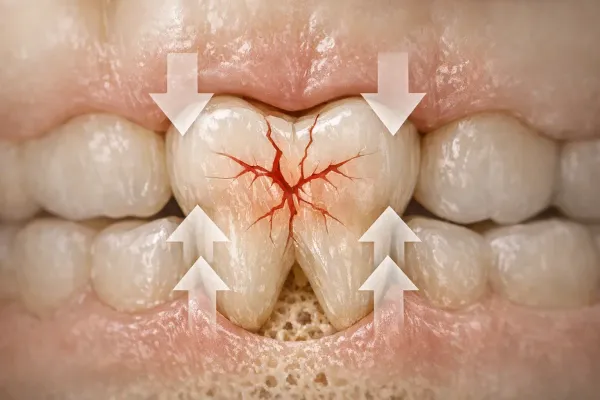
How Long Does a Night Guard Last? How to Tell When Yours Is Finished
Discover night guard lifespan by type, signs of wear, and tips to extend its life.
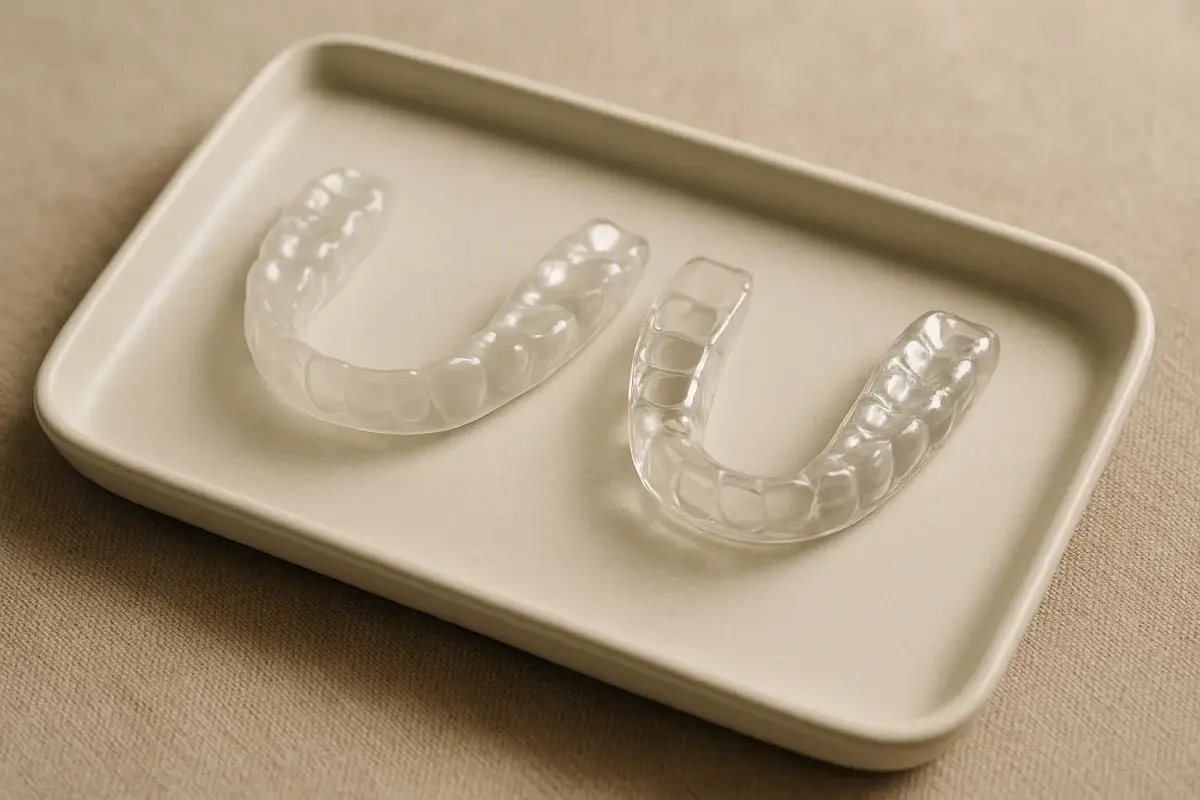
A night guard lasts somewhere between six months and five years. That range is so wide it is almost useless, which is the problem with most answers to this question.
The honest version: the type of guard sets the ceiling, and how hard you grind sets the actual number. A soft guard in the mouth of a heavy grinder can be chewed through in four months. A hard acrylic guard on a light clencher can outlast the car they bought the same year.
So the useful question is not how long night guards last in general. It is whether yours is finished right now. That is what most of this page is about.
Typical lifespan by type
These are the ranges you will see quoted by labs and dentists. Treat them as a starting point, not a schedule.
| Type | Typical lifespan | Notes |
|---|---|---|
| Over-the-counter boil-and-bite | 3 to 6 months | Soft EVA, deforms quickly. Many are sold in multipacks for a reason. |
| Soft custom (light grinding) | 6 months to 2 years | Comfortable, wears fastest. Heavy grinders can destroy one in months. |
| Dual laminate / hybrid | 1 to 3 years | Soft inside, hard outside. The usual compromise pick. |
| Hard acrylic | 3 to 5 years, sometimes longer | Most durable, least forgiving to get used to. |
If you have no idea which one you own, the quick test is to press a thumbnail into it. A soft guard dents. A hard one does not.
Why grinding intensity matters more than the type
A night guard is a sacrificial part. It is doing its job by wearing out. Every bit of thinning you can see is damage that went into plastic instead of into your enamel, which is exactly the trade you paid for.
That reframes the whole question. A guard that looks pristine after three years might mean you are a light clencher. It might also mean you are not wearing it. A guard that is visibly chewed after eight months is not a defective guard. It is evidence that you grind hard, and probably evidence you should be looking at a harder material next time.
This is also why calendar advice fails people. Replacing on a schedule you read online means some people throw away a perfectly good guard and others keep wearing a broken one for a year. Check it instead.
Seven signs your night guard is finished
Take it to a window in daylight. Dry it first, because water hides a lot.
1. You can see through it where you bite hardest
Hold it up to the light and look at the back molars, which is where most of the force lands. Thin, translucent patches mean you are close to the end. This is the earliest reliable sign, and the one most people miss because they never look.
2. There is a hole, a split, or a piece missing
This is the one to act on immediately. The concern with a perforated guard is not just that it protects less. It is that the teeth poking through can make contact and shift while the rest of your teeth are still being held apart. A guard with a hole in it can be worse than no guard at all, because it changes how your bite loads rather than simply failing to protect it.
3. It no longer snaps into place
A working guard seats with a small, definite click and stays put when you tug gently. If it rocks, slides, drops on its own, or you find yourself holding it in place with your tongue, the fit is gone. Guards distort with heat and age, and teeth move over the years too.
4. It smells even after a proper deep clean
Odor usually means bacteria, and bacteria usually means cleaning. But if you have done a genuine deep clean and the smell returns within a day or two, the odor is coming from inside the material rather than off the surface. Porous, broken-down plastic holds onto bacteria in places no soak can reach. At that point it is not a hygiene problem, it is a replacement problem. We go deeper on this in why night guards smell.
5. Cloudiness or discoloration that will not clean off
Some staining is cosmetic and normal. What matters is texture. If the surface has gone chalky, rough or crazed with fine cracks, the material itself is degrading. Run a fingernail across it. Smooth is fine, gritty is not.
6. Sharp or ragged edges
Worn guards develop rough edges that cut into the gum or the side of the tongue. If you are waking up with a sore spot in the same place every morning, check the edge above it. Do not sand it yourself. You will change the fit in ways that are hard to undo.
7. Your symptoms came back
This is the sign people rationalize away. If the morning jaw ache, the headaches or the tooth sensitivity have quietly returned after months of being fine, and you are still wearing the guard every night, the guard has probably stopped doing its job. Your body noticed before your eyes did.
One caveat worth stating plainly: returning symptoms can also mean something has changed that a new guard will not fix. We are not dentists, and this is not dental advice. If your symptoms are getting worse, or your jaw is locking or clicking painfully, see a dentist rather than buying a replacement and hoping.
The two-minute check
Do this on the first of the month. It takes longer to read than to do.
- Rinse and dry the guard.
- Hold it up to a window and look for thin or translucent patches at the molars.
- Run a fingernail over the biting surface. Feel for grit, cracks or ragged edges.
- Seat it. Does it click in and stay put without help?
- Smell it, having cleaned it the day before.
Any one of those failing is worth watching. Two or more, and it is time.
Repair or replace?
Replace. There is no meaningful home repair for a night guard, and the DIY fixes floating around are worse than the problem. Do not use superglue or any household adhesive, because you would be putting an unrated chemical in your mouth for eight hours a night. Do not reheat and remold a custom guard, because you will lose the fit that made it worth buying. Do not file the edges.
Some labs will adjust or relieve a guard that is uncomfortable but structurally sound, which is a different thing and worth asking about before you replace.
What actually shortens a night guard's life
Most premature deaths come down to heat and neglect.
- Hot water. The single fastest way to ruin one. No boiling, no dishwasher, no leaving it in a car in July. Heat warps the fit permanently.
- Storing it wet in a closed case. That is a bacterial incubator. Rinse, dry, then close the case.
- Toothpaste. Most are abrasive enough to scratch the surface, and scratches hold bacteria. Use a soft brush with mild soap, or a proper cleaner.
- Alcohol-based mouthwash soaks. Fine briefly, but long soaks can dry and craze some materials.
- Pets. Not a joke. Dogs are drawn to them and a chewed guard is a common and expensive story.
Our full routine is in how to properly clean your night guard.
What we would buy for this
Sentinel Ultrasonic Cleaner + UV Light Sterilizer, $68. Ultrasonic cleaners work by cavitation: the water carries microscopic bubbles that collapse against the surface and lift debris out of pores a brush cannot reach. That is the part of the problem soaking and scrubbing keep missing.
One honest limit. No cleaner rescues a guard whose material has already broken down. If the smell comes back within a day or two of a proper clean, you are past cleaning and into replacement territory.
Worth a look at our full Sentinel review before buying anything larger from them, but this one is low risk: there is no impression, no fitting and no remake cycle, which is where their documented problems sit.
See the Sentinel ultrasonic cleaner
Affiliate link. If you buy through it we earn a commission, at no extra cost to you. How this works.
When it is genuinely finished
The practical thing nobody mentions: order the replacement before the old one dies, not after.
A custom guard ordered from a lab takes roughly three to four weeks, because you take the impression at home and mail it in. If you wait until yours cracks, that is a month of unprotected nights, and a month of grinding is exactly what you bought the guard to avoid. When you spot the first translucent patch, that is the moment to order, not when the hole appears.
What we recommend replacing with
We use and recommend Pro Teeth Guard. It is a real dental lab selling direct, so you get the same guard a dentist would order at roughly a third of the price, with four thicknesses to match how hard you actually grind.
The reason it suits a replacement specifically is the guarantee. It is a 60-day 110% money-back guarantee, so if the new one does not fit as well as the guard you are retiring, you get back more than you paid.
Check current pricing at Pro Teeth Guard
Affiliate link. If you buy through it we earn a commission, at no extra cost to you. How this works.
If you would rather understand the whole landscape before spending anything, we compare the options in over-the-counter versus custom night guards, and break down real prices in what bruxism treatment actually costs.
Frequently asked questions
How often should you replace a night guard?
There is no universal schedule, which is why we recommend the monthly two-minute check instead. As a rough guide: over-the-counter guards every 3 to 6 months, soft custom guards every 6 months to 2 years, dual laminate every 1 to 3 years, and hard acrylic every 3 to 5 years. Heavy grinders should expect the short end of every one of those ranges.
Can I keep wearing a night guard with a hole in it?
We would not. A perforated guard lets some teeth contact while others stay separated, which changes how force is distributed across your bite. Replace it, and if there is a gap before the new one arrives, ask your dentist what they would rather you do in the meantime.
Is it bad to wear an old night guard?
An old guard that still fits, seats firmly and has no holes or thin spots is fine. Age alone is not the issue. A guard that has lost its fit or been worn through is the problem, whether that took six months or six years.
Why does my night guard smell even though I clean it?
If a genuine deep clean does not fix it for more than a day or two, the material has become porous and is holding bacteria internally. That is a replacement signal rather than a cleaning one. More detail in why night guards smell.
Do custom night guards last longer than store-bought ones?
Usually, and by a wide margin. Custom guards are made from denser materials at a controlled thickness, so they resist wear far better than soft boil-and-bite guards. The cost per night usually favors the custom guard even though the sticker price is higher.
My teeth feel different since I stopped wearing my old guard. Is that normal?
Teeth can shift when a guard that was holding them stops being worn, and that is worth raising with a dentist rather than solving with a purchase. A new guard molded to shifted teeth locks in the new position.