Mouth Guard for TMJ: How Different Types Offer Relief
Compare mouth guard types for TMJ, learn what research says about pain relief, and find out why fit, symptoms, and dental supervision matter.
Research offers a cautious answer when you are choosing a mouth guard for TMJ. Riley and colleagues’ “Oral splints for temporomandibular disorder or bruxism: a systematic review” found no clear evidence that splints reduced jaw pain compared with no splint or minimal treatment when different TMD conditions were pooled. The evidence was very uncertain, so the review does not prove that nobody benefits. It does mean that “best mouth guard” claims deserve more scrutiny than a product page usually provides.
Your first step is to separate tooth protection from pain treatment. A guard can create a barrier between your teeth, but that does not automatically mean it stops grinding, treats a joint problem, or improves sleep. Your symptoms, diagnosis, appliance design, and follow-up plan matter more than a confident sales pitch.
Hard stabilization splints, soft guards, and anterior repositioning splints serve different purposes. Understanding those differences can help you ask better questions, avoid unsuitable devices, and judge whether an appliance is actually helping.
How a Mouth Guard for TMJ May Help Your Symptoms
TMJ is the joint. TMD is the condition.
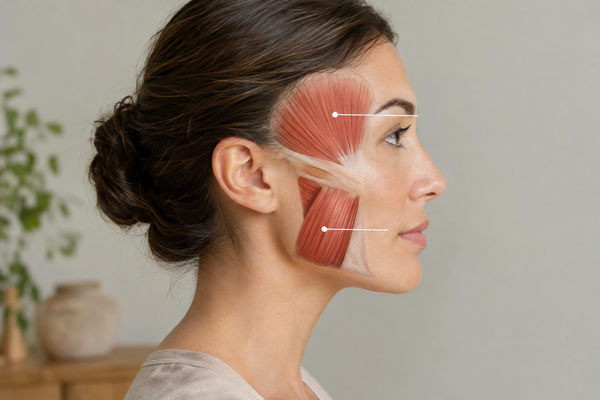
Your temporomandibular joints, or TMJs, connect your lower jaw to your skull. You have one on each side. They work with muscles and other tissues to help you chew, speak, and open your mouth.
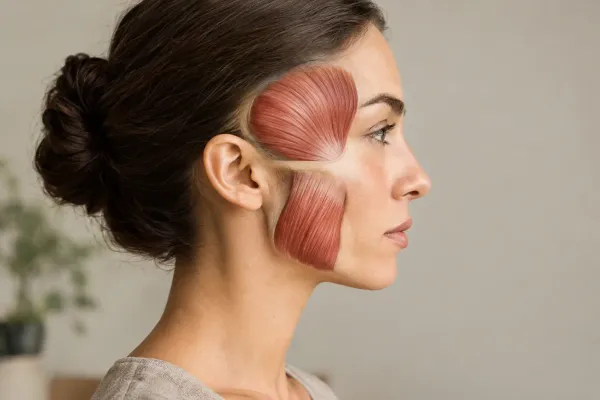
Temporomandibular disorders, or TMDs, affect these joints, the chewing muscles, or both. “TMJ” has become shorthand for jaw trouble, but the joint itself is not a diagnosis.
Muscle soreness, painful chewing, clicking, and locking can point to different problems. You might have tender chewing muscles without a major joint problem. Restricted movement or repeated locking may call for a different assessment.
According to the National Institute of Dental and Craniofacial Research, or NIDCR, painless clicking or popping is common and generally does not need treatment. A noisy joint is not automatically a damaged joint that needs fixing.
Protecting your teeth is not the same as treating jaw pain
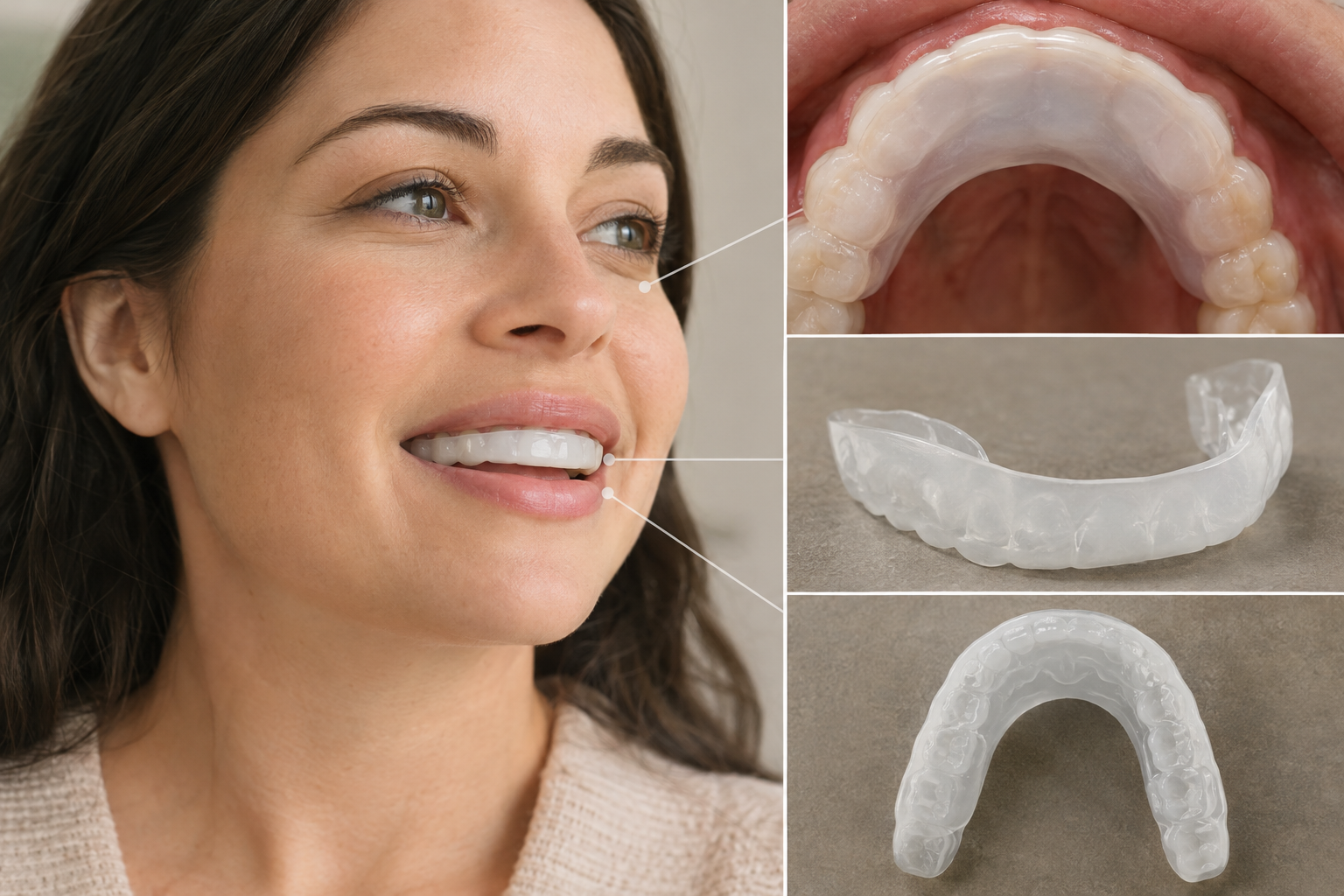
An oral appliance, sometimes described as an occlusal guard or night guard, sits over some or all of your teeth. It separates opposing teeth and changes where they contact when you close your mouth. Depending on its design, it may also guide or hold your jaw in a particular position.
A barrier between your teeth can help protect tooth surfaces from direct contact. However, tooth protection, fewer grinding episodes, less pain, and better jaw movement are separate outcomes. Improvement in one does not prove improvement in the others.
Macedo and colleagues’ Cochrane review, “Occlusal splints for treating sleep bruxism (tooth grinding)”, found insufficient evidence to establish that splints effectively treat sleep bruxism. This older review highlights an important distinction: wearing a guard is not proof that grinding has stopped.
A piece of plastic is not a diagnosis, either. Tooth wear may reflect past grinding, acid exposure, other habits, or several factors together. Waking with jaw soreness also does not tell you exactly what happened during sleep.
What research can and cannot tell you
To interpret a splint study, you need to know who participated, which appliance they used, and what treatment it was compared with. You also need to know what researchers measured and how long they followed participants.
The Riley review found that the evidence for splints was very uncertain. In plain language, weaknesses and differences across the studies made it difficult to draw a dependable conclusion about benefit. That is not the same as strong evidence that splints never work.
The NIDCR also describes the evidence supporting intraoral appliances for TMD pain as limited. Together, these findings support realistic expectations and regular reassessment rather than promises of a cure.
A short-term change in pain does not establish lasting improvement in jaw function. Likewise, fewer clicks do not prove that joint anatomy has returned to normal. Your treatment goal should be specific enough to measure.
Hard Stabilization Splints: A Custom Mouth Guard for TMJ Symptoms
How a full-coverage stabilization splint works
A hard stabilization splint is a rigid appliance, usually made specifically for your mouth. It covers all the teeth in either your upper or lower arch. Its biting surface is adjusted so your opposing teeth contact it as intended.
“Full coverage” matters because every tooth in that arch is included, rather than leaving some uncovered. A dentist checks how the appliance seats, whether it stays secure, and how your teeth meet when you close and move your jaw.
A stabilization splint is not designed to permanently move your jaw or correct your bite. Its purpose differs from orthodontic treatment and from appliances that deliberately hold the jaw forward.
Be cautious about claims that a routine night guard will permanently “realign” your jaw. If a proposed treatment aims to make lasting changes to your bite, ask about its evidence, risks, and reversible alternatives.
Which symptoms may make it worth discussing
Your clinician might discuss a stabilization splint if you have tooth wear, muscle tenderness, or pain alongside clenching. These findings justify a closer look, but none guarantees that a splint will reduce your pain.
The examination should also consider dental problems that can mimic jaw pain. A cracked tooth, an infected tooth, and sore chewing muscles do not call for interchangeable treatment.
Your dentist may assess tooth health, tenderness, jaw movement, and how your symptoms relate to eating, waking, or daily habits. That assessment helps establish what an appliance would be intended to do.
An upper appliance is not automatically better than a lower one. The choice can depend on your teeth, restorations, bite, comfort, and treatment plan. You should be able to insert and remove it as instructed without forcing it into place.
Digital versus conventional fabrication
Making a custom splint typically involves impressions or digital scans, fabrication, a fitting appointment, and follow-up adjustments. The first fitting is not necessarily the final one. Your clinician may need to refine tooth contacts or address pressure spots.
Digital scanning, 3D printing, and conventional impressions describe how an appliance is produced. They do not tell you whether it is a stabilization splint, a repositioning device, or another type of guard.
They also do not, by themselves, prove better pain relief. To support that claim, a study would need to compare relevant patient groups, clinical outcomes, adjustment needs, and follow-up periods.
A precise scan can help make an appliance that fits your teeth. It cannot replace a diagnosis or show whether that appliance is the right treatment. The technology is useful, but it is not the treatment plan.
Soft and Boil-and-Bite Mouth Guards for TMJ: Know the Differences
Soft material and store-bought fit are different features
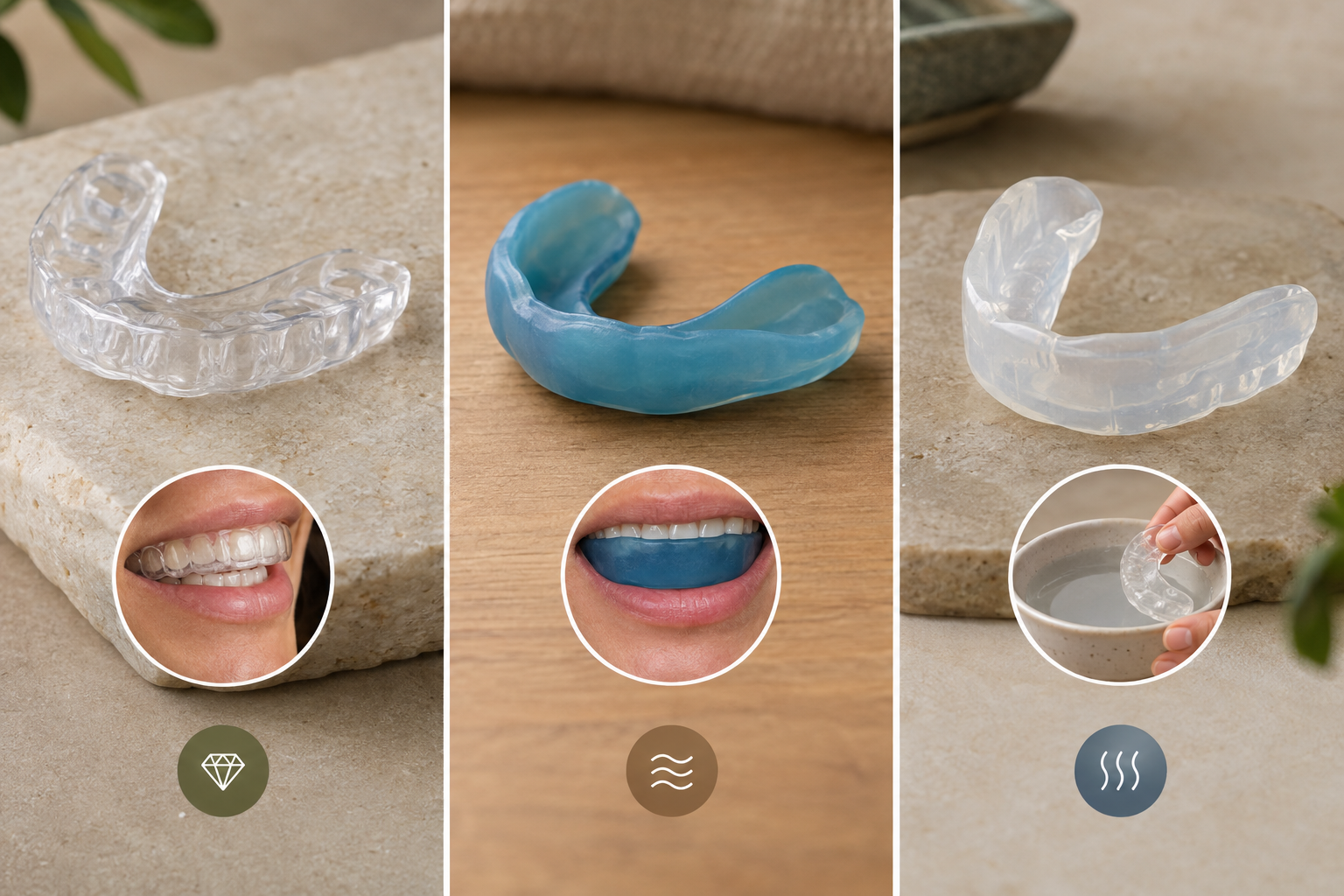
Mouth guards have at least two separate labels: what they are made from and how they are fitted. Material may be hard, soft, or layered. Fit may be ready-made, boil-and-bite, or custom.
A soft guard can be custom-made. A hard appliance can be digitally fabricated. Comparing “soft” with “custom” mixes two different features, a little like comparing a cotton shirt with a tailored one.
Ready-made guards come in predetermined shapes. Boil-and-bite guards soften with heat so you can mold them around your teeth, following the product instructions.
Custom appliances are made from an impression or scan. However, “custom” does not necessarily mean that a dentist has examined you, adjusted the appliance, or arranged follow-up. Check what a service actually includes, especially when ordering online.
Where convenience can come with trade-offs
Store-bought options appeal because they are accessible and often cost less upfront. That convenience does not establish equal benefit for jaw pain.
When comparing over-the-counter and custom-fitted night guards, practical questions include whether the appliance stays in place, feels bulky, presses on teeth, wears through, or creates uneven contact. These are fitting and durability concerns, not proof that one material always produces better clinical outcomes.
Here is how the main options differ:
- Hard custom stabilization splint: Provides a planned biting surface and, when appropriate, tooth protection. Fit comes from an impression or scan plus clinical fitting. A dentist can adjust contacts and monitor symptoms. A custom label does not guarantee pain relief across every TMD diagnosis.
- Custom soft guard: May be prescribed for tooth protection or selected symptoms. It is made for your mouth, but its flexibility affects its fit and how it can be adjusted. Professional review remains important. Soft material alone does not establish better or worse pain outcomes.
- Ready-made or boil-and-bite guard: Offers easier access and may provide a barrier between teeth. Fit varies with the product and how well you can mold it. Professional adjustment may be limited. Lower initial cost should not be mistaken for proven treatment of a specific jaw disorder.
Do not assume that soft guards universally increase clenching or that hard guards always relieve pain better. Those claims require evidence relevant to the diagnosis and the appliances being compared.
Stop using an appliance and seek reassessment if it increases pain, will not stay secure, or changes how your teeth meet. Do not keep reshaping or trimming it to chase a comfortable bite without guidance.
Why a sports mouth guard is not a TMJ treatment
A sports guard is designed primarily to protect against impact injuries. The American Dental Association’s MouthHealthy guidance describes athletic mouthguards and their fitting options.
Impact protection is a different job from managing jaw pain or providing a clinically adjusted biting surface. A sports guard should not be treated as a substitute for an appliance prescribed for a diagnosed jaw condition.
The same caution applies in reverse: a night guard is not automatically appropriate protection for contact sports. “Mouthguard” is a broad product label, not a promise that one device can do every job.
Anterior Repositioning Splints: A Different Tool for Selected Joint Problems
How repositioning differs from stabilization
An anterior repositioning splint holds your lower jaw farther forward while you wear it. Unlike a stabilization splint, it does more than provide a surface for your teeth to contact.
This makes it a diagnosis-specific option, not the default answer for every sore or clicking jaw. Your clinician needs a reason to choose forward positioning and a plan for monitoring the results.
Do not try to reproduce this treatment by holding your jaw forward, modifying a guard, or following an online wear schedule. Changing jaw position is not a harmless experiment simply because an appliance is removable.
What disc displacement means in plain language
Inside each jaw joint is a small disc that helps the joint surfaces move together. You can think of it as a cushion, although the joint is more complicated than two bones sliding over a pillow.
In disc displacement with reduction, the disc is out of its usual position when your mouth is closed. During movement, it returns to a more typical relationship with the joint surfaces. That transition may produce a click.
A click alone does not establish the full diagnosis or show that treatment is necessary. Your clinician should consider pain, movement, locking, and how the problem affects everyday activities.
Research on stabilization splints should not automatically be applied to repositioning devices. Different appliances may be used for different conditions, and studies may measure different outcomes.
For example, less clicking is not proof of less pain, restored joint anatomy, or lasting recovery. Ask which outcome a proposed repositioning splint is meant to improve and how your clinician will assess it.

Why monitoring matters
Your clinician should explain when to wear a repositioning appliance, what outcome to track, and when to return. The plan should include checking for lasting bite changes, worsening pain, and new movement problems.
Ask what happens next if the appliance helps, does nothing, or makes symptoms worse. An open-ended instruction to keep wearing it is not a complete follow-up plan.
Imaging may be useful in selected situations, but every click does not require a scan. The decision depends on your history, examination, and whether imaging would change treatment.
A repositioning splint for a joint problem is also different from a mandibular advancement device prescribed for obstructive sleep apnea. Both may move the lower jaw forward, but their goals, design, assessment, and monitoring are not interchangeable.
How to Choose a TMJ Relief Mouth Guard Without Guesswork
Match your appliance to a diagnosis, not a marketing claim
Before buying an appliance for persistent jaw pain, arrange an examination. An online symptom list cannot reliably distinguish a muscle-focused problem from a joint-focused problem. The two can also overlap.
Bring a short symptom history. Useful details include:
- Where you feel pain: Near the joint, in your cheeks, around a tooth, or elsewhere.
- What changes it: Chewing, yawning, waking, stress, or prolonged talking.
- How your jaw moves: Whether opening is limited, painful, or accompanied by catching or locking.
- What is happening with your teeth: Wear, fractures, sensitivity, missing teeth, or recent dental work.
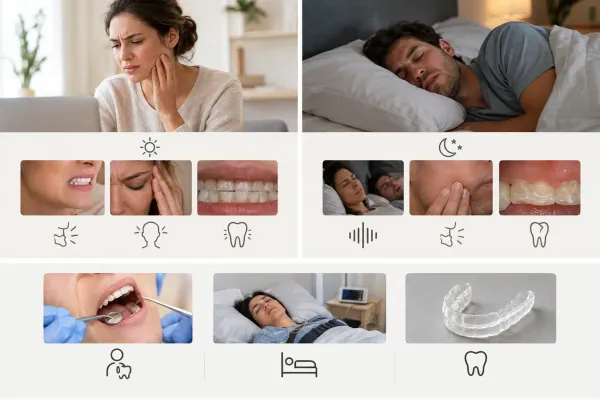
- What happens during sleep: Reported grinding, loud snoring, breathing pauses, or daytime sleepiness.
Tooth wear is useful information, but it is not a real-time grinding monitor. Your clinician should interpret it alongside your dental health and symptoms rather than treating it as a complete diagnosis.
Ask directly: “What condition are you treating?” Then ask why that particular appliance fits the diagnosis. “It is our premium option” is not much of a clinical explanation.
Ask about wear schedules, adjustments, and total cost
There is no universal instruction to wear every guard nightly, all day, or for a fixed number of weeks. The schedule depends on the appliance and treatment goal. Follow the plan prescribed for your device rather than borrowing instructions from another product.
Before committing, ask:
- What outcome should we track: pain, comfortable opening, chewing ability, tooth damage, or something else?
- How will we record that outcome so we can judge progress?
- When should we reassess the appliance and decide whether it is helping?
- What should I do if pain increases or my bite changes?
- Which fitting visits and adjustments are included?
- What might replacement, repair, or additional appointments cost?
- What does my insurance cover for a night guard, and what requires separate approval?
Partial-coverage appliances deserve particular caution. Because they cover only some teeth, their use can allow unwanted tooth movement or changes in how your teeth meet. They need professional selection and monitoring. Small does not necessarily mean simple or low-risk.
A splint should fit within a broader conservative-care plan. Depending on your diagnosis, that may include education, reducing daytime clenching, appropriate jaw exercises, or physical therapy for TMJ pain management.
The uncertainty described in the Riley review is a reason to discuss these alternatives, not to assume an appliance must be the first or only treatment. Your plan should explain why each option is being considered and when it should be reviewed.
Know when your symptoms need another kind of care
A standard night guard does not treat obstructive sleep apnea. If you snore loudly, someone notices breathing pauses, or you struggle with daytime sleepiness, discuss a sleep assessment with a clinician.
Protecting your teeth does not establish that your breathing is safe during sleep. If you already use an appliance for sleep apnea, speak with your treating clinician before adding or replacing it with another device.
Seek prompt evaluation for new or persistent locking, major difficulty opening your mouth, trauma, swelling, or severe worsening pain. These are reasons to investigate, not reasons to keep trying different guards.
For routine care, clean your appliance according to its material-specific instructions. Avoid hot water or other heat unless the manufacturer or clinician specifically directs it, since heat can distort some materials.
Bring the guard to follow-up visits so your clinician can inspect both the appliance and your mouth. Report cracks, rough edges, changes in fit, or a bite that feels different after removal. Do not assume that a worn-through guard proves your treatment is working.
Conclusion: Choose a Mouth Guard for TMJ That Fits Your Condition
There is no universal best mouth guard for TMJ. Hard stabilization splints, soft guards, and anterior repositioning splints differ in material, purpose, fit, and supervision needs.
A rigid custom appliance provides a different biting surface from a flexible guard. A repositioning splint deliberately changes jaw position during wear. Those differences matter more than whether a product is labeled “advanced,” “digital,” or “premium.”
Just as important, protecting your teeth is not the same as reducing pain, decreasing grinding, or improving jaw function. The Riley and Macedo reviews support caution about broad promises, while also showing why researchers need to assess these outcomes separately.
Your next step is practical: bring your symptom history and any existing guard to a dentist familiar with TMD or an orofacial pain clinician. Agree on a specific treatment goal, a way to measure progress, and a follow-up plan that includes what to do if symptoms worsen.
Your jaw needs a plan, not just more plastic.