Night Guard Insurance Codes: What Your Dentist Bills and How to Get It Covered
Discover if dental insurance covers night guards and how to navigate policies.
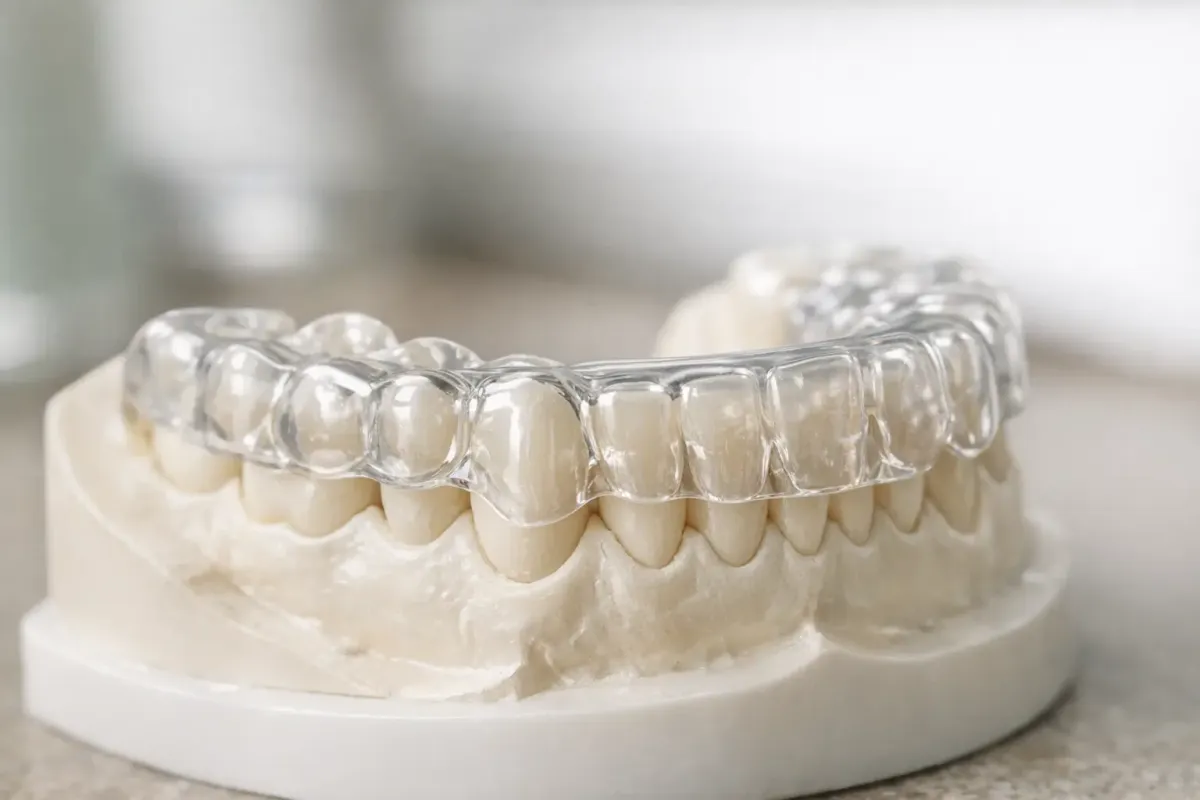
If you want to know whether your plan covers a night guard, the fastest route is not a phone call. It is knowing the five-character code your dentist will put on the claim, then looking that code up in your own plan documents.
Insurers do not have a category called "night guard". They have occlusal guards, and those are billed under specific CDT codes. Get the code right and you can usually answer the coverage question in about ten minutes. Get it wrong and you can end up with an automatic denial for something your plan would actually have paid for.
The codes, in full
| CDT code | What it covers | Notes |
|---|---|---|
| D9944 | Occlusal guard, hard appliance, full arch | The most commonly billed. Usually reimburses highest, because lab costs are higher |
| D9945 | Occlusal guard, soft appliance, full arch | Flexible material, typically for lighter grinding |
| D9946 | Occlusal guard, hard appliance, partial arch | Covers a section rather than the whole arch |
| D9942 | Repair and/or reline of an occlusal guard | Useful when a guard is salvageable and a remake is not covered |
| D9943 | Occlusal guard adjustment | For modifying an existing guard |
| Retired. Removed in the CDT 2019 update and replaced by the three codes above. If you see it on a current claim, that is an error |
Two rules that decide more claims than anything else:
- Hard beats soft when a guard is both. The ADA's guidance is that a guard with any hard occlusal component should be coded as hard, so D9944 for a full arch or D9946 for a partial arch, regardless of whether it also has a soft layer. That matters directly for dual laminate guards, which are soft inside and hard outside and are the most commonly prescribed type. Billed as D9945 because it feels soft in the hand, it can be denied or underpaid.
- These codes are not for sleep apnea, snoring or TMD appliances. Those are separate devices with separate codes and often a separate benefit entirely, sometimes on the medical rather than the dental side. Using an occlusal guard code for a snoring appliance is a denial waiting to happen.
How to check your own coverage in ten minutes
- Log into your insurer's portal and open the Certificate of Coverage or Evidence of Coverage, not the summary page.
- Search that document for D9944, then occlusal. One of the two will find it.
- Read the surrounding text for three things: the coverage percentage, the frequency limitation, and any waiting period.
- If you cannot find it, call and ask a specific question rather than a general one. "Is CDT code D9944 a covered benefit on my plan, at what percentage, and what is the frequency limitation?" gets a usable answer. "Do you cover night guards?" often does not.
On frequency: most plans limit you to one guard every few years, commonly somewhere in the two to five year range depending on the carrier. Check your own number rather than assuming, because this is the single most common reason a legitimate replacement gets denied.
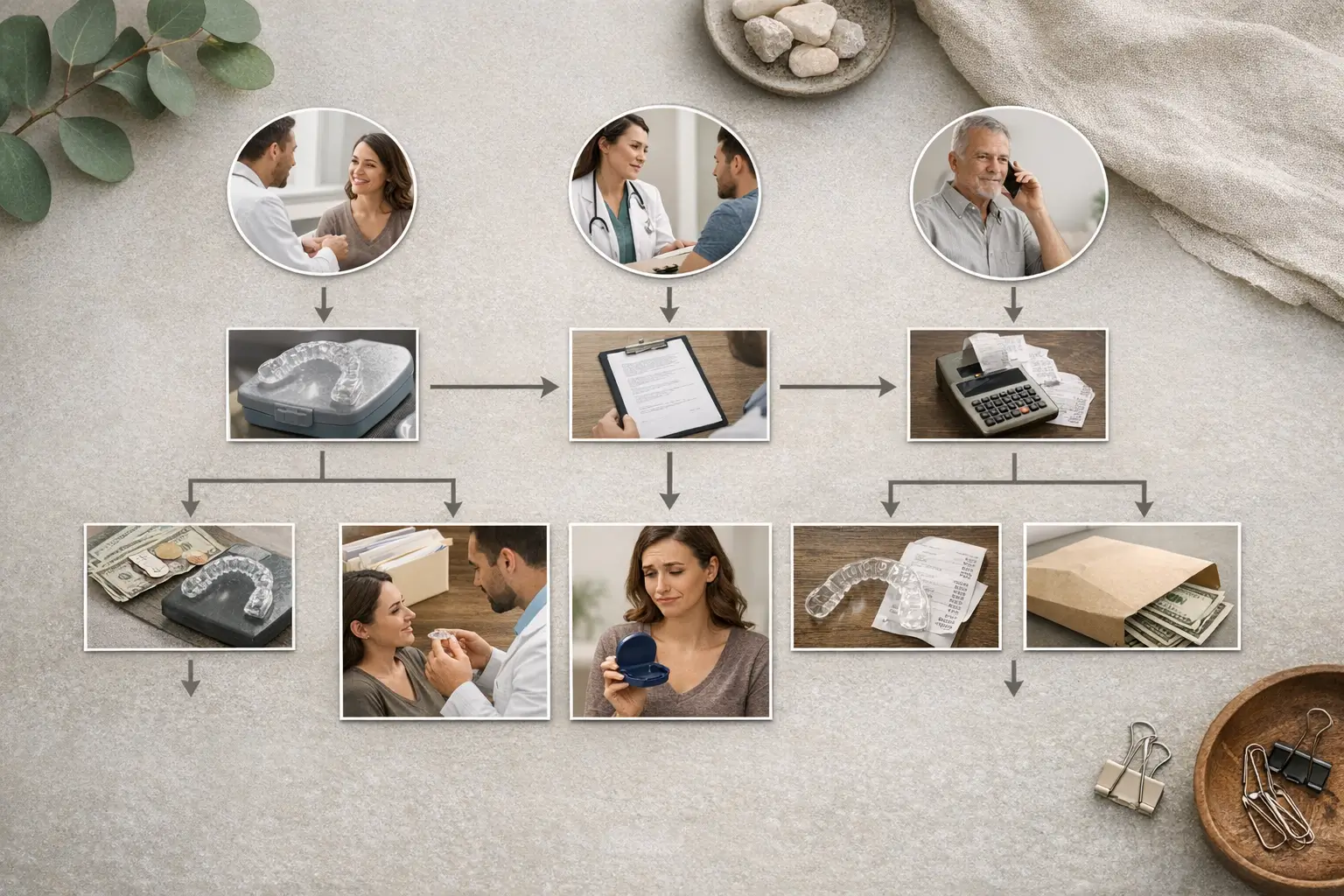
Why claims get denied, and what to do about each
| Reason given | What it usually means | What works |
|---|---|---|
| Not medically necessary | The chart did not document evidence of grinding | Ask the office to resubmit with intraoral photos of wear facets, a note on symptoms, and a short narrative |
| Frequency limitation exceeded | You had one more recently than the plan allows | Appeal with evidence the old guard failed early. D9942 (repair) is sometimes payable when a new guard is not |
| Wrong code submitted | Often a dual laminate guard billed as soft | Ask the office to check the appliance against the hard/soft rule above and resubmit |
| Considered elective | Some plans exclude occlusal guards entirely | Confirm in writing, then move to FSA/HSA, which do not require the insurer's agreement |
Two things that materially improve your odds. Ask for a predetermination (some carriers call it a pre-treatment estimate) before the guard is made, so you learn the answer while you can still act on it. And keep the appeal in writing, because a documented paper trail is what appeals turn on.

If insurance says no
An outright exclusion is not the end of it, and this is where the arithmetic gets interesting.
A dentist-supplied guard commonly runs several hundred dollars before any insurance is applied. A direct-from-lab guard is typically a fraction of that, and because FSA and HSA funds are pre-tax, paying that way is effectively a discount equal to your marginal tax rate, with no insurer involved and no predetermination to wait for.
In plenty of cases a direct-lab guard paid from an HSA costs less out of pocket than the patient share of an insured guard from a dental office. Worth running your own numbers before assuming coverage is the cheaper path. We break the full picture down in what bruxism treatment actually costs.
The route most people end up taking
Pro Teeth Guard is a dental lab selling direct, at roughly a third of typical dental office pricing, and FSA and HSA cards work at checkout. Four thicknesses, free adjustments, and a 60-day 110% money-back guarantee.
If your plan excludes occlusal guards, or your frequency limit has not reset, this is usually the cheaper answer rather than the compromise.
Check current pricing at Pro Teeth Guard
Affiliate link. If you buy through it we earn a commission, at no extra cost to you. How this works.
Frequently asked questions
What is the dental code for a night guard?
D9944 for a hard full-arch guard, D9945 for a soft full-arch guard, and D9946 for a hard partial-arch guard. D9942 covers repair or reline and D9943 covers adjustment. The old catch-all code D9940 was retired in the CDT 2019 update.
Does dental insurance cover night guards?
Many plans do, commonly at 50% after deductible, but it varies enormously and some plans exclude occlusal guards entirely. Coverage usually requires documented clinical need rather than a patient request, and almost always carries a frequency limitation.
What is the difference between D9944 and D9945?
Material. D9944 is a hard appliance, D9945 is soft, both full arch. It matters for reimbursement because hard guards generally carry higher lab costs and higher allowed amounts. Per ADA guidance, a guard with any hard occlusal component should be billed as hard even if it also has a soft layer.
Will insurance cover a night guard for TMJ?
Sometimes, but often under a different benefit. TMD appliances are not the same as occlusal guards and should not be billed under D9944 to D9946. Some plans handle TMD on the medical side, so it is worth checking both policies.
How often will insurance pay for a new night guard?
Typically once every few years, most often quoted somewhere between two and five, depending on the carrier. Find the exact number in your Certificate of Coverage, because this is the most common cause of a denied replacement.
Can I use my HSA or FSA for a night guard?
Yes. Occlusal guards for bruxism are generally an eligible medical expense, including guards bought directly from a lab rather than through a dentist. Keep the receipt, and check with your plan administrator if your situation is unusual.
My dentist billed the wrong code and the claim was denied. What now?
Ask the office to review the appliance against the hard/soft and full/partial arch definitions and resubmit with a corrected code. Miscoding is a common and entirely fixable cause of denial, and a corrected resubmission is usually simpler than a formal appeal.