The Jaw Pain Acid Reflux Connection: GERD and Teeth Grinding
Explore how acid reflux may relate to jaw pain and teeth grinding, what studies suggest, and when your symptoms need dental or medical attention.

The Jaw Pain Acid Reflux Connection: GERD and Teeth Grinding
“A Possible Link Between Nocturnal Bruxism and Gastroesophageal Reflux” investigated whether nighttime reflux and teeth grinding occur together. That research helps frame the jaw pain acid reflux connection, but it does not settle it. Reflux may overlap with sleep bruxism and contribute indirectly to jaw discomfort in some people. It does not follow that acid reflux causes every sore jaw, or that jaw pain means you have gastroesophageal reflux disease, or GERD.
If you wake with a sore jaw and a sour taste, both symptoms deserve attention. The useful question is not simply whether they are connected. It is whether reflux, muscle activity, a dental problem, a sleep disorder, or several factors could explain what you are experiencing.
Safety first: new or unexplained jaw pain with chest discomfort, shortness of breath, sweating, nausea, or pain brought on by exertion needs emergency assessment. Call your local emergency number rather than assuming it is reflux. Jaw discomfort can be a heart attack warning sign, and chest pain is not always the main symptom.
The jaw pain acid reflux connection: what research actually shows
An association is not a diagnosis
GERD develops when stomach contents flow back into your esophagus, the tube connecting your mouth and stomach, and cause troublesome symptoms or complications. Occasional reflux does not automatically mean you have GERD.
Sleep bruxism is chewing-muscle activity during sleep. It can include clenching, grinding, or bracing your jaw. The “International consensus on the assessment of bruxism: Report of a work in progress” describes bruxism as muscle activity that is not necessarily a disorder in otherwise healthy people. Its importance depends partly on whether it causes harm or occurs alongside another condition.
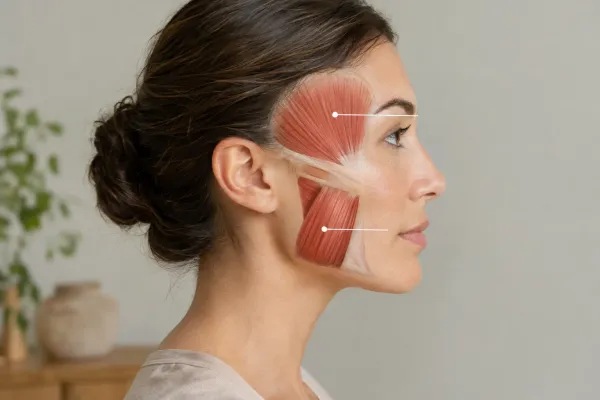
Temporomandibular disorders, or TMD, affect your jaw joints, chewing muscles, or both. They can cause pain, stiffness, and difficulty moving your jaw.
Bruxism and TMD can overlap, but they are not interchangeable diagnoses. You can grind without pain, and you can have TMD without grinding. Finding reflux alongside either condition does not tell your clinician which came first or whether one caused the other.
What studies can and cannot tell you
In “A Possible Link Between Nocturnal Bruxism and Gastroesophageal Reflux,” researchers investigated the relationship between nighttime acid exposure and jaw-muscle activity. The findings supported a possible connection, including a potential role for swallowing and saliva around reflux events.
This was a small study, not proof of a universal cause. Findings about muscle activity also cannot automatically explain pain. A study can detect grinding without showing that participants developed sore jaws because of reflux.
Other research approaches have limits too. Observational studies can examine whether reflux symptoms and jaw problems occur together. However, stress, medication use, disrupted sleep, and other conditions may influence both. Researchers call these factors potential confounders: they can make a relationship look simpler than it is.
The study population matters as well. Results from people working night shifts or attending a specialist clinic may not apply neatly to your circumstances. A convincing explanation needs more than two symptoms appearing in the same questionnaire.
Acid reflux and teeth grinding: how nighttime symptoms might overlap
Search for “acid reflux teeth grinding,” and you will find explanations that sound more settled than the science. A more useful starting point is that reflux, brief awakenings, swallowing, and jaw-muscle activity can occur close together during sleep. Their timing may offer clues, but it does not establish one fixed chain of events.
Brief awakenings may connect reflux and jaw activity
A sleep arousal is a brief shift toward lighter sleep or wakefulness. You may not remember it. Reflux episodes can occur around these shifts, as can swallowing and bursts of jaw-muscle activity.
One proposed pathway is that reflux is followed by an arousal, then swallowing and jaw activity. But the timing and direction can vary. An arousal or another sleep event might precede reflux. Nearby events are not necessarily causing each other.
Think overlapping processes, not a row of dominoes that always falls in the same order.
Repeated clenching or grinding can load your chewing muscles and, in some people, contribute to morning fatigue or tenderness. Muscle activity does not automatically produce pain, though. Its intensity, duration, and your sensitivity all matter.
Why saliva matters in the proposed mechanism
Saliva helps clear acid from your mouth and esophagus. It also buffers, or neutralizes, some of that acid. Swallowing helps move refluxed material back toward your stomach.
Researchers have proposed that jaw activity occurring around reflux might support saliva flow and swallowing. That is one possible explanation for an observed relationship, not proof that grinding protects you.
Even if some jaw activity helps with acid clearance, repeated tooth contact can still cause problems. A possible protective function is not a free pass for cracked teeth, persistent muscle pain, or damaged dental work.
Where sleep apnea fits
Obstructive sleep apnea happens when your upper airway repeatedly narrows or closes during sleep. Breathing interruptions can fragment sleep. Sleep apnea may coexist with reflux, bruxism, or both, but having one does not establish the others.
If you snore loudly, wake gasping, or have witnessed breathing pauses, tell your clinician. Excessive daytime sleepiness is another reason to ask about assessment. These clues matter even if your main complaint is a sore jaw.
Apnea could contribute to shared sleep disruption in some people. It is not a proven explanation for every reflux-bruxism connection.
None of these proposed mechanisms means stomach acid travels into your jaw joint or directly damages your chewing muscles. The possible connection is more indirect, involving sleep disruption, muscle activity, and potentially other conditions.
GERD jaw pain symptoms: clues, look-alikes, and red flags
Patterns worth recording, not self-diagnosing
“GERD jaw pain” describes a suspected connection, not a distinct diagnosis with a validated symptom checklist. Your symptoms may offer useful clues, but they cannot settle the cause on their own.
Tell your clinician if morning jaw fatigue, tender chewing muscles, or headaches occur alongside heartburn, a sour taste, or nighttime regurgitation. Note whether jaw pain happens on reflux-free days too. That detail can be more useful than simply reporting that both problems exist.
Also record what changes the pain. Discomfort when chewing, opening wide, or pressing on a particular tooth can help guide an examination. These patterns are clues, not home diagnostic tests.
Cough, frequent throat clearing, and hoarseness are sometimes considered possible extraesophageal symptoms, meaning complaints outside the esophagus. Allergies, respiratory conditions, voice strain, and other problems can cause them too.
The “AGA Clinical Practice Update on the Diagnosis and Management of Extraesophageal Gastroesophageal Reflux Disease: Expert Review” emphasizes the difficulty of linking these symptoms to reflux. Having no heartburn neither establishes nor rules out reflux-related disease.
Tooth erosion and tooth wear are different problems
Acid exposure can chemically dissolve tooth mineral, causing erosion. Grinding can mechanically wear tooth surfaces through repeated contact. These processes may coexist, but they are not the same problem.
Reflux is one possible source of acid. Acidic drinks and repeated vomiting are others. Tooth wear can also reflect past habits or several processes acting together.
Dental appearance alone cannot diagnose active sleep bruxism or GERD. A worn tooth is not a timestamp. Your dentist needs your history and an examination, with additional assessment when appropriate.
Tooth sensitivity also deserves a proper check. Erosion can contribute, but so can decay, cracks, exposed roots, and other dental conditions. Assuming every sensitive tooth is an acid reflux symptom can delay the treatment you actually need.

When jaw pain needs urgent care
Common alternatives to reflux-related explanations include dental infection, a cracked tooth, TMD, and tension-related muscle pain. Sometimes pain is referred, meaning you feel it away from its source. This is another reason not to assign unexplained jaw pain to reflux by default.
Seek prompt assessment for facial swelling, fever, trouble swallowing, or rapidly worsening dental or jaw pain. Swelling that spreads toward your neck, an inability to swallow saliva, or breathing difficulty requires emergency care.
Sudden or unexplained jaw pain with chest discomfort, breathlessness, sweating, nausea, or exertion also requires emergency assessment. A long history of indigestion does not make a new episode safe to ignore.
How you and your clinicians can investigate the connection
The AGA expert review supports a careful approach to symptoms outside the esophagus. The goal is to investigate plausible causes, not make reflux responsible for every complaint above your collarbone.
Start with a symptom and sleep diary
For a week or two, if symptoms are not urgent, record:
- When jaw pain starts, how long it lasts, and whether chewing changes it.
- Meal timing, alcohol use, heartburn, sour taste, and regurgitation.
- Bedtime, sleep position, and nighttime awakenings.
- Snoring, witnessed breathing pauses, gasping, and daytime sleepiness.
- Medicines and supplements, including recent changes.
- Daytime clenching and any grinding sounds reported by a bed partner.
A diary can reveal patterns and help you remember details during appointments. It cannot confirm that reflux caused the pain. Do not delay care to finish it, and do not stop prescribed medication to test a theory without discussing it with your clinician.
What your dentist and medical clinician assess
Your dentist can check for decay, infection, cracks, muscle tenderness, jaw movement problems, and tooth wear. They may ask about daytime clenching, morning symptoms, and reports of nighttime grinding.
Your medical clinician can review reflux symptoms, medication effects, sleep concerns, and other possible sources of pain. Coordinating those assessments is often more useful than asking either professional to explain everything alone.
A proton pump inhibitor, or PPI, reduces stomach acid. If symptoms improve while you take one, that does not by itself prove reflux caused your jaw pain. Symptoms fluctuate, and several things may change during treatment.
Research tools are not personal diagnostic tests either. For example, genetic studies can explore possible causal directions between conditions, but their conclusions depend on assumptions about the genetic data. They cannot tell you why your jaw hurt this morning.
When reflux testing or a sleep evaluation may help
The “ACG Clinical Guideline: Guidelines for the Diagnosis and Management of Gastroesophageal Reflux Disease” outlines how clinicians assess suspected GERD. Testing depends on your symptoms, medical history, previous treatment, and any warning signs.
Ambulatory reflux monitoring measures reflux over a day or longer during your usual activities. Depending on the test, a small catheter or wireless sensor records acid exposure. Some catheter-based systems also detect nonacid reflux.
Endoscopy uses a thin camera to examine your esophagus and stomach. It can help identify inflammation, narrowing, or other disease. It does not automatically show why your jaw hurts, and a normal examination does not rule out every form of reflux disease.
For isolated symptoms outside the esophagus without typical GERD symptoms, clinicians may favor objective reflux testing rather than repeated acid-suppression prescriptions without reassessment. Difficulty swallowing, unexplained weight loss, gastrointestinal bleeding, or persistent vomiting also needs medical attention.
A sleep evaluation may be appropriate if you snore, gasp, have breathing pauses, or feel excessively sleepy. Laboratory sleep testing is not necessary for everyone who reports grinding. Your clinician can explain whether a home sleep apnea test or an in-laboratory study fits the question being investigated.
What may help when reflux and jaw pain occur together
You can address reflux and jaw discomfort together without assuming they are one disease. Coordinated management aims to reduce symptoms, protect teeth, and treat confirmed conditions. It does not promise that fixing reflux will silence nighttime grinding.
Reduce reflux triggers without banning every enjoyable food
The ACG guideline suggests avoiding meals within two to three hours of bedtime when possible. If symptoms occur at night, discuss raising the head of your bed or using a wedge that elevates your upper body. An extra pillow that only bends your neck may not accomplish the same thing.
Look for personal food and alcohol triggers rather than adopting a joyless, one-size-fits-all ban list. Smaller evening meals may help some people. If a particular food repeatedly brings on symptoms, adjusting its amount or timing may be more practical than eliminating entire food groups.
Weight loss can improve GERD symptoms for some people who have overweight or obesity. Whether it belongs in your plan depends on your health and circumstances. Body size should not become a substitute for investigating persistent symptoms.
If you smoke, ask about support for quitting. Smoking can worsen reflux and carries other major health risks. Lifestyle changes work best when they are realistic enough to keep doing.
Keep medication decisions clinician-guided. PPIs have an established role in treating appropriate GERD symptoms and complications, but evidence does not support prescribing acid suppression specifically as a routine treatment for jaw pain or bruxism.
If you already take a PPI, ask whether the dose, timing, and treatment goal are right for you. Do not increase it, stop it, or keep extending a trial simply because your jaw still hurts.
Protect your teeth and ease jaw strain
During painful flares, skip gum and very hard or chewy foods. Notice daytime clenching and gently let your teeth separate when you are not eating. Ask your dentist for individualized advice rather than forcing stretches or repeatedly testing a sore joint.
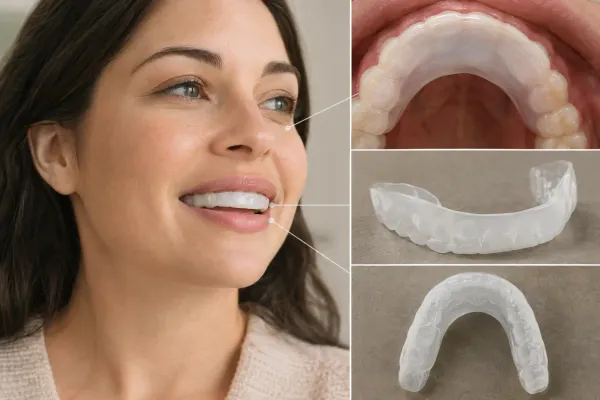
A professionally fitted guard may protect teeth, but it does not reliably stop bruxism or treat GERD. Your dentist should check its fit and review whether it is helping, especially if pain changes or your bite feels different.
A protective guard is different from an oral appliance prescribed for sleep apnea. Discuss snoring or suspected apnea before choosing a device. Buying something labeled a “night guard” does not mean you have addressed a possible breathing disorder.
After acid reaches your mouth, rinse gently with water and avoid brushing immediately. Ask your dentist how long to wait and which fluoride products suit your teeth. Scrubbing harder is not an acid-removal strategy.
Stress management may help if you notice daytime clenching or tension. It is a useful part of care, not proof that the pain is “all in your head.” Persistent pain still deserves an examination.

Treat diagnosed sleep conditions, not just the noise
If you have sleep apnea, treatment matters for its own health and safety benefits. Choices depend on your assessment and may include positive airway pressure or an appropriate oral appliance.
Do not assume apnea treatment will eliminate reflux or grinding. These conditions may interact, but they are not interchangeable treatment targets. Each problem may need its own follow-up.
Likewise, quieter grinding does not necessarily mean your sleep or breathing has improved. Track outcomes that matter: pain, tooth damage, reflux symptoms, sleep quality, and daytime alertness. Share persistent or changing symptoms with the clinician managing that part of your care.
Conclusion: a possible connection, not a shortcut diagnosis
Reflux, sleep bruxism, and jaw pain can overlap, but current evidence does not justify treating them as one condition. Your discomfort might involve chewing-muscle activity, another dental or medical problem, shared sleep disruption, or more than one factor.
“A Possible Link Between Nocturnal Bruxism and Gastroesophageal Reflux” offers evidence for a possible nighttime relationship. The ACG guideline and AGA expert review provide an equally important clinical reminder: identifying reflux as the cause of symptoms outside the esophagus requires care.
- Track when jaw symptoms, reflux, meals, and sleep problems occur.
- Arrange dental and medical assessment if symptoms persist or recur.
- Ask about a sleep evaluation if you snore, gasp, have witnessed breathing pauses, or experience excessive daytime sleepiness.
- Review whether treatment is helping each problem rather than assuming one improvement explains everything.
Treating confirmed reflux may help reflux without resolving grinding or jaw pain. Your jaw deserves an explanation, not a reflux label slapped on it.
And do not dismiss sudden jaw pain with chest discomfort, breathlessness, sweating, nausea, or exertion as indigestion. Those warning signs need emergency assessment.