Arch Shaping Night Guards: Separating Fact from Marketing Claims
Explore arch shaping night guards, their claims, and risks in unsupervised orthodontic treatments.
You might be here because your social feed, a late-night commercial, or a friend at the gym mentioned a mouthpiece that claims to "reshape your arch while you sleep." The idea sounds almost magical: slip in a pliable guard, drift off, and wake up with a wider smile, a better bite, and no more teeth grinding. Before you decide to buy, let’s see what the science, not the slogans, really says about arch shaping night guards.
Below is a straightforward breakdown of the claims, the real clinical evidence, and the common risks that may not appear on the product page. Consider it your guide through a crowded dental gadget marketplace.
Understanding the Claims of Arch Shaping Night Guards
Arch shaping night guards have two central promises. First, they claim to protect teeth against bruxism (nighttime grinding). Second, they suggest that the same guard will "expand" your upper and lower arches, creating more room for crowded teeth and improving jaw alignment. The marketing implies orthodontic-level changes without braces, aligners, or even a single office visit.
These pitches address real concerns. People with sleep bruxism wake up with headaches, sore jaws, and tooth wear. Others notice crowding relapse years after orthodontic treatment but are deterred by the cost of braces. A cheap, do-it-yourself device that offers both protection and expansion looks tempting. The key phrase you keep seeing is arch shaping night guard, often paired with terms like “self-directed palate expander” or “bite-correcting mouthpiece.”
Here’s how the claims break down in everyday language:
- Arch expansion: The guard supposedly applies gentle outward pressure on teeth and the palate, widening the dental arch over time.
- Bite alignment: By nudging teeth into new positions, the device is said to fix crossbites, mild crowding, or a narrow smile.
- Teeth protection: The material cushions grinding forces to prevent enamel damage and jaw pain.
Proponents often wrap these points in wellness language, mentioning "activating facial muscles," "improving airway volume," or "training proper tongue posture." While these buzzwords reference legitimate fields like myofunctional therapy and sleep medicine, a soft guard alone cannot replicate a multi-disciplinary treatment plan. If a product claims to be a muscular trainer, airway opener, and orthodontic expander in one, remember the saying: if it sounds too good to be true, it probably is.
These claims bundle three very different clinical goals. Protective night guards are established tools for bruxism. Orthodontic expansion, however, typically requires precise force, continuous monitoring, and sometimes skeletal modification. Marketing often blurs these lines, suggesting one over-the-counter gadget can do it all.
Major dental organizations, such as the American Dental Association, emphasize that a mouthguard that absorbs grinding forces is not the same as an orthodontic appliance designed to move teeth. This distinction matters because confusing the purposes can lead to unmet expectations or, worse, oral health problems.
Protective Night Guards vs. Orthodontic Expanders
To understand why multipurpose claims raise eyebrows among clinicians, it helps to know how traditional devices work.
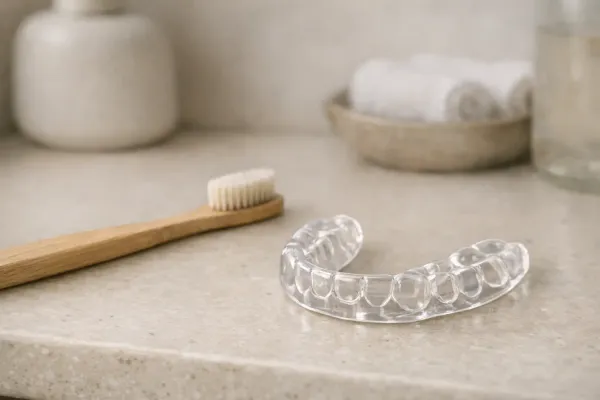
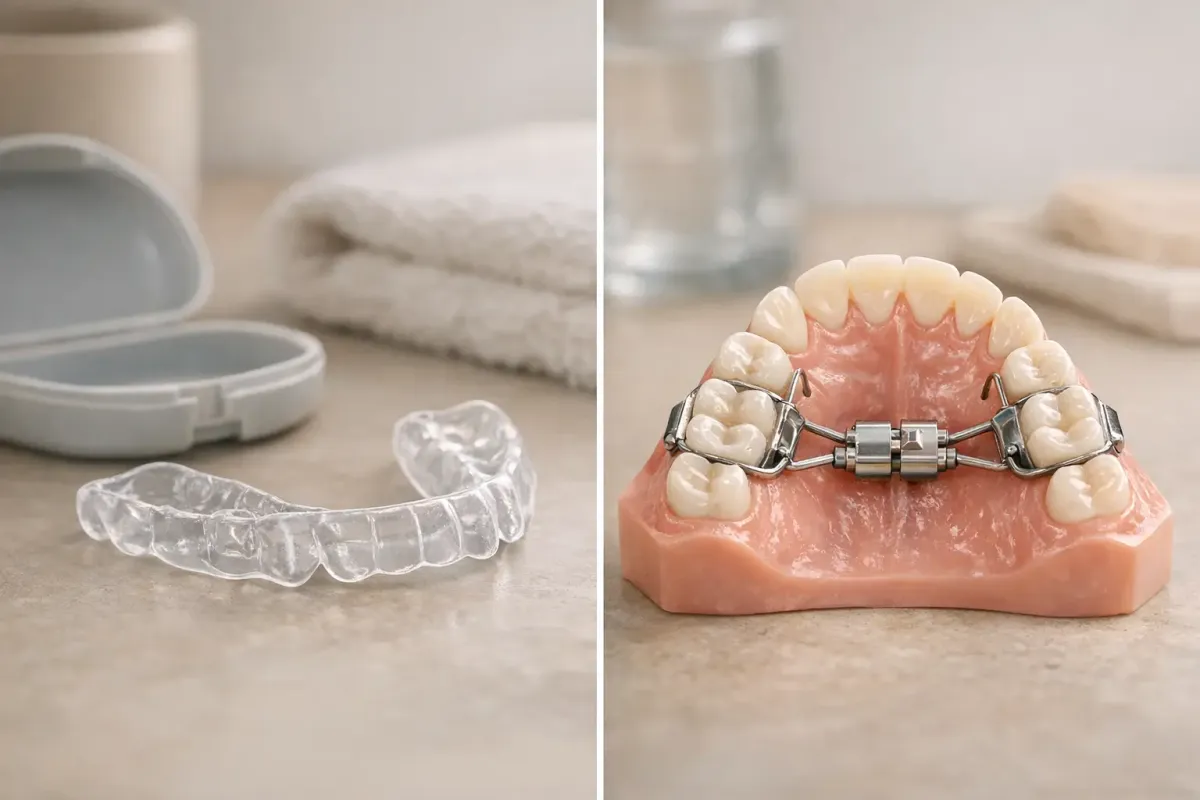
Protective night guards (also called occlusal guards or bite splints) are usually made from soft or dual-laminate plastic. They can be heated and bitten into or custom-molded by a dentist. Their main job is to form a physical barrier so your upper and lower teeth cannot grind directly against each other. This cushions jaw muscles and limits chipping or cracking. The guard is passive; it absorbs force rather than applying new force to move teeth.
Orthodontic expanders, such as rapid palatal expanders (RPEs) or clear aligner sequences, deliberately apply controlled pressure to stimulate bone remodeling around teeth. Kids can remodel the palate bone more readily because growth plates are still open. Adults lose that skeletal flexibility, so true expansion relies on dental tipping, time, and, in difficult cases, surgery.
Key differences at a glance:
- Primary goal: Protection for night guards vs. movement for expanders
- Direction of force: Vertical cushioning vs. lateral pressure
- Professional oversight: Optional for basic guards, mandatory for expanders as per the American Association of Orthodontists
- Material rigidity: Softer polyethylene for guards vs. rigid acrylic/metal or multilayer plastic for aligners and skeletal expanders
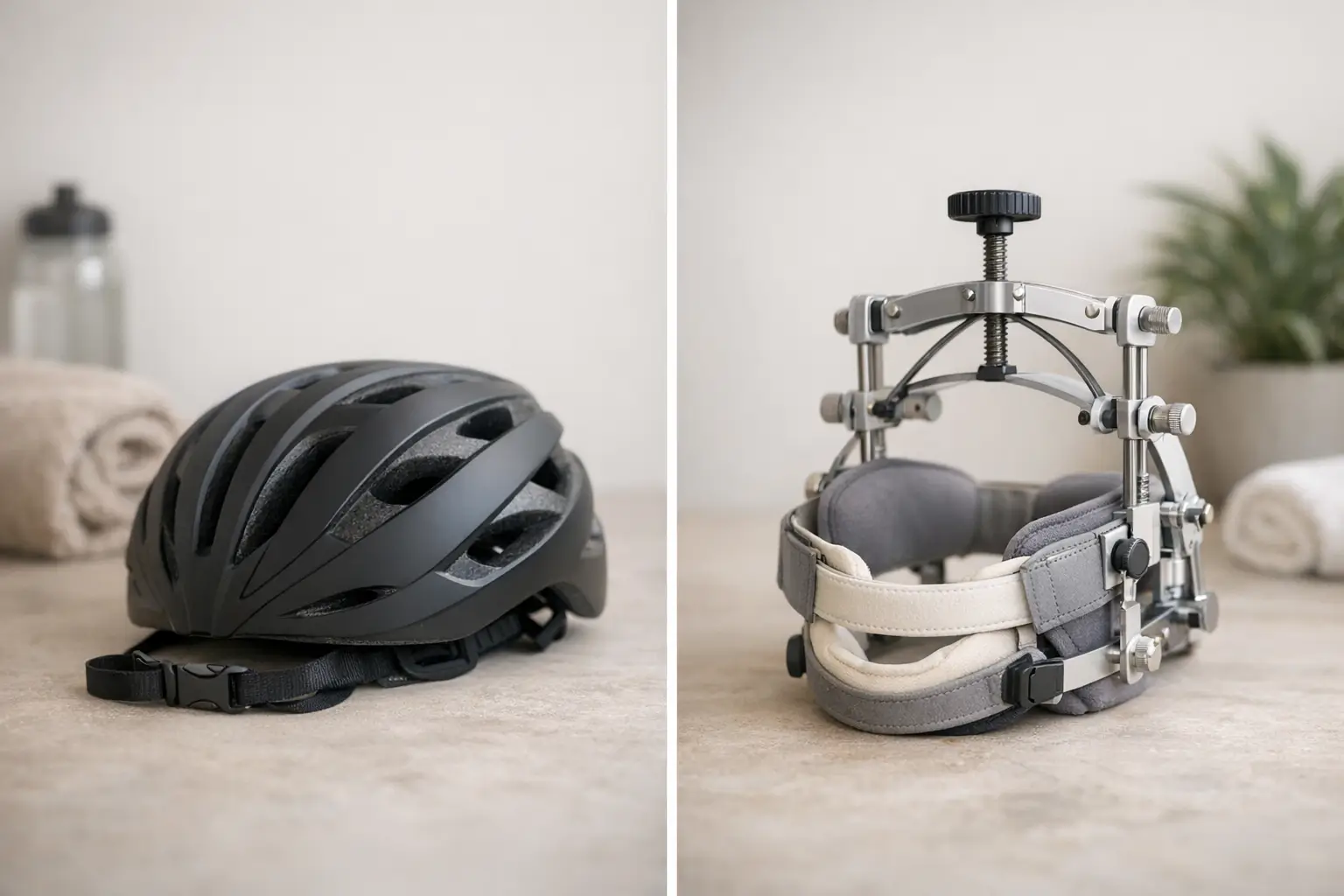
Think of it this way: a crash helmet protects your head but does not reshape your skull. Similarly, a classic boil-and-bite guard shields enamel but is not engineered to widen your arch.
The physics also differ. An RPE uses a central screw to generate roughly 1 to 2 lbs of sustained force per activation, enough to separate mid-palatal suture fibers in a growing child. A retail guard, in contrast, exerts whatever pressure comes from you biting into softened plastic for 30 seconds, after which the material hardens and becomes inert. The force drops from pounds to mere ounces, far below the threshold required to move bone.
Evaluating Consumer Devices Marketed for Arch Expansion
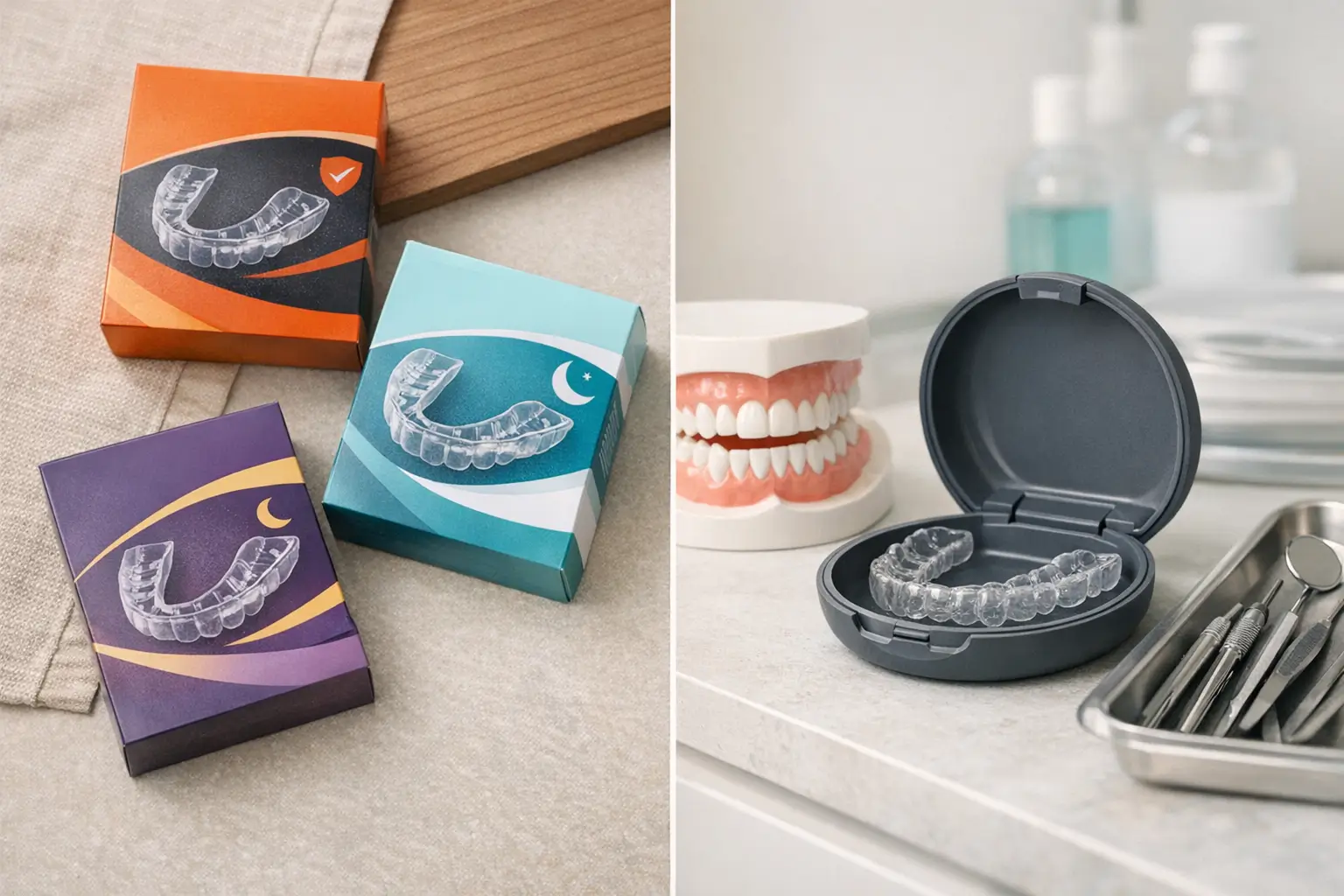
Open an online marketplace and you'll find mouthguards billed as “arch trainers,” “jaw wideners,” or “myofunctional expanders.” Prices range from $25 to $150. Sales pages often list benefits such as:
- “Naturally straighten crowded teeth while you sleep”
- “Enhance oxygen intake by opening nasal passages”
- “No orthodontist visit needed”
What do these devices actually do? Most are made from thermoplastic that you heat in hot water and mold onto teeth. The initial molding may feel snug, but after the plastic cools it merely fits passively. Without a rigid frame and an activating screw or sequential set of tighter trays, there is little sustained lateral force. Think of pressing a balloon with your hands: the shape changes only while you push. Remove the pressure and it returns to form.
Some vendors downplay this reality by showcasing dramatic “before and after” photos. A closer look often reveals that lighting, camera angle, or even facial expression differs between shots, visual tricks that exaggerate results. Read the fine print and you may spot statements like “individual results may vary” or “not intended to diagnose or treat any medical condition.” Those disclaimers protect the seller, not your bite.
The evidence base for over-the-counter arch shaping guards in adults is almost nonexistent. Makers sometimes cite research on clear aligners, hoping you will assume their low-cost guard is the same technology. For instance, a 2025 study by Caruso et al. examined digital models of prepuberal patients using clear aligners and found measurable expansion. The aligners delivered controlled pressure because each tray was fabricated with incremental changes. That design is not replicated in a single moldable guard.
Similarly, a 2023 paper by Galluccio et al. reported accurate maxillary arch expansion using aligners in an orthodontic setting. Again, the protocol included clinical supervision, 3-D planning, and a series of aligners with millimeter-level staging. That is worlds apart from the nightly “one-size-fits-all” device you buy online.
Authoritative consumer sources echo this caution. The Colgate Oral Care Center states that an over-the-counter mouthguard cannot substitute for a programmed aligner sequence. WebMD Dental Health likewise notes that arch expansion is complex and should be supervised.
In short, while marketing copy cherry-picks words like “aligner,” the product you unbox is normally a soft guard, not a tooth-moving appliance. If it feels comfy and reduces grinding, great, you have bought a night guard. Just do not expect orthodontic magic.
Clinical Findings on Adult Arch Expansion
True arch expansion in fully grown adults is possible but limited, slow, and technique-sensitive. Orthodontists divide expansion into two mechanical categories:
- Dental tipping: Teeth are angled outward within the existing bone. This offers a few millimeters of width and is common with aligners.
- Skeletal expansion: The mid-palatal suture is widened, ideally before puberty. In adults, surgically assisted expansion may be required.
Let’s look at what published studies tell us.
The previously mentioned Caruso et al. 2025 analysis involved children whose craniofacial bones were still developing. They saw predictable expansion with aligners, but the authors caution that the results should not be generalized to adults.
Galluccio et al. 2023 evaluated adults and adolescents treated with aligners. They observed lateral changes averaging 1.5 to 2.5 mm at the premolar region, primarily from dental tipping, not bone widening. The paper stresses that forces must be carefully planned to avoid excessive root exposure.
Key clinical takeaways in plain language:
- You can nudge teeth outward a couple of millimeters, but you cannot create a brand-new bone plate without surgery.
- Even mild expansion in adults benefits from periodic X-rays and checks for gum recession.
- The gradual force schedule used by orthodontists is what allows safe remodeling; random pressure from a soft guard lacks that precision.
- Retention is critical, after any expansion, patients typically wear a bonded retainer or night-time aligner for years to prevent relapse. Over-the-counter guards do not address this long-term phase.
On balance, the literature supports limited aligner-guided dental expansion in adults, provided it is monitored. There is no peer-reviewed evidence that an unsupervised, single-stage night guard accomplishes the same biomechanical change.
Risks of Unsupervised Bite Changes
Trying to self-engineer your bite is a little like remodeling your kitchen without a tape measure. Some people get lucky, but many end up calling a contractor to fix crooked cabinets and busted pipes. Dentistry is no different. Altering tooth position without diagnostics can create immediate and long-term problems.
Potential Complications
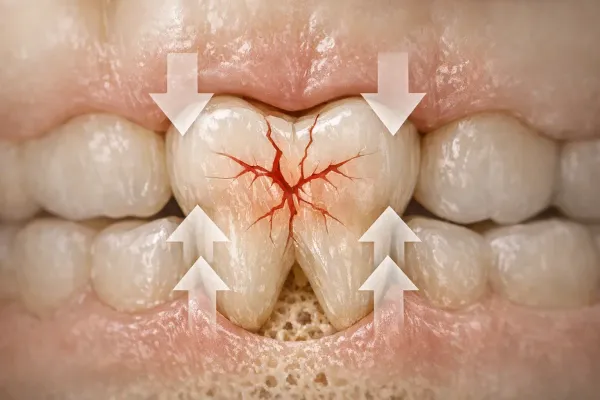
- Bite misalignment: Random or uneven pressure can shift a tooth more on one side than the other, leading to a new crossbite or open bite.
- Tooth mobility: Excessive lateral forces make teeth feel loose. Stabilizing them later may involve splints or even extraction.
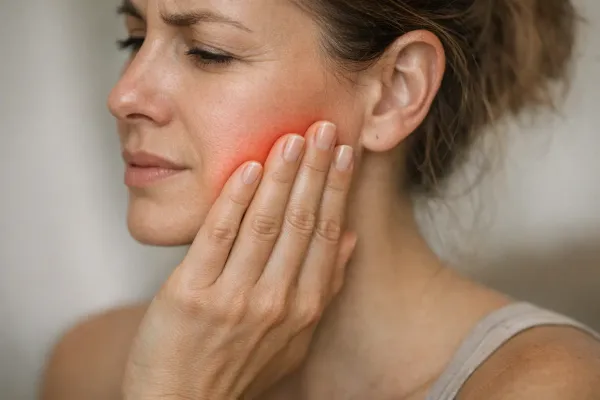
- Temporomandibular joint (TMJ) flare-ups: A new bite relationship can strain jaw joints, causing clicking, pain, or limited opening. Explore more about effective TMJ treatments for relief.
- Gum recession and root exposure: Tipping teeth through thin bone can push roots against the gum, leading to recession that may require grafting.
- Pulpitis and tooth sensitivity: Constant pressure or grinding on an ill-fitting guard can inflame tooth nerves.
- Oral hygiene challenges: An oversized guard can trap plaque, increasing the risk of decay and bad breath. Proper cleaning can help mitigate these risks.
These complications are not theoretical. Dentists routinely treat patients who found a cheaper path online, only to pay more later.
Cost Implications
Let’s attach some numbers so you can weigh the real-world impact:
- Professional custom night guard: $300–$600
- Over-the-counter guard: $25–$150
- Orthodontic retreatment to fix bite: $3,000–$7,000
- Gum grafting per quadrant: $700–$1,200
- TMJ therapy (splints, physio, meds): $1,000–$2,500
If a low-cost guard performs its protective duty, you save money. If it triggers misalignment, you could spend thirty times more correcting the outcome. That risk-reward ratio is why most dental professionals urge caution.
Conclusion: Navigating the Claims and Risks
Arch shaping night guards promise a two-for-one deal: guard your teeth and widen your smile. Current research does not support significant adult arch expansion from a single unsupervised device. Protective night guards are valuable for bruxism, but they function differently from orthodontic appliances designed for gradual, controlled tooth movement.
Before you click “Add to Cart,” talk with a dentist or orthodontist. A short consultation can clarify whether you need mere protection, monitored expansion, or another treatment altogether. Your bite is a complex system; give it the professional respect it deserves.
If you are determined to explore expansion, arm yourself with the right questions: How much widening do I realistically need? What diagnostic records (X-rays, 3-D scans) will guide the plan? How will retention be handled? What are the red-flag symptoms that mean I should stop using a device and seek help? The answers will turn marketing hype into measurable, safe progress, or save you from unnecessary risk altogether.