Botox for Bruxism: Latest Innovations and What Research Shows
Explore Botox for bruxism, from ultrasound-guided injections to treatment comparisons, with a clear look at the evidence, benefits, and risks.

Research on Botox for bruxism points to an important distinction: weakening your jaw muscles is not the same as stopping grinding. In “Botulinum Toxin Therapy for Managing Sleep Bruxism: A Randomized and Placebo-Controlled Trial,” injections reduced the strength of recorded muscle contractions without clearly reducing how often sleep bruxism events occurred. A quieter jaw muscle is not automatically a cured condition.
That finding helps explain both the appeal and the limits of treatment. Botulinum toxin may help selected symptoms, but pain relief, fewer grinding episodes, and protection against tooth damage are separate goals. Evidence for one should not be used as proof of another.
Newer approaches include ultrasound guidance, more tailored muscle selection, and better ways to track results. Before you pay for an upgraded injection plan, you deserve to know whether it offers a meaningful advantage over simpler options. Better equipment is useful. Better outcomes still need evidence.
Botox for Bruxism: What Does the Research Actually Show?
Two placebo-controlled trials offer a useful starting point. “Onabotulinum toxin-A injections for sleep bruxism: A double-blind, placebo-controlled study” reported improvements in some patient-rated outcomes after treatment. The authors described the results as promising, while calling for a larger trial.
The later study, “Botulinum Toxin Therapy for Managing Sleep Bruxism: A Randomized and Placebo-Controlled Trial,” examined overnight jaw-muscle recordings. Its findings supported an effect on contraction strength rather than on the occurrence of sleep bruxism itself.
Together, these studies suggest that botulinum toxin can change what your jaw muscles do during bruxism. They do not establish a cure, prove lasting tooth protection, or settle the safety of repeated treatment over many years. They are also not a complete account of every study published since. A claim about the “latest evidence” needs an up-to-date, systematic search, not just a recent date on a webpage.
Less jaw pain is not the same as less grinding
When you assess treatment claims, separate five outcomes:
- Pain relief: whether your jaw hurts less during chewing, on waking, or through the day.
- Bite force: how strongly your jaw muscles can close your teeth together.
- Muscle activity: the strength or pattern of electrical signals recorded from those muscles.
- Grinding frequency: how often bruxism episodes occur, particularly during sleep.
- Tooth protection: whether treatment prevents fractures, wear, or damage to dental work.
An injection can weaken a muscle without removing the signals that trigger bruxism. You could also feel less pain while grinding episodes continue. Neither result, by itself, proves that your teeth are protected or that your sleep has improved.
That distinction matters when a headline says Botox “works.” Works for what? Less soreness is worthwhile. It should not quietly become a claim that treatment stops grinding, prevents every cracked tooth, or cures bruxism.
Why the quality of the evidence matters
A randomized trial compares treatments while trying to limit differences between groups. A placebo-controlled trial adds a comparison treatment designed to help separate a treatment effect from expectations and other influences.
These methods strengthen research, but they do not make every conclusion equally reliable. Small trials may miss uncommon harms. Short follow-up cannot answer questions about years of repeat injections. Results may also depend on which muscles were treated, which product was used, and how bruxism was diagnosed.
Systematic reviews can bring these studies together. However, they cannot repair weak underlying research. A review that combines different patient groups, injection methods, and outcome measures may offer less certainty than its headline suggests.
For your decision, the useful question is not simply whether a study found improvement. Ask what improved, by how much, for how long, and at what cost to chewing function or comfort.
How Botox for Bruxism Works, and When It Might Fit Your Treatment Plan
Botulinum toxin temporarily blocks some nerve signals that tell an injected muscle to contract. The muscle then contracts less strongly. Botox is a brand name for onabotulinumtoxinA, while bruxism research also discusses other botulinum toxin type A products.
Those products are not interchangeable. Their dosing units are product-specific, so a number used for one product should not be treated as an equivalent amount of another.
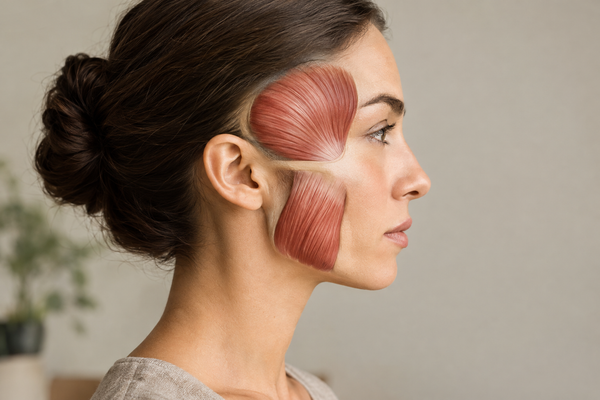
The masseter, a large chewing muscle at the side of your jaw, is a common treatment target. The temporalis, which spreads across your temple, may also be considered. Your clinician should assess which muscles contribute to your symptoms rather than assuming every sore jaw needs the same injections.
Awake clenching and sleep bruxism need different assessments
Awake bruxism can involve repeated tooth contact, clenching, or jaw bracing while you are conscious. Sleep bruxism involves jaw-muscle activity during sleep. Research findings from one group do not automatically apply to the other.
Bruxism is not always a disorder that needs treatment. What matters is whether it contributes to pain, tooth damage, problems with dental work, or other meaningful effects.
Your assessment may include muscle tenderness, jaw movement, headache patterns, medication use, and daytime habits. Your dentist may also look for worn teeth or cracked restorations. Tooth wear alone does not prove current sleep bruxism because it can reflect past activity or other causes, including acid erosion.
Snoring, witnessed breathing pauses, and marked daytime sleepiness deserve attention too. Sleep testing is not necessary for everyone with suspected bruxism, but these symptoms may justify an evaluation for a sleep disorder.
What relaxing your jaw muscles can and cannot do
Reducing muscle force may help selected symptoms, but it does not necessarily remove the drivers of grinding. It also does not place a physical barrier between your teeth. A professionally fitted splint serves a different purpose.
Similarly, reducing an enlarged masseter is not the same goal as treating bruxism. A slimmer lower face may be an intended cosmetic result. It does not show whether your morning pain, sleep-related muscle activity, or risk of dental damage improved.
Your treatment plan should name the problem being treated. “Jaw slimming” and “less pain when chewing” are not interchangeable outcomes, even when the same muscle is involved.
Who might consider injections
Injections may be considered for selected adults with persistent symptoms after a careful diagnosis and discussion of alternatives. They are not a default response to every tender jaw or a routine replacement for tooth protection.
A reasonable discussion includes what you have already tried, whether those treatments were suitable, and why they did or did not help. It should also cover your ability to chew comfortably, any existing weakness, and what would count as a worthwhile result.
If the diagnosis is unclear, adding injections can make the picture harder to interpret. Finding the cause of your symptoms comes before choosing the most heavily marketed treatment.
Innovations in Botox for Bruxism: What Is Actually New?
“Innovative” can mean a better tool, a more thoughtful plan, or simply a fresh marketing label. For Botox for bruxism, it helps to separate technical improvements from proven patient benefits.
Ultrasound guidance, tailored muscle selection, and detailed symptom tracking may improve how treatment is planned or evaluated. Whether each approach improves bruxism outcomes needs its own evidence.
Ultrasound guidance: clearer targeting, but better outcomes?
Ultrasound lets a clinician view muscles and nearby structures while planning or performing an injection. This can provide information about muscle depth, thickness, and surrounding anatomy.
That is a technical benefit. Less pain, better chewing function, and fewer adverse effects are patient benefits. One does not automatically prove the other.
To show that ultrasound guidance improves bruxism treatment, researchers need direct comparisons with injections guided by anatomical landmarks. Those comparisons should use similar patients, suitable treatment methods, and meaningful follow-up.
Until a clinician can point to relevant comparative evidence, ultrasound guidance is best described as a targeting approach, not a proven bruxism breakthrough. Ask why it is recommended for your anatomy and whether it changes the expected benefit, risk, or cost.
Personalized muscle selection and treatment planning
Individualized planning means asking which muscles appear involved, whether symptoms affect one or both sides, and what you want treatment to achieve. Your facial anatomy, chewing function, previous treatments, and existing weakness also matter.
That is sound clinical reasoning. It is not proof that a particular clinic’s customized protocol has outperformed other approaches in trials.
Your clinician should be able to explain the proposed muscle targets in plain language. “This is our standard package” is less useful than a clear reason linked to your symptoms and examination.
Be especially cautious when the main evidence offered is a set of before-and-after jawline photographs. A photograph can show a change in shape. It cannot measure pain, nighttime grinding, or the condition of your teeth.
Better measurement instead of bigger promises
Muscle recordings can show changes in contraction strength or patterns. Overnight sleep recordings, when clinically appropriate, can examine nighttime events and related sleep problems.
Your own experience matters too. A simple symptom diary can record morning pain, chewing difficulty, headaches, and whether symptoms interfere with meals or daily activities.
These measures complement one another. None is a universal score for treatment success. Reduced muscle activity may not match your pain level, and feeling better does not prove that tooth damage has stopped.

A useful plan sets a baseline before treatment and checks the same outcomes afterward. If your main goal is less morning pain, record that consistently. If your concern is dental damage, continued dental monitoring remains important even when your jaw feels better.
Better measurement is less glamorous than a new injection technique. It is also harder to replace with a sales pitch.
Comparing Bruxism Treatments: Botox, Splints, and Physical Therapy
Different bruxism treatments do different jobs. Botulinum toxin reduces the force of injected muscles. A splint provides a barrier between your teeth. Physical therapy may address pain and jaw function. Daytime habit strategies target awake clenching or bracing.
That makes a simple ranking misleading. The best choice depends on your diagnosis, your main problem, and the balance of likely benefit and harm.
What Botox-versus-splint trials can tell you
A trial comparing injections with an occlusal splint can help answer a specific question, such as which approach reduces jaw-muscle pain over a defined period. It cannot automatically show which treatment prevents tooth fractures or works best over many years.
Pay attention to the study population too. Results in adults with painful jaw muscles and probable sleep bruxism may not apply to someone whose only concern is tooth wear.
There is also a statistical trap: “no significant difference” does not mean “equally effective.” A small study may fail to detect a real difference. Establishing that treatments are similarly effective requires a study designed to test that question.
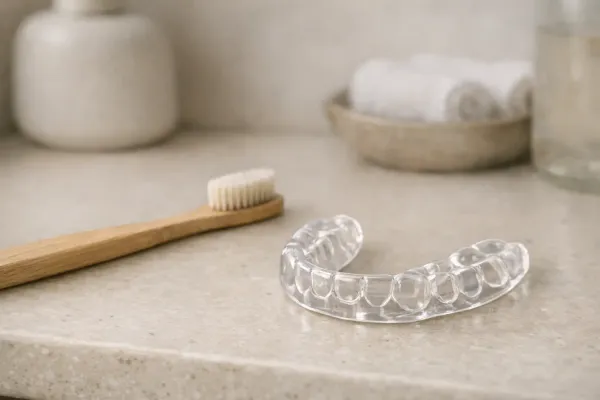
For your decision, a professionally fitted splint may help protect teeth even when bruxism continues. It may also help some symptoms. Fit, comfort, and follow-up matter, and a guard should be checked if it causes new pain or changes how your bite feels.
How dry needling and manual therapy compare
Manual therapy and a tailored physical therapy plan may address painful muscles, jaw movement, and daily function. Dry needling uses needles but does not inject botulinum toxin.
These approaches should be judged against the condition being treated. Evidence for relief of jaw-muscle pain is not automatically evidence that a treatment reduces sleep bruxism events.
The same caution applies to medicines. A drug prescribed for pain, anxiety, or another condition may have a different goal from treating bruxism itself. Some medicines may also contribute to clenching or grinding in certain people. Review your medication list with your clinician rather than stopping a prescribed medicine on your own.

Here is a practical comparison:
- Botulinum toxin: aims to reduce injected muscle force and selected symptoms. It requires injections, has temporary effects, and may cause chewing weakness. Repeat treatment needs reassessment.
- Professionally fitted splint: provides a barrier between teeth and may help symptoms. It requires regular use, cleaning, and fit checks. Protection does not mean grinding has stopped.
- Physical therapy or manual therapy: aims to improve pain and jaw function. Results depend on your diagnosis and treatment plan. Home exercises and follow-up may be needed.
- Daytime habit awareness: aims to reduce awake clenching or bracing. Reminders and behavior changes require practice. They do not give you conscious control over grinding during sleep.
Why a combined plan may make more sense
Your symptoms may need more than one tool. Tooth protection, daytime behavior changes, physical therapy, and treatment of contributing conditions can serve different goals.
Combination care still needs a clear rationale. Adding several treatments at once can make it difficult to tell which one helps. When practical, agree on priorities and a way to measure each step.
Addressing a coexisting sleep disorder is important for your health, but it is not a guaranteed bruxism cure. Likewise, jaw pain may reflect a temporomandibular disorder, or TMD, rather than bruxism alone.
The National Institute of Dental and Craniofacial Research’s TMD guidance emphasizes careful diagnosis and conservative care. That is a useful principle when considering a treatment that weakens chewing muscles.
Botox for Bruxism Safety: Side Effects and Repeat Treatments
Botulinum toxin is a prescription medicine, not a risk-free jaw reset. Its effects are temporary, but an unwanted effect may interfere with eating, speaking, or facial movement while it lasts.
Your consent discussion should cover product-specific warnings and the uncertainty around repeated use for bruxism. A cosmetic consultation alone may not address every issue relevant to jaw pain and dental health.
Side effects and unresolved long-term questions
Possible problems include injection-site discomfort, bruising, chewing weakness, facial asymmetry, and unwanted effects on nearby muscles. Your medical history, medicines, swallowing function, and any neuromuscular condition belong in the safety assessment.
Botulinum toxin products carry a serious warning that effects can spread beyond the injection area. Seek immediate medical care if you develop trouble swallowing, speaking, or breathing after treatment. Do not dismiss these symptoms as routine soreness.
Reduced muscle size, called atrophy, can follow reduced muscle activity. This may be an intended cosmetic effect, but it can also matter for chewing function.
Repeated treatment raises questions about changes in the jawbone when muscles place less force on it. Animal research and limited human studies have raised concerns, but they do not establish how often clinically important bone changes occur in people treated for bruxism.
It would be misleading to declare this issue settled. It would also be misleading to claim that everyone receiving injections will develop meaningful bone damage. Better long-term human research is needed.
Repeat-treatment timing should depend on your response, side effects, function, and goals. A calendar reminder is not a medical indication. If treatment does not produce a worthwhile benefit, repeating it automatically is a poor substitute for reassessment.
What off-label treatment means
In the United States, bruxism is not an FDA-approved indication for Botox. Using it for bruxism is therefore off-label. Approval status varies by product and country, so your clinician should check the current local prescribing information.
Off-label does not automatically mean inappropriate. It does mean that approval for another condition should not be presented as approval for bruxism.
Ask what evidence supports the proposed use, what alternatives are available, and what costs you may face. Insurance coverage may differ from coverage for approved uses.
Why pediatric case reports do not establish routine safety
A case report about treating a child can describe an individual experience. It cannot establish how well treatment works across children, identify uncommon harms, or show long-term safety in growing jaws.
Even an encouraging result needs context. A child with a complex neurological condition may have very different needs from a child who grinds their teeth but has no pain or damage.
Pediatric decisions require appropriate dental and medical assessment. Adult treatment plans should not simply be scaled down and marketed to children.
Your consultation checklist
Before agreeing to injections, ask:
- What is my diagnosis, and what else could explain my symptoms?
- What qualifications and experience do you have in treating jaw conditions?
- Which symptom are we treating, and how will we measure improvement?
- Which product will you use, and is this use approved locally or off-label?
- Why are you recommending these muscles for treatment?
- Would ultrasound guidance change the expected benefit or risk in my case?
- What less invasive alternatives fit my situation?
- What risks are especially relevant to my health and chewing function?
- When will you review the result, and whom should I contact about side effects?
- What is the total cost, including assessment, follow-up, and possible repeat treatment?
- What would make us stop, change the plan, or investigate another diagnosis?
A good consultation should leave you with clear answers, not just an appointment for injections. You should understand both the intended benefit and the limits of what treatment can promise.
Conclusion: Choose Evidence Over the Latest Injection Trend
Botox for bruxism may have a role in managing selected symptoms, but it is not an established cure. Placebo-controlled research supports a distinction between reducing muscle force and stopping the sleep-related activity that causes bruxism.
New targeting methods may improve how injections are delivered. They still need evidence showing that technical precision translates into benefits you can feel or measure. Less pain, fewer grinding episodes, preserved chewing function, and protected teeth remain separate outcomes.
Your next step is an assessment by a qualified dental or medical clinician, with sleep evaluation when symptoms warrant it. Start with three questions: Which problem are we treating? How will we measure success? What would justify repeating injections, changing course, or stopping?
Those answers matter more than how new the technique sounds.