How to Identify Jaw Clenching from Stress vs. Other Dental Issues
Learn to distinguish stress-induced jaw clenching from other dental problems.
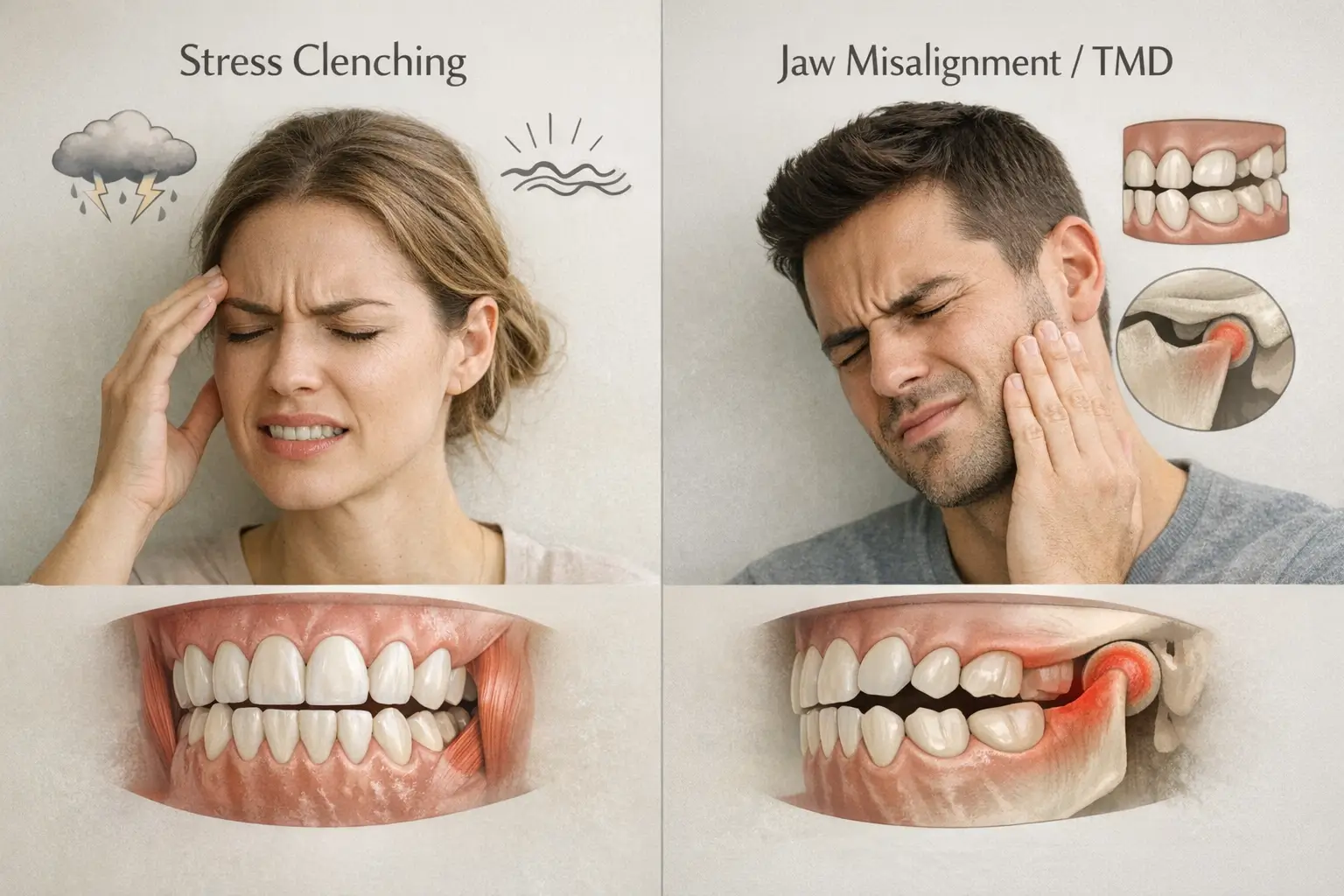
Jaw clenching is sneakier than you might think. You can go through your workday, trade memes, or enjoy a green smoothie without realizing your masseter muscles are in overdrive. The result? Headaches, worn enamel, or your partner complaining about your nighttime trash compactor impressions.
The tricky part is figuring out why you're clenching. Stress is a usual suspect, but so are crooked teeth, temporomandibular joint disorders (TMD), and simple habits. This article delves into the science to help you differentiate, find the right treatment, and prevent your jaw from feeling like a vice-grip commercial.
Understanding Jaw Clenching: Stress or Other Issues?
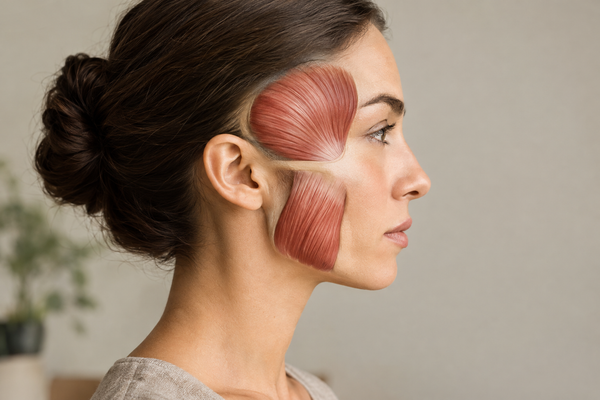
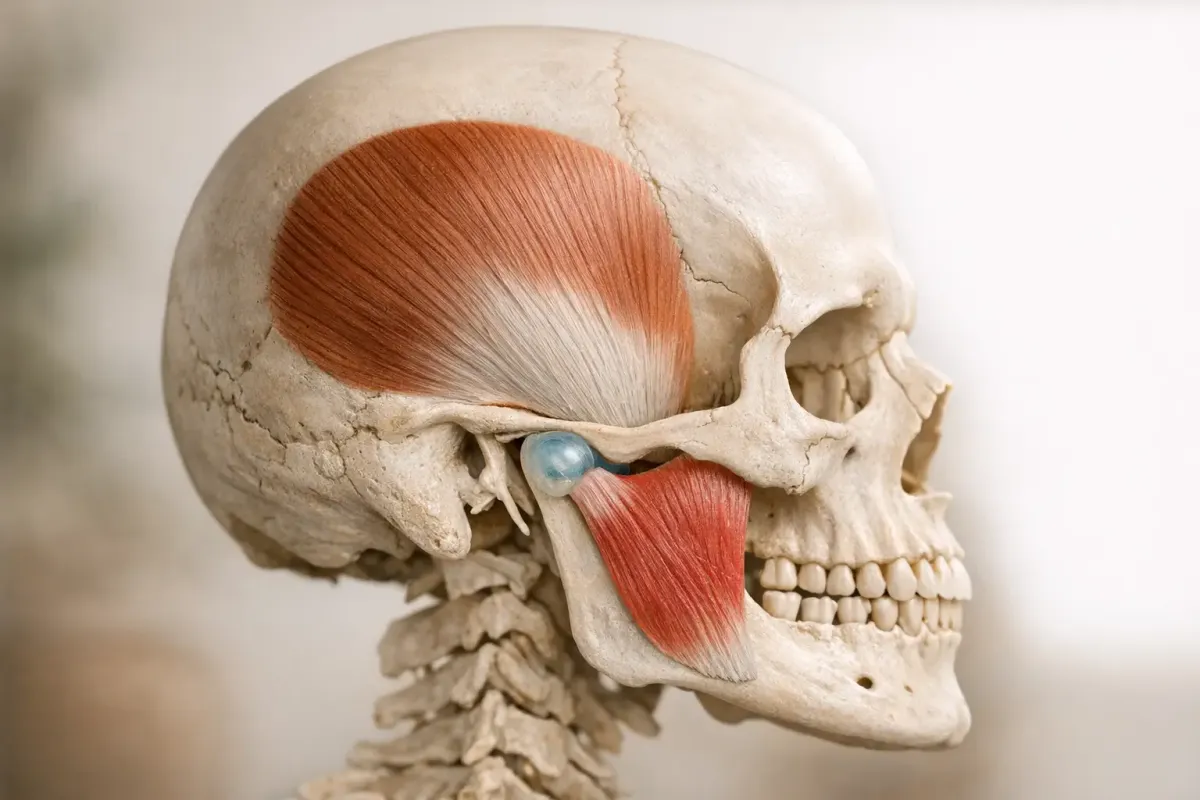
Jaw clenching is part of bruxism, a term dentists use for grinding or gnashing of teeth, whether consciously (awake bruxism) or during sleep (sleep bruxism). It involves the masseter and temporalis muscles—some of the strongest relative to their size. When these muscles repeatedly contract, they apply pressure on teeth and jaw joints not built for constant power-lifting.
Bruxism is defined as “repetitive jaw-muscle activity” and can include clenching or grinding. It's often associated with headaches or TMD. The Standardised Tool for the Assessment of Bruxism (STAB) is a common diagnostic tool, utilizing self-reports, clinical signs, and instrumental data from devices monitoring muscle activity during sleep.
Not all clenching is stress-driven. Other causes include an uneven bite and medications affecting dopamine levels. A narrative review by Voß et al. found correlations between bruxism, TMD, and headaches, though the cause-effect is complex. Jaw clenching might be a response to pain from an existing disorder, not the root issue.
Why does stress get the spotlight? Multiple studies and oral-health resources highlight psychological tension as a major factor. The risk-factor review by Kuhn and Türp lists stress, anxiety, and sleep disturbances as common triggers. However, it's essential to rule out other mouth mechanics that could cause clenching without your awareness.
The Science of Stress-Induced Jaw Clenching
When your brain detects stress, it activates the sympathetic nervous system—the “fight or flight” circuit. Heart rate increases, cortisol floods your body, and muscles prepare for action. The jaw is no exception. Electromyography (EMG) studies show elevated masseter activity when people face stressors like mental arithmetic or suspenseful video games.
This link is evident in both sleep and wakefulness. A 2018 analysis by Kuhn and Türp found that psychosocial stressors significantly raise the odds of sleep bruxism, likely through central nervous system arousal. Voß et al. noted that cortisol spikes and heightened autonomic activity are common in clenchers.
Here's a simplified breakdown:
- Stress signal: Your amygdala signals “Code Red,” even if the danger is just a full inbox.
- Cortisol and adrenaline surge: Hormones prepare your body for action, tightening muscles for potential combat or quick escapes.
- Parafunctional movement: The jaw channels excess muscle readiness into clenching or grinding.
- Feedback loop: Muscle soreness or tooth sensitivity can create more stress, perpetuating the cycle.
Stress-induced clenching often occurs during the day or at night during lighter sleep phases. Stress clenchers may report morning headaches but might not have significant tooth wear early on. A telltale sign is clenching during stressful periods like finals or tax season, with relief on vacation.
Stress can also disrupt sleep architecture. Micro-arousals—tiny awakenings—become more frequent, each potentially triggering bruxism. Sleep tracking studies using polysomnography link higher arousal indexes to more jaw-muscle activity.
The takeaway: If clenching coincides with racing thoughts or anxiety, stress is likely the cause. However, it's crucial to rule out other mechanical issues before reaching a conclusion.
Differentiating Dental Issues: Beyond Stress
Stress isn't the only factor. Mechanical and structural problems in the mouth and jaw joint can cause clenching independently or worsen stress-induced habits. Below are key factors to consider.
1. Malocclusion (Bad Bite)
If your upper and lower teeth don't align, your brain may try to "find" a better resting position, resulting in clenching. Orthodontists often link cross-bites or open bites to parafunction, even without stress. For more insights, uncover surprising causes of teeth grinding that could be linked to mechanical misalignment.
2. Temporomandibular Joint Disorders (TMD)
The temporomandibular joint acts as a sliding hinge between the jawbone and skull. Misalignment or inflammation may lead to clenching for stabilization or pain avoidance. The National Institute of Dental and Craniofacial Research notes that TMD symptoms overlap with bruxism, complicating differentiation. Consider exploring dry needling as a method for TMJ pain relief.
3. Dental Restorations and Missing Teeth
A high filling or unbalanced crown can feel like a pebble in your shoe. Until adjusted, jaw muscles may tense to protect the area. Missing molars alter bite architecture, promoting clenching. If you're experiencing jaw tension, you might find effective techniques for jaw tension relief from stress beneficial.
4. Medications and Systemic Conditions
SSRIs and amphetamine-based ADHD meds are notorious for inducing clenching, possibly due to dopamine pathway changes. Conditions like GERD can also cause nocturnal clenching as a protective reflex.
Voß et al. and a pediatric review by Bulanda et al. highlight that multiple factors often coexist. For example, a child with sleep-disordered breathing might clench due to airway collapse during REM sleep, triggering arousal and muscle activity. Parents may find it useful to explore strategies for managing pediatric bruxism.
How do you distinguish stress from mechanical causes? Look for red-flag clues:
- Uneven tooth wear on one side (suggesting bite issues)
- Pain in front of the ear when opening or closing (indicating TMD)
- Recent dental work preceding clenching onset
- New prescription meds with bruxism as a side effect
- Clenching that doesn't fluctuate with stress levels
If any clues apply, schedule an evaluation with a dentist or orofacial pain specialist. Stress management won't fix a high crown or TMJ issue.
Diagnostic Tools and Techniques
Solving the mystery requires good clues. Modern dentistry offers tools from simple questionnaires to sleep studies. Here's what you can do and what professionals offer.
The Role of Self-Assessment
- Check your daytime posture: Are your teeth touching? They should hover apart except when chewing or swallowing. If clenched, note the context—deadlines, gaming, or tough workouts are common triggers.
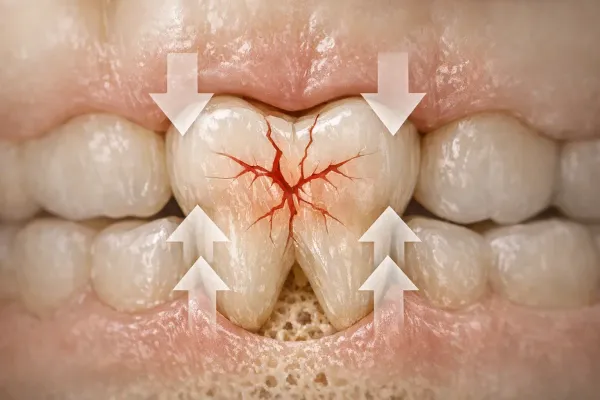
- Mirror test: Look for flat, shiny molar surfaces or vertical enamel cracks, indicating chronic clenching.
- Headache log: Record when headaches occur. Stress clenching often causes morning headaches that fade after breakfast.
- App-based trackers: Some wearables record jaw micro-movements during sleep. While not diagnostic, patterns can be discussed with your dentist.
- Standardised Tool for the Assessment of Bruxism (STAB): Download the checklist or ask your dentist to guide you through it. STAB combines self-report, clinical exam, and instrumental findings for a structured score.
Professional Diagnostic Tools
When self-assessment raises concerns, dental professionals use advanced tools:
- Intraoral exam: Dentists check for wear facets, gum recession, and linea alba (a white line from cheek biting).
- Bite analysis: Articulating paper highlights hard-hitting points, revealing if malocclusion, not stress, is responsible.
- TMJ imaging: Panoramic X-rays or CBCT scans assess joint structures, ruling out arthritis or dislocation.
- EMG and polysomnography: Overnight studies record jaw muscle activity across sleep stages. If bursts align with micro-arousals, stress-related sleep bruxism is likely.
- Occlusal splint trial: A dentist fits a night guard and reassesses symptoms. Improvement suggests mechanical load as the problem; no change points to stress or systemic causes.
Children may need extra steps. A pediatric sleep bruxism review by Leung et al. recommends ENT evaluation to rule out airway issues, as tonsillar hypertrophy often contributes to clenching in children.
Managing Stress-Induced Jaw Clenching
If stress is identified as the primary cause of your clenching, good news—it can be managed. Here are effective strategies, backed by research and a touch of irreverent practicality.
Lifestyle Changes
- Mindfulness meditation: Apps like Headspace or brief breathing breaks at your desk can reduce sympathetic overdrive. Lower stress hormones lead to less jaw tension.
- Cut the stimulants: Caffeine and nicotine increase arousal levels. Swap your afternoon coffee for herbal tea to see if your jaw responds.
- Exercise, but time it right: Aerobic workouts reduce stress hormones long-term but can spike cortisol if done before bed. Aim for morning or early evening sessions.
- Tech hygiene: Blue light disrupts circadian rhythms. Dim screens an hour before bed to normalize sleep stages and reduce micro-arousals.
- Jaw-drop reminders: Place a note saying “lips together, teeth apart” on your monitor. It may be corny, but it's effective.
Therapeutic Interventions
- Custom occlusal splints: A night guard cushions bite forces and protects enamel. While not a cure for stress, it provides time for lifestyle changes. Learn more about choosing the right bruxism treatment.
- Physical therapy and massage: Trigger-point release for the masseter and stretching exercises can break the tension cycle. A study on jaw clenching and balance by Fadillioglu et al. suggests modulating jaw posture benefits whole-body stability. You can also explore the role of physical therapy in TMJ pain management.
- Cognitive behavioral therapy (CBT): CBT teaches coping strategies for stress, tailored to body-focused habits. You'll learn to recognize tension cues and redirect behavior. For a comparison with other treatments, see CBT versus biofeedback for bruxism.
- Biofeedback devices: Wearables that vibrate when you clench help retrain jaw posture. Some night guards sync with apps to log clench episodes, providing valuable data.
- Botox injections: For severe cases, a dentist or oral surgeon can inject botulinum toxin into the masseter to temporarily weaken the muscle. It's a last resort, not a spa treatment, and requires careful dosing.
Don't forget the basics: regular dental checkups, balanced nutrition, and hydration keep oral tissues resilient. While stress may instigate, healthy teeth and gums handle occasional clenching better than a mouth already in crisis.
Conclusion
Jaw clenching is a complex issue. Stress is a major factor, but malocclusion, TMD, medications, and systemic conditions all contribute. Start with self-assessment: notice when you clench, log headaches, and inspect your teeth. If stress seems to be the cause, use relaxation techniques, mindfulness, and behavior modification. When mechanical issues are evident—uneven tooth wear, ear pain, or recent dental work—schedule a dental visit promptly.
The STAB questionnaire can guide you and your dentist through a structured diagnosis, ensuring treatment targets the actual issue. Combining professional input with lifestyle changes gives you a solid chance at retiring your jaw from its night-shift gig. Your teeth, partner, and posture will thank you.