Dental Implants and Bruxism: Understanding the Risks and Considerations
Explore the interaction between dental implants and bruxism, risks involved, and management strategies.
You already know that replacing a missing tooth with a titanium dental implant is about as high tech as dentistry gets. But what if you're also a night-time tooth grinder or clencher? That repetitive jaw workout, known as bruxism, puts significant forces on teeth and any hardware secured in the jaw. Before you commit to implant surgery, it’s crucial to understand how bruxism and implants interact, where the risks lie, and how smart planning can protect your investment.
This guide compiles the current evidence, translates the dental jargon into plain talk, and adds a dash of attitude. You'll find research from peer-reviewed journals alongside advice from major health organizations, so you can walk into the dental office informed and ready to ask the right questions.
Understanding Dental Implants and Bruxism
Dental implants are small titanium screws that fuse with your jawbone, creating an artificial root for crowns, bridges, or dentures. Success rates hover above 90 percent, but that's assuming a relatively calm bite. Enter bruxism, a parafunctional habit defined by involuntary grinding or clenching of the teeth, often during sleep. The American Dental Association estimates that up to 15 percent of adults grind their teeth, while the Cleveland Clinic suggests even higher rates during stressful times.
In the context of implants, bruxism is more than just a nuisance. A 2024 systematic review by Häggman-Henrikson et al. analyzed data from 23 studies and found that bruxers experience significantly higher rates of biological and mechanical implant complications compared to non-bruxers. Similarly, a narrative review by Shafiee and Nourizadeh emphasized that uncontrolled nocturnal clenching can jeopardize osseointegration, the bone bonding around the implant. To better understand the causes of bruxism, you might find it useful to explore the scientific research uncovering the causes of bruxism and teeth grinding.
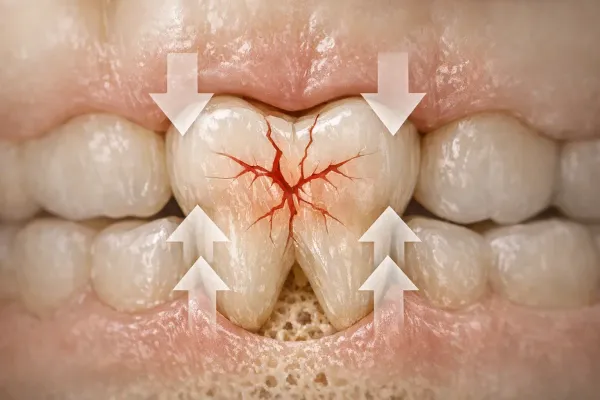
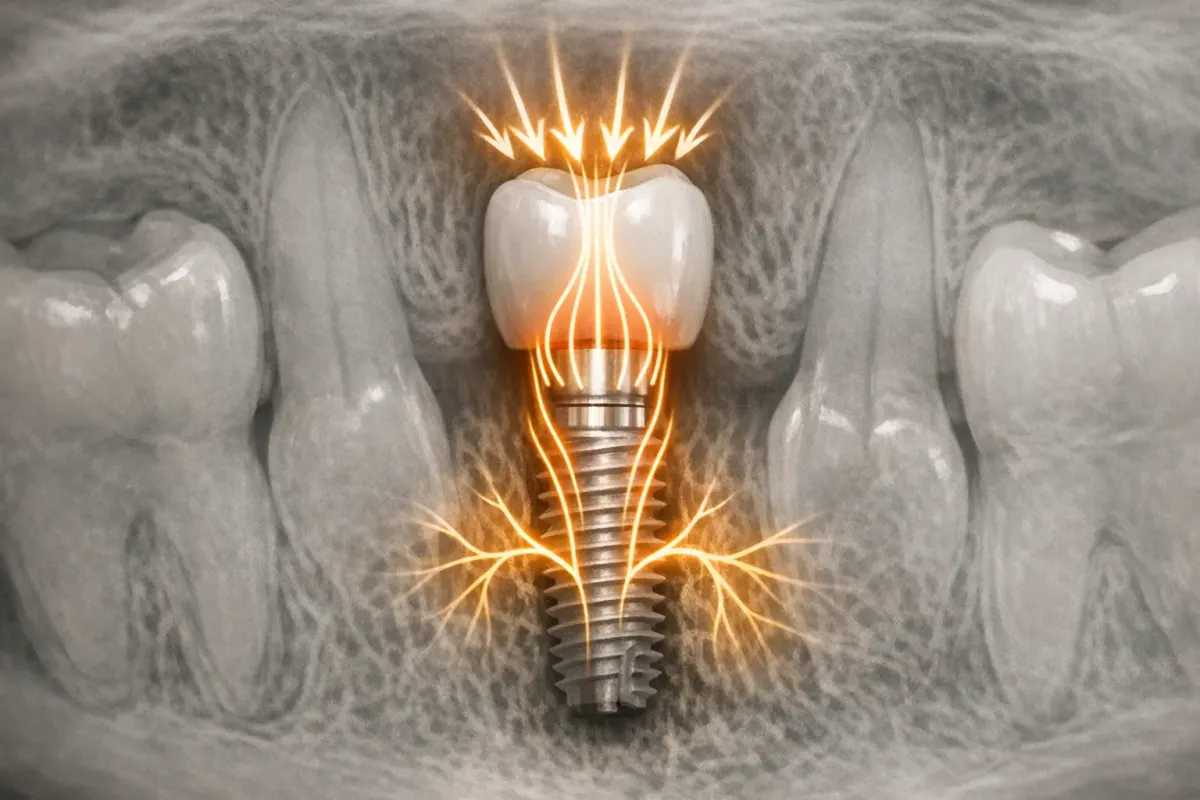
Why is bruxism such a big deal? The forces generated during a grinding episode can exceed 500 newtons, dwarfing the 70 to 150 newtons used in normal chewing. Natural teeth have periodontal ligaments acting like shock absorbers. Implants do not. They relay all that force directly to the bone and screws that hold the prosthetic in place. Repeated overload can lead to fractures and bone loss.
Because bruxism is often painless and occurs during sleep, many patients are unaware of the habit until a dental professional spots the telltale wear facets, cracked enamel, or sore jaw muscles. If you suspect you grind or your dentist has mentioned it, bring it up early during implant planning. Prevention beats repair every time.
Risks of Bruxism on Dental Implants
The link between bruxism and implant failure revolves around one core concept: occlusal overload. Imagine maxing out the weight limit on a bridge. According to a 2025 review by Mojaver et al., sustained overload triggers micro-movements at the bone-implant interface. Bone dislikes constant micromotion, responding with remodeling or resorption, undermining the fixture's stability.
Manfredini et al. performed a systematic review in 2024, identifying bruxism as a top clinical factor associated with implant fractures. They noted that once a crack starts in the metal, the cyclic loading from nightly grinding accelerates failure in a fatigue pattern similar to bending a paper clip repeatedly. More bone loss leads to more movement, further accelerating the crack. It's a vicious cycle.
Implant Fractures
Implant bodies, abutment screws, and even the porcelain crown can break under excessive functional load. Häggman-Henrikson’s meta-analysis reported a two- to four-fold increase in fractures among confirmed bruxers. Cracks often initiate at the crown-abutment junction where stress concentrates. Once the crack travels through the metal, surgery is usually required for removal and replacement, repeating the initial ordeal.
Fractures might remain hidden under the gum until the prosthetic starts to wobble. Your dentist might discover them incidentally on a routine radiograph, or you might feel a sudden "snap" while chewing. Either way, failure often arrives without much warning. Exploring advanced bruxism treatments can provide you with options to manage these risks effectively.
Bone Loss and Peri-implantitis
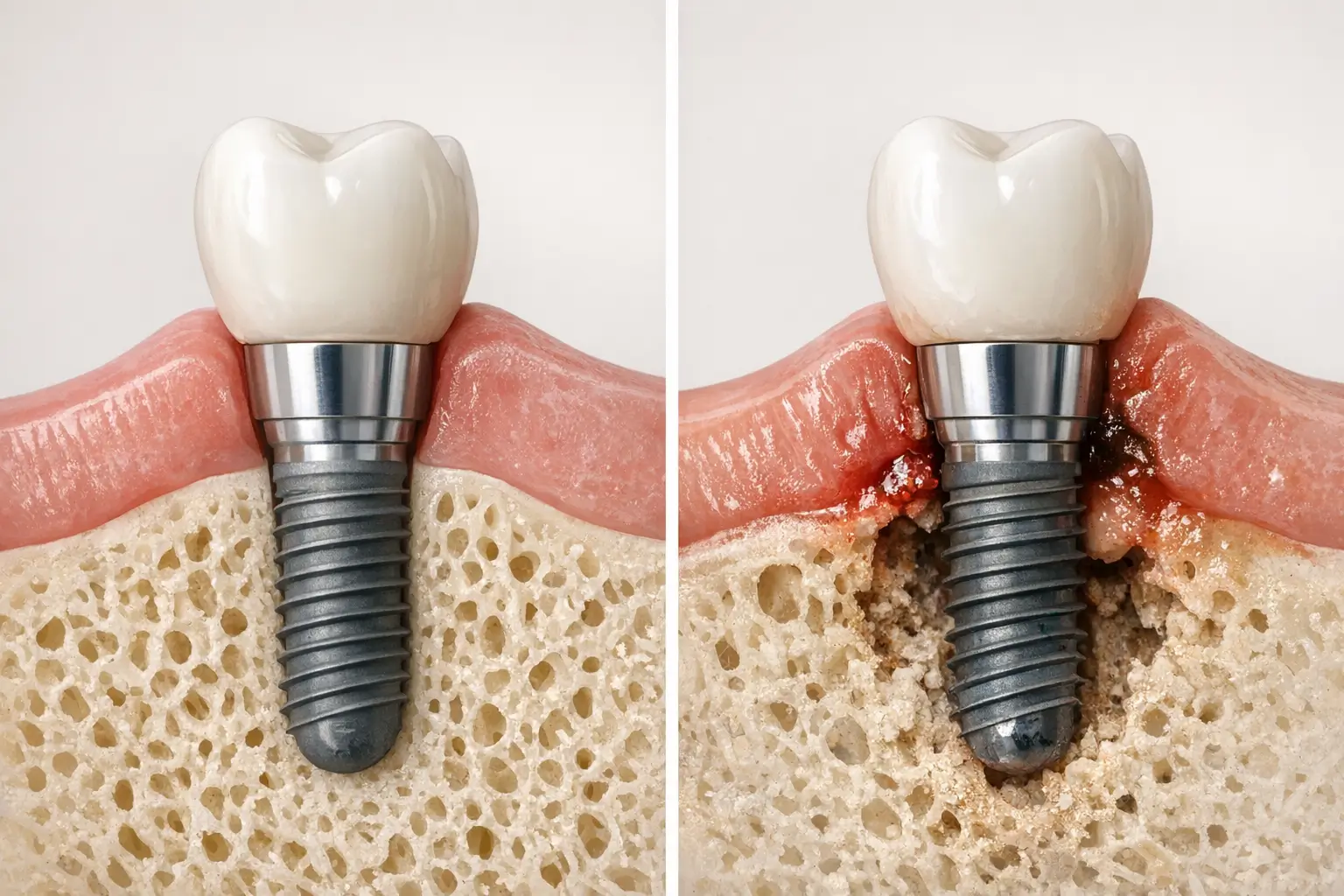
Peri-implantitis is an inflammatory condition characterized by bone loss and pocket formation around an implant. While bacteria are the primary culprits, mechanical overload amplifies tissue destruction. Mojaver’s review found that overload doubled the risk of progressive bone loss compared to normal loading. Continuous bruxism forces create micro-gaps at the implant collar, inviting bacterial infiltration. Once inflammation sets in, the supporting bone shrinks, exposing more threads and further destabilizing the fixture.
Clinically, you may notice bleeding on brushing, swollen gums, or a metallic taste. Radiographs reveal a saucer-shaped bone defect creeping down the implant. Left unchecked, peri-implantitis can lead to total implant loss.
Mechanical Complications in Implant-supported Prostheses
The implant itself is only one part of the equation. The crown, bridge, or full-arch prosthesis screwed onto those implants must also withstand grinding forces. A 2025 meta-analysis by Vidal de Araujo et al. linked bruxism to various mechanical issues, from loosened screws to shattered ceramics.
Common failures you might face include:
- Screw loosening: Repeated lateral forces cause micro-rotation of abutment screws until they slowly back out. You may notice a faint clicking sound or movement when biting. Though your dentist can usually retighten the screw, recurrent loosening signals underlying overload.
- Prosthetic screw fracture: If loosening continues unchecked, the screw can shear off at the neck. Retrieval often requires complicated techniques or even removal of the entire fixture.
- Porcelain chipping: High-stress contacts lead to micro-cracks in ceramic crowns. Chipped porcelain not only looks unappealing but also exposes softer substructures to wear.
- Framework fracture: Full-arch bridges may snap at the thinnest connector when subjected to uneven grinding pressure.
Digital technology is stepping in to address these problems. Shi et al. demonstrated a computer-aided grinding guide helping dentists fine-tune contact points on neighboring teeth, distributing forces more evenly. Even so, bruxism remains a stubborn variable. A single patient can deliver thousands of high-load cycles every night.
From a cost perspective, mechanical failures translate into chair time, lab fees, and patient frustration. If you've already spent thousands on an implant-supported bridge, the last thing you want is to keep paying for repairs. Addressing bruxism before or immediately after installation saves money and sanity. You might consider exploring innovative strategies to stop clenching teeth to protect your investment.
Management Strategies for Bruxism in Implant Patients
Knowing the risks is only half the story. The other half is controlling the grinding habit so your implants can last a long, uneventful life. Management plans generally mix behavior modification, pharmacologic aids, and mechanical protection. You and your dentist can assemble the right combination based on the severity of your bruxism, overall oral health, and personal preferences.
Botulinum Toxin as a Treatment Option
If stress reduction techniques and traditional night guards don't suffice, botulinum toxin type A injections into the masseter and temporalis muscles offer a novel route. In simple terms, tiny doses of the neurotoxin partially relax the chewing muscles, lowering the peak forces generated during a clench.
A 2025 systematic review by Yacoub et al. compiled results from 12 randomized controlled trials and found consistent reductions in electromyographic activity and self-reported pain scores up to four months post-injection. For implant patients, less muscle force means less stress on the prosthesis. Side effects were generally mild, such as transient chewing fatigue or slight asymmetry, and resolved within weeks.
Still, botulinum toxin isn't a magic bullet. You'll need maintenance injections every three to six months, and insurance coverage can be spotty. Discuss dosage, target sites, and expected outcomes with a clinician experienced in facial injections. Temporary muscle weakening may also affect chewing efficiency for hard foods, so plan a soft-food week after your first session.
Occlusal Splints and Night Guards
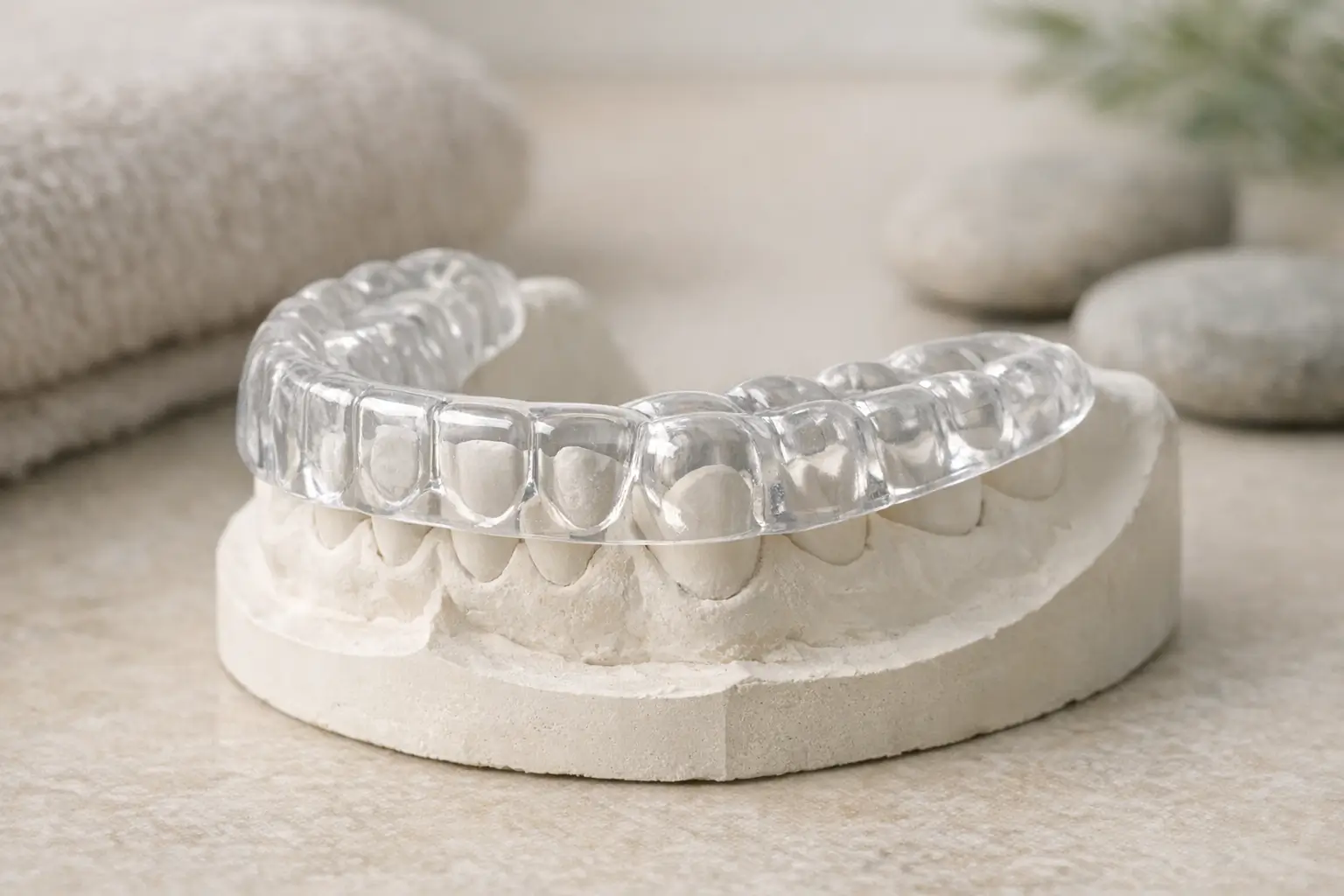
The classic first-line defense remains the occlusal splint, often called a night guard. Custom acrylic devices fit over the upper or lower teeth, providing a sacrificial surface that takes the beating instead of your implant crown. Beyond simply acting as a bumper, well-designed splints can redistribute forces along the arch, reduce muscle activity, and stabilize the jaw joint.
The American Dental Association endorses custom fabricated guards over store-bought boil-and-bite versions, citing better fit and durability. For implant cases, precision is critical. Ill-fitting guards may introduce new occlusal interferences and worsen loading. You can explore how to choose the right bruxism mouth guard to ensure you get the best fit.
An evidence map produced by Singh et al. in 2024 concluded that hard acrylic splints reduce nocturnal muscle activity by roughly 20 percent compared with no appliance. Soft vacuum-formed guards showed mixed results and wore out faster. Some dentists incorporate a metal framework for added rigidity when multiple implants support a bridge.
Tips for successful splint use:
- Wear the guard every night. Skipping sessions allows muscles to maintain their old, stronger patterns.
- Clean with mild soap, not toothpaste, to avoid scratching the surface where germs love to hide.
- Bring the guard to check-ups. The dentist can adjust high spots that develop as the acrylic wears.
Other adjuncts include stress management, sleep hygiene, and physical therapy. Apps that track jaw muscle activity through wearable EMG patches are emerging, providing both patient and clinician with real-time biofeedback. While the technology is young, early adopters report better awareness of clenching episodes that spill into daytime hours. You might find it helpful to learn about how wearable tech can assist in managing bruxism.
Routine Assessment and Maintenance of Dental Implants
You wouldn't buy a sports car and skip oil changes. Implants, especially in a bruxer's mouth, require the same mindset. Stilwell’s 2024 review emphasized that routine occlusal assessment is as vital as plaque control. Even minor shifts in bite, such as a newly erupted wisdom tooth or wear on natural enamel, can concentrate forces on the implant crown.
Here's what a proactive maintenance schedule looks like:
- Semiannual professional cleanings: Hygienists use specialized plastic scalers to avoid scratching the implant surface while removing plaque and calculus that fuel peri-implantitis.
- Annual radiographs: Standard bitewing or periapical films allow your dentist to compare bone levels over time. Catching a one-millimeter bone drop early could save the implant.
- Occlusal guards check: Guards warp with age and lose occlusal contacts. A quick adjustment or remake restores protective function.
- Torque test of abutment screws: Dentists may use a calibrated wrench to verify that screws remain at manufacturer-recommended torque. Early tightening prevents catastrophic loosening later.
If wear facets or porcelain chips appear, occlusal adjustments involve selectively polishing high spots on the crown or opposing teeth. Digital bite analysis tools help map pressure points more precisely than old-school articulating paper. Small tweaks can drop force levels by 30 percent or more, according to Stilwell. To explore additional ways to manage bruxism, you can look into natural lifestyle changes that reduce bruxism symptoms.
Self-monitoring at home also matters. Check for new mobility, bleeding, or bad breath around the implant. Any change warrants a prompt dental visit. Remember, pain is a late sign; asymptomatic bone loss can progress quietly for months.
Conclusion
Dental implants offer a reliable solution for tooth replacement, but bruxism introduces challenges. Grinding subjects implants to forces they were not designed to withstand continuously. Research shows higher rates of fractures, screw failures, and bone loss in habitual bruxers. The good news is that risk doesn't equal destiny. Botulinum toxin injections, well-crafted occlusal splints, and meticulous maintenance can tilt the odds back in your favor. Partner with a dentist who takes bruxism seriously, schedule routine evaluations, and treat your night guard like essential sports gear. The payoff is an implant that lasts decades instead of years, allowing you to chew, smile, and move on with life.