Do I Need a New Night Guard After a Crown?
A crown changes the shape and height of your tooth, so a guard made before it may rock, pinch, or not seat. Here is how to tell, when an adjustment is enough, what to do with a temporary crown, and what the research says about grinding and crown chipping.
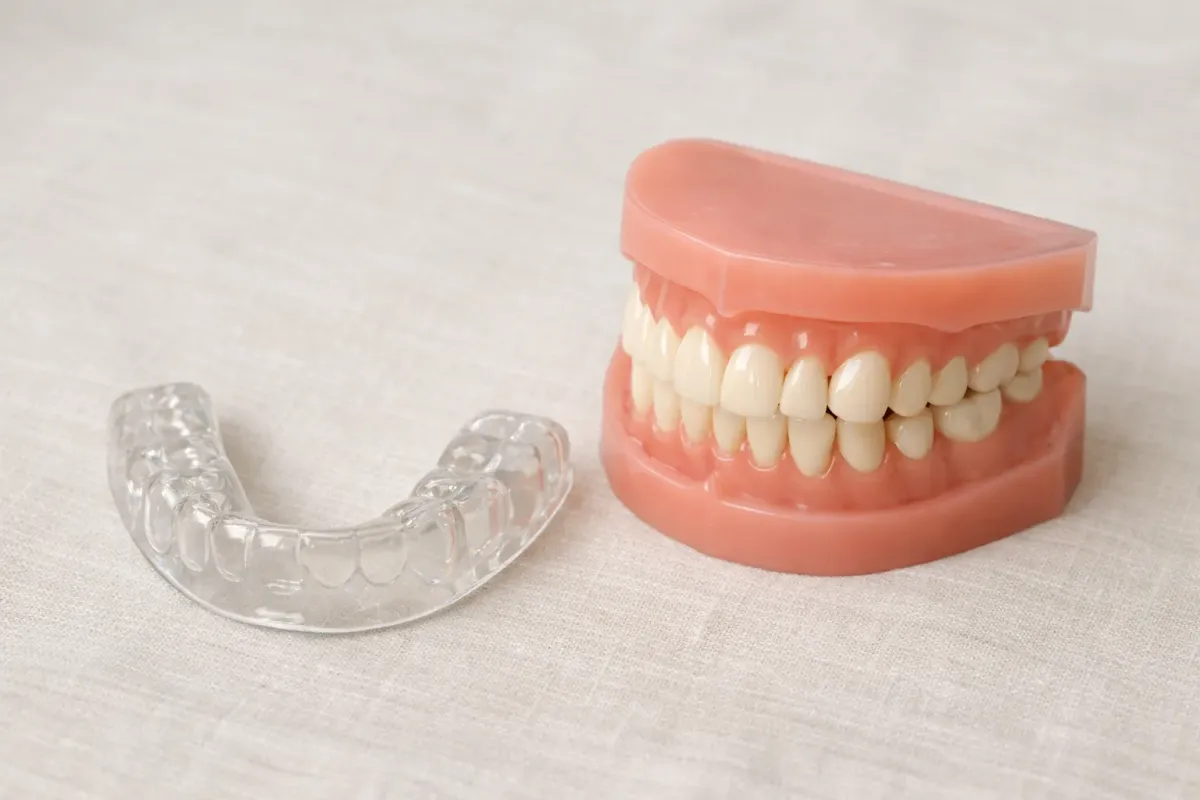
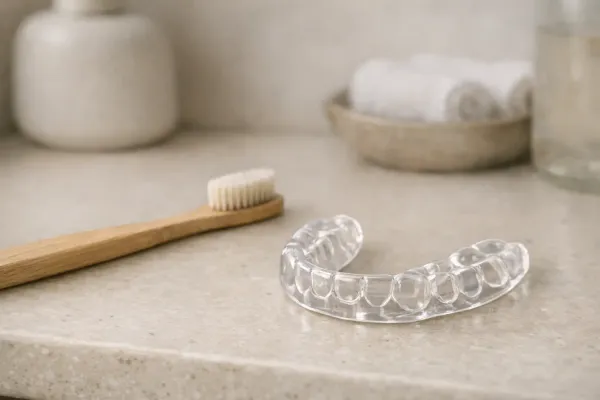
Often, but not always. A crown changes the shape and height of the tooth it covers, so a guard made before the crown may rock, press, or refuse to seat. Many dentists can adjust or reline your existing guard at the crown appointment. You need a new one only if the fit is clearly off or several teeth were restored.
Why a crown changes the fit
A night guard is molded to the exact surfaces of your teeth. A crown replaces the outside of one of those teeth with a new surface, built to a new shape and often a slightly different height. Your guard remembers the old tooth. The crown doesn't care what your guard remembers.
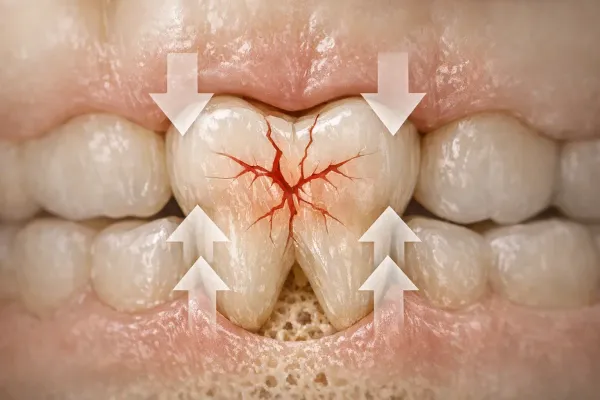
A small difference on one back tooth can be enough to make the guard press on the crown, lift off the teeth around it, or change where your top and bottom teeth meet when you bite down on the guard. The more teeth you had crowned, the less likely the old guard is to fit.
Timeline: when you can wear your guard again
- Temporary crown phase (usually a couple of weeks while the lab makes the permanent one). Ask your dentist before wearing your old guard over a temporary. Temporaries are held on with weaker cement on purpose, so they can be removed later. A tight guard can press on one, and pulling the guard out in the morning can tug it loose. If the guard doesn't seat fully, don't force it.
- Crown seating day. The best moment to check the guard, since your dentist has the adjustment tools out.
- The first week or two after seating. Some sensitivity is normal. If the guard fits comfortably, you can usually wear it right away. If it pinches the crown, stop and call your dentist rather than filing it down yourself.
If you had a root canal before the crown, the timing for that tooth has its own quirks. See our guide to wearing a night guard after a root canal.
Will your old guard still fit? How to tell
Put the guard in after the permanent crown is cemented and pay attention to these signs:
- Rocking. Press on one side and the other side lifts. That usually means the crowned tooth is taller or wider than the old one.
- A pressure spot on the crown. A dull ache or squeeze on one tooth that doesn't fade.
- It won't click in, or clicks in only with force.
- Your bite on the guard feels different. One side hits first, or your jaw feels pushed to a new position.
- Morning soreness that wasn't there before. A guard that fits badly can make your teeth and jaw sore. We cover that in more detail in why your teeth and jaw hurt after wearing a night guard.
If it slides on easily, sits flat, and feels the same as before, it probably still fits.
What to do: adjust, reline, or remake
- Bring your guard to the crown seating appointment. The dentist can try it in right after the crown goes on and see where it binds.
- Ask whether an adjustment will do. Hard acrylic guards can often be trimmed or relieved around the new crown in a few minutes. This works when the change is small and limited to one tooth.
- Ask about a reline if it's loose. Some guards can have material added to the inside so they grip the new crown properly. Whether this is possible depends on the guard material.
- Get a new guard if the fit is clearly wrong. Rocking that adjustment can't fix, several crowned teeth, or a changed bite are all reasons to start fresh. So is a guard already worn thin (see how long a night guard lasts).
- Wait for the permanent crown before taking a new impression. A guard molded around a temporary will not fit the final crown.
If your crown means a new guard
A new guard after a crown costs less than most people assume. Pro Teeth Guard is a dental lab that has supplied dental offices for over 20 years and sells the same custom guards direct, at roughly $145 to $220. Their guards are lab-pressed acrylic rather than the soft thermoplastic in a boil-and-bite tray.
Home impression kit, 7 to 11 business days to build, free adjustments if the fit is off, and a 60-day 110% money-back guarantee. Take the impression once your permanent crown is cemented, not while you are wearing a temporary.
Check current Pro Teeth Guard pricing
Affiliate link. If you buy through it we earn a commission, at no extra cost to you. How this works.
Considering a drugstore guard instead? Our over-the-counter vs custom comparison covers the trade-offs.
Does grinding break crowns? It depends on the material
Bruxism has a reputation as a crown killer. The research is more mixed than that, and the material matters.
A 2025 scoping review in the Journal of Dentistry looked at 46 studies and concluded that bruxism is a risk factor for failure of both fillings and indirect restorations like crowns, with one exception: monolithic zirconia. The authors also noted that most of the studies were retrospective, so the evidence is not as strong as it sounds.
"Monolithic" means the crown is milled from one solid block. Older-style crowns, including porcelain-fused-to-metal and layered zirconia, have a cosmetic porcelain layer baked over a stronger core. That outer layer is where chips tend to happen. A 2021 summary of systematic reviews on zirconia restorations found chipping was the most common technical complication, and that it could be reduced by using monolithic designs. It also pointed out that bruxers were only studied sporadically.
The most direct test so far is a randomized trial from Heidelberg University published in 2026. It followed 109 patients who got a single monolithic lithium disilicate or zirconia molar crown, with and without sleep bruxism, and did not allow protective guards. After three years there were no technical complications in any group, and bruxism showed no detectable effect on survival or success. Three years is short for a crown and it's one study, but it's reassuring.
So why keep wearing a guard? Because your crown is only one tooth. The guard also protects the natural teeth around it, and a hard ceramic crown grinding against an unprotected natural tooth is not a fair fight for the natural tooth. If your crown has a porcelain layer, the guard takes the load that would otherwise go into chipping it. And a replacement crown costs a lot more than a guard.
We cover the same question for veneers and dental bridges.
FAQs
Do I need a new night guard after getting a crown?
Not always. If your old guard sits flat, clicks in without force, and doesn't press on the crown, it's probably fine. If it rocks, pinches, or your bite on it feels different, ask your dentist to adjust it. A new guard makes sense when the fit is clearly off or several teeth were crowned.
Can I wear my night guard with a temporary crown?
Ask your dentist first. Temporary crowns are held on with weak cement so they can come off later, and a tight guard can press on one or pull it loose when you take the guard out. If the guard doesn't seat easily, leave it out until the permanent crown is in.
Can a dentist adjust my night guard for a new crown?
Often, yes. Hard acrylic guards can usually be trimmed around a new crown in one short visit. Bring the guard to your crown seating appointment so the dentist can check it right after the crown goes on.
What is the best night guard for crowns?
A custom guard made from an impression taken after your permanent crown is cemented. A hard or hard-soft custom guard spreads the force evenly and can be adjusted by your dentist. Boil-and-bite guards can work short term, but they're harder to fit precisely around a crown.
Can grinding my teeth crack a crown?
It can, especially crowns with a layered porcelain surface, where chipping is the most common problem. Solid (monolithic) zirconia and lithium disilicate crowns held up well in bruxers in a recent three-year trial. A guard still protects the crown's porcelain and the natural teeth around it.
My crown feels high when I wear my guard. What should I do?
Stop wearing the guard and call your dentist. A crown or guard that hits too hard can make the tooth sore and strain your jaw. It's usually a quick adjustment to one or the other.