Can You Wear a Night Guard After a Root Canal?
Usually yes, and the weeks before your permanent crown are when the tooth needs it most. When to put the guard back in, how to tell if it still fits, and why grinders should not delay the crown.
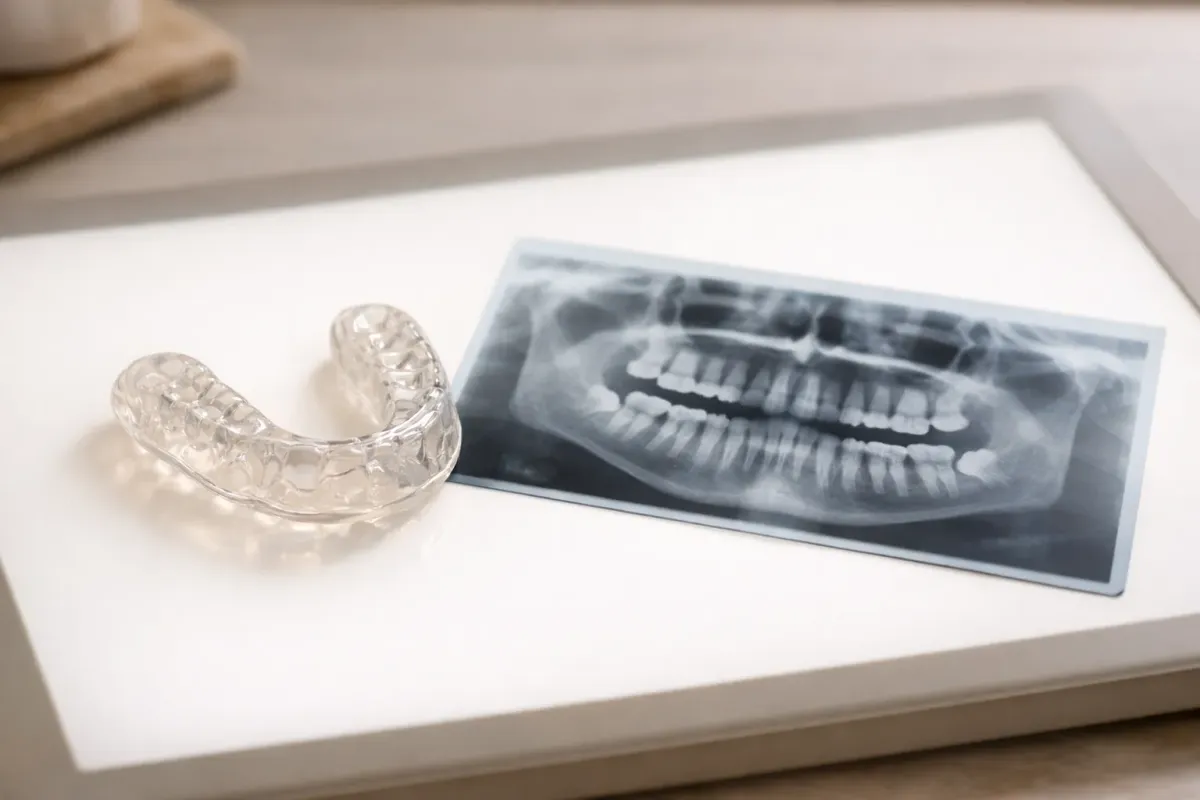
Yes. For most people, wearing your night guard after a root canal is a good idea, and the weeks before your permanent crown goes on are when the tooth needs protection most. Put it back in once the numbness wears off, as long as it seats without pressing on the treated tooth. Once the crown is placed, expect the guard to need a check or an adjustment.
Why a root canal changes things
A root canal removes the infected or inflamed pulp from inside the tooth, then seals the canals. To get in, your dentist drills an access hole through the top of the tooth. That hole gets closed with a temporary filling, and the tooth waits for its final restoration, usually a crown on back teeth.
That in-between stage is the weak spot. The tooth has lost structure, the temporary filling is not built to last, and if you grind, the tooth is taking heavy loads every night. A review in the Journal of Endodontics on preventing cracked teeth lists bruxism as a key risk factor for cracks, names occlusal splints (night guards) among the preventive strategies, and says timely restorations improve long-term outcomes for teeth that have had root canals.
A night guard does not make the tooth stronger. It spreads the force of grinding across the whole arch instead of letting it land on one weakened cusp, which is the job you want done while you wait for the crown.
Timeline: when you can wear it again
- The first few days: Wear it once the numbness is gone, so you can tell if something presses. The tooth often feels bruised for a few days, and a guard that sits evenly should not make that worse. If it does, skip a night and see the fit section below.
- Temporary filling or temporary crown phase: Wear it every night. This is when the tooth is most vulnerable, and when a guard is most worth wearing.
- After the permanent crown: Wear it, but bring it to the crown appointment or a follow-up so the fit can be checked. More on that in our piece on whether you need a new night guard after a crown.
How long the in-between phase lasts matters more than most people realize. In an eight-year retrospective study in the Journal of Endodontics, back teeth crowned more than 4 months after the root canal were about 3.4 times as likely to be extracted as teeth crowned within 4 months (a single-clinic retrospective study, so an association rather than proof). So wearing a guard is a stopgap, not a reason to put the crown off.
Will your old guard still fit?
Usually, yes. A root canal on its own does not move teeth, and the temporary filling sits inside the tooth rather than on its outside. Two things can change the fit, though:
- Some dentists shave the top of a sore tooth slightly so it is out of the bite while it heals. That can leave a small gap under the guard over that tooth, which is harmless.
- If the tooth has already been prepared for a crown and has a temporary crown on it, the shape of the tooth has changed a lot. A guard made for the old tooth may seat differently or grip the temporary.
Signs the guard is not playing well with the treated tooth:
- A sharp or throbbing pressure point on that one tooth when the guard is in
- The guard rocks, or clicks into place differently than before
- The treated tooth aches more in the morning than it did at bedtime
- A piece of temporary material is stuck in the guard when you take it out
General morning jaw soreness is a separate issue with its own causes. We cover it in why your teeth and jaw hurt after wearing a night guard.
What to do, step by step
- Tell your dentist or endodontist you grind. It affects how quickly they want the crown done and whether they reduce the bite on that tooth.
- Bring the guard to the root canal appointment or the first follow-up, and ask them to seat it and check for pressure on the treated tooth.
- Wear it every night until the permanent crown is on. Avoid chewing hard food on that side during the same stretch.
- Take it out gently. Lift it from both sides rather than prying it off one corner, especially if you have a temporary crown.
- Have the fit checked after the crown is cemented. A new crown can be a hair taller or shaped differently from the old tooth, and the guard may need adjusting or, less often, remaking.
If you have been using a soft boil-and-bite tray, the crown is a natural point to upgrade. Our over-the-counter vs custom comparison covers the trade-offs.
If your guard needs replacing after the crown
Going custom after your crown costs less than most people assume. Pro Teeth Guard is a dental lab that has supplied dental offices for over 20 years and sells the same custom guards direct, at roughly $145 to $220. Their guards are lab-pressed acrylic rather than the soft thermoplastic in a boil-and-bite tray.
Home impression kit, 7 to 11 business days to build, free adjustments if the fit is off, and a 60-day 110% money-back guarantee. Take the impression once your permanent crown is cemented, not while you have a temporary filling or temporary crown.
Check current Pro Teeth Guard pricing
Affiliate link. If you buy through it we earn a commission, at no extra cost to you. How this works.
The real risk: cracking the tooth before the crown
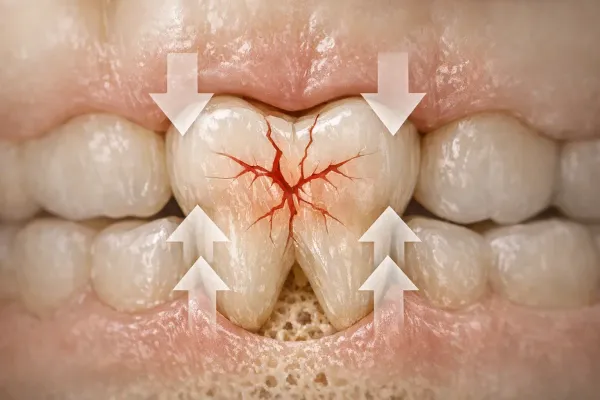
Grinding plus a hollowed-out back tooth is what dentists worry about. Cusps can split off, and a crack that runs into the root usually means the tooth cannot be saved.
Observational studies consistently link crowning to better survival for these teeth. A study in the Journal of Prosthetic Dentistry on crown placement and survival of root-canal-treated teeth found that teeth not crowned after treatment were lost at about 6 times the rate of teeth that were crowned. A long-term Journal of Endodontics study of cracked teeth restored early found that, among cracked teeth, those that had previously had a root canal fared worse, and that full crowns were linked to less tooth loss than onlays.
We found no study testing whether a night guard during the temporary phase prevents fractures. The case rests on mechanics and on the review above recommending splints for people at risk of cracks. Sensible and cheap, not proven.
Call your dentist promptly if the temporary filling falls out, the tooth feels loose or "separate" when you bite, you feel a sharp pain on release after biting, or swelling appears. Those are not wait-and-see symptoms.
FAQs
Can a night guard pull out a temporary filling?
It is unlikely. The temporary filling sits inside the access hole on the top of the tooth, and a well-fitting guard rests over it rather than gripping it. A temporary crown is more vulnerable, so remove the guard gently and tell your dentist if you find temporary material stuck to it.
Should I stop wearing my night guard if the tooth is sore after a root canal?
Only if the guard presses on the sore tooth or makes the pain worse. Mild tenderness to biting for a few days is common. If the guard creates a clear pressure point on that tooth, stop and have your dentist check it.
Does a night guard protect a root canal tooth until the crown?
It spreads grinding forces across all your teeth instead of letting them concentrate on the weakened one, which is why dentists often recommend it. There are no studies measuring fracture rates with and without a guard in this window, and the crown itself is the proven protection.
Will I need a new night guard after the crown goes on?
Often the old one just needs a small adjustment. If the crown changes the shape or height of the tooth enough that the guard rocks or presses, it may need a reline or a remake. Bring it to the crown appointment.
Can I wear my night guard after a root canal on a front tooth?
Yes, the same rules apply. Front teeth are less often crowned after a root canal than back teeth, so ask your dentist whether yours needs one. If it just gets a filling, see our guide on wearing a night guard after a filling.