Can You Wear a Night Guard After a Filling?
After a white (composite) filling you can usually wear your night guard the same night, once the numbness fades. After a silver (amalgam) filling, wait about a day. If your bite feels high or the guard presses on the new filling, get the filling adjusted, not the guard.
Yes. After a white (composite) filling you can usually wear your night guard the same night, once the numbness has worn off. After a silver (amalgam) filling, it is safer to wait about 24 hours so the metal can reach most of its strength. The one real exception: if your bite feels "high" or the guard suddenly presses on the new filling, the filling needs adjusting, not the guard.
Why a filling barely changes the equation
A normal filling replaces the decayed part of a tooth and is shaped to match what was there before, so in most cases your guard fits exactly as it did yesterday.
Three things can change that:
- Material. Composite and amalgam harden on very different schedules.
- Bite. A filling left slightly too tall ("high") hits the opposite tooth first. You will feel it, and so will your guard.
- Size. A small filling rarely alters the tooth's shape. A large filling that rebuilds a cusp, or an onlay, can.
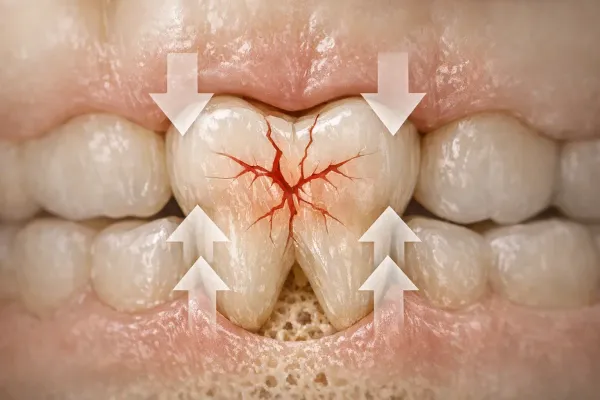
And there is a reason to go back to the guard quickly: grinding is hard on fillings. A 2012 review in Dental Materials on the longevity of back-tooth composite fillings found that the main long-term reasons they fail are new decay and fracture, and it lists bruxism among the patient factors behind fracture.
Timeline: when you can wear the guard again
White (composite) fillings: same night
Composite is hardened in the chair with a blue curing light, layer by layer. By the time you leave, it is set. The only reason to wait is the anesthetic. While you are numb you cannot tell whether the guard is pressing somewhere it shouldn't. Once feeling is back (usually a few hours), put the guard in and check the fit.
Silver (amalgam) fillings: wait about a day
Amalgam keeps hardening for hours after it is placed, which is why dentists usually say to avoid hard chewing on that side for the first day. A 1995 lab study in the Dental Materials Journal measuring early amalgam strength found that all five amalgams tested reached about 90% or more of their seven-day compressive strength at 24 hours, and only two of them got there by six hours. Skipping one night of clenching on it is cheap insurance, but follow your dentist's instructions if they differ.
Large fillings and onlays: after the bite check
If the tooth was substantially rebuilt, do the fit check below before the first night. If you have a temporary onlay, ask your dentist whether to wear the guard until the final one is bonded, since temporaries are softer and can pop off.
Will your old guard still fit? How to tell
Put the guard in while you are awake and sitting up, not in the dark at bedtime. Signs of a problem:
- It clicks into place everywhere except over the new filling, or needs extra force to seat.
- It rocks when you press on one side.
- You feel a pressure spot or ache on the filled tooth after 15 to 30 minutes.
- With the guard out, your teeth meet on the new filling first, before the rest of your bite touches.
That last one is the important one. A high filling makes your whole bite feel off, and the tooth often gets sore to bite on within a day or two. The fix is a quick reshaping of the filling at the dentist, usually a few minutes with no numbing. Do not try to fix it by grinding down or trimming your guard. You would be carving the guard around a mistake that is about to be corrected.
If the filling is the right height but the guard still doesn't seat, the tooth's shape has changed enough to matter. Soft and boil-and-bite guards can sometimes be remolded. A hard custom guard may need an adjustment or, after a big rebuild, a new impression. Our comparison of over-the-counter and custom guards covers which types handle changes better.
If a big filling changed your fit
If your guard no longer seats after a large filling or onlay, going custom costs less than most people assume. Pro Teeth Guard is a dental lab that has supplied dental offices for over 20 years and sells the same custom guards direct, at roughly $145 to $220. Their guards are lab-pressed acrylic rather than the soft thermoplastic in a boil-and-bite tray.
Home impression kit, 7 to 11 business days to build, free adjustments if the fit is off, and a 60-day 110% money-back guarantee. Take the impression once your filling is final and your bite feels normal again, not while you have a temporary onlay or a high spot waiting to be adjusted.
Check current Pro Teeth Guard pricing
Affiliate link. If you buy through it we earn a commission, at no extra cost to you. How this works.
What to do after your filling
- Bring your guard to the appointment if the filling is large or on a biting surface. The dentist can check the fit before you leave.
- Wait for the numbness to fade before wearing it, and give amalgam about 24 hours.
- Do the awake fit test above before the first night.
- If your bite feels high, call the dentist. Adjusting a filling is a quick, routine fix.
- If the bite is fine but the guard isn't, ask about adjusting the guard first. A new one is for when the tooth shape has changed a lot.
Sensitivity, and why grinders should take new fillings seriously
Some sensitivity to cold, sweets, or biting is common after a filling and usually fades over days to a few weeks. Sharp pain when you bite down, pain that lingers after something cold, or pain that gets worse instead of better are reasons to go back.
Grinders have a specific reason to care. In a study that followed front-tooth (Class IV) fillings for up to 14 years published in Clinical Oral Investigations on fracture of tooth-colored fillings, fracture was the main reason the fillings failed, and restorations in patients who grind broke more often: 22 fractures among 45 restorations in bruxing patients, compared with 9 among 39 in non-bruxing patients. That study looked at front teeth, so it doesn't predict what happens to a molar filling, but it points the same way as the review above. A guard doesn't stop grinding. It does put something between the new filling and the opposite teeth at night.
If your guard is worn through, have it checked at the filling appointment (here is how long a night guard typically lasts). Having more involved work done? See our guides to night guards after a crown and after a root canal.
FAQs
Can I wear my night guard the night after a filling?
For a white composite filling, usually yes, once the numbness is gone. For a silver amalgam filling, waiting about 24 hours is the standard advice, since amalgam is still gaining strength during the first day.
Why does my night guard feel tight after a filling?
Usually the filling is slightly higher or wider than the old tooth surface. If your teeth hit the new filling first when you bite without the guard, the filling needs adjusting. If not, the guard may need a small adjustment.
Should I get a new night guard after a filling?
Rarely. Small and medium fillings are shaped to match the old tooth, so the guard keeps fitting. A new guard is worth considering only after a large rebuild or onlay that changes the tooth's shape, and only once the final restoration is in.
Can a night guard damage a new filling?
A well-fitting guard spreads biting force across your teeth. A guard that presses on one spot, or a filling that sits high, can make the tooth sore. That is a fit problem to fix. If the guard makes the filled tooth hurt, leave it out and have your dentist adjust the filling or the guard, then go back to wearing it.
Is it normal for a filled tooth to hurt when I wear my guard?
Mild sensitivity for a few days is common after any filling. Pain that is sharp, gets worse, or only shows up with the guard in usually means a high spot or pressure point. See our guide on why teeth and jaws hurt after wearing a night guard, and call your dentist if it doesn't settle.
Does grinding make fillings fail sooner?
The evidence points that way. A review of back-tooth composite fillings lists bruxism among the factors behind fracture, and a long-term study of front-tooth fillings found more fractures in patients who grind.