Can You Wear a Night Guard With Veneers? Protect Your Investment
Learn if a night guard can be worn with veneers and how to protect your teeth from grinding damage.
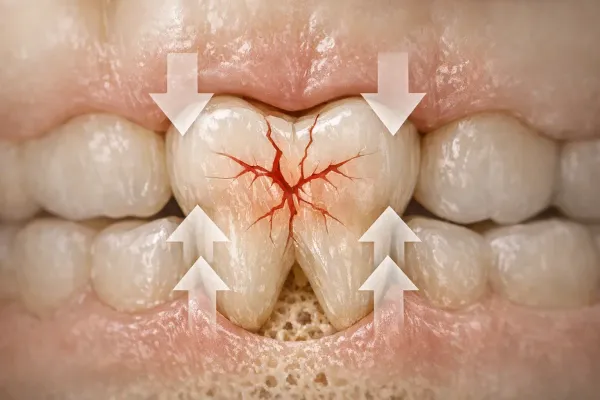
You spent serious money on those porcelain veneers, and the last thing you want is for a nighttime grinding session to damage them. Bruxism, the clinical term for teeth clenching and grinding, affects up to 30 percent of adults, according to the American Dental Association. Veneers look great, but they do not make you immune to the muscle forces that can crack natural enamel.
The short answer: yes, you can (and usually should) wear a night guard with veneers. Below, you will see why dentists recommend this protective habit, how to time a new guard, and what to expect during the process. The evidence comes from peer-reviewed research and respected dental institutions, translated into plain language so you can decide whether your current bite gear is up to the task.
Can You Wear a Night Guard With Veneers?
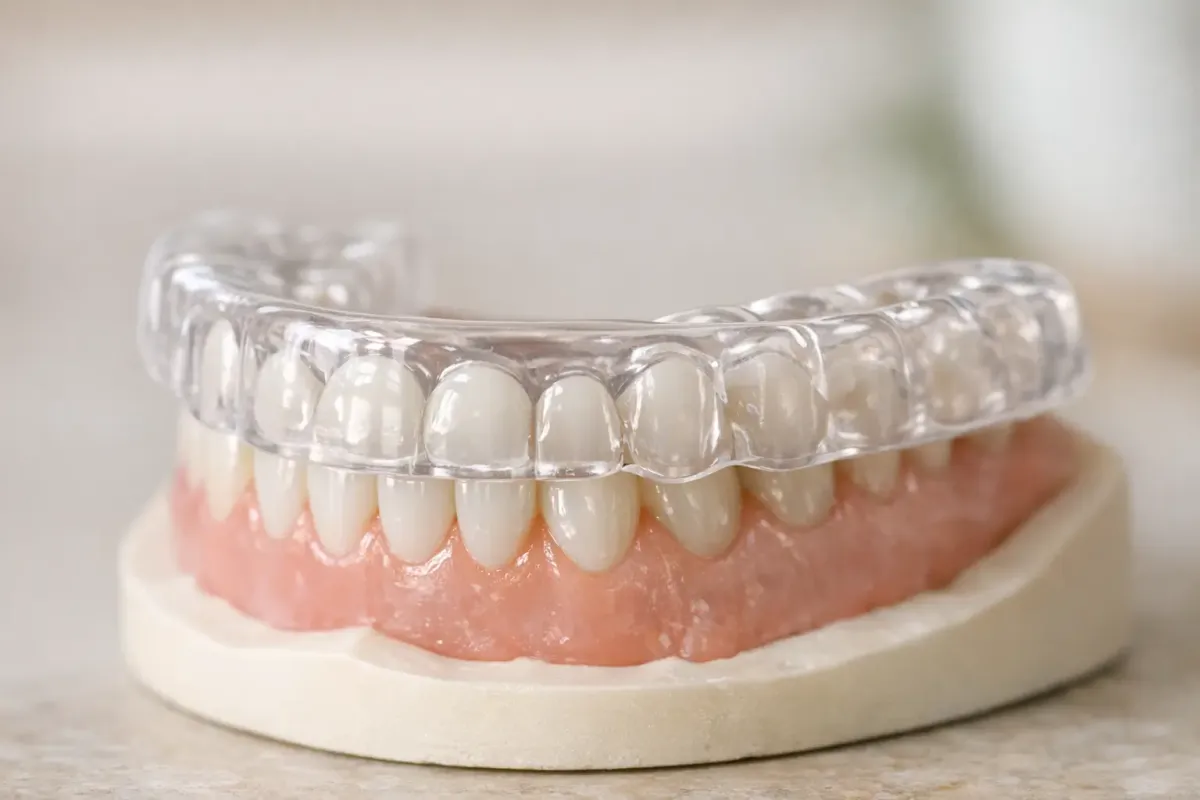
Absolutely. A properly fitted night guard will sit over your veneered teeth and create a physical barrier between the upper and lower arches. That thin layer of plastic or acrylic takes the hit instead of your expensive restorations. Modern guards are designed with minimal bulk, so they do not pry veneers off or create unnatural pressure points.
The key word is “properly.” A guard that fits natural teeth may no longer match the contour of teeth covered in porcelain or composite. If the guard rocks, pinches, or leaves gaps, you are trading one problem, grinding, for another: uneven force that can pop a veneer right off. Most dentists therefore recommend refitting or replacing the appliance after veneers are placed.
Think of a night guard like a phone case. Getting a new phone and keeping the old case almost guarantees poor alignment. The buttons do not line up, the camera opening is off, and one accidental drop ends in disaster. Veneers change the shape of your teeth in the same way a new phone changes its dimensions.
Bottom line: yes, you can wear a night guard with veneers, but only if the guard is customized to your new smile. Otherwise, you risk doing the very damage you are trying to prevent.
Why Most Dentists Recommend a Night Guard After Veneers
Importance of Protecting Veneers
Veneers are not cheap. Depending on region and material, you could spend $1,000 to $2,500 per tooth. That investment deserves an insurance policy, and a night guard is the easiest one you can buy. Veneers are strong, yet they rely on a thin layer of bonding resin to stay attached. Constant grinding creates shear forces at that bond line, potentially causing fractures or debonding.
Consider Linda, a 42-year-old graphic designer who loved her new eight-unit smile makeover. Within six months she noticed a hairline crack on a lateral incisor veneer, a $1,200 repair, because she had returned to her habit of clenching during late-night design sessions. After switching to a rigid acrylic guard, she has gone three years without another incident. Her case is typical: post-veneer complications often appear early when no protective appliance is worn.
In a 2023 systematic review by Sanz Elena et al., prostheses made of feldspathic porcelain, similar to many veneers, showed higher complication rates when patients reported uncontrolled bruxism. Chipping, cracking, and surface wear were the top issues. While implants were the main focus of the review, the authors emphasized that ceramic materials have limited flexural strength under repeated occlusal stress.
Potential Damage from Grinding
Grinding exerts forces of up to 250 pounds per square inch on molar contacts. Unfortunately, those forces do not stay in the back of your mouth. The pressure travels along the arch and can affect front teeth, especially after veneers lengthen the incisal edge or add bulk. Exploring the impact of long-term bruxism on dental health, including tooth wear and implications for veneers, is crucial for understanding how to protect your investment.
Untamed bruxism does more than chip porcelain. The constant overload strains the periodontal ligament and can aggravate temporomandibular joint (TMJ) disorders. Patients frequently report morning headaches, ear fullness, or tender jaw muscles, symptoms that often improve once a guard redistributes the load. Protecting veneers is therefore only part of the equation; a properly fitting appliance also safeguards the joints and surrounding soft tissues.
Chipping is not the only worry. A 2018 study by Brandt compared tooth-supported and implant-supported ceramic veneers and found a higher incidence of edge wear in bruxers who did not use protective appliances. The evidence stacks up: without a guard, the risk of post-treatment complications rises, and so does the bill for repairs.
For a modest cost, usually less than a single veneer, you can extend the life of your restorations and sleep easier, literally and figuratively.
The Problem of Old Night Guards Not Fitting New Veneers
Changes in Tooth Shape
Veneers alter three-dimensional tooth contours. Enamel is slightly reduced, then porcelain is added, often extending the length or width of a tooth. An old guard captured your pre-veneer anatomy; after veneers, the molded plastic might press on new edges or hover over incisal tips.
A 2023 study by Garcia-Torres et al. used 3D scanning to map veneer preparation. They found an average facial thickness change of 0.5 mm and an incisal length increase of 1 mm. Those numbers may sound small, but in dental fit, fractions of a millimeter decide whether a guard seats fully or not.
Adapting to New Veneers
When a guard does not seat, you may notice:
- One side contacts before the other, creating a lever effect.
- Edges dig into gum tissue around the veneer margins.
- Bonded porcelain feels “loose” or sensitive upon removal of the guard.
Do a quick home test: apply a thin layer of toothpaste inside the guard and bite gently. Remove it and look for even smear marks. Patchy spots mean uneven contact and signal that you need a refit. Schmalz’s 2019 review on laminate veneers stresses that uneven occlusal contacts lead to stress concentration at the veneer-to-enamel interface, increasing the likelihood of fracture lines. Continuing to wear a badly fitting guard can do more harm than going without one.
The take-home: old guards rarely fit new veneers. You will likely need a fresh impression or scan to fabricate an appliance that respects your updated tooth anatomy.
Timing and Process for Getting a New Night Guard
When to Get a New Impression
Dentists differ slightly, but the common rule is to wait until veneers are fully bonded and any minor bite adjustments are finished. For most patients, that is one to two weeks after final cementation. Waiting allows the gums to settle and gives you a chance to notice any high spots that need refining before the guard captures the final occlusion.
The digital workflow case report by Obeid et al. recommends scanning for a night guard at the delivery appointment if no major occlusal changes are expected. However, for complex cases, a follow-up scan at the one-month check is safer. Edelhoff et al. highlighted that minor settling of restorations alters contact points over the first few weeks.
Budget is another timing factor. Custom guards range from $150 to $600 depending on material and lab fees. Some dental insurance plans reimburse a portion every two to three years, so ask whether scheduling after a policy renewal date will maximize your benefit.
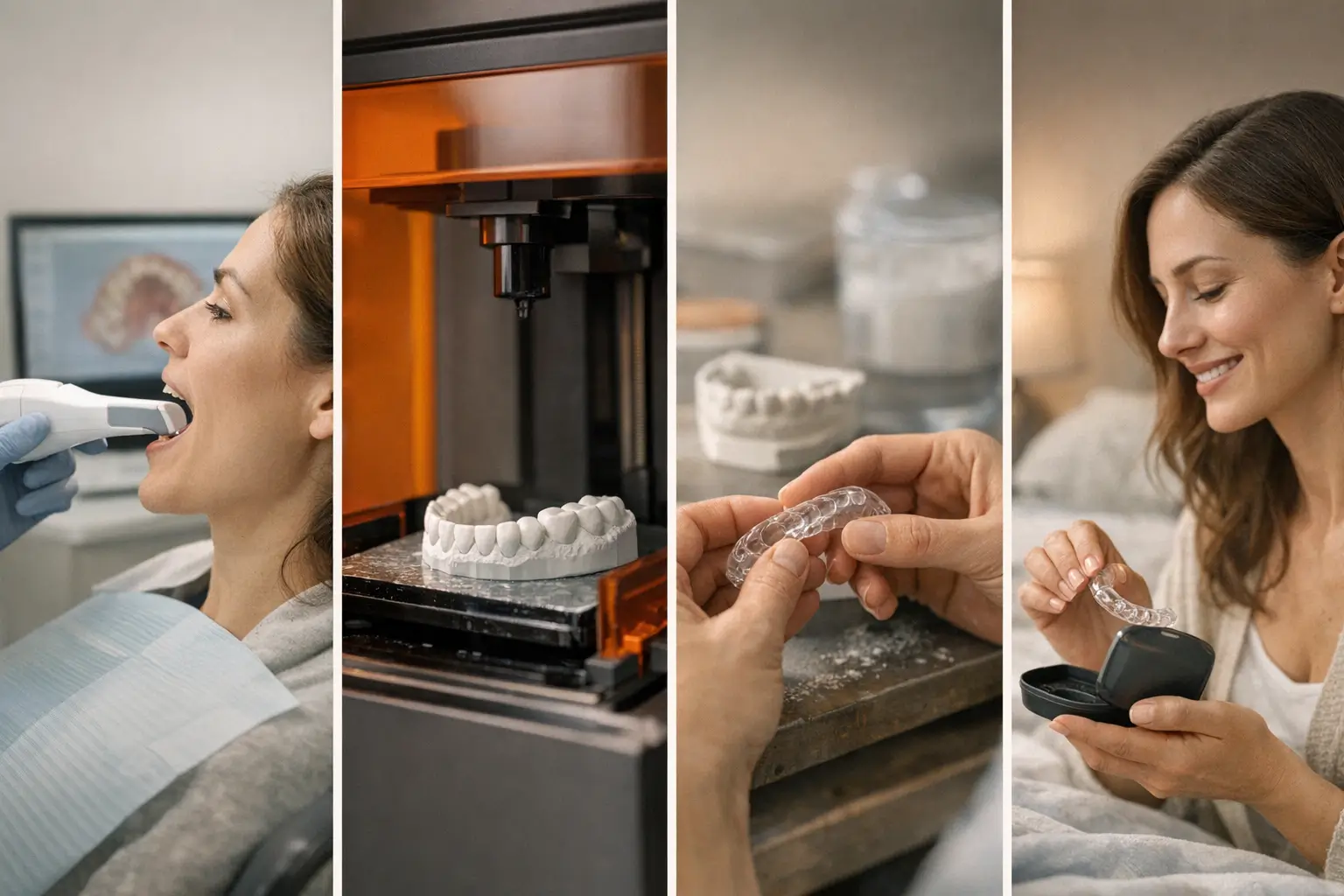
Steps in Creating a Custom Guard
- Final Bite Check
Your dentist ensures the veneers feel right when you close. Any premature contact is adjusted. - Impression or Digital Scan
Traditional impressions use polyvinyl siloxane material. Digital methods employ an intraoral scanner, which many patients find more comfortable. - Lab Design
The lab designs the guard in CAD software, emphasizing even thickness and proper canine guidance ramps if needed. - Fabrication
Most guards are thermoformed EVA plastic or milled acrylic. Turnaround time ranges from two days to two weeks. Same-day in-office milling is available in some clinics for an added fee. - Fitting Appointment
You try the guard, and the dentist checks for pressure points with articulating paper. Minor trimming fine-tunes comfort. - Home Instructions
Clean with a soft brush and non-abrasive soap, store dry, and avoid hot water that could warp the material.
Plan for one or two follow-ups within the first month to tweak fit. Your jaw muscles may relax with the new appliance, creating slight looseness. Quick relines or minor adjustments fix that before it becomes a problem. For detailed guidance on how to manage this transition effectively, consider exploring resources on how to choose the right bruxism mouth guard.
Understanding the Mechanism: How Night Guards Protect Veneers
Stress Distribution
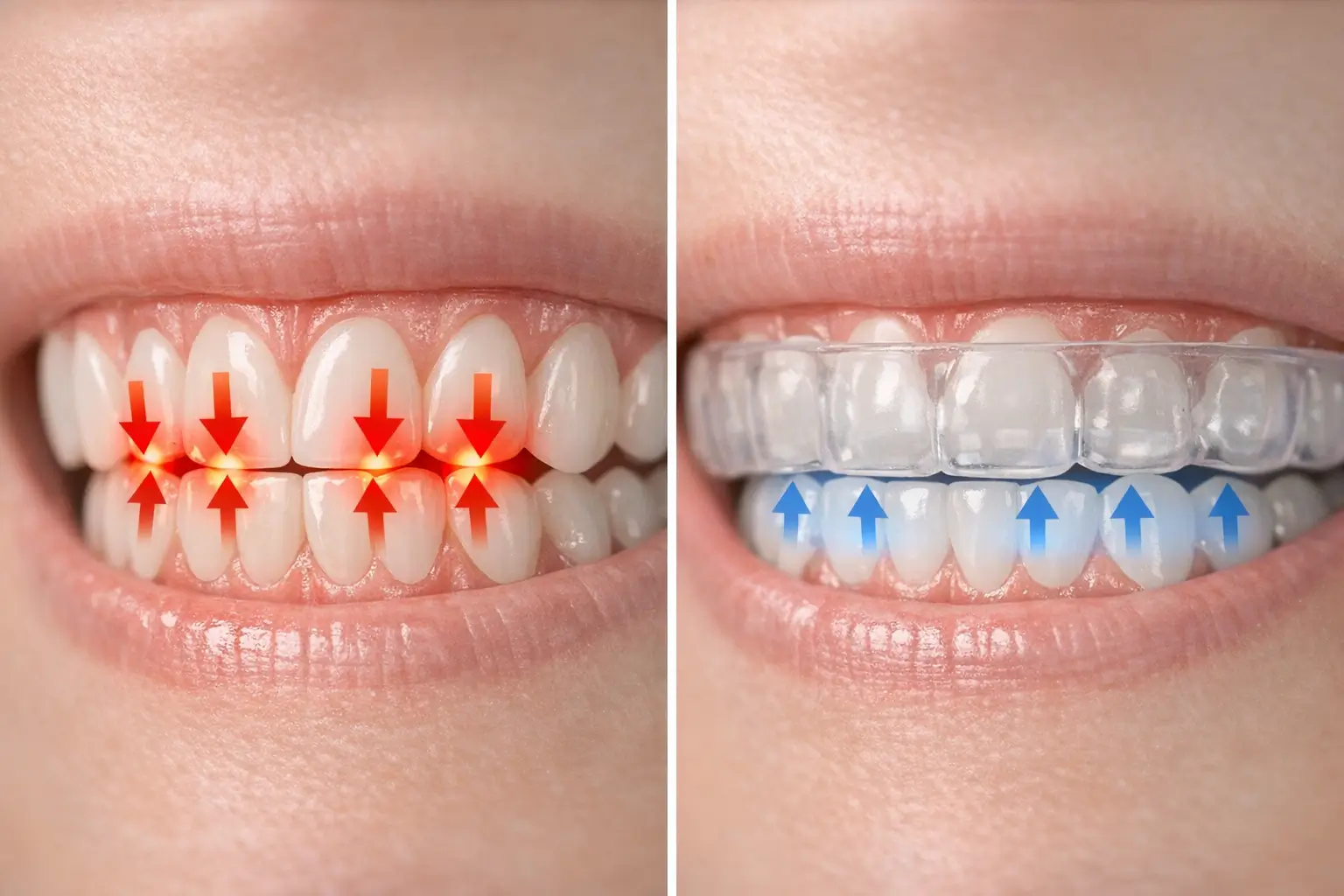
Imagine squeezing a walnut with pliers. The shell cracks at the point where force concentrates. A night guard works by spreading bite force over a wider area, reducing peak stress on any single veneer edge. The principle is called stress distribution.
In Brandt’s 2018 comparison study, thermoplastic guards decreased ceramic chipping by 65 percent in bruxers over a two-year period. Finite-element models showed force dissipation across the splint surface rather than localized at incisal tips.
Another piece of the puzzle is “posterior disclusion.” A well-designed guard guides the jaw so back teeth do not grind flat during side-to-side movements. By unloading the molars, the anterior veneers avoid heavy lateral forces that cause micro-cracking. Rueda et al. 2015 demonstrated that feldspathic porcelain survives more cycles of fatigue when lateral forces are reduced.
Material Considerations
Night guards come in a few flavors:
- EVA Soft Guards: Flexible, comfortable, but wear faster. Good for mild bruxism.
- Dual-Laminate Guards: Soft interior, hard exterior. Offer comfort with added durability.
- Hard Acrylic Guards: Rigid, long-lasting, and easier to adjust. Preferred for severe grinders and for protecting porcelain because they maintain shape under load.
Which is best for veneers? Most prosthodontists choose a hard or dual-laminate guard. The rigid outer layer prevents bite-through, while the precise fit keeps force even. A too-soft guard can allow your teeth to sink in, concentrating pressure on incisal edges over time.
Thickness also matters. The sweet spot is 1.5 to 2 mm on the occlusal surface. Thicker guards gag some patients; thinner guards lose durability. Discuss the trade-off with your dentist based on your grinding intensity.
Replacing Your Night Guard: A Step-by-Step Guide
If your current guard looks like a dog toy, or if you just upgraded your smile, check out our detailed tutorial on swapping an old appliance for a fresh one. The guide walks you through:
- Spotting wear such as cracks, flattened bite indentations, or yellow stains.
- Scheduling a quick evaluation to confirm fit and note veneer margins.
- Choosing material and thickness based on your bruxing profile.
- Cleaning hacks to extend the new guard’s lifespan.
You will find photos, cleaning charts, and a printable checklist. Use it as a roadmap to streamline the process and avoid common mistakes like soaking acrylic guards in alcohol (they craze) or storing them wet (bacteria feast). A cheap ultrasonic cleaner and a tablespoon of odorless denture tablet solution once a week keep stains at bay without scratching the surface. If you’re a tech lover, UV-C light boxes, originally marketed for earbuds, also work well for nightly disinfection.
Conclusion: Consult Your Dentist for Personalized Advice
Veneers transform a smile, but they do not grant superpowers. Nighttime grinding can still chip, crack, or dislodge them. Wearing a well-fitted night guard is the easiest and cheapest insurance policy for your investment. Remember that veneers change tooth shape, so your old guard probably needs to retire. Plan a new impression one to two weeks after final bonding, follow the fabrication steps, and choose a material that matches your grinding intensity.
Every mouth is different. Talk with your dentist or prosthodontist about your bite, muscle activity, and veneer material before you commit to a specific guard style. With professional guidance and consistent nightly use, you can keep that Hollywood smile intact for years and wake up without jaw pain or new dental bills. For further reading on managing bruxism symptoms, explore how innovative sleep aids for bruxism management can complement your night guard strategy.