Exploring Jaw Pain Relief for Athletes: Beyond the Mouthguard
Discover non-invasive jaw pain relief methods for athletes, focusing on TMJ and stress-related pain.
You hit the gym, nail your macros, and track every heartbeat on your smartwatch, yet your jaw keeps staging a mutiny. Athletes like you spend hours perfecting form from the neck down, but temporomandibular joint (TMJ) pain can disrupt sleep, recovery, and game-day focus. The problem often gets filed under "just wear a mouthguard." Nice try, but research shows there are far more tools in the kit. This article breaks down those options: laser beams, tiny needles, mindful breathing, and even a strip of tape, so you can choose what actually works for you.
Below, we walk through the latest evidence on each approach, sprinkle in a few irreverent commentaries, and keep the jargon to a minimum. Every claim is backed by peer-reviewed studies or rock-solid health-institution pages because your jaw deserves data, not guesswork.
Understanding Jaw Pain in Athletes: Causes and Challenges
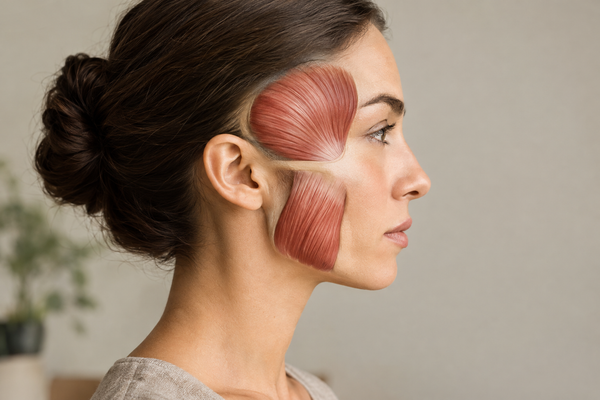
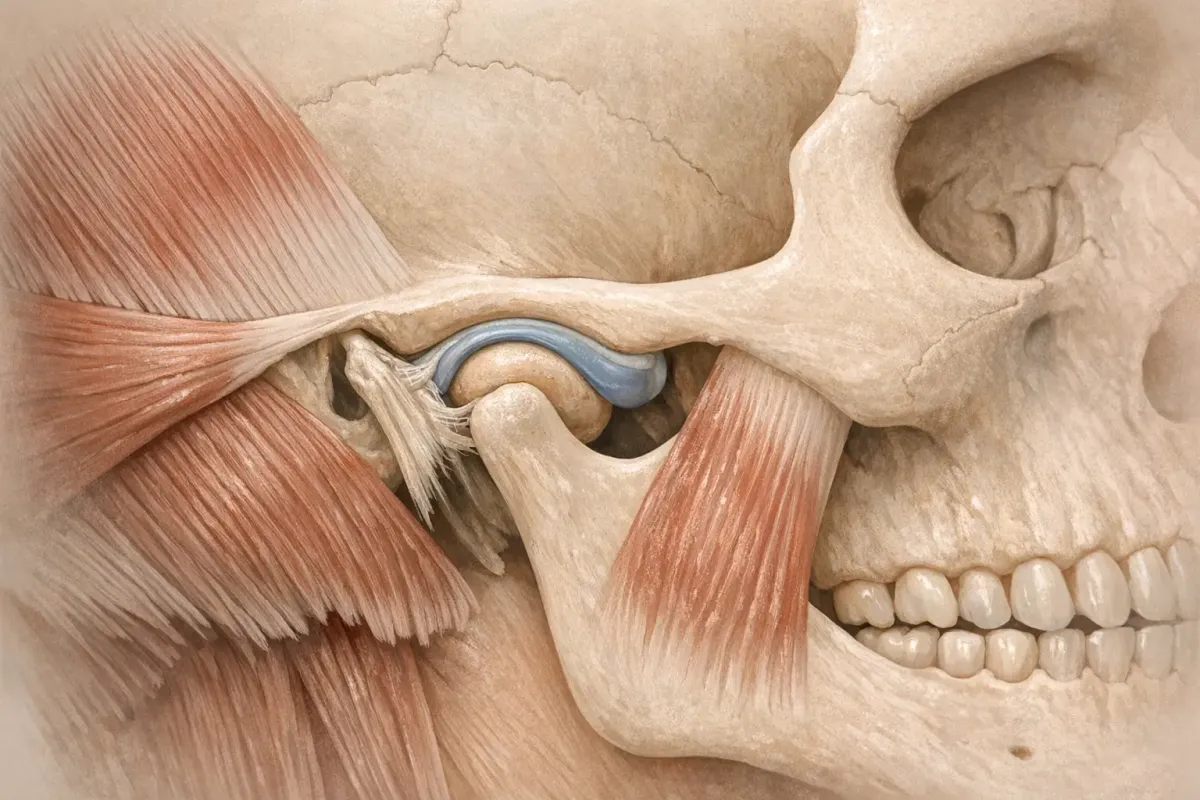
The temporomandibular joint is the hinge that lets you chew protein bars, yell during a sprint, and yawn after a midnight film review of last night’s match. Trouble starts when muscles, ligaments, or the joint itself become inflamed or overworked. Athletes face unique triggers:
- High impact forces from contact sports or weight-lifting bracing.
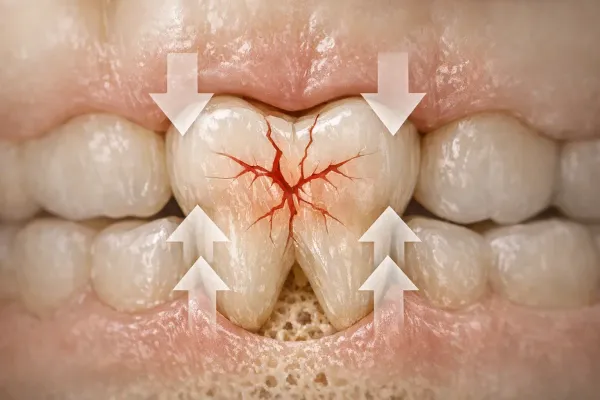
- Bruxism (unconscious teeth grinding), often peaking during intense training cycles. Explore how exercise stress leads to jaw clenching in athletes for more insights.
- Stress and cortisol spikes before competition, tightening jaw muscles. Discover how stress exacerbates bruxism and jaw tension through physiological and psychological connections.
- Postural strain—think forward-head posture cyclists and swimmers know too well. Learn about how poor posture worsens jaw pain and get tips for relief.
According to a 2024 systematic review by Alowaimer et al. that pooled data from more than a dozen trials, non-invasive therapies like laser therapy, splints, and acupuncture can rival or even surpass traditional mouthguards in reducing pain intensity and improving jaw opening. The review emphasized that athletes, who often avoid downtime or invasive procedures, especially benefit from treatments they can fit between training sessions.
Major institutions echo that message. The Mayo Clinic lists rest, gentle exercises, and stress management as first-line care. The Cleveland Clinic similarly notes that many TMJ problems improve without surgery when conservative therapies are applied early. For athletes, “conservative” means you can keep moving while attacking the root cause.
That’s good news because time off the field often feels like kryptonite. But before jumping into solutions, remember that jaw pain is rarely one-dimensional. Muscle tenderness can hide joint degeneration, and stress can masquerade as dental misalignment. A dentist or sports medicine professional should always confirm the diagnosis. Once confirmed, the following evidence-based options give you a menu that stretches well beyond the humble mouthguard.
Low-Level Laser Therapy for Jaw Pain Relief
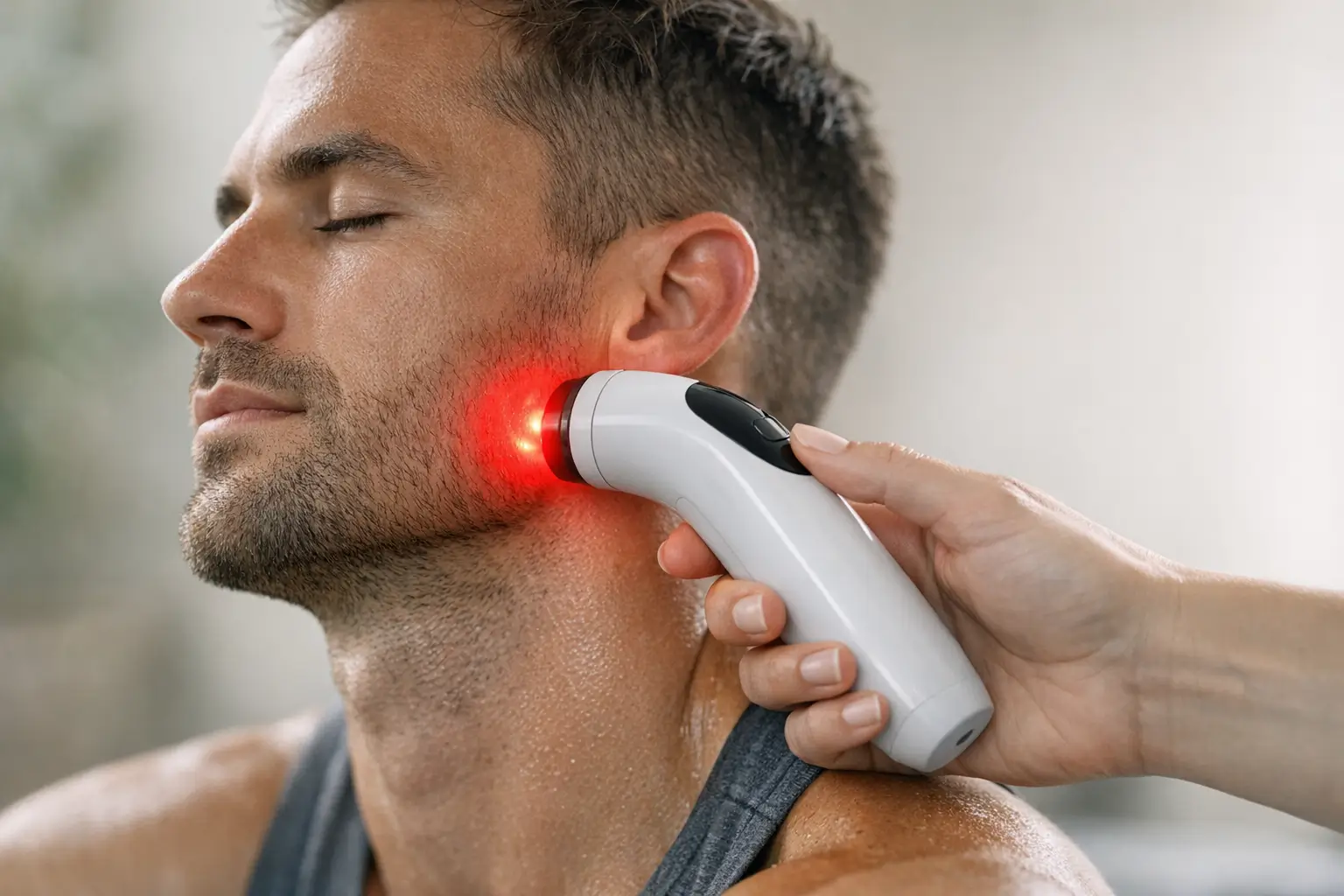
Yes, lasers. Not the "cut through steel" kind, but the gentle red or near-infrared beams used in clinics and some upscale gyms. Low-level laser therapy (LLLT), also known as photobiomodulation, is gaining serious traction for TMJ issues.
How LLLT Works
LLLT uses specific wavelengths—usually between 600 nm and 1000 nm—to penetrate skin and soft tissue. Photons interact with cellular powerhouses called mitochondria, boosting adenosine triphosphate (ATP) production. The extra ATP energizes cells, reduces inflammatory markers, and improves local blood flow. Translation: less pain, looser muscles, and faster tissue repair.
In a 2025 systematic review by Díaz et al., 17 randomized clinical trials were analyzed. Across participants with TMJ disorders, LLLT decreased pain scores by an average of 40 percent and improved maximum mouth opening by roughly 5 mm compared to sham treatment. That difference might sound small, but in jaw terms, 5 mm means going from “can’t bite an apple” to “no problem with a sandwich.”
Benefits and Limitations
- Non-invasive: No needles, no meds, minimal downtime.
- Quick sessions: Treatments usually last 5–10 minutes per side.
- Cumulative gains: Benefits often build over multiple sessions, ideal for athletes working through a season.
- Portable options: Some FDA-cleared devices are small enough to toss in a gym bag for travel tournaments.
Limitations do exist. The review noted variation in wavelength, power, and dosing protocols. Too little energy means no effect, while too much can heat tissue without added benefit. Cost can bite into the training budget, especially if your insurance is stuck in the 1990s. Finally, LLLT alleviates symptoms but does not realign a misbehaving bite or offset chronic stress on its own. Combine it with strengthening and relaxation exercises for a more sustainable fix.
Botulinum Toxin and Occlusal Splints: Comparative Insights
The same neurotoxin that smooths foreheads can also dial down clenching. Botulinum toxin type A (BoNT-A) injections, when precisely targeted at the masseter or temporalis muscles, act like a temporary dimmer switch on muscle contraction. Occlusal splints—those custom night guards—take a mechanical route, redistributing bite forces and reducing enamel-on-enamel warfare.
Effectiveness of Botulinum Toxin
A 2025 randomized controlled trial by Yıldırım et al. pitted BoNT-A against occlusal splints in 80 adults with jaw muscle pain. At the 12-week mark, the toxin group reported a 55 percent reduction in pain intensity, beating the splint group’s 35 percent. Jaw opening improved, and muscle palpation tenderness scores dropped significantly. Athletes who grind hard due to powerlifting bracing or contact sport tension may find the chemical muscle “vacation” especially relieving.
Pros:
- Rapid relief: Noticeable reduction in clenching within a week.
- No device to wear: Great if you hate gear in your mouth. Learn more about effective solutions for daytime clenching.
- Targeted: Only the overactive muscle groups chill out; other muscles keep firing.
Cons:
- Effects last 3–4 months, meaning repeat shots and recurring costs.
- Minor risk of chewing weakness or asymmetry if dosage misses the Goldilocks zone.
- Some sport governing bodies may require therapeutic-use exemptions because the drug is technically a neurotoxin.
Role of Occlusal Splints
Occlusal splints remain the stalwart first-line tool endorsed by the American Dental Association. The same Yıldırım trial showed splints cut pain a respectable 35 percent and significantly lowered nocturnal electromyography (EMG) activity. Splints also protect teeth from fracture, not a trivial perk if you punch bags or practice Brazilian jiu-jitsu.
Key points for athletes:
- Splints are drug-free and reversible—stop wearing, effects fade.
- They can be combined with LLLT or physical therapy for a multi-modal attack. Explore how physical therapy aids TMJ pain and bruxism relief.
- Compliance is king: leaving the splint on the nightstand does nothing.
So which one wins? It depends on your priorities. Need quick pain relief before playoffs and have a generous health-care stipend? BoNT-A might be your MVP. Want something you can control, tweak, and potentially wear only during heavy training blocks? Splints hold their own. Many athletes end up using both sequentially: toxin for short-term calm, splint for long-term maintenance.
Electroacupuncture: A Novel Approach to Jaw Pain
If needles make you squeamish, hear us out. Electroacupuncture marries traditional Chinese medicine with modern electricity. A mild current passes between inserted needles, modulating pain pathways more robustly than needles alone.
Mechanism of Action
The big picture: tiny shocks tweak the nervous system. A 2025 study by Chen et al. explored how electroacupuncture reverses chronic stress-induced pain hypersensitivity. They found the ventral anterior-lateral thalamic complex—picture a neural relay station—dialed down pain signaling when stimulated. Dopamine and serotonin circuits also got involved, essentially rebooting the body’s internal analgesic software.
For athletes, that means two victories: muscle relaxation at the local site and systemic mellowing of the “fight or flight” loop that keeps jaws clenched.
Clinical Evidence
Chen’s animal work is backed by human pilot trials that report jaw-pain reductions of 30–50 percent after six sessions, with effects lasting up to three months. While these studies are smaller than the LLLT or BoNT-A trials, they show compelling trends. Plus, electroacupuncture sessions double as guided relaxation periods—try scrolling your phone with needles in your face, it’s practically impossible, which forces a mindfulness break.
Logistics for athletes:
- Treatments run 20–30 minutes, two times per week for three weeks.
- You might feel a mild tingling but usually no more than a post-workout muscle stim session.
- Minimal side effects—occasional bruising or dizzy spell if you stand too fast.
Bottom line: if you’ve plateaued on splints or lasers, electroacupuncture offers a biologically plausible and increasingly evidence-backed alternative.
Stress Management Techniques for Jaw Pain Reduction
You can laser, inject, and needle all day, but if stress keeps clamping your jaw like a bench vise, pain will boomerang back. Luckily, the brain’s stress circuits can be hacked with zero copays.
Mindfulness and Relaxation
A 2025 animal study by Saghafi et al. showed that activating D1- and D2-like dopamine receptors in the ventral tegmental area produced stress-induced analgesia. Translation for humans: calming your mind can literally turn down pain signals. Layer in findings from a 2025 case report on stress-induced cardiomyopathy—extreme stress can send the whole body into distress, jaw muscles included.
Practical steps:
- Box breathing: Inhale four counts, hold four, exhale four, hold four. Five rounds before bed can cut nocturnal clenching. Discover effective techniques for jaw tension relief from stress.
- Progressive muscle relaxation: Tighten then release shoulders, neck, and finally jaw. It teaches your nervous system that relaxed is the default state.
- Guided imagery: Visualize sinking into soft sand or floating in a pool—works well during cool-down stretches.
Physical Exercises
Jaw-specific movements can reinforce relaxation. The National Institute of Dental and Craniofacial Research recommends controlled opening: place tongue on roof of mouth, open two fingers wide, hold five seconds, close. Repeat ten times twice daily. Add neck and upper-back mobility drills—cat-cow, thoracic rotations—because stiffness above and below the jaw amplifies TMJ stress. Finish with light self-massage: press fingertips in small circles along the masseter while slowly opening and closing the mouth. Two minutes can flush out trigger points without fancy tools. Learn more about how self-massage can ease bruxism symptoms and jaw pain.
The Role of Athletic Tape in Jaw Pain Management
You’ve taped ankles and shoulders, so why not the jaw? Fascial or Kinesio-style athletic tape can offload overworked muscles and improve proprioception.
Application Techniques
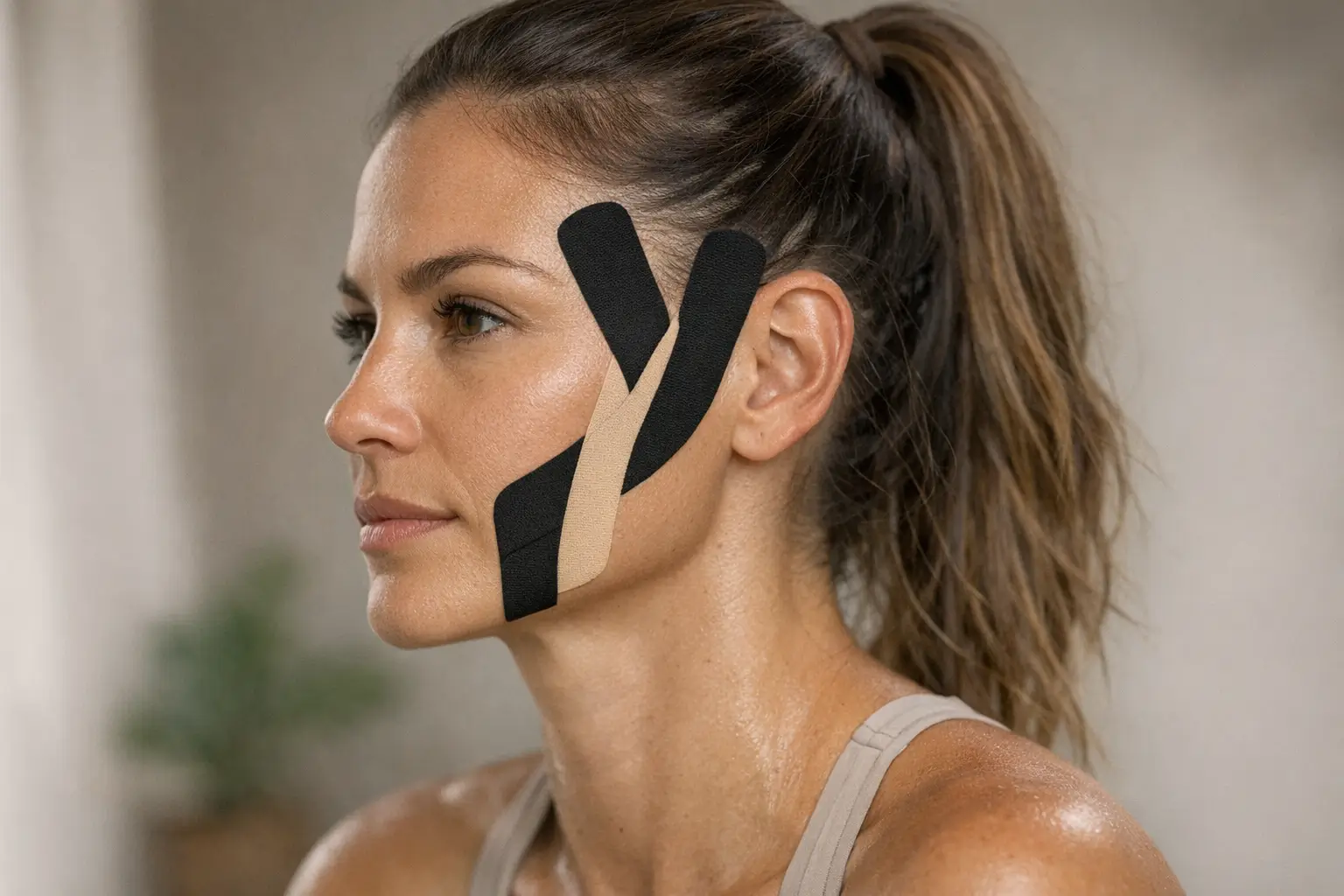
A 2024 randomized clinical trial by Faria et al. applied a Y-shaped strip from the cheekbone down toward the mandible angle. The tape was stretched 15 percent before anchoring, creating a subtle skin lift believed to decompress fascia and improve micro-circulation.
- Clean the skin—sweat and lotion repel adhesive.
- Cut a 20 cm Y-strip: base under the earlobe, tails fanning toward corner of mouth and temple.
- Apply with light tension while jaw is partially open, then rub to activate glue.
Many athletes wear the tape for 24 hours, even through practice, then swap for a fresh strip.
Efficacy and Benefits
The Faria trial logged a 25 percent pain dip and a 4 mm boost in mouth opening after one day. While not as dramatic as lasers or toxins, tape is dirt-cheap, drug-free, and allows full training participation. It also doubles as a reminder not to clench—every time you feel the tape tug, you relax the jaw. One caveat: sensitive skin may protest, so test a small patch first.
Conclusion: Choosing the Right Approach for Jaw Pain Relief
Your jaw isn’t a one-trick pony, and neither should your treatment plan be. Low-level laser therapy shines for quick, cumulative relief; botulinum toxin offers potent, targeted muscle chill; occlusal splints provide mechanical night-time protection; electroacupuncture taps neural circuits; stress management rewires the brain’s pain filter; and athletic tape delivers budget-friendly support. Mix and match based on season demands, pain severity, and personal preference.
Most importantly, loop in a qualified dentist, sports physician, or physical therapist to confirm the diagnosis and monitor progress. With the right combo, you can silence the jaw drama, sleep deeper, and focus on smashing PRs—not your molars.