Navigating Jaw Pain Treatment: Innovative Approaches for Jaw Pain Relief
Discover innovative treatments for jaw pain relief beyond the basics in our comprehensive guide.
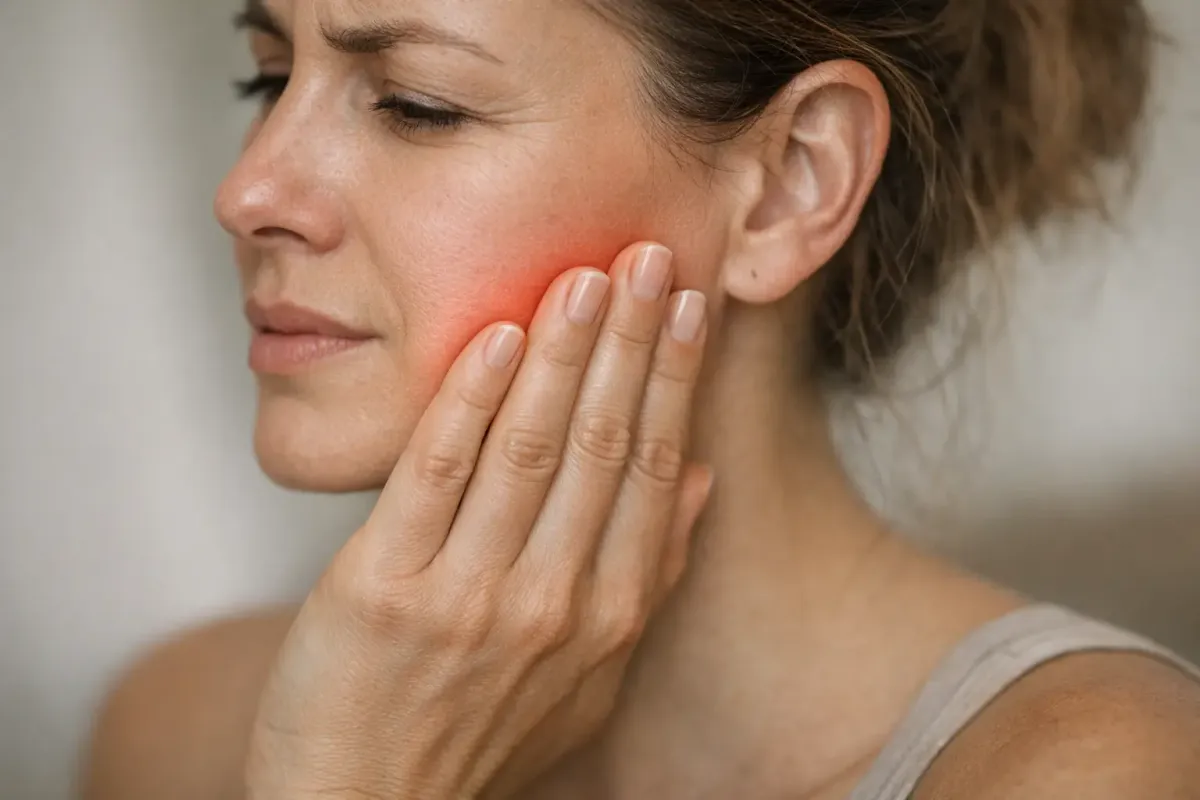
If you've ever woken up with a clenched jaw, a throbbing temple, or a mysterious click when you chew, you know jaw pain can be a real issue. Up to ten percent of adults report chronic jaw discomfort, yet many never get a clear answer about why it happens or how to stop it. The good news: science is advancing with new ideas beyond just wearing a night guard. This guide explores the latest research on jaw pain treatments and how you can benefit from them.
We'll start with common causes like grinding, sleep apnea, and temporomandibular joint (TMJ) disorders. Then, we'll explore gadgets, injections, lasers, and other innovations that might help you tackle persistent pain. Everything here is based on peer-reviewed studies or reputable medical organizations, explained in simple terms so you can discuss options with your dentist or sleep physician.
Understanding Jaw Pain: Causes and Challenges
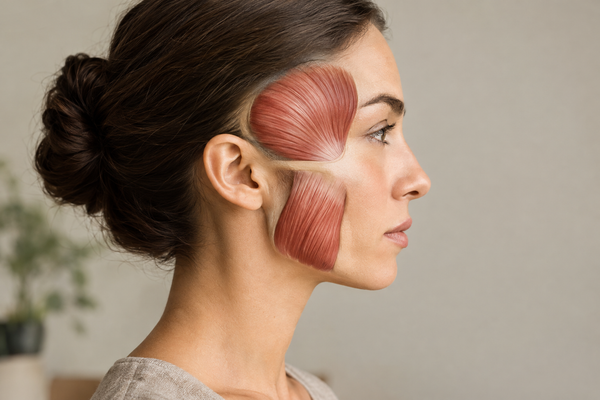
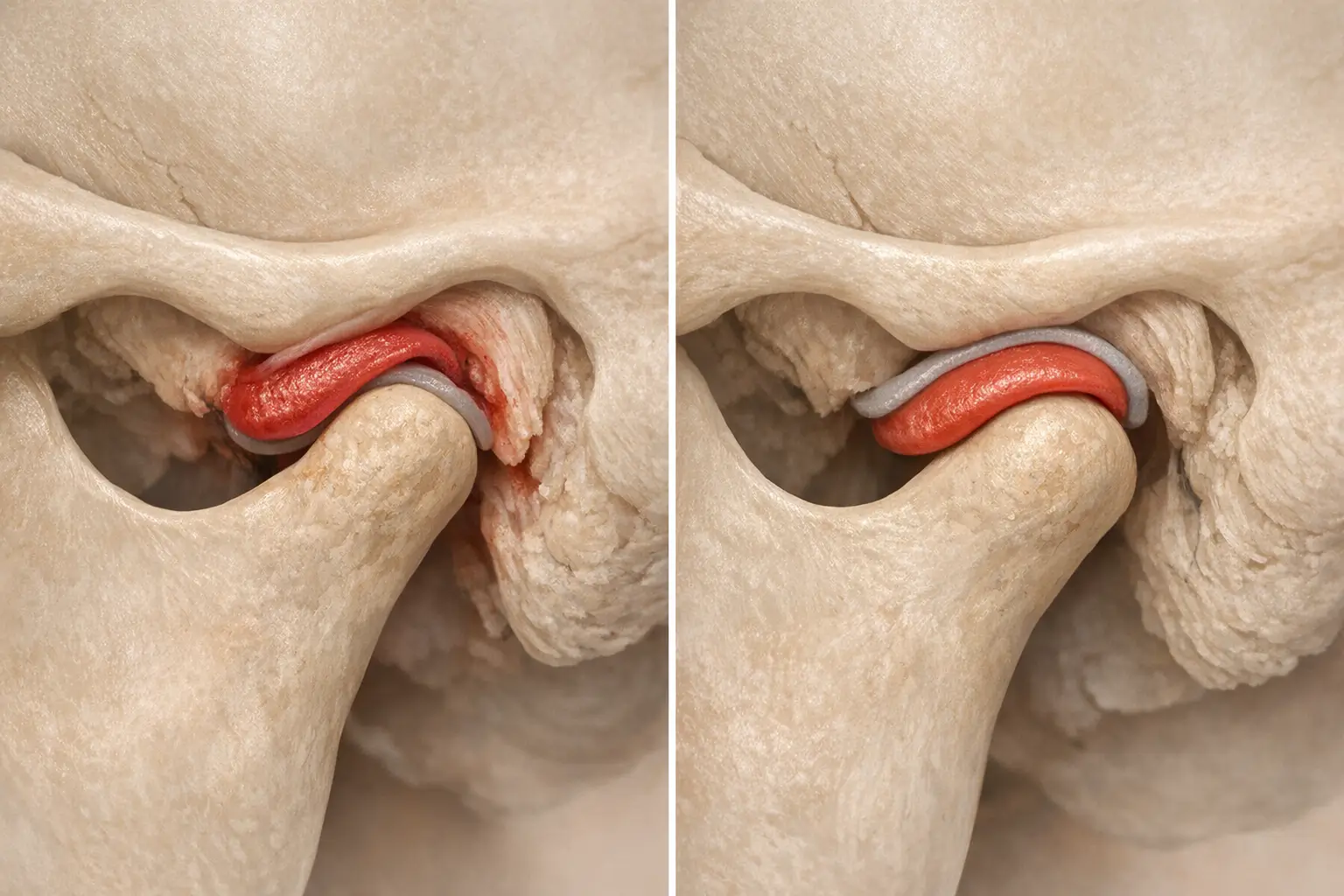
Your jaw is not just one bone. It's a complex system of bone, cartilage, muscles, nerves, and blood vessels. When something goes wrong, you feel it with every word or bite. Researchers from the National Institute of Dental and Craniofacial Research describe jaw pain as a "multifactorial problem," meaning there are usually several causes at play.
Common offenders
- TMJ Disorders (TMD): Inflammation or structural changes inside the joint capsule.
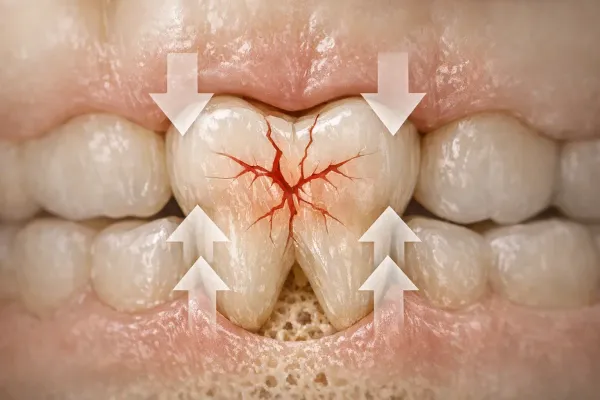
- Bruxism: Unconscious clenching or grinding, often during sleep or intense focus. Learn more about bruxism causes and solutions.
- Sleep Apnea: When your airway collapses at night, you may thrust your jaw forward to improve breathing, straining the joint.
- Stress and Anxiety: Psychological tension can lead to muscle tension, increasing jaw pressure. Discover the connection between stress and bruxism.
- Dental Malocclusion: A misaligned bite can force the jaw to overwork.
In a 2025 anatomy paper by Nieves Del Rio et al., cadaver dissections showed that tiny nerve branches in the joint capsule send pain signals before visible damage occurs. That's one reason X-rays can look normal while you still hurt. Muscle factors add even more complexity.
Diagnosis is also challenging. The DC/TMD diagnostic criteria include over a dozen subtypes, yet many clinics rely on quick exams. According to an international Delphi study by Lindfors et al., experts still disagree on the best assessment tools. This means you might need input from a dentist, an orofacial pain specialist, and a sleep doctor to cover all bases.
Standard first-line treatments usually involve:
- Soft diet and heat packs
- NSAID or muscle relaxant medications
- Acrylic night guards or occlusal splints
- Physical therapy and stress reduction
- Continuous Positive Airway Pressure (CPAP) if sleep apnea is confirmed
These basics can help, but many patients hit a plateau. When that happens, new options come into play.
Real-world snapshot: Jasmine, a 34-year-old graphic designer, tried a soft diet and splint for six months with only partial relief. A detailed sleep study later revealed 14 apnea events per hour. Once her care team added a custom mandibular advancement device and short-term anxiety coaching, her pain episodes fell from daily to twice a month. The takeaway? One root cause masked another until a broader evaluation revealed the issue.
Innovative Jaw Pain Treatments: Beyond the Basics
Two of the most talked-about tools are Mandibular Advancement Devices (MADs) and ultrasound-guided regenerative injections. Both aim to fix underlying mechanics instead of just addressing symptoms.
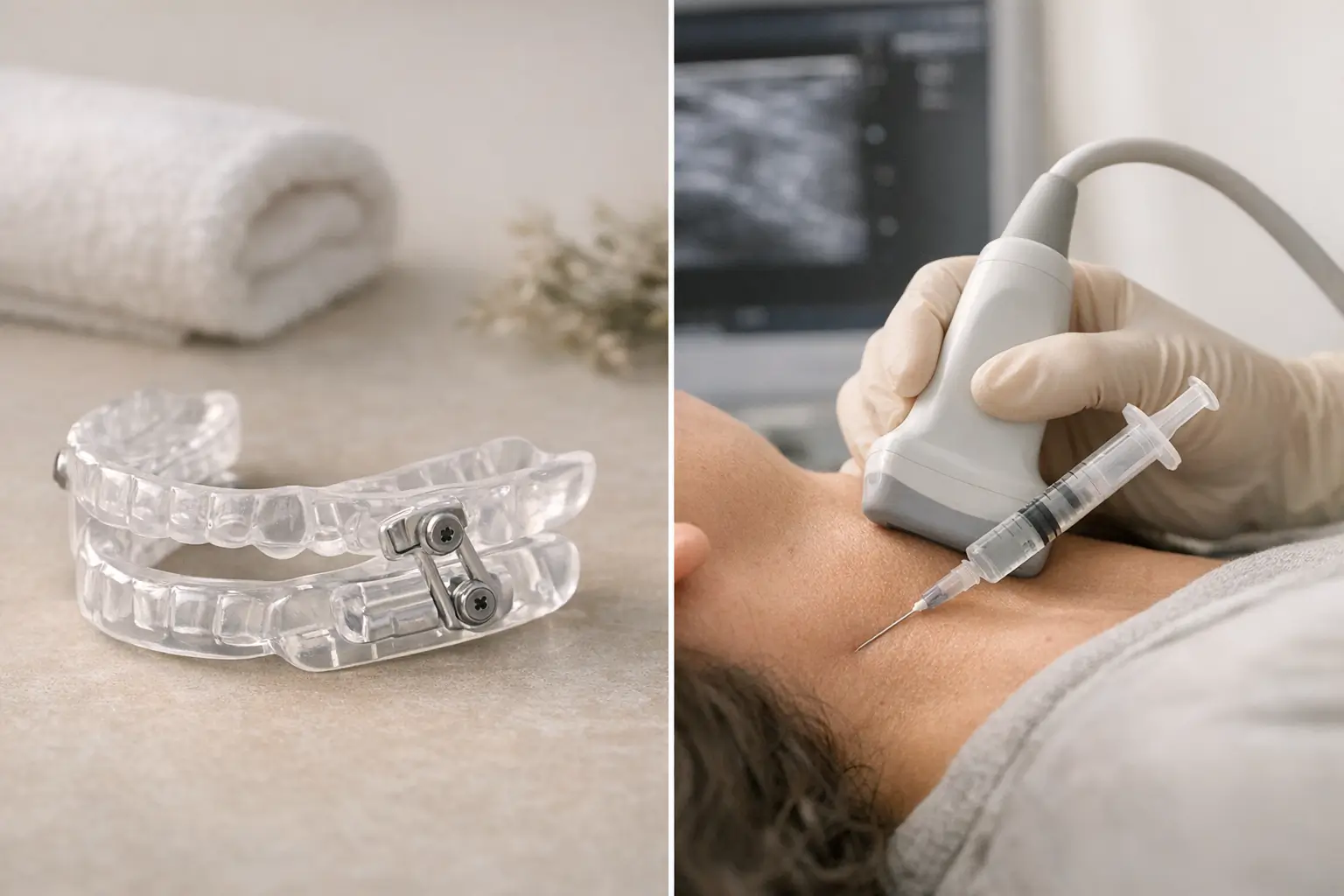
Mandibular Advancement Device
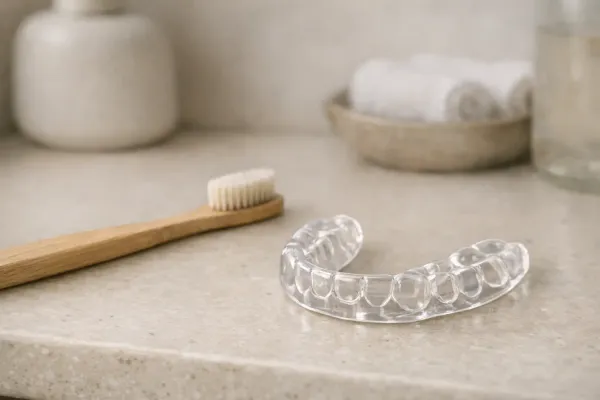
MADs look like clear retainers locked together. They hold your lower jaw slightly forward overnight to prevent throat tissue from collapsing. In sleep medicine circles, they're considered a friendlier option than CPAP, which uses a hose and mask to blast air.
A 2026 trial by Colpani et al. compared adults with severe obstructive sleep apnea using either CPAP or a custom MAD for three months. Both groups reduced apnea events, but MAD users reported less morning jaw pain and higher comfort scores. The authors suggested that stabilizing the mandible reduces nocturnal clenching, giving your TMJ a break.
Key takeaways:
- Custom fit is critical. Over-the-counter "boil and bite" trays rarely advance the jaw effectively. Consider comparing OTC and custom night guards for better understanding.
- Side effects can include tooth movement and extra saliva, so schedule regular dental checks.
- If you grind your teeth, a MAD can also serve as an anti-bruxism splint.
Expect a titration period. Most sleep dentists start the appliance conservatively at 60 to 65 percent of maximum protrusion, then advance it millimeter by millimeter until symptoms and sleep metrics improve. This slow ramp reduces the risk of waking up with stiff muscles or an altered bite.
Ultrasound-Guided Regenerative Injections
Picture a tiny needle delivering platelet-rich plasma (PRP) or hyaluronic acid directly into the inflamed joint space, with real-time ultrasound ensuring accurate placement. That's the idea behind regenerative injections.
In a trial by Bahgat et al., researchers measured myeloperoxidase, an enzyme linked to inflammation, in joint fluid before and after PRP injections. Levels dropped, pain scores decreased, and jaw opening range improved compared to saline controls. Ultrasound guidance reduced the risk of hitting nearby nerves and increased accuracy.
Pro tips:
- Expect two to three sessions spaced a few weeks apart.
- Post-injection soreness is normal. Most clinics recommend gentle movement rather than strict rest.
- Insurance coverage is inconsistent because PRP is still considered experimental in many regions.
Many patients combine PRP with at-home isometric exercises (like mouth-closed gentle pushes against the palm) to prevent scar tissue from forming. Your provider should supply a printed exercise sheet or video demo before you leave the office. Explore massage therapy for TMJ relief as a complementary approach.
Regenerative Medicine: Paving the Way for Jaw Pain Relief
Low level laser therapy (LLLT) and arthrocentesis are gaining attention for degenerative TMJ conditions, especially osteoarthritis and disc displacement.
Low Level Laser Therapy
LLLT uses narrow-band red or near-infrared light to stimulate cellular repair. Unlike high-power surgical lasers, it doesn't heat tissue. Instead, photons penetrate a few millimeters under the skin, encouraging mitochondria to produce more ATP, the energy currency of muscle cells.
A 2026 study by Gupta et al. examined 60 patients with TMJ osteoarthritis. Half received arthrocentesis alone, while the other half added LLLT sessions twice a week for four weeks. The combo group experienced a 64 percent pain reduction versus 39 percent in the lavage-only group, plus better bite force at six-month follow-up.
What that means for you:
- Sit still for about ten minutes while a therapist applies a handheld laser over your jaw muscles and joint line.
- LLLT is painless, though you'll wear protective goggles.
- Benefits are cumulative, usually appearing after three to six sessions.
Device specifics matter. Most clinics use wavelengths between 780 nm and 830 nm at a power density below 100 mW/cm², ideal for deep penetration without thermal damage. Home laser pens advertised online rarely meet these specifications, so opt for professional treatment.
Arthrocentesis
Think of arthrocentesis as a deep clean for your TMJ. Under local anesthetic, a surgeon inserts two small needles into the joint space, infuses sterile saline to flush debris, and sometimes adds steroid or hyaluronic acid. The goal is to break up adhesions and restore the negative pressure that allows the disc to move smoothly.
Guidelines from the American Association of Oral and Maxillofacial Surgeons position arthrocentesis as a middle-ground step between conservative care and open-joint surgery. When combined with LLLT, success rates improve, as shown in the Gupta study.
You might be a candidate if:
- Your jaw locks open or closed intermittently.
- Imaging shows disc displacement without full bony fusion.
- Previous splint therapy plateaued or failed.
Downsides: mild swelling, potential infection (rare), and a couple of days on soft foods. Most patients recover quickly and notice smoother movement within weeks.
Addressing Complex Cases: Persistent Idiopathic Facial Pain
Some patients try everything, from guards to imaging and therapy, yet still battle daily pain. Welcome to the world of Persistent Idiopathic Facial Pain (PIFP). "Idiopathic" means the cause eludes current testing, which is frustrating for everyone involved.
The aforementioned Delphi study by Lindfors et al. surveyed 38 global experts on how they manage PIFP. Consensus was thin. Respondents used neuropathic medications, cognitive behavioral therapy (CBT), and even low-dose botulinum toxin without a clear winner.
Challenges unique to PIFP:
- Pain often migrates across teeth, jaw, and even the ear canal. Learn more about the connection between ear pain and TMJ.
- Clinical exams usually appear normal, leading to diagnostic confusion.
- Psychological overlap is high; anxiety and depression can both precede and follow the pain.
Innovative ideas under review include:
- Neuromodulation gadgets. External trigeminal nerve stimulators send low-voltage currents to reduce pain pathways. Early data look promising, but devices are costly.
- Ketamine micro-dosing. Clinics are testing sub-anesthetic ketamine infusions for chronic orofacial pain, drawing from success in complex regional pain syndrome. Evidence is preliminary, and you need a specialized center.
- Pulsed radiofrequency. Targeted energy applied to the auriculotemporal nerve can reduce neurotransmitter release without damaging tissue.
If you suspect PIFP, assembling a care team is essential. This may include a neurologist, pain psychologist, and an orofacial pain dentist. Discuss both standard and cutting-edge options to map a comprehensive treatment plan. Explore CBT for managing bruxism symptoms as part of the approach.
Coping tip: Keep a daily "jaw journal." Note pain intensity, food texture, stress level, and sleep quality. Patterns often emerge that neither you nor your clinician would spot from memory alone, guiding medication timing or therapy adjustments.
Post-COVID-19 Jaw Pain: Emerging Concerns
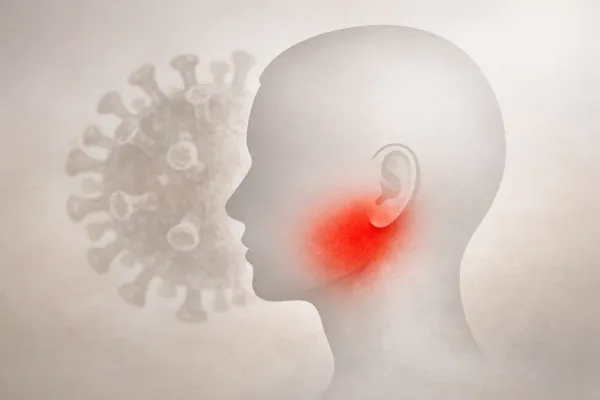
COVID-19 left more than masks and hand sanitizer behind. A growing body of research documents jaw complications, notably osteonecrosis, where bone dies due to blocked blood supply.
A 2026 review by Cătălin et al. linked SARS-CoV-2 infection, steroid therapy, micro-clotting, and jawbone degradation. Cases often appeared months after infection, surprising both patients and clinicians.
Red flags include:
- Dull, persistent pain in the maxilla or mandible
- Exposed bone spots that won't heal
- Loose teeth without periodontal disease
- Tingling or numbness in the chin or lip
Treatment strategies are still evolving, but early reports suggest:
- Hyperbaric oxygen to flood tissues with healing oxygen
- Surgical removal of necrotic bone
- Adjunctive PRP or stem cell grafts to stimulate regeneration
If you had moderate to severe COVID-19 and notice unexplained jaw symptoms, seek dental imaging and, if needed, a referral to an oral and maxillofacial surgeon. Early intervention can limit bone loss. Explore the link between long COVID and bruxism for more insights.
Conclusion: A Holistic Approach to Jaw Pain Management
Your jaw is a multitasker, involved in talking, breathing, chewing, and expressing emotions 24/7. When pain disrupts this system, you need more than a one-size-fits-all fix. Evidence supports a layered plan: start with conservative basics, add targeted devices like a MAD if sleep apnea is present, and explore regenerative or laser therapies for stubborn joints. Complex cases such as PIFP or post-COVID osteonecrosis require a broader network of specialists and innovative tools.
Daily self-care still matters. Simple habits like maintaining correct posture, limiting gum chewing, and practicing a relaxed jaw position can reduce strain. Pair these with diaphragmatic breathing before bed to lower stress-induced clenching, creating a low-cost foundation that complements any high-tech remedy.
The key is personalization. No online article can replace a hands-on exam and advice from a qualified professional. Use the research and options covered here as starting points for discussions with your dentist, physician, or physical therapist. By combining proven fundamentals with innovation, you stand a better chance of reclaiming a pain-free bite and a restful night's sleep.