Can You Wear a Night Guard With Braces? Understanding Your Options
Discover if you can wear a night guard with braces and explore alternatives for bruxism management.
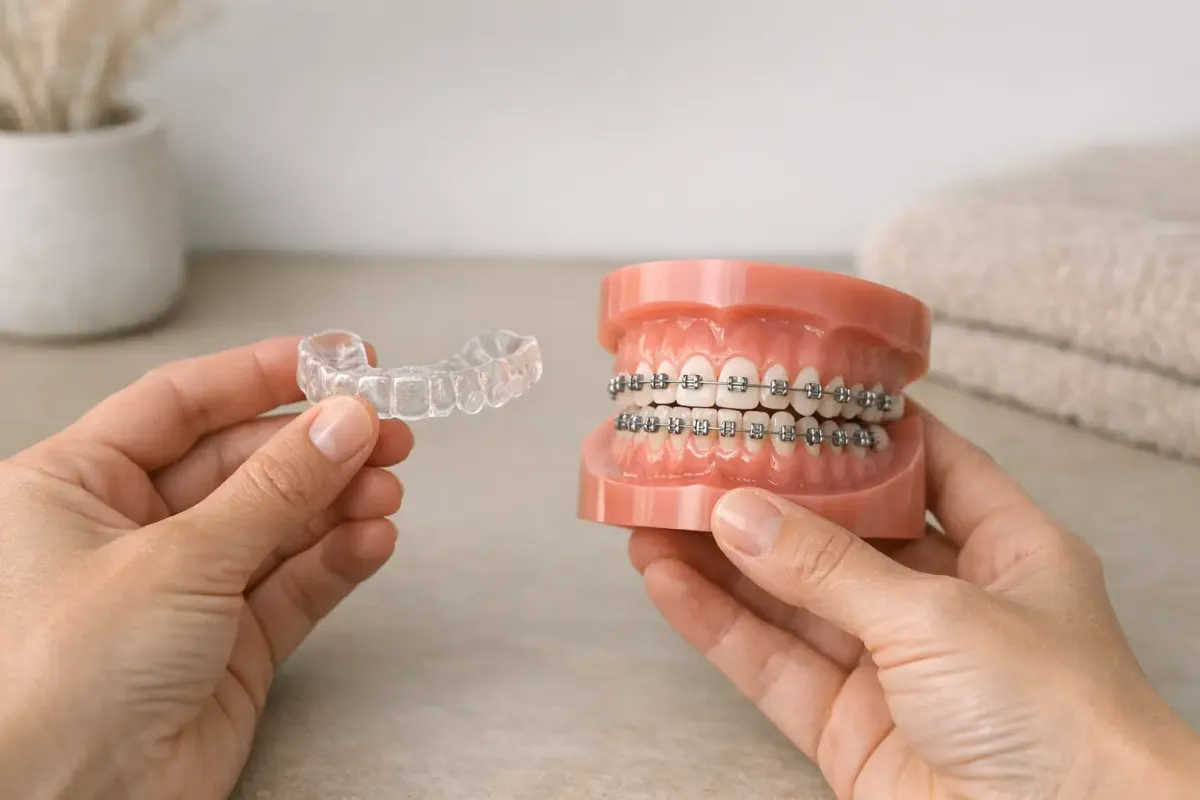
Teeth grinding is a sleep-cycle quirk that can escalate into a dental issue. If you have braces, the stakes feel higher. Metal brackets, wires, and elastics leave little room for another appliance. Yet, your molars keep mashing at night. You wonder if a night guard can save your enamel or if it would clash with your braces like socks with sandals.
The same question comes up with other dental work. If you have had porcelain work done rather than orthodontics, we cover wearing a night guard with veneers separately, because the concern there is chipping the porcelain rather than interfering with tooth movement.
Below, you’ll discover what research and orthodontic guidelines say about night guards with braces, along with practical alternatives that won’t disrupt your treatment plan. This article is written in plain language, supported by credible studies, and free of unnecessary dental jargon.
Can You Wear a Night Guard With Braces?
The short answer is no, not the over-the-counter kind. Standard night guards mold to your teeth’s exact shape. Braces change that shape weekly, so a guard that fits on Monday may feel like a bear trap by Friday. This mismatch is why orthodontists typically advise against using one until your braces come off.
Research supports this advice. An in vitro study by Harrington et al. (2022) revealed that mouthguards designed for unbraced teeth couldn’t accommodate the extra bulk of brackets without cracking or causing pressure points. Additionally, a survey by Bussell & Barreto (2014) found fewer than 10 percent of UK orthodontists would recommend a standard boil-and-bite guard for patients with braces.
Even if you could fit a stock guard over your braces, you'd risk disrupting the tooth movement you're paying for. Orthodontic forces guide teeth in precise increments. Add a rigid plastic layer, and those forces get distorted. Bottom line: you grind away the benefits of braces along with your enamel.
Why Standard Night Guards Don’t Work With Braces
To understand the issue, peek under the orthodontic hood. Braces rely on forces delivered by brackets, wires, and elastics. Modern systems, like the CAD/CAM smartwires studied by Weissheimer et al. (2025), apply light, continuous pressure to nudge teeth along a predicted path. The wires fit into bracket slots that are fractions of a millimeter wide. Any interference, like a thick plastic guard, can send the force vectors sideways.
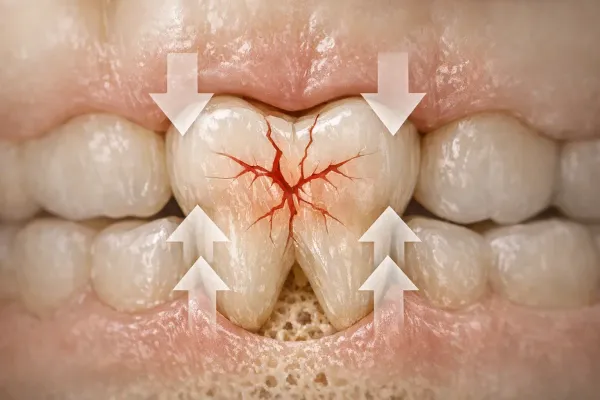
Then add bruxism to the mix. Grinding involves clamping down and sliding the jaw side-to-side with forces exceeding 250 pounds per square inch. A conventional guard cushions these forces by distributing them across your teeth. But slip that guard over brackets, and two problems arise:
- Compression spots: The guard presses unevenly against brackets, creating pressure that can bend wires or dislodge adhesive.
- Fit drift: As braces move teeth constantly, the guard loses its fit within days, leading to sore teeth or gums.
These flaws aren’t just theoretical. In the Harrington 2022 study, researchers noted standard EVA guards warped around brackets after only a few grinding cycles. Similarly, Bussell & Barreto’s survey highlighted “appliance dislodgement” as the top concern among orthodontists.
Innovative solutions are emerging. Custom 3D-printed guards and flexible silicone shields show promise in pilot projects, echoing advancements like Bauer et al.'s 2024 work on torque-transmitting brackets. Until these products are widely available, most orthodontists recommend specialized orthodontic mouthguards or temporary behavior-based fixes.
Alternatives to Night Guards for Orthodontic Patients
Protecting your teeth, jaws, and braces from grinding is crucial. Fortunately, there are alternatives that are more high-tech than ever.
Custom Orthodontic Mouthguards
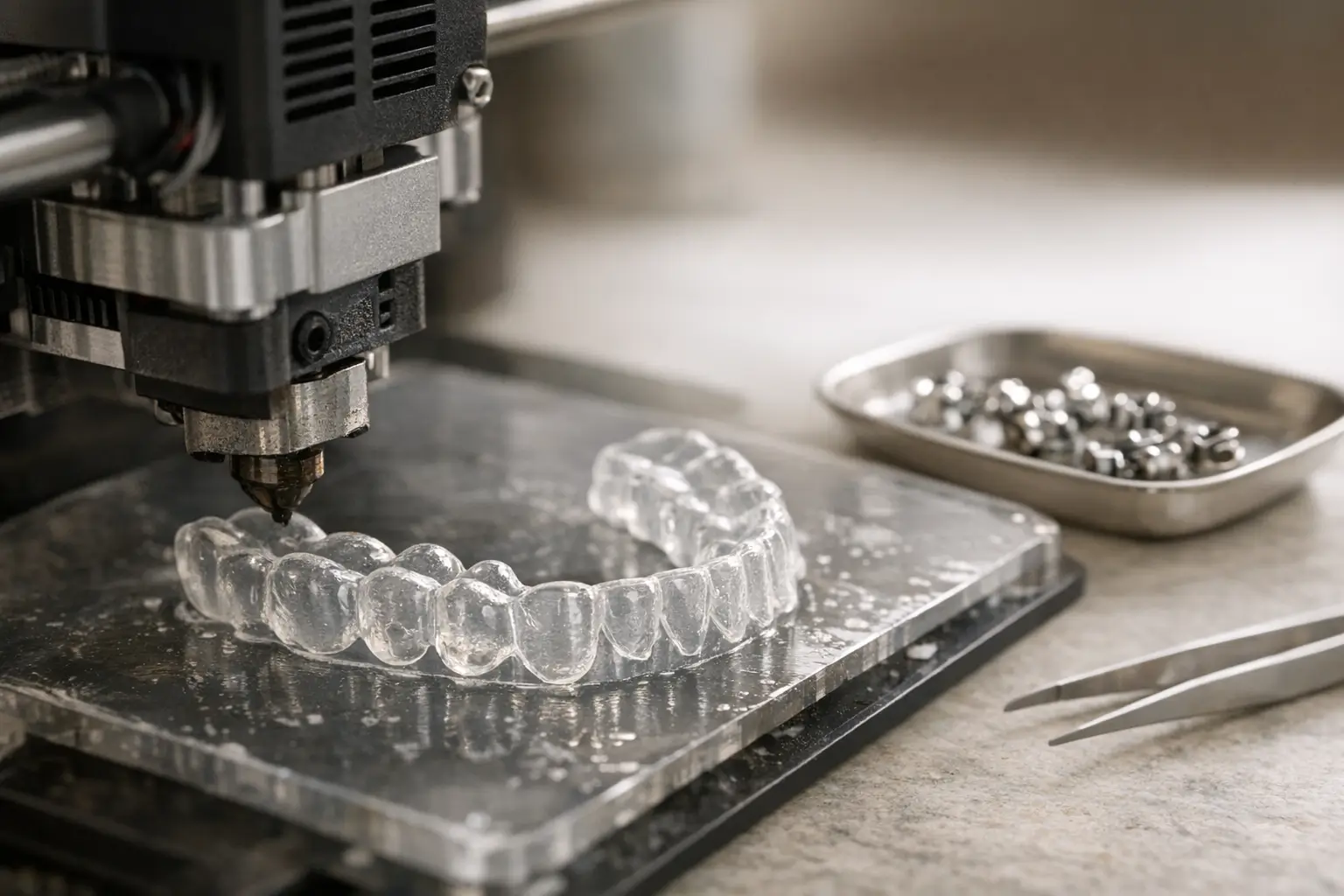
Think of these as night guards with a PhD in brackets. They’re designed from scratch to clear your hardware, utilizing digital scans and CAD software. A lab technician, or increasingly a cloud-based AI, adds extra relief space for brackets and prints or thermoforms a multilayer guard that contacts only the biting edges of your teeth.
In Harrington et al.'s 2022 study, orthodontic-specific guards absorbed up to 30 percent more grinding force than stock guards without distorting bracket position. A randomized clinical trial by Kalra et al. (2022) compared custom guards to generic sports guards in patients with braces. Participants rated the custom versions higher for comfort, fit, and ease of speaking.
Here's the usual process:
- Your orthodontist performs an intraoral scan (no goopy impressions).
- Software blocks out bracket areas and designs the guard with relief channels.
- A lab fabricates the piece using layered EVA, medical-grade silicone, or 3D-printed resin.
- You receive adjustment visits as teeth move.
Drawbacks include cost, often ranging from $300-$600, and the potential need for multiple guards over an 18-month course of braces.
Temporary Solutions for Bruxism
If a custom orthodontic guard feels like an extra expense, consider interim strategies:
- Behavioral strategies: Stress fuels grinding. Mindfulness, jaw-relaxation routines, and consistent sleep hygiene can curb muscle activity. The American Association of Orthodontists offers a guide on reducing clenching triggers (AAO resource). Additionally, explore how stress makes bruxism worse for further insights.
- Silicone bite pillows: Soft inserts sit between molars, providing a target that’s kinder to brackets. They’re disposable, cheap, and less obtrusive than full-arch guards, though they don't prevent lateral movements.
- Wax buffering: Orthodontic relief wax can reduce enamel-to-bracket contact if you grind primarily in one quadrant.
- Sports mouthguards designed for braces: Brands like Shock Doctor offer flexible guards with “ortho-channels” adapting to changing tooth positions. Bulkiness is a trade-off; you may drool or struggle to speak, but your brackets stay safe.
- Medication and muscle relaxants: In severe cases, a dentist or sleep physician may prescribe muscle relaxants or botulinum toxin injections to reduce jaw activity. These are last-line options with side effects. For more on medication options, see our exploration of muscle relaxants for bruxism.
Comfort and wearability matter. An assessment by Gawlak et al. (2015) found user preference strongly correlated with guard thickness: thinner, custom options were preferred. If possible, budget for a tailored device for better compliance and dental health.
For detailed guidance, see our replacement guide covering cost, lifespan, and insurance tips for each guard type.
When to Consider Replacing Your Night Guard
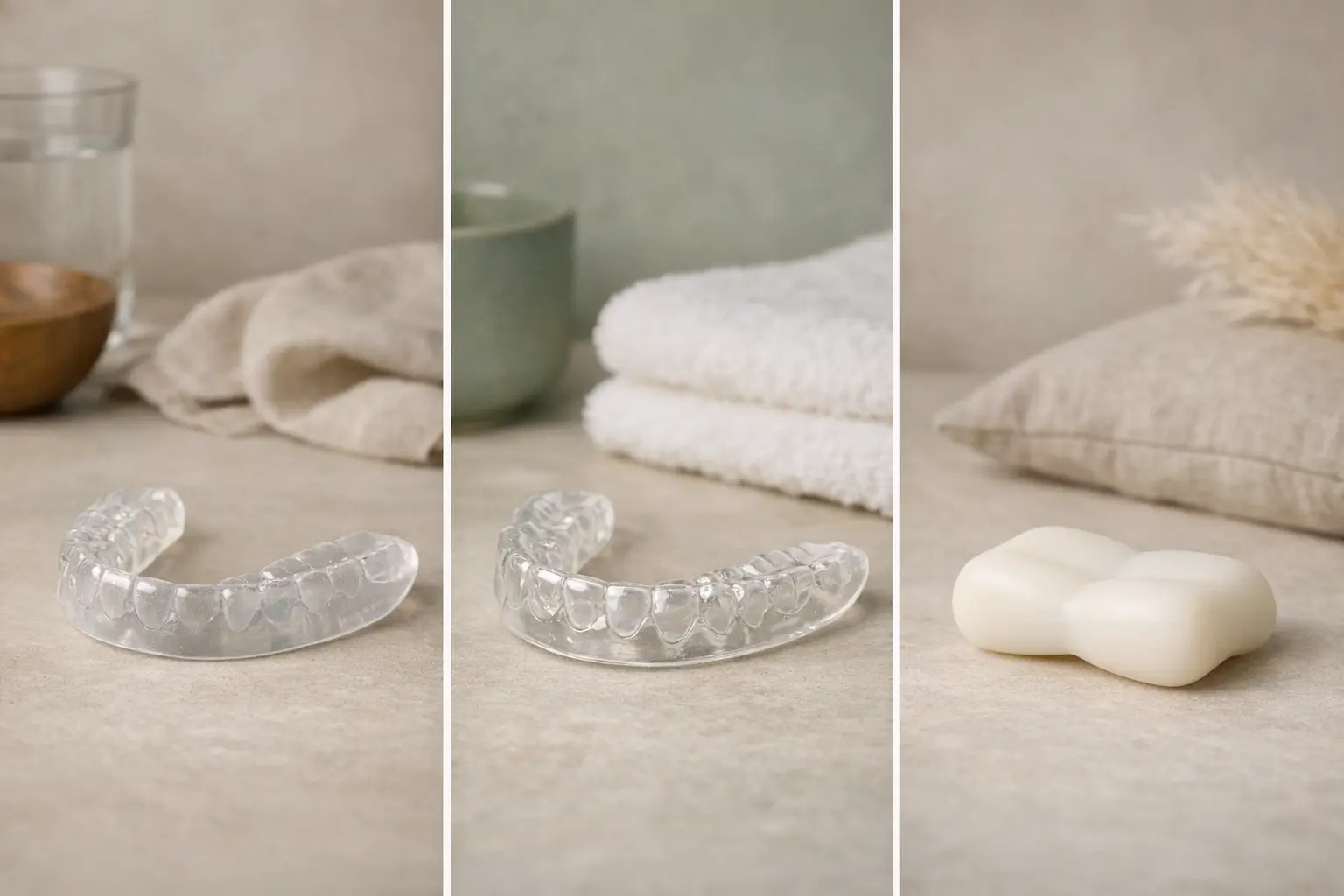
If you already own a pre-braces night guard, hold onto it; you might use it once the brackets are gone. Timing is crucial.
Teeth rarely return to their exact pre-brace position. According to Bussell & Barreto’s 2014 survey, 70 percent of orthodontists recommend a new guard post-treatment rather than reshaping an old one. This is because:
- The arch width often changes.
- Individual tooth angulation adjusts.
- Final occlusion is fine-tuned, altering bite contacts.
Exceptions exist. If your old guard was custom made and lightly adjusted, your dentist might reline or spot-grind it to fit. Bauer et al.’s 2024 study shows minimal torque changes can keep posterior contacts consistent, making modification feasible.
Here’s a quick decision tree:
- Are you done with braces? If not, resist reusing any old guard.
- Do your retainers feel identical to your old bite? If yes, ask your dentist if refurbishing is possible.
- Is your guard cracked, yellowed, or warped? Replace it outright. Degraded guards invite bacteria and offer poor protection.
A ballpark replacement window is every 12-24 months for heavy grinders, according to the American Dental Association’s guidance on oral appliances (MouthHealthy resource). Your mileage may vary based on grind intensity and material quality.
Managing Bruxism During Orthodontic Treatment
This section is your survival kit. While you wait for custom solutions or progress through months of alignments, here’s how to keep bruxism from derailing treatment.
1. Schedule micro-checkups. Bruxism can bend wires or pop brackets. Rapid follow-ups allow the orthodontist to swap distorted wires before they affect tooth movement. A six-week interval is typical, but bruxers may benefit from four-week visits.
2. Opt for smartwire upgrades. The customized CAD/CAM smartwires described by Weissheimer et al. (2025) adapt forces across the arch, making them less sensitive to minor appliance distortion caused by grinding.
3. Use fluoride varnish. Enamel under attack from grinding and plaque needs reinforcements. Professional fluoride varnish can remineralize micro-fractures. The British Orthodontic Society lists varnish applications as a high-yield adjunct for high-risk patients (BOS guidance).
4. Dial in your diet. Acidic energy drinks erode enamel softened by grinding. Swap them for water or milk. If you need caffeine, use a straw to bypass biting surfaces. For more dietary considerations, see how diet influences bruxism.
5. Master jaw-relaxation drills. The AAO suggests placing your tongue on the palate and gently opening and closing the jaw before bed to reset muscle memory. Combine this with diaphragmatic breathing to reduce cortisol levels that spike bruxism.
6. Consider sleep studies. Bruxism can signal obstructive sleep apnea (OSA). If you snore or feel tired despite eight hours in bed, talk to your primary care physician. Addressing OSA can reduce grinding episodes, per the American Academy of Sleep Medicine. If you're interested in the sleep-bruxism link, discover more about sleep disorders and teeth grinding.
7. Keep wax handy. For nights when grinding is intense, add wax blobs on bracket faces that oppose upper or lower teeth. It’s a simple cushion that protects enamel when other solutions fail.
Stay proactive. As Harrington’s study notes, early intervention prevents the cycle where damaged braces amplify grinding discomfort, increasing muscle contractions.
Conclusion
Standard night guards and braces don’t mix. Off-the-shelf guards can warp wires, crack over brackets, and undo months of tooth movement. Instead, orthodontic-specific mouthguards, digital customization, and temporary grind-management tactics fill the gap until your braces come off.
If you own a night guard from your pre-braces days, stash it until after debonding. Then ask your dentist if it can be refitted. In most cases, you’ll need a new guard to match your freshly aligned bite. Meanwhile, rely on behavior tweaks, follow-up visits, and flexible guard alternatives to shield your teeth and hardware from nightly grinding.
Every mouth is unique, and so is every orthodontic journey. Before buying any appliance, consult with your dentist or orthodontist to map out a personalized plan. Your enamel and your wallet will thank you.