Can You Wear a Night Guard With Invisalign? Exploring the Compatibility
Discover if you can wear a night guard with Invisalign and how aligners protect against grinding.
If you wake up with a sore jaw, a flattened molar or two, and an ever-growing suspicion that you spend the night auditioning for a tree-chipper, you are not alone. An estimated 15 percent of adults grind or clench their teeth during sleep. At the same time, millions of adults are straightening their smiles with Invisalign clear aligners. Inevitably the question pops up in late-night searches: can you wear a night guard with Invisalign, or do the trays do double duty as a bruxism shield?
The short answer: sometimes, but the details matter. Let’s unpack the science, the hardware, and the timing so you can protect both your enamel and your orthodontic progress. The goal is not to choose one appliance forever but to understand which tool is doing the most good at any given stage of treatment.
Compatibility of Night Guards with Invisalign
Compatibility comes down to one key idea: both devices need to occupy the same real estate, your teeth, at the same time. You cannot physically snap in a thick acrylic guard over aligners without dislodging the trays. However, research suggests you may not need both anyway.
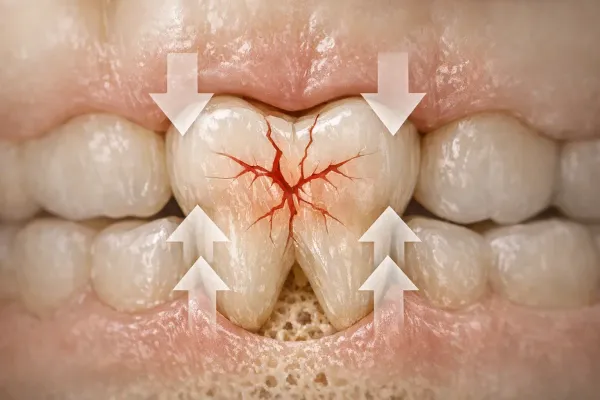
A 2020 systematic review by Porporatti et al. found that clear aligners create a physical barrier between upper and lower arches, reducing the tooth-to-tooth friction that causes damage in grinders. Another key paper, a 2022 review by Manfredini, Ahlberg, and Lobbezoo, reframed bruxism as a behavioral pattern that often persists regardless of appliances. Still, they noted that any interocclusal material, including aligners, can reduce enamel wear.
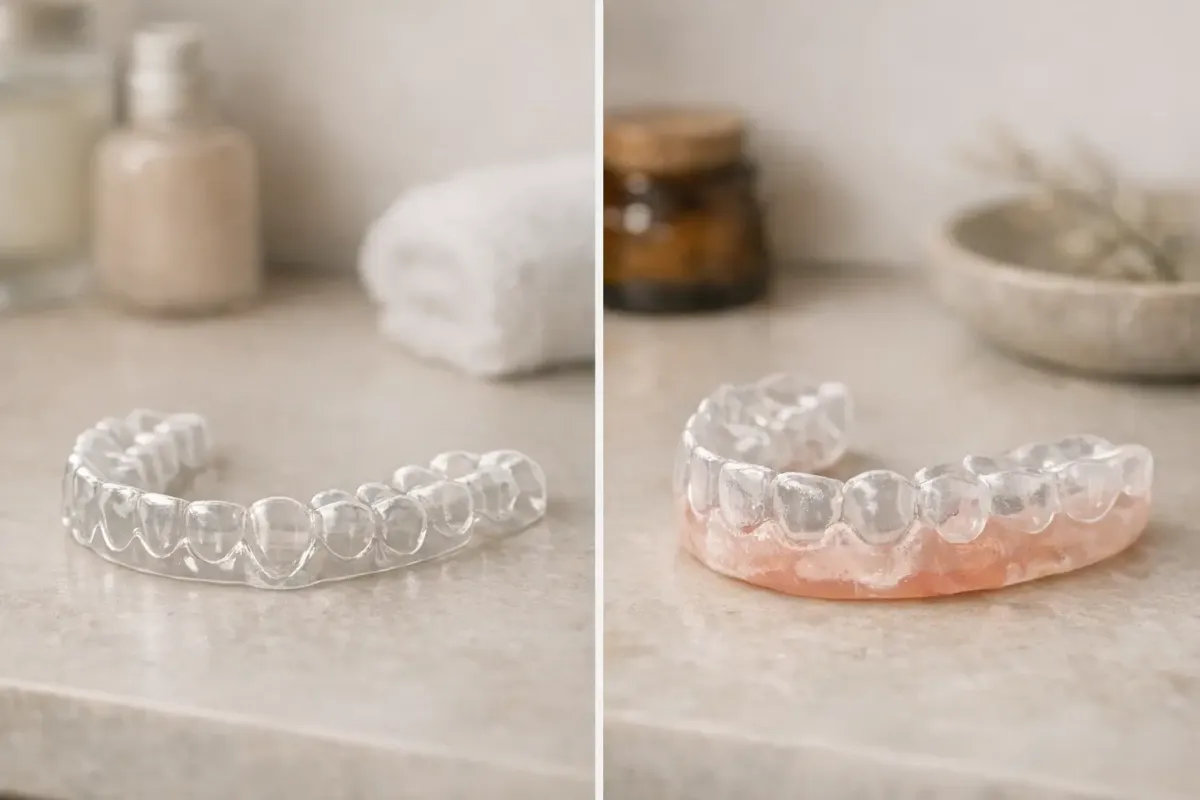
So while you cannot stack a night guard on top of Invisalign, the aligner itself usually offers basic protection. Dentists often tell patients to pause the traditional night guard during active aligner therapy and monitor for signs of excessive wear on the trays. If grinding is mild to moderate, the aligner doubles as a slim night splint. If grinding is severe or painful, you and your orthodontist may need a custom workaround, such as:
- Switching to a thicker “chew-proof” aligner material for nightly use
- Scheduling shorter intervals between aligner changes
- Using medication or physiotherapy to reduce clenching intensity
Consider this scenario: Jessica, a 34-year-old software engineer, began Invisalign with a pre-existing soft night guard. After repeatedly popping trays loose when she tried to layer the guard, her orthodontist advised relying solely on the aligners. Three months in, no new enamel facets appeared, and tray wear was minimal, showing that for her, the aligners were effective.
In short, you cannot physically wear a separate guard with Invisalign, but most patients do not need to. The aligners themselves do some guarding, though the level of protection depends on grind severity and tray thickness. If in doubt, take a “show and tell” approach. Bring your most chewed-up tray to the appointment so your provider can gauge how aggressively you brux.
Understanding How Invisalign Works Against Bruxism
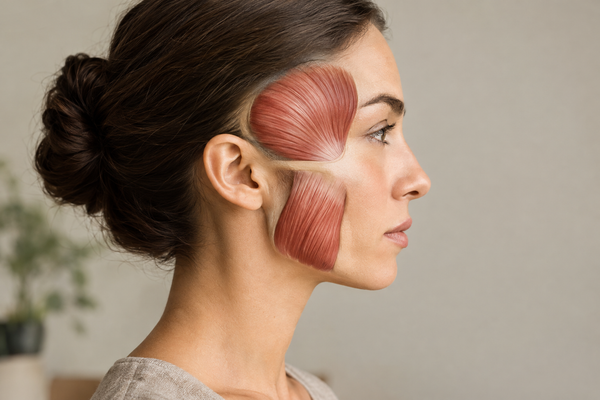
Invisalign trays are made from a multilayer polyurethane resin that is 0.75 to 1 millimeter thick. When you sleep, this wafer of plastic sits between upper and lower teeth, absorbing some of the forces generated by the masseter and temporalis muscles. According to Porporatti’s review, lab simulations show that aligners can reduce peak bite force on enamel by roughly 30 percent.
The key protective mechanisms are:
- Cushioning. The thermoplastic slightly deforms under pressure, acting like a shock absorber.
- Force redistribution. The full-arch tray spreads load across multiple teeth rather than concentrating it on a single molar.
- Disclusion. The added thickness prevents some posterior tooth contact, trimming the grinding “gear” effect.
Electromyography (EMG) studies further confirm the benefit. Grinders outfitted with thin aligner material showed a 15 percent drop in nocturnal muscle bursts compared with no appliance, a modest but clinically relevant decline. Although not as dramatic as the 30-to-40 percent reduction seen with thick acrylic splints, the difference explains why many Invisalign wearers stop waking up with chipped edges and sore joints.
Traditional night guards, typically 2 and 3 millimeters thick and fabricated from hard acrylic, provide a larger buffer and are custom-shaped to your bite. They remain the gold standard for patients with severe bruxism or temporomandibular joint (TMJ) disorders. Yet Manfredini et al. caution that compliance is the bigger determinant of success; users often leave bulky guards on the nightstand. Clear aligners, worn up to 22 hours a day, sidestep this adherence problem.
Clinical takeaway: Invisalign offers partial protection comparable to thinner over-the-counter guards. If your grinding is moderate, the trays may be “good enough” during active treatment. If you experience jaw pain, headache, or cracked fillings, discuss adjunctive therapies rather than attempting to layer devices. Mouth-taping to encourage nasal breathing or five-minute jaw-relaxation routines before bed can also dial down muscle hyperactivity.
Wear-Through Concerns: Impact of Grinding on Aligners
What if your grinding is strong enough to chew through your own bite guard? The same could happen to aligners. A worst-case scenario is swapping trays every week only to find perforations at the molars.
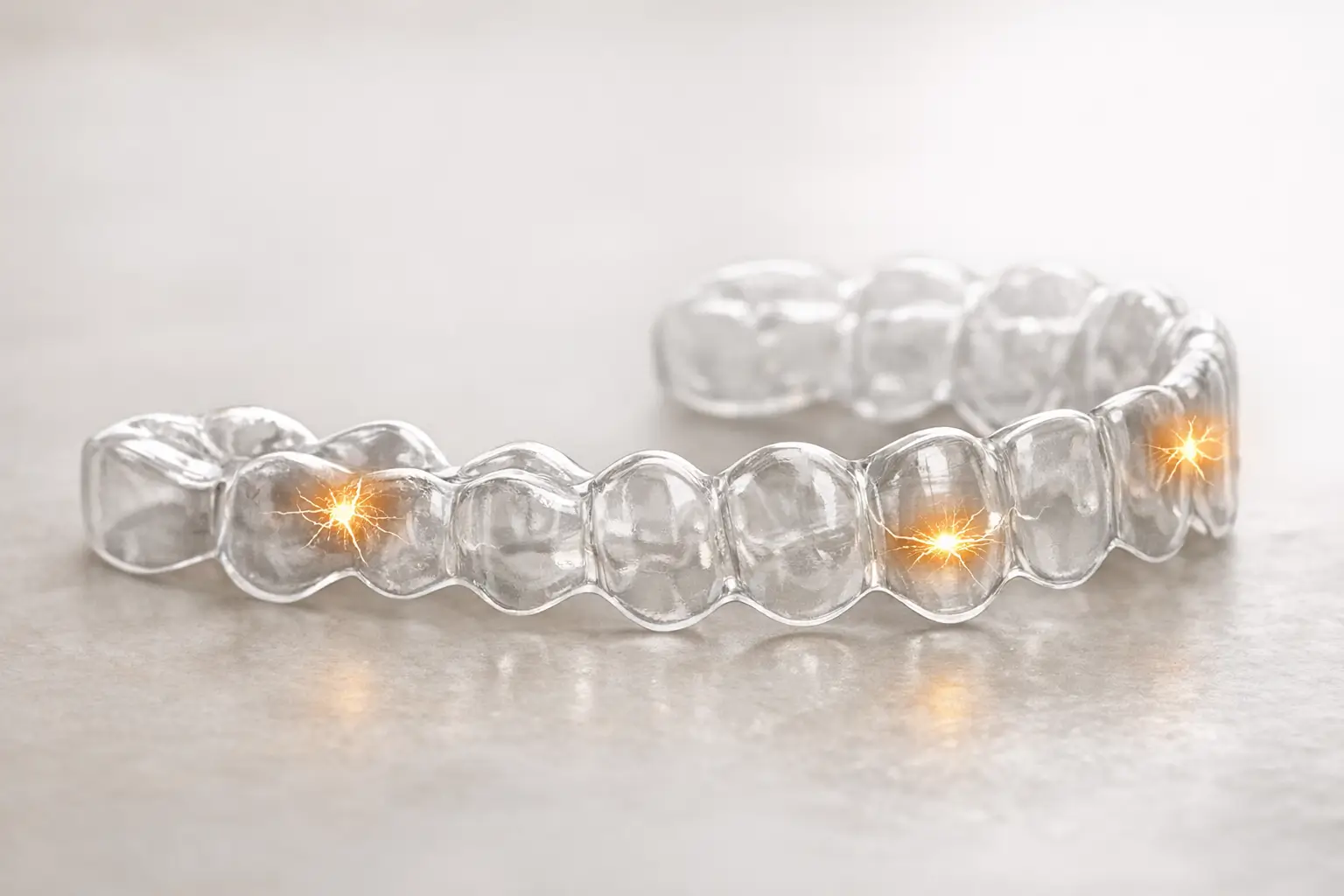
A 2020 study by Al-Nadawi et al. showed that patients instructed to wear aligners 22 hours a day generated microscopic cracks within 14 days of normal use. Add bruxism, and damage accelerates. Porporatti’s review also documented anecdotal cases of aligner puncture lines in heavy grinders.
Signs you may be wearing through trays:
- Opaque stress marks on the molar section by day 3 and 5
- Small pinhole perforations visible against light
- Edges that curl, warp, or feel rough on the tongue
Material science offers a few solutions. Invisalign’s parent company introduced a tougher “SmartTrack” formulation with higher elastic recovery. For extreme grinders, some orthodontists print an extra set of “sleep-only” retainers in a thicker 1.25 millimeter PETG. You pop in the daytime trays for teeth movement and the reinforced set at night.
Another strategy is to build “bite ramps”, small composite bumps on the lingual surfaces of upper incisors. These keep posterior teeth apart during heavy clenching and shift the load to a sturdier part of the tray. Your orthodontist can add or remove ramps without remolding the entire aligner series.
The downside is cost and environmental waste. More plastic trays mean higher fees and fuller landfills. Still, enamel is non-renewable; if you suspect aligner wear-through, show the trays to your provider rather than soldiering on. Consider storing damaged trays in a labeled bag so the orthodontist can pinpoint exactly where the forces concentrate.
Timing: When to Reintroduce a Night Guard
Eventually the aligner marathon ends and your teeth graduate to retention. That is when a dedicated night guard can return to the party. The catch: post-orthodontic tooth positions are different, so the old guard parked in a drawer no longer fits.
A 2025 follow-up by Tabellion et al. tracked CAD/CAM bonded retainers for two years and found that minor relapse occurs mainly in the first six months. A 2023 study by Bonadio et al. added that occlusal adjustments within three months of finishing treatment improved long-term stability.
Putting the two studies together, here is a practical timeline:
- Week 0 (last aligner): Transition into your prescribed Vivera or fixed retainer. No night guard yet; let the bite settle.
- Month 1 and 3: Orthodontist checks for minor shifting and polishes any premature contacts.
- Month 4 and 6: Once your provider confirms stability, impressions or digital scans can be taken for a fresh night guard.
- Month 6+: Wear the new guard nightly, alternating with your retainer as instructed. Some labs can fuse retainer and guard into a single appliance, though durability varies.
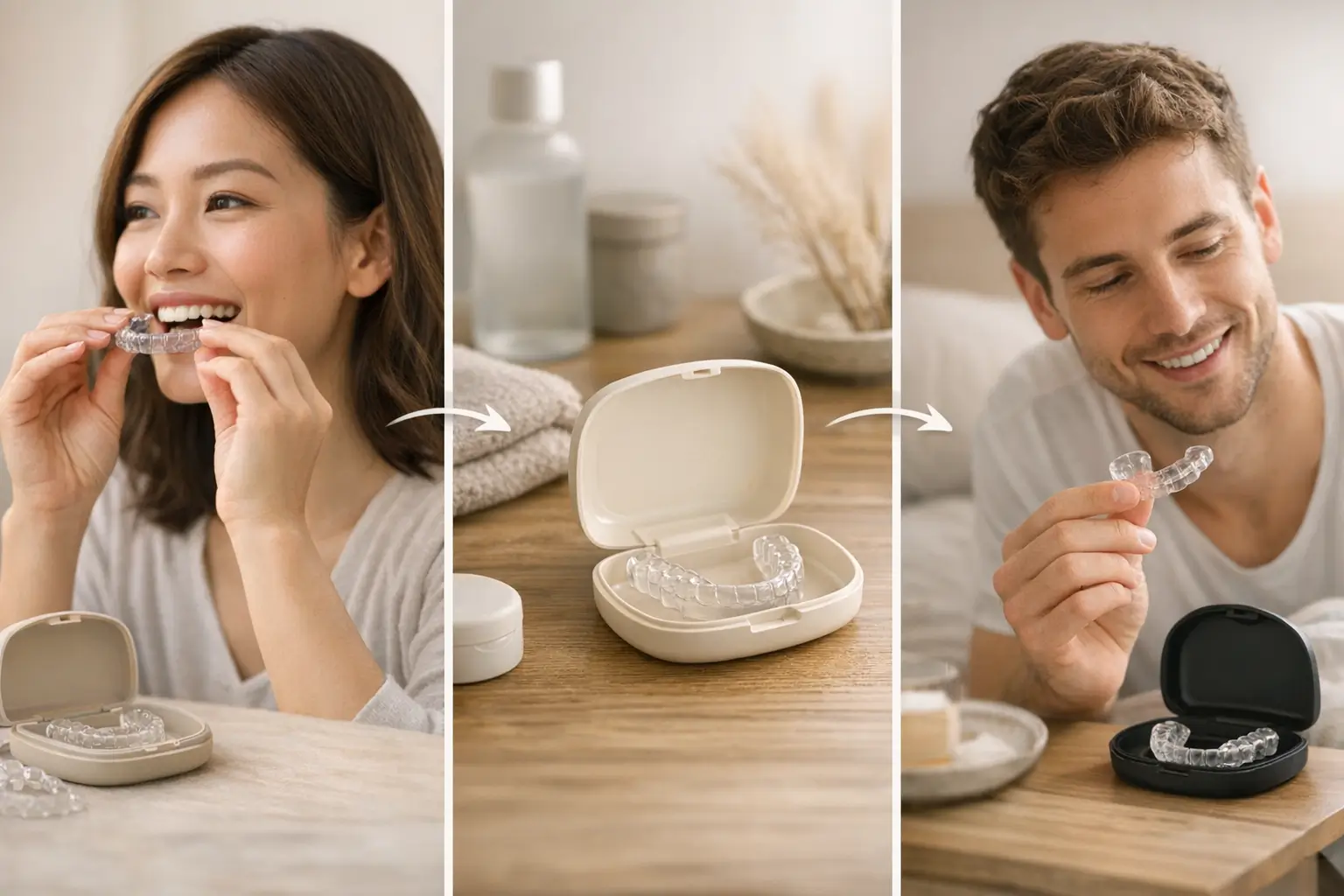
If you jump straight into an old guard, you risk moving teeth back toward their pre-Invisalign positions. That wastes months of alignment and could create pressure points that trigger gum recession or root resorption. A “retainer first, guard later” policy gives tissues time to remodel, especially the periodontal ligaments that were stretched during tooth movement.
Custom Night Guards: Post-Invisalign Considerations
Once you get the all-clear to order a new guard, the lab process begins. You will likely hear two design options:
- Flat-plane guard (Michigan or Tanner style) that covers one arch and offers a smooth occlusal surface.
- Dual laminate guard with a soft inner liner for comfort and a hard outer shell for durability.
Cavity risk, TMJ symptoms, and personal comfort guide the choice. A 2024 cross-sectional study by Theodorelos et al. linked certain retention methods to gingival recession, emphasizing that any full-coverage appliance must be meticulously cleaned. Clear aligner graduates are already cleaning pros, so the habit carries over.
Cost is another variable. A lab-fabricated guard runs $300–$600 on average in the U.S. If you have dental insurance, ask whether code D9944 (occlusal guard, hard appliance full arch) is covered. Some carriers reimburse 50 percent every five years, but only if bruxism is documented in the chart notes. Bring photos of worn aligners and any cracked fillings as evidence.
Other considerations:
- Digital vs stone models: Many orthodontic offices now scan rather than take alginate impressions, ensuring the guard matches your post-treatment arch with sub-millimeter accuracy.
- Bite registration: The lab needs to know how upper and lower teeth meet. A relaxed “lips together, teeth apart” jaw posture can reduce the trigger for future clenching.
- Thickness: Heavy grinders may want a 3 millimeter guard. Light clenchers can go down to 1.5 millimeters for comfort. Your provider will advise.
Expect fabrication to take one to two weeks. During that window you will keep wearing your retainer per your orthodontist’s schedule, usually nighttime only. When the guard arrives, perform a three-night test drive and report any sore spots for quick adjustment, as tiny acrylic highs can magnify clenching pressure.
Linking to Further Resources: Replacement Guide and Dentist Consultations
If your current aligner or guard looks like a dog toy after a week, our detailed Night Guard Replacement Guide breaks down costs, materials, and lifespan. It walks you through insurance codes and out-of-pocket ranges so you can budget for future replacements.
For tailored advice, book a chairside conversation rather than crowdsourcing opinions in forums. A dentist or orthodontist can:
- Evaluate enamel wear patterns under magnification
- Measure bite force with pressure mapping sheets
- Screen for sleep apnea, a common co-pilot of bruxism
- Adjust retainers or fabricate a combo guard if clinically indicated
Tele-dentistry can fill gaps between in-office visits. Many platforms now allow you to upload smartphone photos of trays or guards so a clinician can spot cracks early and mail replacements. Still, a yearly in-person exam remains non-negotiable: only physical palpation can detect early TMJ inflammation.
Authoritative online reads you might bookmark include:
- American Association of Orthodontists – Night Guards and Invisalign
- Mayo Clinic – Bruxism Overview
- Colgate Oral Care Center – Managing Bruxism With Clear Aligners
The internet can orient you, but it cannot grind down acrylic or scan your bite. That is why an in-person exam remains the gold standard.
Conclusion
You cannot layer a conventional night guard over Invisalign trays, but in many cases you do not need to. Research shows that the aligners themselves cushion and redistribute grinding forces. Severe bruxers should watch for tray wear and discuss reinforced options with their orthodontist. After treatment ends, wait until tooth positions stabilize, about three to six months, before investing in a new custom guard. Clean it well, wear it nightly, and keep the jaw muscles honest.
Every mouth is different, so these guidelines are a starting point, not a prescription. Partner with a dental professional to decide whether your aligners are doing enough protective work or if a dedicated guard is the safer bet. Your enamel will thank you, and so will your orthodontic investment.