Do GLP-1 Medications Like Ozempic Cause Jaw Clenching?
Explore if GLP-1 meds like Ozempic cause jaw clenching or grinding.
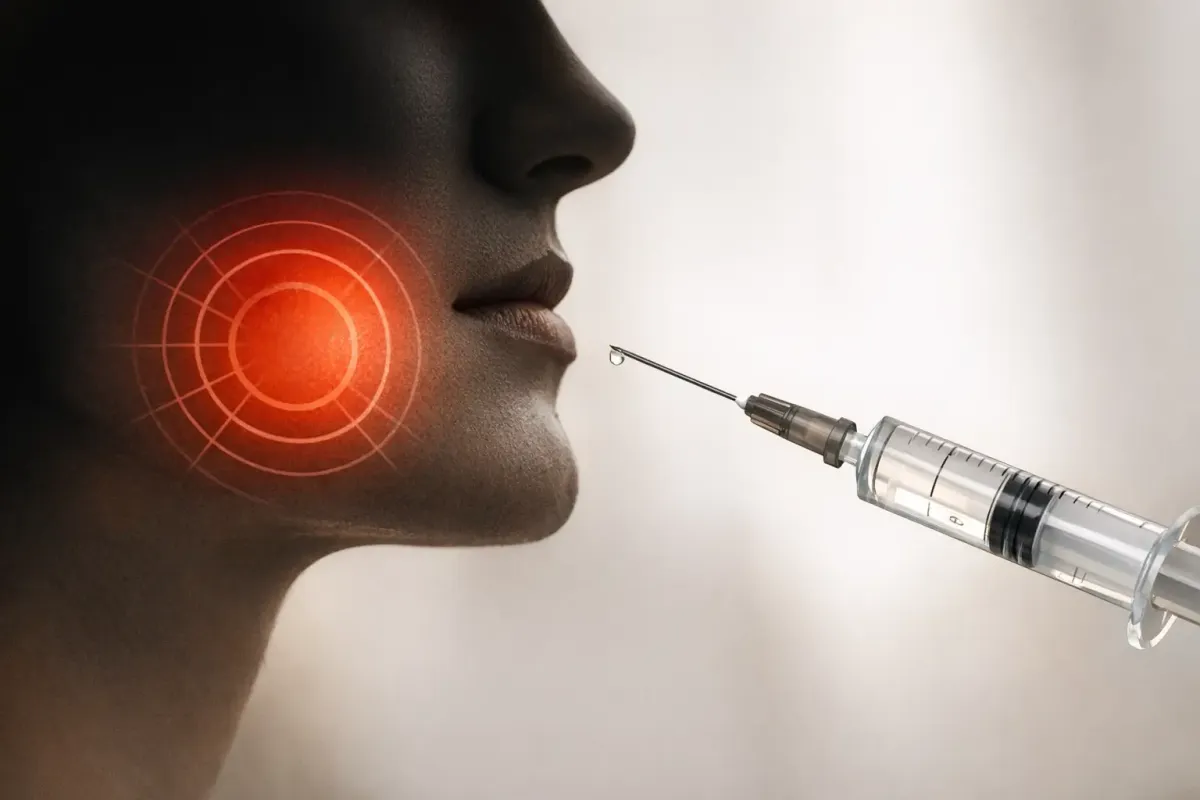
You started taking Ozempic or another GLP-1 medication, and your blood sugar has improved, and the scale is finally cooperating. But now you wake up with a sore jaw. Is this just a coincidence or a sneaky new side effect? Online forums suggest yes, your dentist says maybe, and the official drug label mentions nothing about bruxism. Before you retire your night guard or stop the injections, let’s dive into what the science, or lack thereof, actually reveals about GLP-1 medications and jaw clenching.
Below, you'll find what researchers have published, what people are discussing on forums like Reddit, and what you can do tonight to prevent grinding your expensive crowns into sand. The information is second-person, evidence-based, and a bit irreverent, just as you requested.
Understanding GLP-1 Medications and Their Uses
GLP-1 receptor agonists mimic a naturally occurring gut hormone called glucagon-like peptide-1. This hormone helps boost insulin release when you eat, slow stomach emptying, and reduce appetite signals in your brain. Drug makers have bottled this effect, and now you recognize the lineup by their catchy brand names: Ozempic, Wegovy, Rybelsus, Mounjaro, and the newly approved Zepbound.
Originally cleared for type 2 diabetes, these medications quickly moved into weight-loss clinics because they lower A1C and help people shed double-digit percentages of body weight. According to a 2026 review by Anderson et al., GLP-1 agonists also show promise in fields you might not expect, such as ear, nose, and throat medicine, indicating their far-reaching effects.
You inject or swallow semaglutide, tirzepatide, or a similar drug once a week, once a day, or somewhere in between. This drug binds to GLP-1 receptors in the pancreas and brain, turns down the hunger meter, ramps up insulin, and slows the conveyor belt that is your stomach. For many, this combo is a metabolic jackpot. Like any jackpot, though, it comes with fine print. Nausea, vomiting, constipation, and sometimes odd neuromuscular complaints appear on patient message boards long before they hit peer-reviewed journals.
As prescriptions rise, so does curiosity about less-publicized reactions. Bruxism, also known as jaw clenching or teeth grinding, has entered the conversation. The official Ozempic prescribing information lists gastrointestinal symptoms, vision changes, and low blood sugar, but not bruxism. The gap between label and lived experience has created a digital paper trail of anecdotes that deserve a closer look.
Bottom line so far: GLP-1 drugs are metabolic multi-tools, but their off-target effects are still under investigation.
Anecdotal Reports of Jaw Clenching and Teeth Grinding
Scroll through any diabetes or weight-loss subreddit, and you'll see variations of the same headline: “On Ozempic, anyone else grinding their teeth at night?” These crowd-sourced observations aren't scientific studies, but they serve as valuable breadcrumbs. They alert clinicians to patterns that might warrant formal research later.
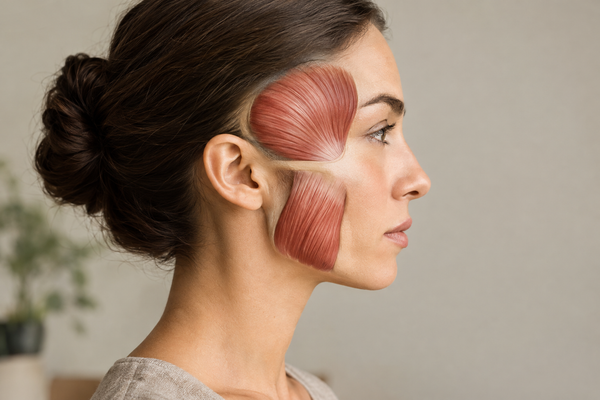
Users describe sore masseter muscles, tension headaches, chipped enamel, and bed partners complaining about nocturnal crunching. Some notice daytime jaw tension during stressful tasks, while others only after reducing their weekly dose. A few say the symptom fades once their body acclimates, while others switch to a different GLP-1 medication and report the grinding stops.
Here's the sticking point: no randomized trial has documented bruxism as an outcome in people taking semaglutide or tirzepatide. Spontaneous adverse-event databases, such as the FDA’s FAERS, contain isolated entries, but you'd expect a handful of irregular reports among millions of prescriptions for any medication.
Jaw clenching, after all, is common. The Mayo Clinic estimates that up to 30 percent of adults grind their teeth. Add stress, caffeine, and poor sleep to the mix, and you have the perfect storm even before injecting a single hormone analog. Therefore, when someone on Ozempic notices jaw tension, we can't yet say the drug is the cause, but we can't rule it out either.
Think of these anecdotes as the opening scene of a mystery: lots of clues, no confirmed culprit. They prompt researchers to ask, “Could a hormone that slows gastric emptying also affect the trigeminal motor system responsible for chewing?”
Exploring Potential Mechanisms: Why Might Jaw Clenching Occur?
Without randomized data linking GLP-1 agonists to bruxism, the best you can do is build a plausible storyline. Several pathways could converge to make your masseter muscles work overtime. None prove causation, but each offers a testable hypothesis.
Nausea and Altered Eating Patterns
Nausea is the most common early side effect of semaglutide. When you feel queasy, you might chew gum, suck on mints, or clench jaw muscles subconsciously to suppress the urge to vomit. A tightened jaw stabilizes the head and neck during retching, a reflex discussed in a 2014 neurophysiology paper by Iida et al. Repeated clenching, even for brief moments, can lead to corticomotor plasticity, meaning your brain rewires itself to treat clenching as the default. Over days and weeks, what began as an anti-nausea reflex becomes an ingrained habit you carry into sleep.
Second, GLP-1 drugs make you feel full with less food. Smaller meals may reduce the amount of chewing you do, leaving jaw muscles underused during the day. Similar to how people bounce a leg when they sit too long, your masseter may look for activity at night, leading to grinding. It’s speculation, but one rooted in our nervous system’s love of balance.
Impact of Sleep Disruption
Sleep and bruxism have a complicated relationship. Many cases of sleep bruxism occur during micro-arousals, brief awakenings you may not remember but that show up as spikes on a sleep study. GLP-1 medications can cause gastrointestinal discomfort that wakes you up or makes you shift positions. According to a 2021 study by Tomita et al., posture and jaw clenching modulate neck and trunk muscle activity, suggesting that position changes can activate jaw muscles. For more insights, explore how sleep disorders may trigger teeth grinding and related issues.
In other words, if GLP-1 drugs disturb your sleep, even indirectly through heartburn or nocturia, they might increase the number of micro-arousals, giving bruxism more runway.
Rapid Weight Loss and Facial Musculature Changes
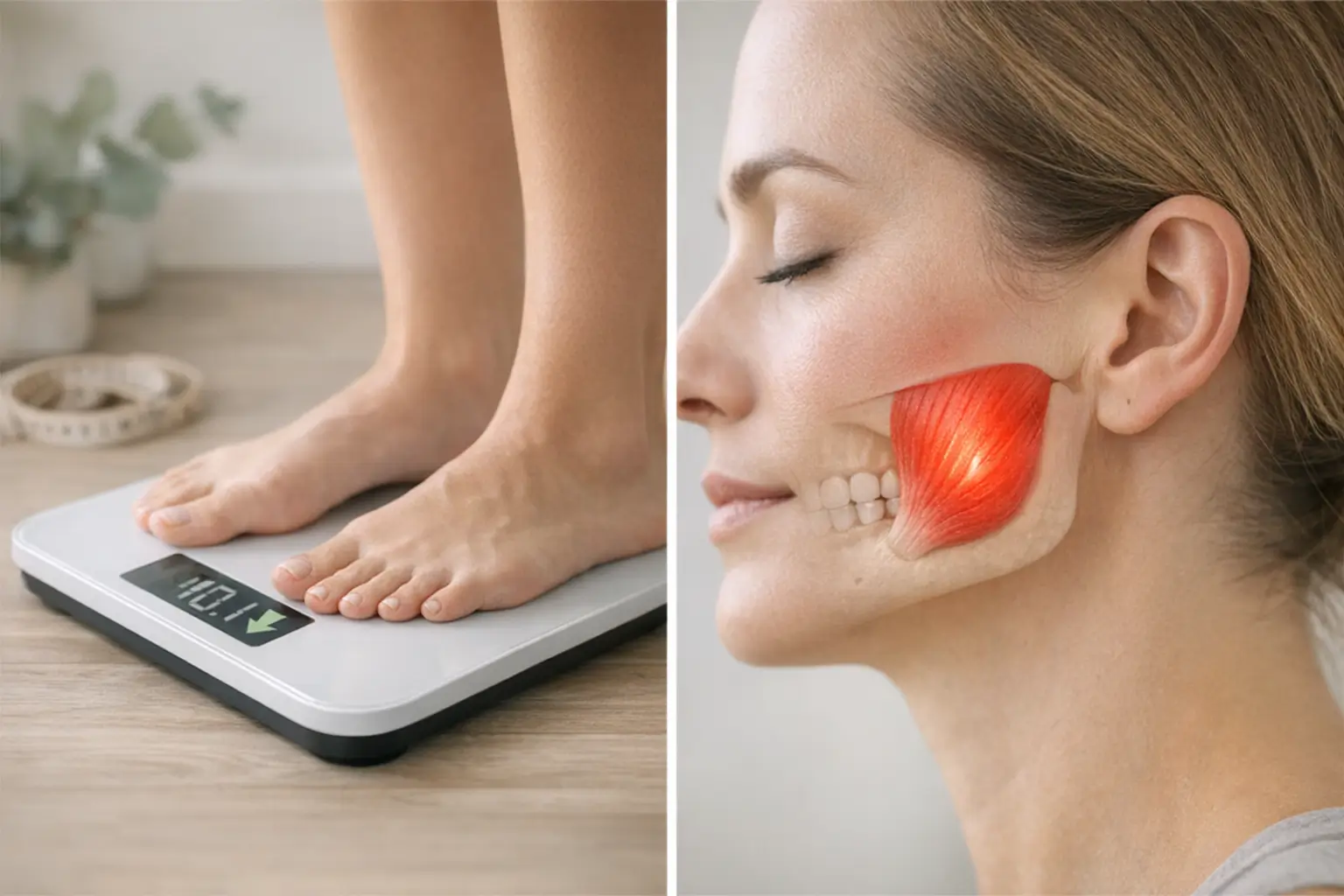
Lose a significant amount of body fat, and your face changes. Cheeks hollow, jawlines sharpen, and the supporting pads of buccal fat reduce. The skin and fascial tissues must adapt to a new scaffolding. Some patients report that as the soft tissue cushion disappears, they become more aware of clenching that was always there but never triggered soreness. Alternatively, the change in occlusion forces as fat pads thin could alter how your teeth meet, triggering compensatory muscle activity.
No study has mapped weight loss and driven facial fat changes to bruxism. Yet sports science offers indirect parallels. Athletes who clench during strength moves experience altered muscle activation patterns, as shown in a 2022 experiment by Miró et al. Rapid body composition changes may recalibrate proprioceptive feedback loops in jaw muscles the same way new training regimens recalibrate limb muscles. For more information, see how athletic training stress leads to jaw clenching in athletes.
Current Research: What the Science Says
When you search PubMed for “semaglutide bruxism,” you find no direct studies linking the two. That’s the current state of direct evidence. However, indirect studies add context to the picture.
Neuromuscular Plasticity. The earlier-mentioned work by Iida et al. (2014) found that repeated voluntary clenching changes motor cortex excitability. Even when jaw clenching isn’t drug-induced, the nervous system quickly rewires. This supports the idea that any trigger, nausea included, could snowball into a nightly grind.
Posture and Sedentary Behavior. Office workers who adopt poor posture show higher neck and trunk EMG activity when they clench, based on the 2021 typing study by Tomita et al. If GLP-1 meds cause fatigue that leads to more sitting, posture changes could intensify jaw tension. Discover more about how sleep positions impact bruxism and jaw pain.
Performance-Related Clenching. Sports scientists love mouthguards. A systematic review on athletes wearing bite-aligning guards found that voluntary jaw clenching can enhance force output in certain contexts, according to Cichelli et al. (2026). Why does this matter? It shows jaw muscles are ready to recruit under any stressor, physical or psychological.
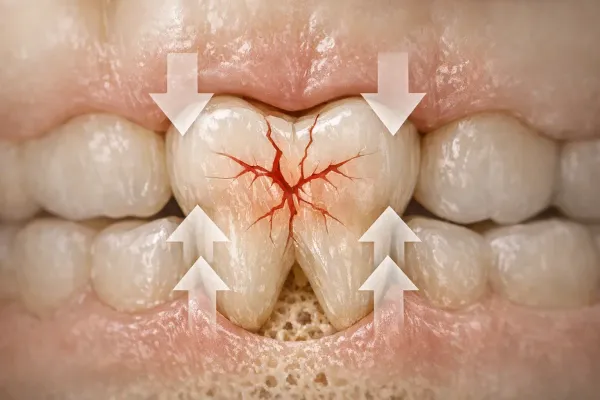
Dental Damage Evidence. Forensic dentistry has documented microcracks caused by forced jaw clenching in legal investigations, according to Kamalyan (2026). The study isn’t about semaglutide, but it underscores how powerful nocturnal forces can be.
ENT-Specific Observations. The 2026 otolaryngology review by Anderson et al. suggests that GLP-1 receptors exist in tissues beyond the gut, including areas that participate in swallowing and possibly jaw movement. The review called for mechanistic studies on head and neck muscles in GLP-1 treated patients. That call remains unanswered.
What About Registry Data? Searches of FAERS and EudraVigilance show sporadic listings of “bruxism” and “trismus” under semaglutide, but the incidence is lower than one per 10,000 reports. Under-reporting is a known issue, so absence of data is not data of absence.
Net conclusion from current research: you’re standing on an island of anecdotes surrounded by scattered pieces of indirect science. No bridge yet, but plenty of materials to build one.
Managing Jaw Clenching: Practical Tips
While the ivory tower discusses mechanisms, your molars are on the line tonight. Here’s what you can do now:
- Talk to your prescriber. Never adjust your GLP-1 dose without professional input. Some people find that a slower titration reduces nausea and, by extension, jaw tension.
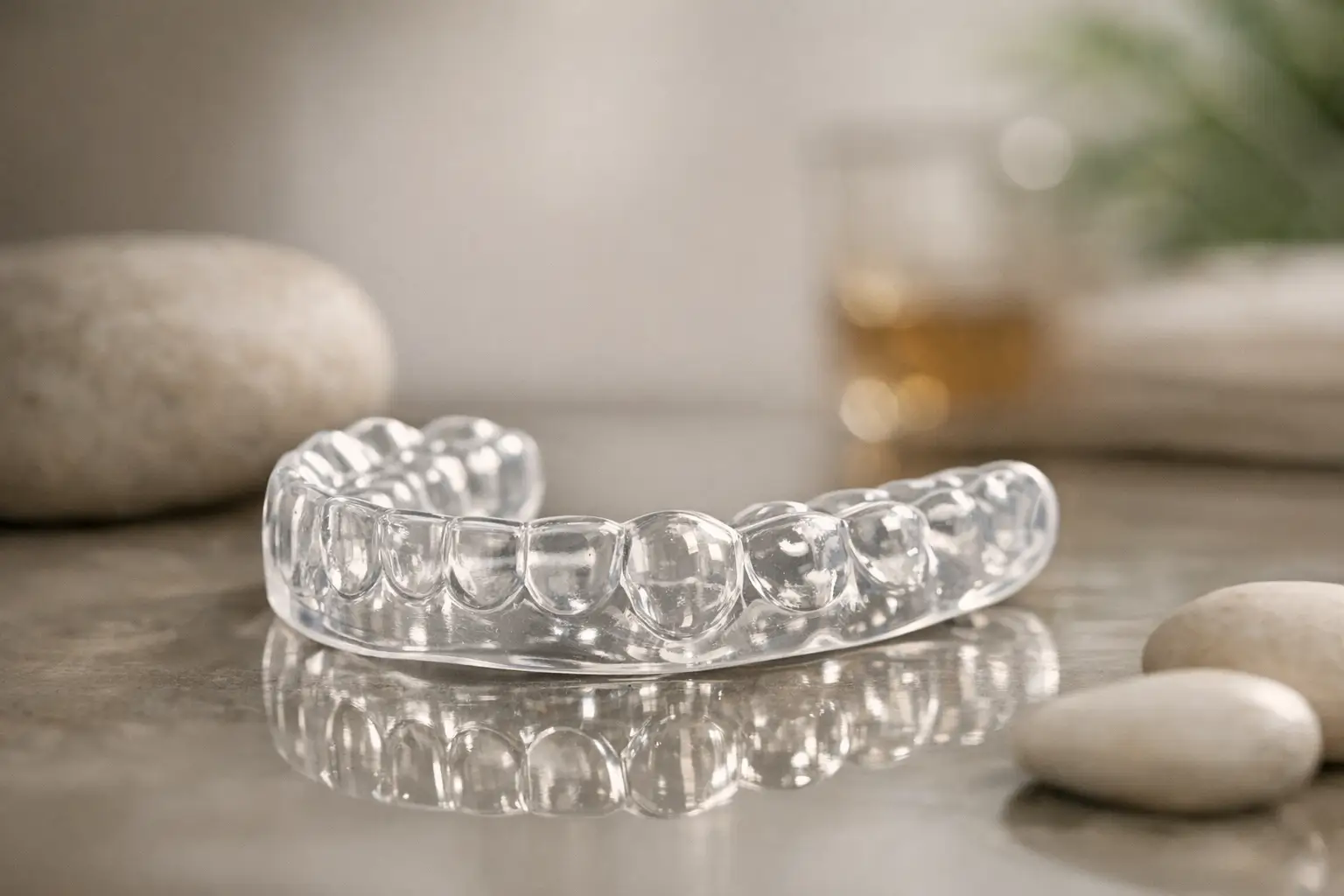
- Consider a custom night guard. The American Dental Association endorses occlusal splints for protecting enamel. Recent research comparing full versus partial splints shows varied muscle activation patterns, according to Seiler et al. (2024), so ask your dentist which style fits your bite. To understand more about mouthguards, see our guide on the best mouth guards for TMJ relief.
- Add stress management rituals. Bruxism thrives on stress hormones. Five minutes of diaphragmatic breathing or progressive muscle relaxation lowers sympathetic tone. Free apps can guide you.
- Limit stimulants after lunch. Caffeine and nicotine crank up central nervous activity. Cutting the 3 p.m. coffee may drop your nocturnal clench quotient. For more detailed insights, explore how caffeine impacts bruxism.
- Optimize sleep hygiene. Stick to a regular bedtime, blackout your room, and give your GLP-1 injection earlier in the day if nighttime nausea keeps you up.
- Massage and stretching. Use warm compresses on the masseter and temporalis muscles before bed. Gentle jaw stretches signal to your brain that tension is unwelcome.
- Track symptoms. A clenching diary or smartwatch with bruxism detection can reveal patterns. Share the log with your physician or dentist. For more on tracking symptoms and solutions, see our post on recognizing bruxism symptoms.
- Check meds for synergy. Some antidepressants raise bruxism risk. If you combine these with GLP-1 drugs, the effect could stack. Your doctor can review alternatives.
Practical steps matter. In a 2017 basketball study, mouthguards altered agility and muscle activation, reminding us that a simple bit of plastic can change biomechanics dramatically. In your case, that plastic could keep your crowns intact.
Conclusion: What To Do If You Experience Jaw Clenching
Right now, no clinical trial pins jaw clenching on Ozempic, Mounjaro, or any other GLP-1 agonist. Anecdotes raise the question, physiology offers plausible routes, and indirect studies show how easily jaw muscles slip into overdrive. Whether the drug, the weight loss, the nausea, or your stress is the spark, the grind is real and treatable.
If your jaw wakes up sorer than leg day, do three things: tell your prescriber, protect your teeth with a guard, and calm your nervous system before sleep. Stay on the lookout for new research, because scientists are paying attention. Until the data arrive, you hold the best toolset for keeping your smile, and your metabolic progress, intact.