What Causes Teeth Grinding in Athletes? Stress and Performance Pressure Unveiled
Explore how stress and pressure in athletes lead to teeth grinding.
Grinding your teeth is one thing when you're stuck in traffic. Doing it during a 10K race or dreaming about tomorrow’s competition is another story. Athletes often ignore the popping jaw or sore morning cheeks, but the data suggest you shouldn't. New reviews highlight bruxism as an under-recognized factor affecting performance, recovery, and mood. This article explores why driven competitors end up grinding their teeth and how you can stop.
We rely on the latest peer-reviewed evidence and keep the jargon simple. If the idea of “athlete jaw clenching” makes you picture a sprinter biting down in the blocks, you're already on the right track. Let's explore.
Understanding Bruxism in Athletes
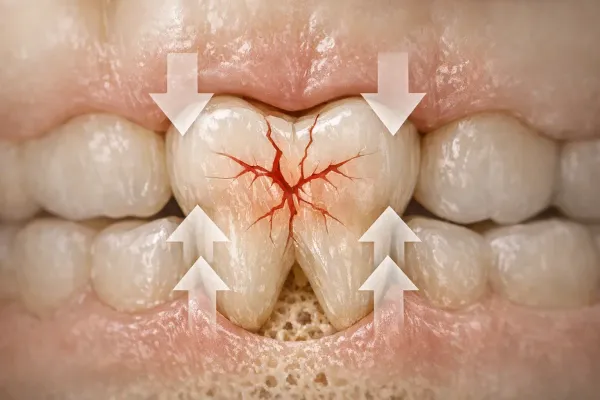
Bruxism refers to repetitive jaw-muscle activity such as clenching, grinding, or moving the jaw. It comes in two main types: awake bruxism (daytime) and sleep bruxism (night-time). Symptoms include worn tooth enamel, headaches, muscle fatigue, and that unsettling crackle in the temporomandibular joint (TMJ) when you chew.
In the general population, prevalence estimates range from 8 percent to 31 percent. Among competitive athletes, the numbers increase. A systematic review and meta-analysis by Okshah et al. pooled data from 14 studies covering runners, swimmers, CrossFit enthusiasts, and team-sport players. They found that athletes show rates close to 35 percent for sleep bruxism and 21 percent for awake bruxism.
Why the increase? Athletes stress their musculoskeletal system more, including jaw muscles that can exert bite forces exceeding 500 N during maximal clench. The high-pressure environment of tryouts, leagues, sponsorships, and social media scrutiny raises psychological stress above that of the average desk job. Add stimulants like caffeine, pre-workout formulas, and dehydration during long practices, and you have a perfect storm for jaw over-activity. Even seemingly harmless habits—chewing on mouthpiece straps or tensing the jaw while chasing personal records—can lead to nocturnal grinding.
The review by Okshah and colleagues also noted unique effects in sports. Athletes with bruxism reported higher odds of morning muscle soreness, poorer sleep quality scores on the Pittsburgh Sleep Quality Index, and a slight drop in vertical jump height the day after grinding. In short, a cramped jaw at night affects performance the next day.
If you wake up with a tight jaw, if your training partner hears clicking, or if your dentist spots flat cusps, don't ignore it. It could be costing you watts, meters, or a place at the finish line.
The Role of Stress and Performance Pressure
How Stress Leads to Bruxism
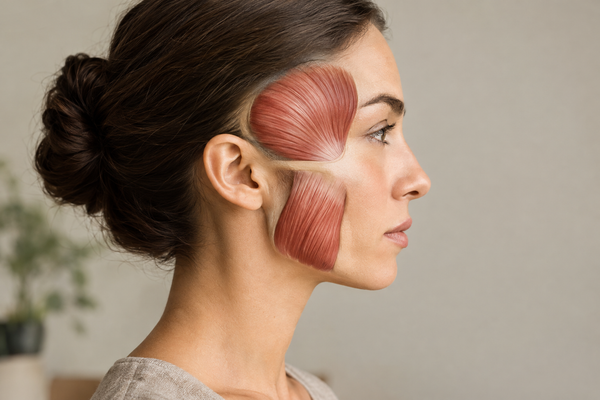
The mouth isn't just for eating and talking. It's also a stress outlet. When cortisol and adrenaline flood your bloodstream during competition prep, the body looks for muscular release valves. The masseter and temporalis muscles, both heavily innervated, activate. A systematic review by Belenda González et al. confirmed a strong relationship between bruxism and elevated scores on the Depression Anxiety Stress Scales (DASS-21). Each rise in perceived stress increased the odds of bruxism by roughly 15 percent.
Athletes face unique stress doses. Two-a-day practice schedules, contract negotiations, and public performance metrics all feed the “fight or clench” response. A meta-regression on bruxism and TMJ disorders by Zieliński et al. showed that populations under chronic performance review, including pro sports, had the highest co-occurrence rates. Many elite programs now monitor heart-rate variability (HRV) not only to estimate readiness but also to flag nights of atypical sympathetic dominance, which correlates with grinding episodes detected by wearable EMG patches.
Impact of Performance Anxiety
Performance anxiety heightens the usual stress cocktail with fear of failure. You replay the missed free throw at 2 AM, and your jaw muscles fire tiny bursts called rhythmic masticatory muscle activity (RMMA). Over time, those bursts evolve into full-on grinding.
Muscle-activation studies support this. Yela-Lorenzo et al. used ultrasound to compare abdominal wall activation in women with and without bruxism. While focusing on core muscles, it found a systemic uptick in electromyographic activity among grinders during stress tasks. If your abs are bracing, chances are your masseters are too—illustrating a whole-body stress pattern.
Sport psychologists describe anxiety as “mental noise.” Bruxism turns that noise into literal vibration felt in teeth enamel. If you play contact sports, add a mouthguard to protect against hits. In non-contact sports, protect enamel from your own bite force.
The American Psychological Association notes that prolonged anxiety erodes sleep architecture. You stay longer in lighter sleep stages where muscle inhibition is weaker, increasing the odds of nocturnal clenching. Poor sleep heightens perceived stress, creating a feedback loop. Breaking that loop—through mindfulness, pre-sleep meditation apps, or simply a tech-curfew—reduces both insomnia minutes and grinding minutes.
Temporomandibular Disorders and Bruxism
Link Between TMD and Bruxism
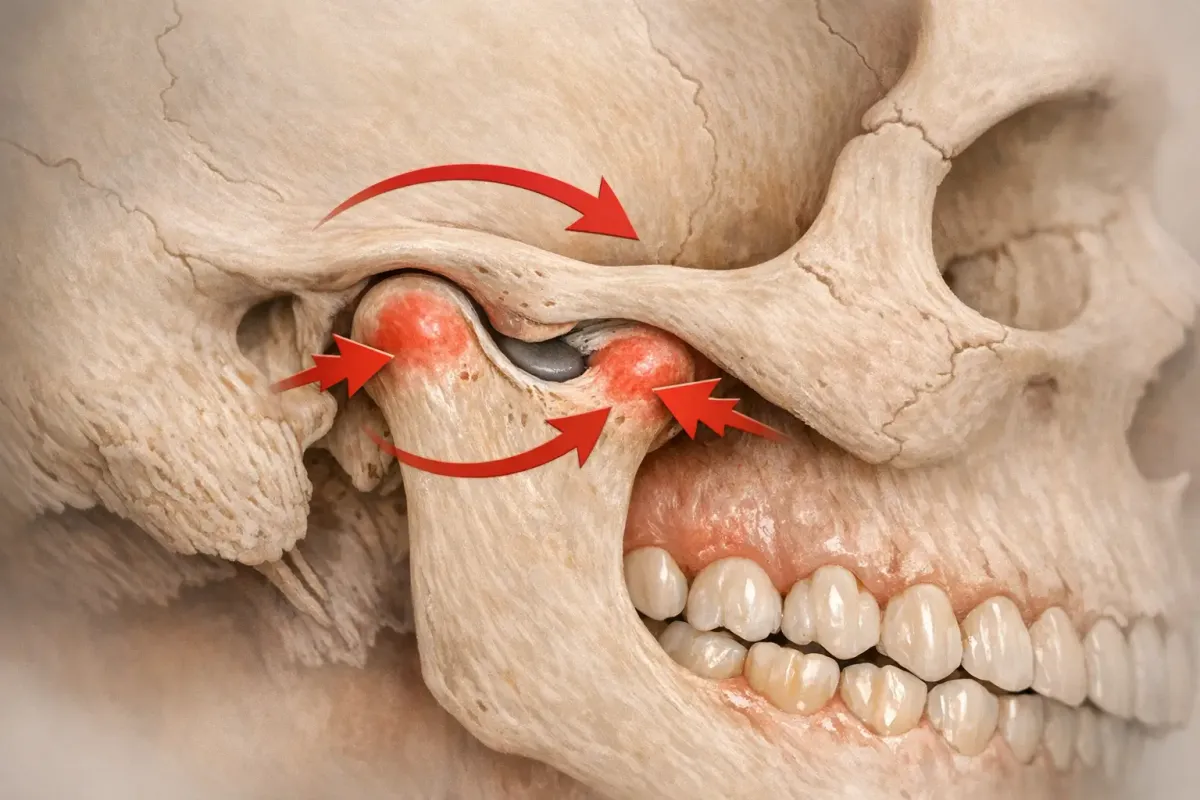
Temporomandibular disorders (TMD) involve pain or dysfunction in the jaw joint and its muscles. Think of TMD as the ankle sprain of the jaw—common, annoying, and performance-limiting. Bruxism is both a cause and a consequence of TMD. Excessive grinding overloads the articular disc and ligaments, triggering inflammation. Meanwhile, pain from an existing TMD can provoke protective clenching, worsening the cycle.
The meta-regression by Zieliński et al. found that people with bruxism are 2.1 times more likely to develop TMD. Among athletes, the odds ratio increased to 2.8, possibly due to additional jaw loading from helmet straps, impact, or high-flow breathing during exercise.
Research supports this link. A gender-balanced study of Olympic hopefuls by de la Parte-Serna et al. found that 41 percent of athletes with self-reported bruxism also met criteria for myofascial TMD. The combination doubled their risk of missing training days compared with teammates without jaw issues.
Effects on Athletic Performance
Jaw pain isn't just a nuisance; it can disrupt biomechanics. When the masseter is in spasm, cervical posture shifts forward, altering scapular mechanics. That's bad news for swimmers who rely on streamlined neck alignment or weightlifters who need neutral cervical position. A sore jaw can also shorten stride length by disrupting rhythmic breathing—every exhale becomes a mini jaw clench.
Recovery suffers too. Deep sleep stages are crucial for growth-hormone release. Studies controlled for nightly bruxism show higher micro-arousal counts, meaning you wake up more often. Over a season, that sleep debt translates to slower reaction times and poorer mood scores. A physiotherapist working with an NCAA runner documented a 20 percent drop in single-leg hop distance during weeks when the athlete’s nocturnal EMG showed high clench frequency—further evidence that the jaw can hamper distal kinetic chains.
Gender Differences in Bruxism Among Athletes
Do male and female athletes grind differently? Evidence says yes, though it's nuanced. The oral-health outcomes study of elite athletes by de la Parte-Serna et al. observed that female athletes reported bruxism symptoms 25 percent more often than males. They also scored higher on pain intensity scales.
One biological factor is estrogen. An updated review on estrogen and TMD by Zieliński and Pająk-Zielińska highlights that fluctuating estrogen may sensitize TMJ connective tissue, making it more vulnerable to micro-trauma from grinding. Combine that with menstrual-cycle-related sleep disturbances, and you have a double hit.
However, prevalence alone doesn't tell the full story. Males in contact sports show higher bite-force thresholds, so when they do grind, the mechanical damage per episode can be greater. Clinicians should tailor screening: ask female athletes more about pain and morning stiffness, and check male athletes for structural tooth wear or cracks.
Social factors play a role too. Males may under-report stress to fit the stoic athlete trope, while females might voice it sooner, leading to earlier diagnosis. Either way, gender-informed conversations help catch bruxism before it becomes TMD.
Managing and Preventing Bruxism in Sports
Treatment Options
Managing bruxism in athletes uses tools from dentistry, physical therapy, and psychology. A randomized trial by Şahin et al. compared botulinum toxin, dry needling, NSAID therapy, and manual therapy for bruxism-induced myalgia. Botulinum toxin was most effective in reducing nocturnal electromyographic spikes and pain over 12 weeks, though the authors cautioned about potential bite-force reduction, which sprinters and martial artists might find unsettling.
Manual therapies, like intra-oral trigger-point release and cervical mobilization, ranked second with fewer side effects. Dry needling provided short-term relief but required repeat sessions. Pharmacological options work but may conflict with anti-doping regulations or cause drowsiness. Always clear medications with your sport’s governing body.
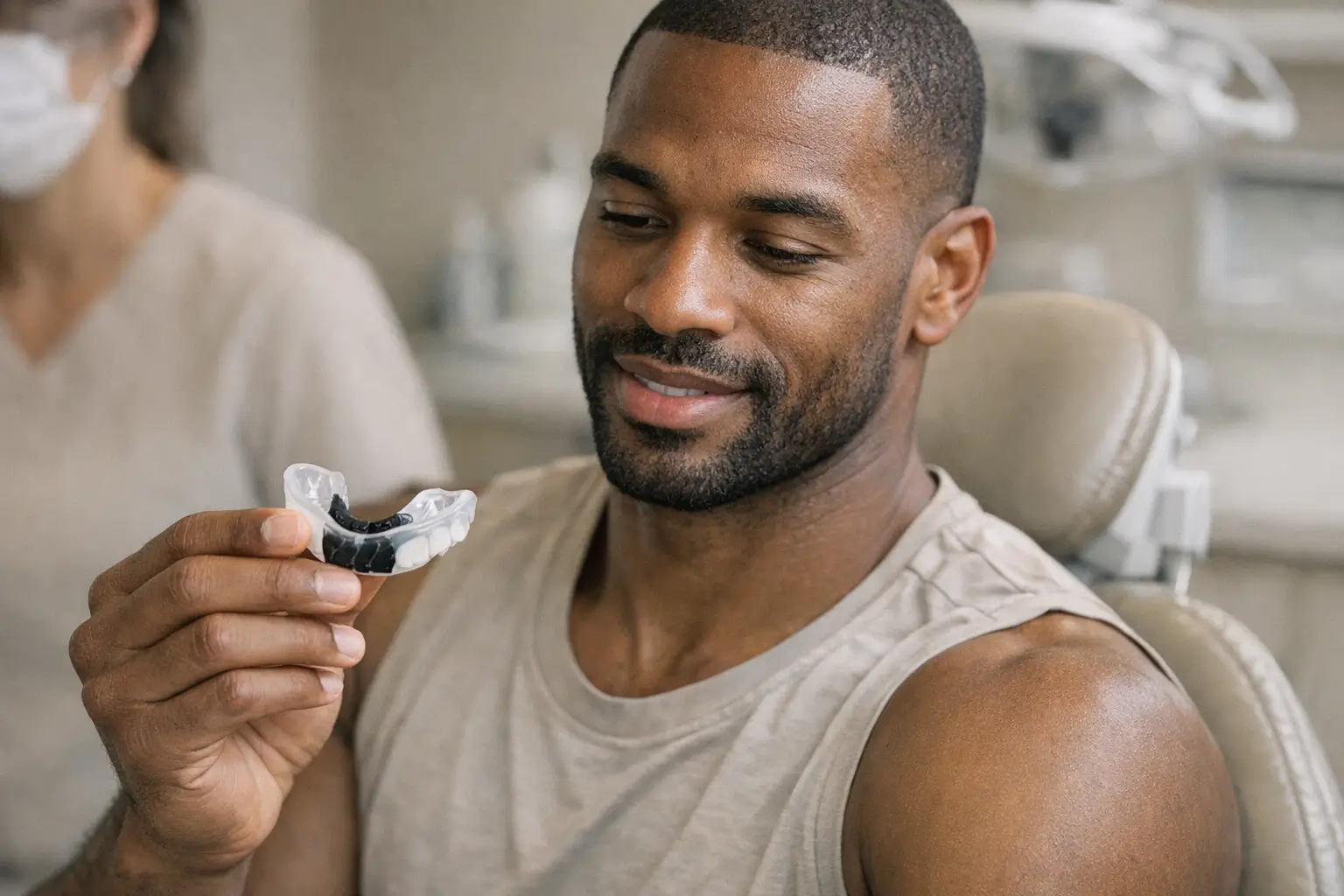
Mouthguards remain a first-line defense. A custom night-guard from your dentist protects enamel and redistributes occlusal forces. For daytime or in-competition scenarios, dual-arch mouthguards can reduce impact trauma and serve as biofeedback; if you bite down too hard, you notice immediately.
Preventative Measures
Prevention starts with stress management. Cognitive-behavioral strategies, like journaling pre-competition worries, lower bedtime rumination and the risk of sleep bruxism. Breathing exercises, notably diaphragmatic breathing before sleep, stimulate the vagus nerve, reducing sympathetic drive.
Limiting stimulants after 2 PM helps too. The Mayo Clinic lists caffeine as a bruxism trigger; many athletes load up on coffee or energy drinks for afternoon workouts and then wonder why their jaw aches at dawn.
Hydration and electrolyte balance matter. Dehydrated muscle tissue is more prone to cramping, including the masseter. Keep a bottle handy during long practice sessions.
Finally, build jaw-relaxation rituals into cooldowns. Simple protocols: gentle self-massage over the masseter, 10 reps of “open-wide and hold,” followed by side-to-side glides. You cool down your quads—why ignore your jaw? Smartphone apps that cue hourly “jaw checks” or smartwatches that vibrate when facial EMG spikes can increase awareness during screen time, team meetings, or travel days.
Case Studies and Real-world Implications
Let’s ground the science in real turf and track.
CrossFit athletes live on the redline, physically and mentally. An observational study of 127 CrossFit practitioners by Ribeiro et al. found clinical signs of bruxism in 48 percent of participants. Those with signs logged higher rates of shoulder and neck overuse injuries, likely due to the postural chain reactions described earlier.
Collegiate environments offer another perspective. A survey of dental students at Jazan University by Bakri et al. linked self-reported bruxism to lower semester GPAs. While academic, not athletic, pressure was the stressor, the finding underscores performance fallout wherever grinding appears.
Military athletes or tactical operators show similar trends. Research on patients with post-traumatic stress disorder by Solis et al. reported bruxism prevalence near 60 percent, suggesting that high-alertness roles magnify jaw-muscle hyperactivity.
Professional cycling provides a cautionary tale. A WorldTour team dentist revealed that three of his riders lost over 0.5 mm of incisal enamel during a single Grand Tour, traced back to nocturnal clenching after caffeine-heavy late-stage finishes. Custom nocturnal splints and a switch to caffeine gum with faster wash-out reduced the damage the following season.
What does this mean for sport? Coaches can integrate bruxism screening into pre-season medicals. Athletic trainers could track jaw pain alongside hamstring tightness on daily wellness sheets. Sports dentists, still rare on pro teams, should be more common.
The term “sports-related bruxism” is gaining traction. Expect insurance codes and rehab guidelines to appear, similar to concussion protocols. Early adoption will save enamel, sleep, and ultimately game points.
Conclusion
Bruxism sneaks into athletes' lives disguised as a harmless twitch. In reality, it affects stress hormones, sleep cycles, and joint mechanics, sapping performance. The evidence—ranging from systematic reviews to cohort studies—links grinding to TMD, gender-specific risks, and measurable training setbacks. The solution is part dental, part psychological, and part lifestyle. Screen for it, treat it early, and respect your jaw as you do any other powerhouse muscle. Your teeth, your coach, and your finish times will thank you.