Innovative Strategies on How to Stop Clenching Teeth at Night
Discover new techniques to prevent teeth clenching at night and reduce jaw tension stress.

<<>
Understanding Teeth Clenching: Causes and Consequences
Think of bruxism as a biological cocktail. Genetics, behavior, brain chemistry, and even the ecosystem of bacteria in your mouth shake together to create nocturnal jaw workouts. In a 2024 scoping review by Oliveira et al., genetic polymorphisms in dopamine and serotonin pathways pop up repeatedly, hinting that some people are simply wired to grind. Mix that wiring with daytime stress, caffeine, or certain medications, and the odds climb higher.
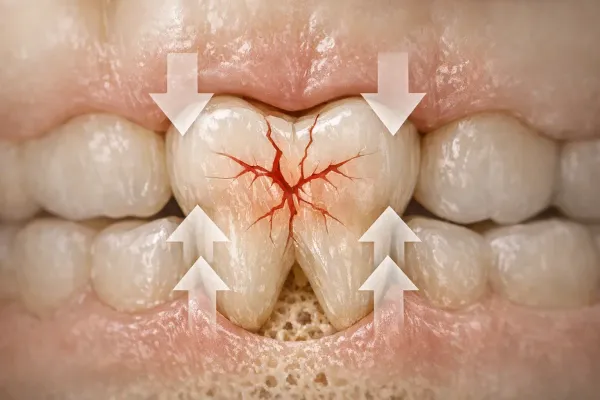
Physiologically, clenching is linked to micro-arousals during the sleep cycle. Your brain flicks on for a second, triggers the masticatory muscles, and you clamp down before drifting back into deeper sleep. Over an entire night, this can happen dozens of times. The result is morning headaches, flattened tooth surfaces, and sometimes cracked dental work. Dentists even joke that modern porcelain cannot keep up with human stress. For more on how stress contributes to this cycle, explore how stress makes bruxism worse.
Consequences spread beyond the mouth. Repeated overloading of the temporomandibular joint (TMJ) leads to localized inflammation and referred pain to the neck or shoulders. Meanwhile, studies show that chronic bruxers score higher on anxiety inventories, creating a feedback loop: stress causes clenching, clenching fuels discomfort, and discomfort spikes stress. To understand the connection between anxiety and teeth grinding, visit anxiety-induced nighttime teeth clenching.
Behavioral factors matter too. Sipping espresso at 4 p.m., scrolling doom-laden news headlines in bed, or using recreational stimulants all ramp up sympathetic nervous system activity. Your jaw muscles interpret that hyper-arousal as an invitation to train for the Ironman. Explore how stimulants make you clench your jaw for more insights.
Because the condition is multifactorial, guidelines from the Mayo Clinic emphasize a layered approach: protect the teeth, calm the nervous system, and address any underlying disorders such as sleep apnea. Simple in theory, yet you can only pick the right layers if you know the emerging science, so let us move to the newer kids on the block.
Real-world snapshot: Sara, a 32-year-old graphic designer, started jaw-clenching during crunch time at work. Her dentist noticed wear on her molars, but it was her fiancé who complained about the grinding sounds at night. A quick review of habits revealed triple espressos after lunch, TikTok scrolling until midnight, and mouth breathing from chronic allergies, a trifecta of triggers that illustrates how everyday choices prime the body to grind.

Lifestyle and Behavioral Tactics You Can Start Tonight
Stress, Sleep and Stimulants
Cortisol spikes keep muscles on edge, so pulling down stress before bed pays dividends. A clinical review by Morales-Lastre et al. found that five minutes of box breathing or a short mindfulness meditation trimmed nighttime clenching episodes in adults. Pair that with solid sleep hygiene, cool room around 65 °F, lights out at a consistent hour, no screens for the last 60 minutes, and you lower the micro-arousals that ignite jaw contractions.
- Last caffeine by 2 p.m. and trade the nightcap for herbal tea. Alcohol fragments REM sleep, driving more jaw bursts according to American Dental Association guidance.
- Write a quick worry journal entry to stop rumination from following you to bed.
- If nasal congestion forces mouth breathing, use saline spray or nasal strips. Dry tissues irritate nerves and push the clench reflex.
Biofeedback, Jaw Exercises and CBT
Wearable EMG patches that buzz when the masseter tightens teach your brain a new idle setting. Chipper et al. reviewed smartphone-linked devices and reported significant reductions in muscle voltage after four weeks of nightly use. Add simple exercises from Morales-Lastre’s paper, tongue to palate while slowly opening and closing ten times, fist-under-chin resistance holds, two-minute masseter self-massage, and you retrain proprioception so teeth rest apart by default.
For mind-driven grinders, cognitive behavioral therapy helps too. Studies that blended CBT with mindfulness for anxious patients cut self-reported bruxism by about forty percent over eight sessions. Thought tracking and stimulus control reduce hyperarousal so the jaw never gets the late-night memo to flex.
Occlusal Splints: A Seatbelt for Your Enamel
Behavior change takes weeks. Until then, a custom hard acrylic night guard spreads bite forces and spares restorations. The narrative review by Shafiee and Nourizadeh notes that full-arch splints cut porcelain-crown fracture risk and even dial down bite force slightly by increasing the vertical dimension. Soft boil-and-bite guards are cheaper but wear quickly and can trigger chewing motions in heavy clenchers.
- Clean the guard daily with non-abrasive soap to avoid bacterial funk.
- Schedule follow-up adjustments or the acrylic can shift tooth positions over time.
- If you have mild sleep apnea, ask about mandibular advancement devices that pull the jaw forward and open the airway while shielding teeth.
Special Populations to Watch
Some medications stir the grind. SSRIs and SNRIs top the list. A review by Jamwal et al. links serotonin pathways to jaw motor control. If your clenching ramped up after a dose change, talk to your prescriber about adjusting or adding buspirone. On the dental side, implant owners need extra vigilance. The 2025 review by Shafiee and Nourizadeh documents screw loosening and porcelain fractures when bruxism is unchecked. Your dentist may craft a metal-reinforced guard or pair it with masseter botulinum toxin to soften bite forces around the implant site.
Botulinum Toxin as a New Approach
How It Works
Botulinum toxin type A, known as Botox, blocks the release of acetylcholine at the neuromuscular junction. Translation: the nerve tells the muscle to contract, but the message never arrives. When a clinician injects tiny doses into the masseter or temporalis muscles, the overactive fibers chill out for three to four months. You still chew steak just fine because only a fraction of the muscle gets dosed. The goal is to weaken excessive nighttime contractions without compromising daytime function. For those considering this treatment, exploring Botox for bruxism provides further insights.
Clinical Evidence
The data pile is growing. In a 2025 overview by Coelho et al., researchers screened more than a dozen trials and concluded that botulinum toxin consistently reduces electromyographic activity of the jaw during sleep. A separate 2025 systematic review by Yacoub et al. echoed those findings, noting improvements in pain scores and tooth wear indices across multiple randomized controlled studies.
Side effects are usually mild: transient chewing fatigue, minor bruising, or a slight dip in bite force that most people barely register. Cost and the need for repeat injections are the main drawbacks. In the United States, typical pricing runs $350–$750 per session depending on geography and the number of units used; insurers rarely cover it unless tied to a diagnosed movement disorder. Still, for patients with severe clenching who fracture night guards for sport, botulinum toxin offers a scientifically backed reprieve.
An unexpected bonus: masseter injections often slim the lower face, a cosmetic effect many patients welcome. That “two-for-one” can offset sticker shock and nudge compliance for follow-up treatments. To explore more non-invasive approaches, check out pressure points to release jaw tension.
Best practice involves ultrasound or electromyographic guidance to avoid drifting into accessory facial muscles. The American Dental Association reminds clinicians that licensure rules vary by state, so confirm local regulations before booking an appointment.

The Role of Oral Microbiota in Bruxism Management
The idea that mouth bacteria could influence jaw muscle activity sounds like sci-fi, yet the evidence is sneakily persuasive. A 2025 paper by Morris et al. linked specific microbiome signatures to heightened inflammatory markers in the periodontal ligament among bruxers. Inflammation increases peripheral nerve sensitization, which in turn lowers the threshold for muscle activation.
How does that play out in real life? Imagine Porphyromonas gingivalis, a notorious gum-disease bacterium, setting up shop around your molars. The immune system marshals cytokines, those cytokines irritate local nerves, and suddenly your masseter fires more readily during micro-arousals. You are not consciously deciding to clench; the local biochemistry tilts the odds. For a deeper dive into the biological underpinnings, check why we grind our teeth at night.
Manipulating the microbiota is still experimental, but early tactics include:
- Targeted probiotics designed for oral use, such as Streptococcus salivarius K12
- Antimicrobial photodynamic therapy that spares beneficial flora
- Prebiotic lozenges that feed commensal bacteria while starving pathogens
Practical tip: swap sugary sports drinks for plain water or xylitol-sweetened options. Xylitol not only reduces cavity-causing bacteria but also boosts saliva flow, and well-lubricated tissues are less prone to the micro-tears that fuel local inflammation. If you breathe through your mouth at night (hello, nasal congestion), consider nasal strips or saline rinses; dryness is kryptonite for a balanced oral microbiome.
Clinical trials are sparse, so do not toss your mouthguard yet. Still, maintaining gum health through diligent flossing and professional cleanings remains a low-risk hedge. You are improving breath and possibly easing jaw tension at the same time, a tidy two-for-one.
Pharmacologic Treatments: Current Standings
Pop a pill and stop grinding? If only it were that simple. The drug landscape for bruxism is a patchwork of off-label experiments. A 2026 meta-analysis by Li et al. examined polysomnographic outcomes for agents ranging from clonazepam to propranolol. The conclusion: modest benefits at best, with many studies hampered by small sample sizes or short follow-up.
Benzodiazepines like clonazepam depress central nervous system activity, reducing the micro-arousals that trigger clenching. You fall asleep easier, jaw muscles relax, but you also risk tolerance, dependence, and next-day grogginess. Beta-blockers such as propranolol aim to blunt sympathetic spikes, yet data show inconsistent reductions in rhythmic masticatory muscle activity.
Antidepressants complicate matters. Selective serotonin reuptake inhibitors (SSRIs) can actually provoke bruxism in susceptible individuals, while tricyclics like amitriptyline sometimes reduce it. Physicians face a Goldilocks scenario: find a dose that calms mood without tipping the jaw into overdrive.
Controversies and Limitations
The biggest hurdle is measurement. Many studies rely on patient-reported outcomes instead of overnight electromyography, making it hard to separate placebo effect from true physiologic change. Moreover, sleep labs are expensive, so trials often last mere weeks, missing long-term relapse patterns. For practical solutions on managing nighttime clenching, visit how to stop clenching your teeth at night.
Newer contenders, such as gabapentin (an anticonvulsant that dampens nerve excitability) and nighttime melatonin (for circadian realignment), show early but shaky promise. Until stronger data emerge, mainstream guidelines from the Cleveland Clinic recommend reserving medications for severe, refractory cases and pairing them with behavioral or mechanical interventions. Translation: pills are tools, not magic bullets.
Cannabidiol and Its Therapeutic Potential
Potential Benefits
Cannabidiol (CBD), the non-intoxicating cousin of THC, is popping up in gummy bears and oils marketed for everything from insomnia to joint pain. When it comes to bruxism, the logic hinges on CBD’s anxiolytic and anti-inflammatory properties. Lower anxiety can reduce nighttime arousals, while dampened inflammation might soothe overworked jaw muscles. For more on managing stress and anxiety, explore how stress and anxiety trigger teeth clenching.
Research Insights
In a 2025 review by Walczyńska-Dragon et al., CBD demonstrated promise for temporomandibular disorders (TMD) by modulating endocannabinoid signaling in peripheral tissues. Although the review did not focus exclusively on bruxism, overlap exists: many bruxers develop TMD pain. Animal studies cited in the paper showed decreased trigeminal nerve firing after CBD administration, hinting at a direct pathway for jaw relaxation.
Human data remain early stage. Small open-label trials report improved subjective pain and sleep quality, but dosage varies wildly between studies, and CBD products are notoriously inconsistent in purity. If you choose to experiment, opt for third-party-tested formulations and loop in your physician, especially if you take blood thinners or other medications metabolized by CYP450 enzymes.
Delivery matters. Sublingual oils kick in within 20–30 minutes, while gummies take up to two hours, timing that could influence effectiveness during the first sleep cycle when most clenching occurs. Start low (5–10 mg) and titrate slowly; higher doses sometimes backfire with grogginess or digestive upset.
Regulatory landscapes also differ by region. In the United States, CBD derived from hemp (<0.3 percent THC) is federally legal but still subject to state rules. Know your local laws before stocking the nightstand.
Future Directions in Bruxism Management
Genetic Research
As with many complex behaviors, researchers are digging deeper into DNA for answers. The 2024 scoping review by Oliveira et al. spotlighted polymorphisms in the COMT and DRD2 genes, both key players in dopamine metabolism. Variants that slow dopamine breakdown may elevate central excitability, nudging the motor system toward clenching. Someday, a cheek swab could help predict who needs preventive counseling early instead of waiting for enamel fractures. For more on how genetics play a role, check out unexpected causes of nighttime teeth clenching.
Pharmacogenomics could also refine treatment. Imagine tailoring a drug or nutraceutical to your unique neurotransmitter profile, improving efficacy and slashing side effects. We are not there yet, but the blueprint is forming.
Holistic Approaches
Beyond genes, integrative medicine is exploring everything from biofeedback headbands that vibrate when you start to clench to mindfulness apps that track stress signatures throughout the day. Acupuncture and low-level laser therapy have small but encouraging data sets suggesting reduced muscle hyperactivity. While evidence levels vary, the overarching trend is personalization: mix and match therapies based on your triggers, whether that is job stress, poor sleep hygiene, or inflammatory gum disease. For holistic methods, explore yoga and meditation for jaw tension relief.
Try this low-tech hack tonight: before bed, perform a five-minute jaw-release routine. Place the tip of your tongue on the roof of your mouth, breathe deeply, and let the bottom jaw fall away from the upper teeth. Follow with a warm compress over the masseters. Simple, free, and backed by physical therapists who specialize in TMD. For more exercises, visit effective TMJ exercises.
Another frontier is neuromodulation. Prototype devices target the trigeminal nerve with mild electrical current, aiming to recalibrate excitability thresholds. Early pilot studies show decreased rhythmic masticatory events without disturbing overall sleep architecture. Keep an eye on that space; noninvasive brain hacking may move from sci-fi to dentist office within the decade.
Conclusion
Teeth clenching at night sits at the crossroads of neurology, dentistry, psychology, and now microbiology and genetics. Traditional guards and relaxation drills remain useful, but they are no longer the whole story. Evidence supports botulinum toxin for tough cases, while microbiota manipulation and CBD show early promise. Pharmacologic options exist yet demand caution and individualized oversight. Future breakthroughs will likely merge genetic screening with targeted, minimally invasive interventions. For now, stay curious, work with a multidisciplinary team, and remember that reducing stress during daylight hours still pays the biggest dividends when the lights go out.