Understanding Musician Jaw Pain: Special Considerations for Brass and Wind Players
Explore jaw pain in brass and wind musicians, its causes, and management strategies.

You love the rush of hitting that high note on the trumpet or sliding effortlessly through a jazz solo on the saxophone. What you may not love is the dull, nagging ache that shows up in your jaw after rehearsals. If you've wondered whether this pain is “all in your head,” science confirms it's very real and quite common among brass and wind players.
This article explores musician jaw pain, its causes, and management strategies based on research. We'll keep jargon to a minimum, add a touch of irreverence, and stick to evidence you can verify yourself.
The Prevalence of Jaw Pain in Musicians
Musicians frequently deal with various aches, but jaw pain is particularly prevalent among brass and wind players. Researchers refer to this as “playing-related musculoskeletal disorders” (PRMDs), which includes pain or injury linked to practice or performance. In a landmark orchestra survey, Steinmetz et al. 2014 found that nearly one in four professional players reported symptoms of craniomandibular dysfunction, which involves jaw and related muscle issues. The incidence was notably higher in brass and wind sections compared to strings or percussion.
A Finnish study expanded on this. According to Ahlberg and colleagues 2019, orofacial pain, stress, and sleep bruxism often occur together. They found jaw pain was “instrument-agnostic,” yet more pronounced in brass and wind musicians due to the physical demands of playing these instruments.
Across various ensembles, genders, and age groups, the statistics tell a consistent story:
- Up to 36 percent of wind players report jaw discomfort during or after practice.
- Brass musicians often report higher rates, with some studies noting over 40 percent.
- Jaw pain typically peaks during intense rehearsal periods and diminishes during breaks, indicating a work-related trigger.
This phenomenon isn't limited to elite orchestras. University marching bands and pit musicians on Broadway experience similar statistics. A 2022 survey of U.S. collegiate bands noted that 31 percent of sousaphone and mellophone players missed rehearsals due to jaw or facial pain, particularly after football game weekends.
If your mandible feels like it's run a marathon after a gig, you're in good company. The data shows that jaw pain in musicians is a legitimate occupational health issue that can derail careers if ignored.
Causes of Jaw Pain: The Role of Instrument Playing
Much of the blame can be attributed to the repetitive, high-load mechanics required to play these instruments, akin to an athletic event for your face.
Impact of Brass and Wind Instruments
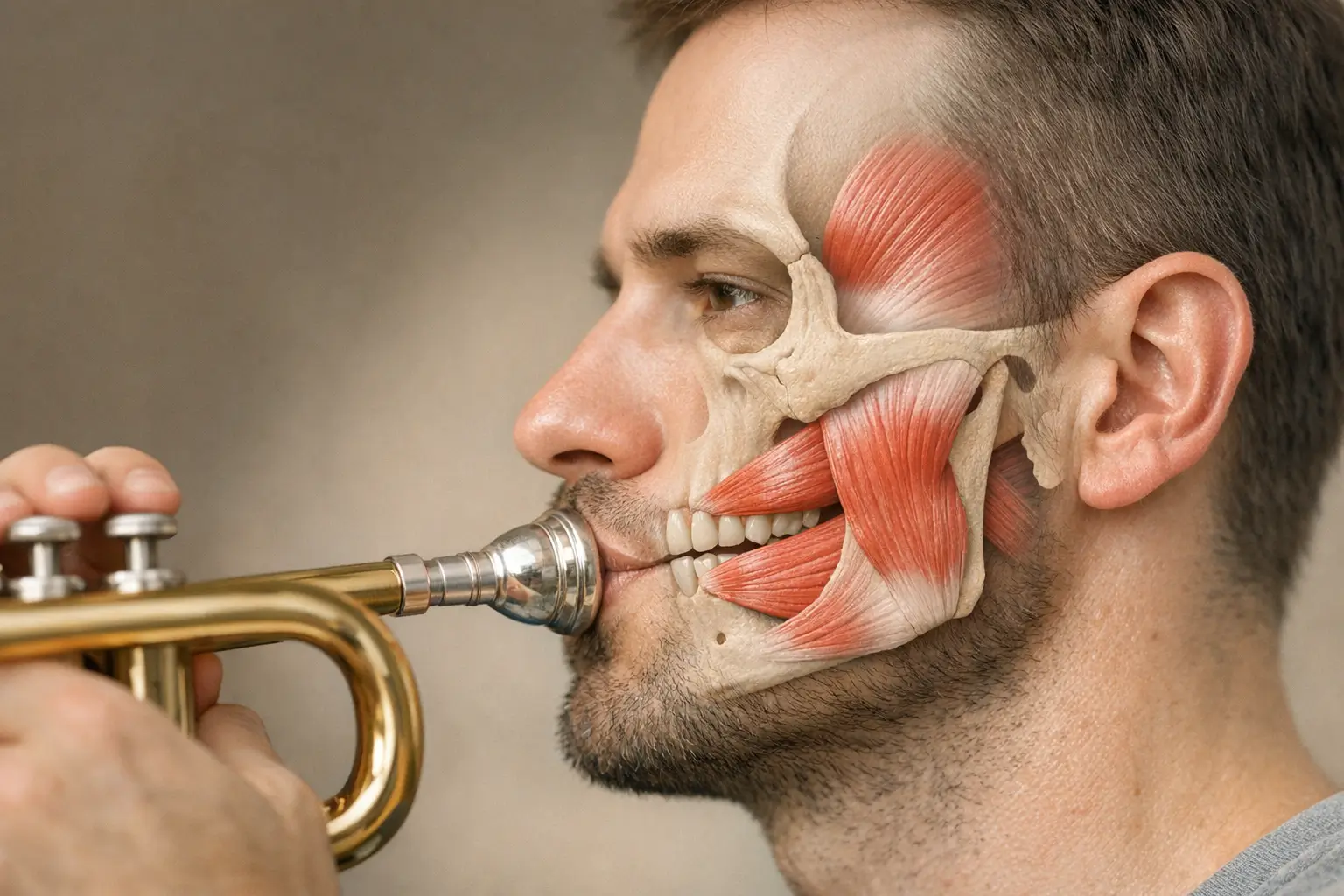
Forming an embouchure involves sealing your mouth around the mouthpiece, engaging muscles from the chin to the temples. A study on saxophonists by Shanoff, Kang, and Guptill 2019 found that jaw protrusion and clenching increased with longer pieces, especially in louder dynamics. Trumpet and trombone players sustain high intra-oral pressure, which can irritate the temporomandibular joint (TMJ).
Clarinetists and oboists face different challenges, as the small, firm reeds require a tight seal. Players often unconsciously tilt their heads or push their jaws forward to maintain pitch, leading to muscle spasms and pain.
Equipment Factors You Might Overlook
Sometimes, the culprit is the equipment rather than anatomy. A slightly too wide mouthpiece can force a trumpeter to open their jaw beyond its neutral range. Reed strength also matters; many young clarinetists switch to harder reeds for better tone, then compensate by biting harder. Dental braces or retainers can also alter the jaw's alignment, causing pain. If your pain began after changing equipment, consider a professional fitting session.
Relation with Bruxism and Jaw Clenching
The issue becomes more complex when bruxism, or nighttime teeth grinding, is involved. Ahlberg et al. 2019 linked self-reported sleep bruxism with higher odds of jaw pain in musicians. During the day, you might press your jaw forward to play, and at night, you grind those same joints, leaving almost no recovery time.
Performance bracing, or clenching during challenging passages, is another issue. A wind-player injury prevention trial by Rodríguez-Gude et al. 2025 found that untrained musicians often lock their jaws in fortissimo sections, increasing muscle loads significantly.
Clinical Findings: Temporomandibular Disorders in Musicians
Temporomandibular disorders (TMDs) include joint pain, clicking, limited range, and muscle soreness. Clinical researchers have explored whether musicians meet standard TMD criteria.
A Dutch study by van Selms et al. 2020 compared musicians to non-musicians, finding that brass and wind players reported more jaw locking and joint sounds. Singers did not share the same risk profile (van Selms, Wiegers, & de Vries 2019), suggesting that mouthpieces contribute significantly to these issues.
Clinical exams reveal three main patterns:
- Muscle tenderness, particularly in the masseter and temporalis muscles.
- Disc displacement clicks, indicating possible disc displacement within the TMJ.
- Reduced opening range, with musicians often maxing out at the low end of normal ranges.
Magnetic-resonance imaging studies provide visual evidence. A 2021 German study scanned 18 professional horn players with chronic pain, revealing early degenerative changes in nearly half of them, typically seen in older individuals.
A 2026 randomized controlled trial on wind musicians (Rodríguez-Gude et al.) demonstrated that early screening and tailored exercises reduced TMD incidence by roughly 30 percent over six months. The takeaway: early intervention can prevent a career-ending spiral.
Managing Jaw Pain: Strategies and Considerations
The good news is you don't have to choose between your instrument and your jaw. A combination of preventive training, smart practice habits, and clinical support can keep you playing pain-free.
Musculoskeletal Injury Prevention
Rodríguez-Gude et al.'s injury prevention program included warm-up routines, embouchure relaxation drills, and rest scheduling. Wind players who followed the plan reduced their jaw-pain episodes significantly. The protocol includes:
- Five minutes of gentle neck and jaw mobility exercises before rehearsal.
- Embouchure "pulses" – quick relax and reform cycles during long tones.
- Mandatory micro-breaks every 25 minutes.
- Weekly check-ins with a physical therapist familiar with musicians.
If time is tight, use tech to enforce breaks. Apps like “Body Timer” or phone alarms can remind you to take short breaks, roll your shoulders, and relax your jaw for a minute.
Exercise and Therapy
Clinical therapists focus on muscle balance through exercises like:
- Isometric jaw holds with controlled opening and closing.
- Lip trill drills to reduce jaw muscle load and engage the diaphragm.
- Resistance-band neck stretches to counter forward-head posture.
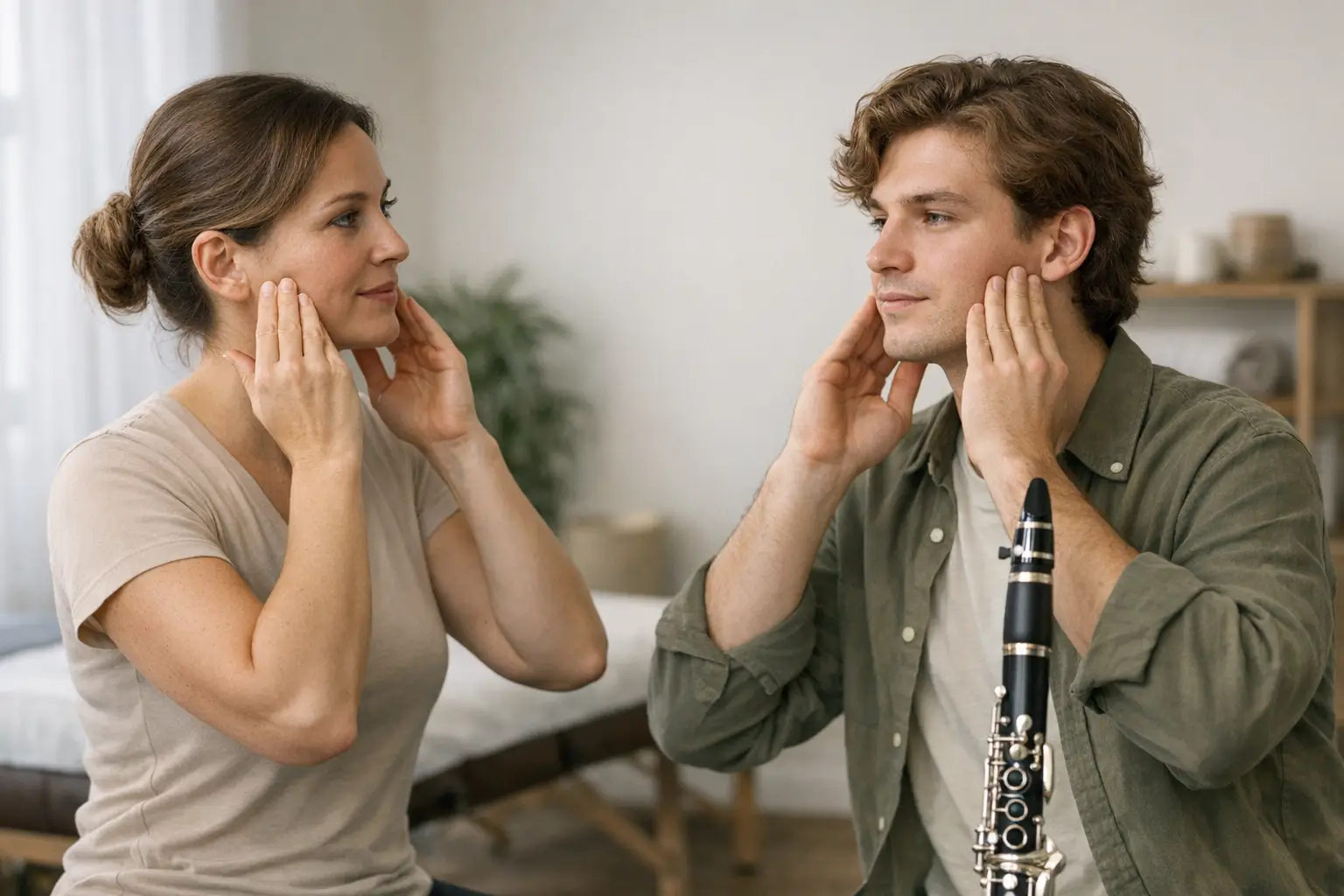
- Self-massage of the masseter using two knuckles in slow circles.
Use heat and cold contrast therapy: a warm compress for five minutes to increase blood flow, followed by a cool gel pack for two minutes to reduce inflammation. Many players find this routine beneficial after practice and before bed.
A joint statement from the American Dental Association and the British Association for Performing Arts Medicine recommends combining exercise with short-term oral splints for those who grind at night. Limit splint use to sleep to avoid interference with daytime embouchure.
Lifestyle and Behavioral Interventions
Your jaw doesn't clock out when you leave the stage. Offstage habits can influence recovery.
Stress Management
Stress can exacerbate jaw tension. A study by Nair et al. 2023 found psychological distress correlates with higher jaw-pain disability scores. Musicians reported coping by biting lips or grinding teeth during auditions, mirroring the classic fight-or-flight response.
Effective tools include:
- Box breathing before performances: inhale for four counts, hold for four, exhale for four, hold for four.
- Progressive muscle relaxation from the toes to the scalp.
- Mindfulness apps designed for quick sessions.
- Cognitive-behavioral therapy for chronic anxiety.
The Performing Arts Medicine Association emphasizes mental health as a critical component of physical recovery.
Sleep and Bruxism
Perfect posture during the day won't help if you grind at night. Ahlberg et al. 2019 linked poor sleep quality to severe morning jaw pain. Key solutions include:
- A wind-down routine without screens 30 minutes before bed.
- Limiting caffeine after 2 PM to calm your central nervous system by bedtime.
- Using a custom night guard if you show wear facets on your teeth. Consult a dentist familiar with musicians, as generic guards can interfere with mouthpiece feel during the day.
- Setting the bedroom at a cool 65 degrees Fahrenheit to improve deep-sleep cycles.
Focus on overall recovery, not just sleep hours. Hydration, anti-inflammatory foods (like salmon, berries, and leafy greens), and avoiding gum or chewy snacks on busy days can reduce jaw strain.
Special Considerations for Brass and Wind Players
Brass and wind musicians have unique challenges in managing jaw pain.
Posture and Instrument Handling. Raising a trombone slide or wrapping fingers around a flute often encourages a forward-head tilt, which shortens the jaw elevators and strains cervical discs. Neck supports or straps can help, but frequent posture resets are best. A quick chin tuck between phrases keeps your head aligned with your spine.
Embouchure Fatigue. Unlike singers, brass and wind players rely on small facial muscles to hold a mouthpiece. After about 45 minutes of continuous playing, muscle firing rates increase sharply (Shanoff et al. 2019). Scheduling breaks during rehearsals isn't laziness; it's injury prevention.
Dental Hardware and Doubling. Braces, aligners, or recent dental work can change how teeth meet a mouthpiece. Woodwind doublers, who switch instruments during performances, often report flare-ups due to different bite patterns. A minute of lip and jaw stretches during instrument changes can help.
Face Masks in the COVID Era. Brass sections used slitted masks in 2020. A study by Rodríguez-Gude et al. 2023 noted that mask use can increase embouchure pressure by about 15 percent. If masks are still required, choose models with pliable edges and schedule shorter sets.
Conclusion
Jaw pain in brass and wind players is common, clinically recognized, and manageable. Research shows a direct link between instrument mechanics, bruxism, and temporomandibular disorders. You can break this link with proactive steps: warm-up drills, posture checks, stress management, quality sleep, and professional screening. Treat your jaw like the vital piece of performance equipment it is, and you'll spend less time dealing with soreness and more time hitting high notes with confidence.