Innovative Approaches to TMJ Pain Relief You Haven't Tried Yet
Discover advanced and alternative TMJ treatments for effective pain relief.
Jaw pain at 2 a.m. can be particularly frustrating. You might press a knuckle under your ear, try a quick stretch, or regret the night guard you forgot to wear. Yet the ache persists. If you're reading this, you've likely explored splints, soft diets, and every “TMJ massage” video on YouTube. The good news is that science is advancing beyond those same old tips. In this article, you'll discover hydrogels that soothe cartilage, AI scans that spot issues before your dentist can, and metabolic tricks that could calm your jaw muscle from the inside out.
The research is current, the tone is candid, and the goal is straightforward: help you find relief you haven't tried yet. Ready to explore? Let's dig in.
Understanding TMJ Pain and Its Complexities
The temporomandibular joint (TMJ) is where your lower jaw meets the skull. It allows you to talk, yawn, and bite into a crisp apple. But when it misbehaves, you'll notice quickly. Symptoms like clicking, popping, limited opening, headaches, and earaches can arise because this joint relies on bone, cartilage, muscle, nerves, and stress levels to function smoothly.
Researchers now describe TMJ disorders (TMD) as “multifactorial.” This means there's no single cause. Bruxism, the nighttime clenching that sounds like a cement mixer, can overload the joint. Sleep disorders like obstructive sleep apnea cause micro-arousals and more grinding. Hormonal shifts, systemic inflammation, poor posture, trauma, and mood all contribute to the problem.
The pain itself is complex. There's local pain from inflamed tissue, neuropathic pain when nerves become sensitive, and referred pain that makes it seem like your ear or temple is the issue. A study on chronic TMD disability by Salbego et al. 2025 found that psychosocial factors like anxiety and pain catastrophizing can worsen symptoms even when joint damage is mild. The takeaway: treating the jaw without considering mental health leaves half the job undone.
Everyday Triggers You Might Be Missing
Micro-habits matter. Holding a phone between your shoulder and cheek, singing loudly during a commute, or chewing on one side because of a sensitive tooth can all misalign the mandibular disc. Office workers who spend hours in a “turtle neck” posture—head forward, chin jutting—triple the load on the jaw's elevator muscles. Quick fix: elevate your laptop with two books, set a timer to relax your shoulders every 30 minutes, and swap gum for xylitol mints that dissolve without chewing.
Understanding this complexity is crucial because it explains why a single mouth guard or muscle relaxer isn't always enough. Recognizing the web of causes opens the door to newer, smarter therapies—and that's where we're headed next.
The Role of Advanced Imaging and Diagnostics in TMJ Management
Until recently, dentists relied on physical exams, panoramic X-rays, and maybe an MRI to assess TMJ damage. The problem is that cartilage thinning and small bone changes can be missed by these scans. Enter artificial intelligence and biomarker science.
An umbrella review by Soares et al. 2025 cataloged salivary and blood biomarkers—like inflammatory cytokines, collagen fragments, and oxidative stress markers—that fluctuate with TMJ degeneration. Detecting these could allow clinicians to diagnose TMD with a simple saliva test.
On the imaging front, convolutional neural networks analyze cone-beam CT and MRI data to identify subtle erosions, disc displacements, and joint effusions. Bayrakdar et al. 2025 reported AI systems spotting early osteoarthritic changes with accuracy rivaling experienced radiologists. What does that mean for you? Personalized treatment. If AI shows minimal bone damage but inflamed soft tissue, anti-inflammatory injections might be preferred over surgery. If biomarkers indicate oxidative stress, antioxidant strategies take priority.
Costs are decreasing, too. A cone-beam CT analyzed by an AI platform might cost under $250 in major U.S. cities, similar to a root canal x-ray series, yet the data is richer. Insurers are slow to adapt, but many are testing coverage as predictive analytics show potential for reducing future surgeries.
Wearables add another layer. Some sleep trackers now record bite-force surges during bruxism episodes. Combine that with metabolite data, and a feedback loop forms: treat, track, adjust, repeat. The ideal scenario is a future where your phone alerts you before a pain flare because your cytokine levels are rising. We're not there yet, but the groundwork is laid.
Regenerative Medicine: A Breakthrough in TMJ Pain Relief
Cartilage has minimal regenerative capacity, which is why osteoarthritis in the TMJ often becomes chronic. Regenerative medicine aims to rewrite this by initiating repair at the molecular level. Two promising approaches are ROS-responsive hydrogels and adipose-derived stem cell (ADSC) therapies.
Hydrogels and Cartilage Repair
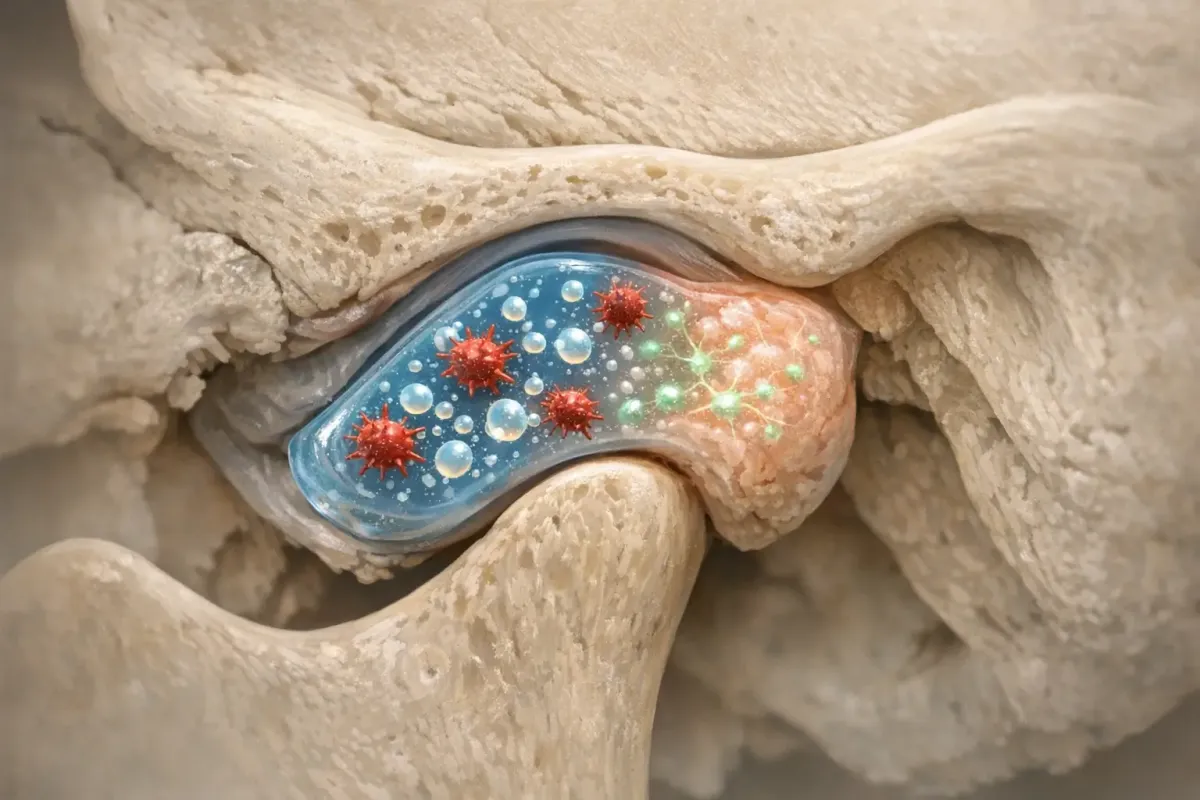
Reactive oxygen species (ROS) are chemical sparks that drive inflammation and tissue breakdown. A dual-functional hydrogel described in Kuang et al. 2025 acts like a smart sponge. It absorbs excess ROS and slowly releases anti-inflammatory drugs into the joint. In rat models, the gel reduced cartilage erosion and restored smoother joint surfaces within eight weeks. Imagine a small, soft contact lens cushioning the joint while cleaning up biochemical messes.
The timing is key. Traditional injections release medication that dissipates in hours. A hydrogel stays in place, releasing drugs as long as oxidative stress remains high. For patients, this means fewer injections and potentially longer pain-free periods. Early human trials are underway in Germany and South Korea, with initial data expected by mid-2026.
ADSC-Enriched Adipose Extract
Fat isn't just storage—it's a stem cell treasure trove. An experiment by Zhang et al. 2025 used adipose tissue, filtered out unnecessary elements, and concentrated ADSCs. Injected into arthritic TMJs, the extract reduced cartilage fibrosis by silencing senescent (aging) chondrocytes. The treated joints showed smoother cartilage layers and improved jaw opening compared to controls.
Why is this important? Senescent cells release "SASP" factors that exacerbate pain and hinder tissue repair. By silencing them, ADSCs allow younger, more active cells to thrive. Complementary evidence from a broader pain review by Sharma et al. 2025 reports similar success using stem cells in knee and spine joints, indicating the TMJ isn't an outlier.
In most pilot studies, patients reported functional improvements within four to six weeks of a single injection, with MRI changes appearing three months later. Post-injection protocols typically include two weeks of light chewing, followed by progressive physiotherapy to guide new collagen along the correct paths.
Exploring the Impact of Energy Metabolism in TMJ Disorders
Ever notice jaw pain increases when you're exhausted? Cellular energy might be the reason. Mitochondria generate ATP, the fuel that powers muscle fibers and renews cartilage cells. When mitochondrial function falters, tissues face an energy crisis, and inflammation increases.
A narrative review by Gao et al. 2025 detailed how defects in oxidative phosphorylation, altered glucose uptake, and faulty fatty acid oxidation appear in TMD samples. In animal models, boosting NAD+ or using mild mitochondrial uncouplers reduced joint swelling and pain behaviors.
Practical strategies are already in testing:
- Coenzyme Q10 (100–200 mg/day) to enhance electron transport chain efficiency
- Dietary interventions like 16:8 intermittent fasting to promote mitophagy (cellular cleanup of damaged mitochondria)
- Cold-laser therapy targeting cytochrome c oxidase to stimulate ATP production
In a small Portuguese study, patients combining CoQ10 with a 16:8 fast three days a week reduced pain scores by 40 percent over eight weeks—comparable to low-dose naproxen but without gastrointestinal side effects. Unlike injections, metabolic therapies are systemic, potentially easing muscle fatigue and brain fog along with jaw pain. However, self-experimenting with supplements can be risky. Work with a clinician familiar with mitochondrial labs to tailor dosing.
Minimally Invasive Interventions: Effective Alternatives
Surgery for TMJ was once a last resort. Now, smaller tools enable specialists to treat the joint through needle-sized ports. A meta-analysis by Spadon-Brito et al. 2025 compared arthrocentesis, hyaluronic acid (HA) injections, platelet-rich plasma (PRP), and conservative therapy (splints, meds, physio). Results showed that minimally invasive approaches often surpassed splints alone for pain relief and range of motion at six months.
Why does flushing a joint with saline (arthrocentesis) help? It breaks up adhesions, removes inflammatory mediators, and restores normal fluid pressure. Pair that with HA for lubrication or PRP for growth factors, and you get a powerful combination.
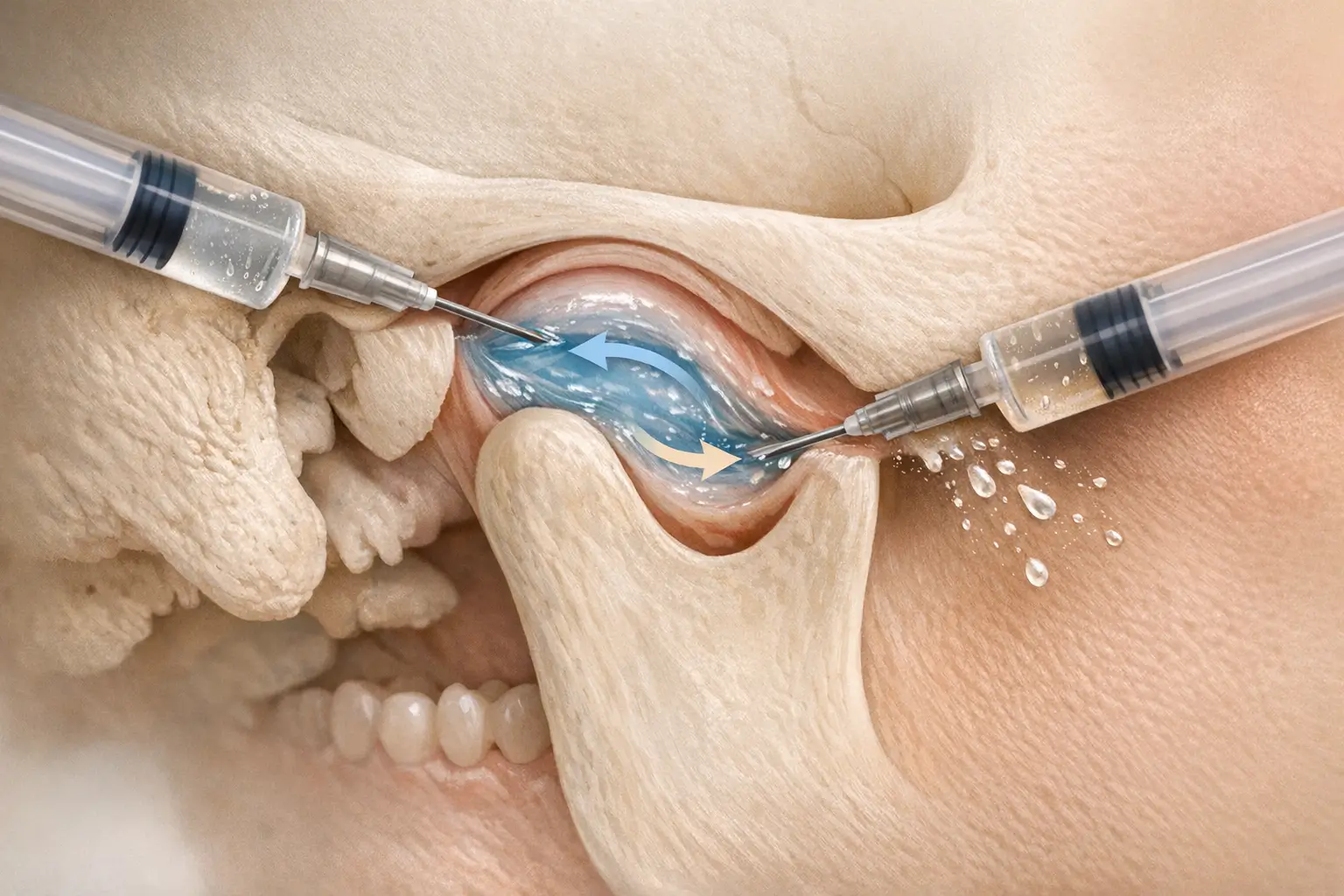
Here's how these options compare:
- Arthrocentesis: A quick 20-minute procedure under local anesthesia. Most people drive themselves home and eat soft foods that evening.
- HA injection: Adds lubricating fluid. Similar to an oil change for the joint. Benefits build over two to three weekly sessions.
- PRP: Uses platelets from your blood to deliver healing proteins. Mild post-procedure soreness is common. Athletes prefer PRP as it's viewed as natural by anti-doping agencies.
- Botulinum toxin: Not in the meta-analysis but worth mentioning. Calms hyperactive muscles when bruxism is relentless. Relief appears in three to seven days and lasts three months.
Complications are rare—temporary facial nerve bruising occurs in under 2 percent of arthrocentesis cases—but it's essential to choose a surgeon with experience in at least 50 TMJ procedures a year. Always ask.
The Future of TMJ Pain Management: Integrating Psychosocial Factors
Imagine trying to fix a leaky roof while rain keeps falling. That's what happens when we treat jaw mechanics but ignore stress, sleep, and mood. The Salbego et al. 2025 study found that pain catastrophizing predicted disability better than MRI findings. In other words, your thoughts can amplify pain more than cartilage wear.
The future of TMJ care looks holistic:
- CBT-I for sleep: Cognitive behavioral therapy for insomnia reduces nighttime arousals that trigger bruxism.
- Biofeedback: Surface EMG devices alert you when jaw muscles tense, helping you relax clenched jaws subconsciously.
- Mindful relaxation and paced breathing: Lowers sympathetic tone, reducing muscle guarding around the TMJ.
- Group pain education: Sharing experiences normalizes symptoms and reduces fear-based avoidance behaviors.
Clinics at the National Institute of Dental and Craniofacial Research and the Cleveland Clinic now incorporate these psychosocial modules into standard TMJ protocols. Early data suggests that combining a minimally invasive procedure with CBT can double the odds of long-term relief compared to either strategy alone.
Digital therapeutics are improving access. Apps like Curable and Mindset use guided imagery, diaphragmatic timers, and AI-chat coaching to reframe pain loops. A 2024 user audit showed that TMJ sufferers who logged at least 60 minutes of app time weekly reduced catastrophizing scores by one-third in three months.
What can you do at home? Track triggers. Does pain increase on deadline days? After minimal sleep? Once patterns emerge, you can try micro-interventions like five-minute diaphragmatic breathing drills every hour or a jaw stretch before meetings. Small changes add up.
Conclusion: Embracing Innovation for Lasting TMJ Pain Relief
The jaw joint may be small, but the science advancing to address TMJ pain is anything but. From ROS-absorbing hydrogels and fat-derived stem cells to AI-guided scans and metabolic strategies, the toolbox for TMJ pain is expanding. Add psychosocial insights, and you move from one-size-fits-all splints to precision care tailored to your biology and lifestyle.
Your next step: bring these findings to your dentist, oral surgeon, or pain specialist. Ask about advanced imaging, biomarker panels, and clinical trials for regenerative therapies. If you prefer non-invasive options, inquire about arthrocentesis or HA injections combined with CBT. Knowledge is power. Use it to transform that 2 a.m. jaw pain into a thing of the past.