How to Stop Grinding Teeth in Sleep: Practical Solutions
Discover effective strategies to prevent nighttime teeth grinding with research-backed solutions.
<<>
If morning jaw pain or chipped enamel has become your unofficial wake-up call, you are not alone. About 10 to 13 percent of adults clench or grind their teeth while asleep, a habit called sleep bruxism. The behavior sounds harmless until your dentist shows you the microscopic wreckage inside your mouth.
The good news is that modern research points to several practical ways to dial back the nighttime gnashing. From tried-and-true mouth guards to cutting-edge botulinum toxin injections, the menu of options is wide enough for nearly every lifestyle and budget. Below, you will find an evidence-backed guide, written in plain English, on how to stop grinding teeth in sleep.
Understanding Sleep Bruxism: Causes and Effects
Sleep bruxism is more than a quirky sleep habit; it is a repetitive jaw-muscle activity that can spiral into dental and medical problems. Researchers group the condition under sleep-related movement disorders, right next to restless legs. The exact cause is still debated, but evidence points to a mix of factors like stress, genetics, airway issues, and certain medications.
Medication-Induced and Genetic Triggers
Some prescription drugs pour gasoline on the neural pathways that fire the jaw. Selective serotonin re-uptake inhibitors, amphetamine-based ADHD stimulants, and atypical antipsychotics are frequent offenders. The 2024 scoping review by Oliveira et al. lists escitalopram, fluoxetine, methylphenidate, and risperidone among the top culprits. If a new med lines up with new grinding, ask the prescriber about dose timing or alternatives rather than quitting cold turkey.
Genes also nudge the odds. The review by Więckiewicz et al. reports that having a parent who grinds doubles your own risk, likely through polymorphisms in dopamine and serotonin pathways. Hormonal swings add another wrinkle: women in certain menstrual phases report higher daytime clenching, although data remain mixed.
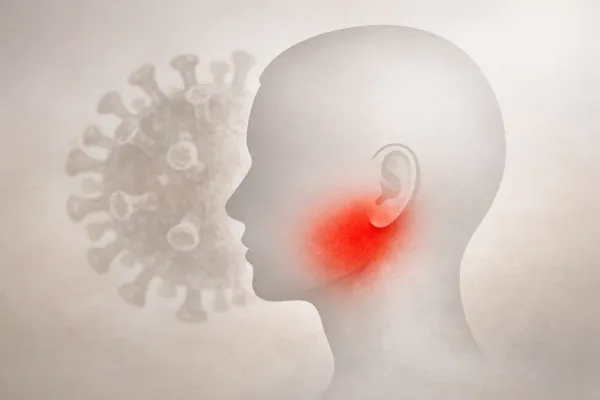
A narrative review published in 2024 by Voß, Basedau, and Svensson summarized growing evidence linking bruxism to temporomandibular disorders (TMDs) and tension-type headaches. In short, the pressure you put on your teeth at night can travel upward, irritating the jaw joint and triggering head pain.
The bidirectional nature of this relationship matters. People with TMD pain often clench more, and frequent clenching can worsen TMD pain. The same feedback loop shows up in headaches: night grinding tightens cranio-facial muscles, which then feed headache pathways. A 2022 overview of therapeutic approaches by Matusz et al. suggested that breaking the bruxism cycle early can blunt downstream symptoms.
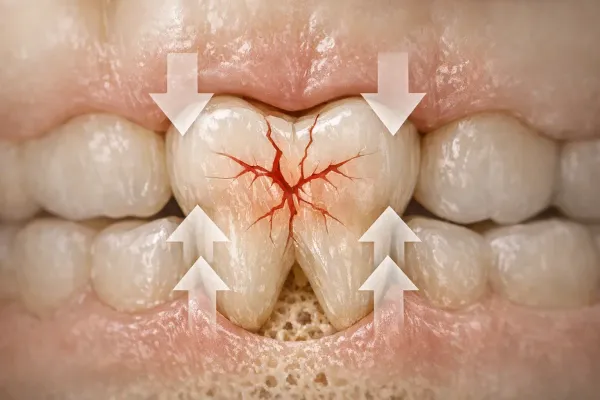
Beyond pain, the dental fallout is real. Continuous grinding can flatten cusps, crack enamel, and even loosen restorations. According to the Mayo Clinic’s bruxism overview, some patients generate forces up to 250 pounds per square inch, far more than typical chewing. Over months or years, that load can outstrip the tooth’s natural repair system, leaving you with sensitivity and pricey dental fixes.
Sleep bruxism also messes with sleep architecture. Micro-arousals that occur during grinding bursts can shave minutes off restorative deep sleep, contributing to daytime fatigue. Recognizing these cascading effects is the first step toward meaningful treatment.
The Role of Occlusal Splints in Managing Bruxism
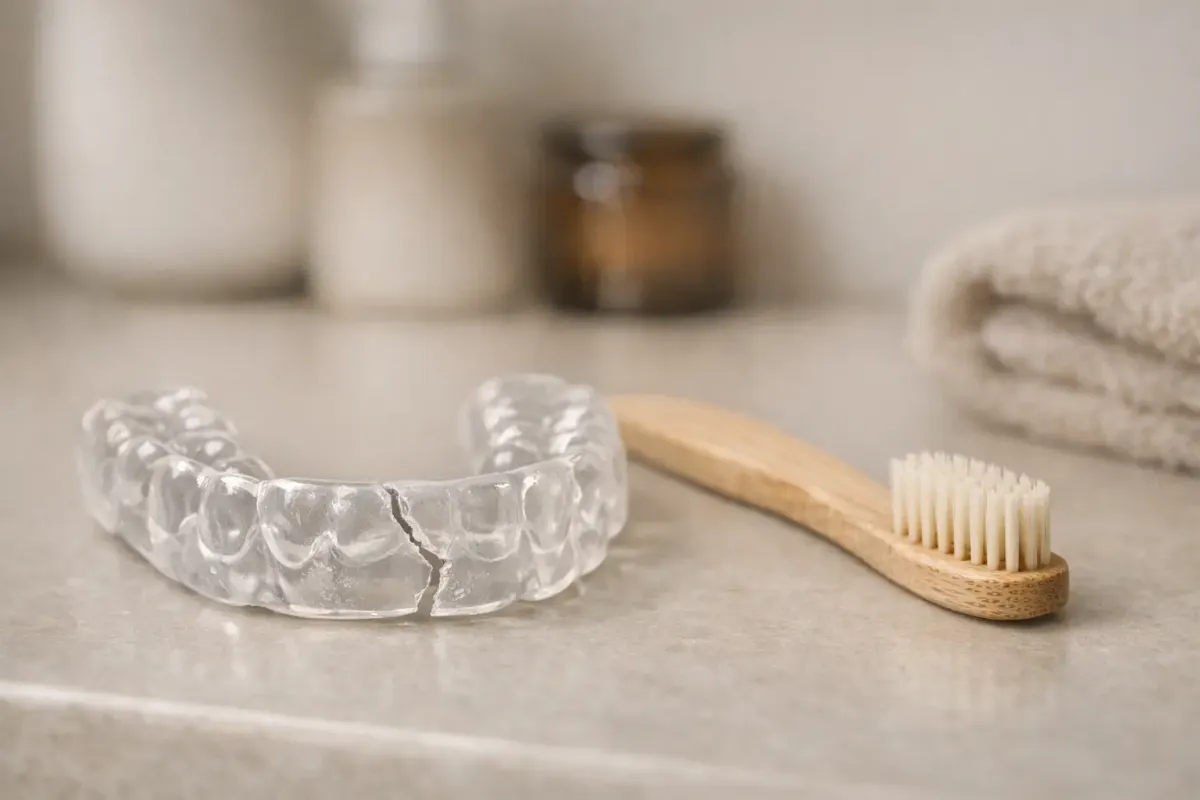
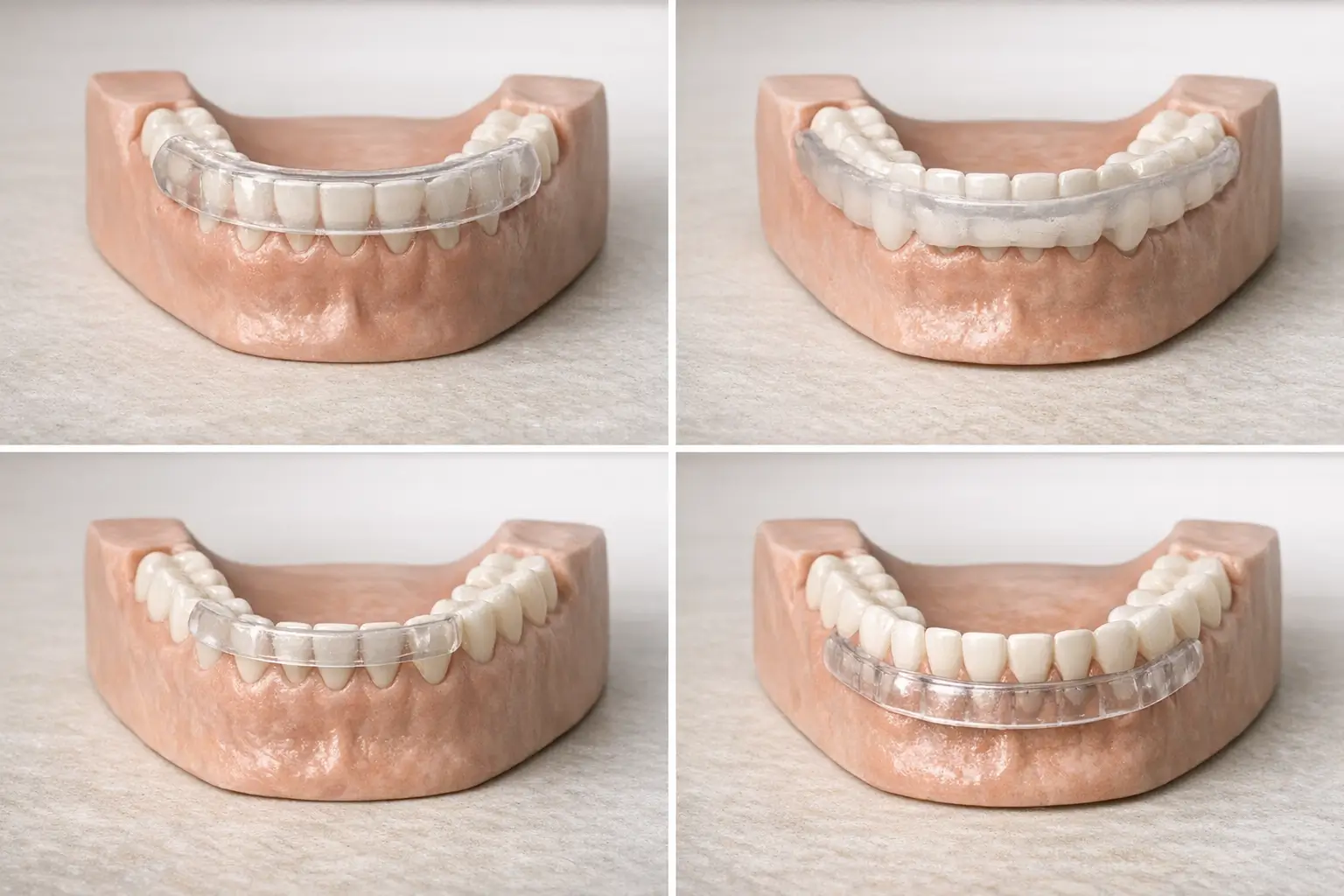
Enter the dental night guard, officially called an occlusal splint. You pop it in before bed, and it acts like a bumper between upper and lower teeth. Think of it as a helmet for your enamel. But is plastic in your mouth really a solution or just a placebo? Research leans in favor of splints, with caveats.
Types of Occlusal Splints
- Full-coverage hard acrylic splints: Custom-made by dentists, these cover either the upper or lower arch. They distribute biting forces and limit tooth-to-tooth friction.
- Soft thermal splints: Often sold over-the-counter, they are boil-and-bite devices. They are cheaper but can wear out quickly and sometimes encourage more chewing.
- Dual-laminate splints: Hard on the outside, soft inside for comfort, merging the best of both worlds.
- Anterior bite planes: Small devices that contact only the front teeth. They reduce the muscle activity responsible for heavy clenching.
Effectiveness of Splints
A randomized clinical trial by Tandon et al. (2025) pitted hard acrylic splints against sleep hygiene plus progressive muscle relaxation. After eight weeks, the splint group showed a larger drop in electromyographic (EMG) burst episodes and reported less perceived stress. Participants also scored higher on sleep quality scales. Another systematic review from 2024, Ainoosah et al., examined 14 trials and concluded that custom hard splints reduce grinding episodes by about 60 percent on average.
That said, splints treat the symptom (tooth wear) rather than the root cause (muscle hyperactivity). They are a protective shield, not a cure. Compliance is another hurdle. Wearing a chunk of acrylic all night is not everyone’s idea of comfort. Dentists often recommend a two-week adaptation period, during which mild soreness or extra salivation is common but usually fades.
Splints can also double as diagnostic tools. If pain or wear continues despite faithful use, it signals that other drivers, such as airway obstruction or severe stress, need attention. Many insurance plans cover at least part of the cost of a dentist-fabricated guard, especially when documented tooth wear is present. If cost is a barrier, over-the-counter versions are better than nothing, but custom guards last longer and fit snugly, reducing the risk of accidental swallowing or gagging.
Non-invasive Techniques: Sleep Hygiene and Muscle Relaxation
If you would rather not introduce yet another gadget into your nighttime routine, lifestyle adjustments may help. The same 2025 randomized trial by Tandon et al. compared splints with a program that combined sleep hygiene education and progressive muscle relaxation (PMR). Participants learned to wind down with scheduled dim-light routines, caffeine cutoffs, and targeted jaw-neck relaxation exercises. At the eight-week mark, PMR plus sleep hygiene shaved off bruxism episodes by roughly 40 percent, a respectable showing albeit slightly behind splints.
Below are practical steps distilled from that and other clinical protocols:
- Consistent sleep schedule: Go to bed and get up within the same one-hour window daily, even on weekends.
- Pre-sleep screen detox: Blue light delays melatonin release. Aim for zero screens 60 minutes before bed.
- Stimulant curfew: Last coffee or energy drink no later than 2 p.m. Nicotine and some asthma inhalers are also stimulants; discuss timing with your doctor.
- PMR sequence: While lying in bed, gently clench your jaw for five seconds, then fully relax it for 15. Work down to your shoulders, arms, and finally legs.
- Mind-body add-ons: Apps that guide short mindfulness sessions can complement PMR. Evidence is still emerging but early data suggest a calming effect on nocturnal jaw activity.
Diet and Micronutrient Tweaks
Food choices set the biochemical mood for your jaw. The 2025 review by Liye An et al. links ultra-processed diets to inflammatory cytokines that sensitize the trigeminal system. A Mediterranean pattern, leafy greens, olive oil, fatty fish, nuts, and whole grains, tones that inflammation down. Magnesium deserves a solo mention: low levels keep muscles on a hair-trigger. Leafy greens, pumpkin seeds, and 70 percent dark chocolate are tasty top-ups. Pair calcium and vitamin D fortified milk or plant milk with dinner to further stabilize neuromuscular firing.
Hydration matters too. Mild dehydration can cramp the masseter. Keep a water bottle nearby rather than another coffee after lunch.
Small swaps build up. Replace the late-night glass of wine with chamomile tea, skip the 10 p.m. doomscroll, and you have stacked the deck in favor of quieter jaw muscles.
Why does this work? Stress hormones and cortical arousals spike during poor sleep. Lower those, and the brain sends fewer “clench” signals to jaw muscles. The beauty is that you can combine these strategies with splints or other treatments for an additive effect.
Botulinum Toxin: A Modern Approach to Bruxism
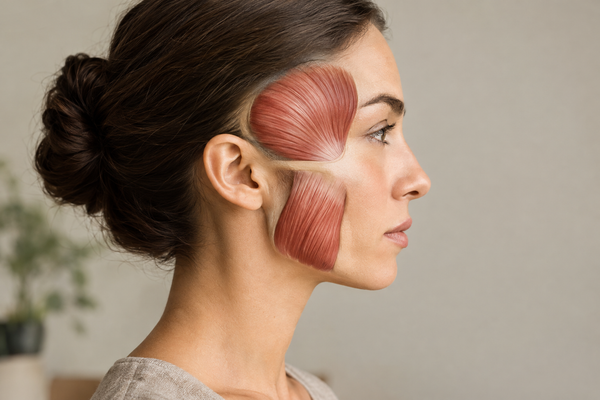
Botulinum toxin, better known by its brand name Botox, is not just for smoothing forehead lines. When injected into the masseter and temporalis muscles, it temporarily weakens the overactive fibers responsible for grinding. The idea is straightforward: if the muscle cannot contract as hard, it cannot deliver bone-crunching forces.
A 2024 comparative trial by Hosgor et al. enrolled patients with both TMD pain and confirmed sleep bruxism. Participants received either a conventional occlusal splint or botulinum toxin injections. Three months later, the Botox group reported a 73 percent drop in pain scores versus 47 percent in the splint group. Objective EMG readings mirrored the trend.
Another systematic review focusing on safety, Buzatu et al. (2024), found that most adverse events were mild and transient, think chewing fatigue or slight smile asymmetry that resolved within a few weeks. Serious complications were rare, generally linked to dosing errors or inaccurate injection placement.
Procedure basics:
- The dentist or facial pain specialist maps out the masseter and sometimes the temporalis muscle.
- Using a thin needle, small units of toxin are injected at 3-4 sites per muscle.
- Results kick in after about one week and last three to six months. Repeat sessions are common.
The main trade-off is cost. Insurance rarely covers Botox for bruxism, viewing it as elective. Prices range from 400 to 1000 dollars per session in the United States. On the upside, maintenance is every few months compared with nightly splint insertion. Some practitioners combine low-dose Botox with splints for dual protection, especially in severe grinders who destroy guards within weeks.
If you choose this route, look for a clinician experienced in facial anatomy. Too high a dose or misplaced injection can weaken chewing to the point that steak becomes an Olympic event. Communicate dietary preferences and desired muscle strength so dosing can be tailored.
Pharmacological Back-ups: Muscle Relaxants and Antidepressants
Meds are not first line, but they have a role when guards and lifestyle edits flop. Short-term muscle relaxants such as clonazepam can mute nocturnal EMG bursts, yet dependence risk keeps prescriptions brief. Small trials reviewed by Assiri et al. suggest that low-dose tricyclic antidepressants like amitriptyline thin out REM density, indirectly cutting grinding frequency. Talk dosage and exit strategy with your doctor before swallowing any pill.
Emerging Tech: Biofeedback and Neuromodulation
Science fiction is inching into the bedroom. Contingent electrical stimulation devices such as GrindCare® sit over the temporalis, sense a clench, then zap a painless microcurrent that reflexively relaxes the muscle. The 2025 perspective by Sladeckova et al. pegs episode reduction around 60 percent within two weeks, making the gadget handy during intense dental restoration periods.
Transcutaneous auricular vagus nerve stimulation (TAVNS) uses an ear clip to pulse the vagus nerve. In the 2026 RCT by Guzel Hazel Celik et al., 20-minute bedtime sessions chopped nighttime muscle bursts by 47 percent and eased morning headaches. Units retail near 160 dollars and side effects seldom rise above mild ear warmth.
Both tools aim to retrain neural circuits rather than just buffer tooth enamel, offering hope to tech-savvy grinders who hate mouth guards.
Complementary Therapies: Acupuncture, Physical Therapy, and Herbal Supports
Needle-free laser acupuncture earned spotlight time in the 2025 Rashed et al. trial. Eight infrared sessions at points ST6, ST7, and LI4 cut nocturnal activity in kids more than manual physical therapy. Adults can extrapolate: photobiomodulation modulates serotonin and calms the masseter without puncturing skin.
Classic physical therapy still helps. Intraoral massage of the medial pterygoid, cervical spine mobilization, and chin-tuck drills unload forward-head posture that adds up to 10 kg of TMJ stress. Desk workers, set a phone reminder and slide that head back ten times, twice daily.
Prefer plants over pulses? Chamomile or valerian tea before bed offers mild muscle-relaxant perks with almost no downside, according to the UK National Health Service notes on bruxism. Diffuse lavender or sweet marjoram essential oil for 30 minutes pre-sleep to tame sympathetic tone, but always dilute oils to dodge skin irritation.
The Connection Between Stress and Teeth Grinding
Your jaw can double as a primitive stress gauge. During tight project deadlines or family drama, you may notice daytime clenching. At night the brain keeps the pattern going, turning subconscious tension into micro-trauma for your teeth. Several studies, including the RCT by Tandon et al., show a clear correlation between perceived stress scores and bruxism intensity.
Cortisol spikes appear to prime the motor pathways that trigger grinding bursts. In plain terms, the fight-or-flight system gets chatty with the trigeminal motor nucleus. The upshot: managing stress is not just good for your mood; it is a frontline defense against dental wear.
Managing Stress to Prevent Bruxism
- Exercise: Aerobic activity chops cortisol levels and floods the brain with endorphins. A brisk 30-minute walk five times a week is a low-tech prescription with high yield.
- Cognitive behavioral therapy (CBT): Short-term CBT teaches coping skills and reframes maladaptive thought loops that feed stress. Ask your provider for telehealth options if scheduling is tight.
- Biofeedback devices: Wearable EMG gadgets buzz when they detect daytime clenching, nudging you to relax the jaw. While not yet mainstream, early users report heightened awareness that carries into sleep habits.
- Breathing drills: The 4-7-8 technique (inhale 4 seconds, hold 7, exhale 8) activates the parasympathetic system, easing muscle tension.
- Digital sunset: Social media doom-scrolling nudges stress hormones upward. Set a “down-time” on your phone that locks apps past 9 p.m.
Pick one or two methods and track jaw tension in a journal. Small wins accumulate, and you can adjust based on what actually moves the needle for you.
When to See a Specialist: Recognizing the Signs
Occasional clenching is normal. Chronic grinding with symptoms is not. Guidelines from the American Academy of Family Physicians rapid evidence review list clear red flags that merit professional evaluation:
- Frequent morning headaches or jaw pain lasting more than one week
- Visible tooth wear, cracks, or loose fillings
- Clicking or locking of the jaw joint
- Ear pain not explained by infection
- Partner reports loud grinding noises nightly
Special Considerations for Children
Kids grind too, peaking at roughly 36 percent in preschoolers according to Al-Jewair et al. If you hear nighttime gnashing, mention it at dental checkups. Rule out enlarged tonsils or adenoids, which often ride shotgun with pediatric bruxism. Most youngsters outgrow the habit, so dentists reserve guards for severe wear or pain.
A dentist trained in TMD and orofacial pain will likely start with a clinical exam and may order a sleep study to rule out comorbid disorders such as obstructive sleep apnea. In complex cases, a multidisciplinary approach involving a sleep physician, physical therapist, and psychologist provides the best outcomes. The 2022 position paper on bruxism definitions by Manfredini et al. underscores the importance of classifying bruxism based on severity and comorbidities before jumping into treatments.
If you already wear a guard and still wake up sore, or if over-the-counter painkillers no longer touch the headache, it is time to level up to a specialist. Early intervention can prevent root canals, crowns, and joint degeneration down the line.
Conclusion
Grinding your teeth in your sleep is more than a noisy quirk. Left unchecked, it can chip away, literally, at your dental and overall health. The current evidence landscape tells a clear story. Occlusal splints remain the frontline defense, backed by solid data for reducing tooth wear. Non-invasive tactics like sleep hygiene and muscle relaxation are worth adopting for their holistic benefits, especially if you prefer to avoid medical devices.
For stubborn cases, botulinum toxin offers a well-researched alternative that dampens muscle power at the source. No matter the tool you choose, stress management acts as the universal modifier, turning down the neural volume on jaw activity. Keep an eye out for red-flag symptoms and recruit a dental or sleep specialist early if the problem escalates. Your jaw, teeth, and morning mood will thank you.