Can You Use a Night Guard With a CPAP Machine?
Usually yes, and it is easiest with a nasal mask and a thin hard guard. Here is how mask type changes things, why a flat guard can worsen apnea in some people, and how a night guard differs from a mandibular advancement device.
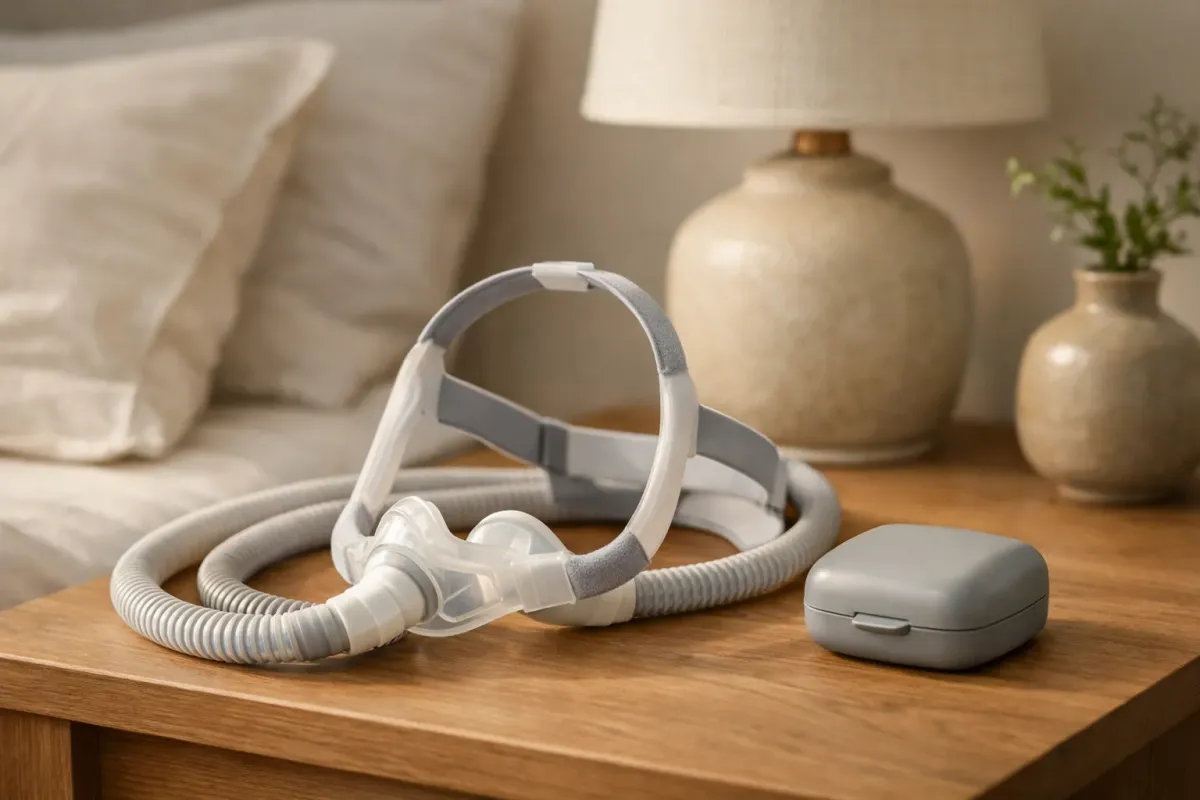
Usually yes. Plenty of people wear a night guard under a CPAP mask, and it is easiest with a nasal mask or nasal pillows and a thin, hard guard. The catch is that a plain night guard is not an apnea treatment, and in some people with sleep apnea a flat upper guard can make breathing during sleep worse, so your sleep doctor and your dentist should both know you are using one.
Why grinders end up with both
Sleep bruxism and obstructive sleep apnea (OSA) are often studied together. A 2025 narrative review in the Journal of Prosthodontics reports that, in adults with one of these conditions, the other shows up in roughly 30% to 50% of cases, while also saying the literature does not firmly support an association, let alone that one causes the other. A 2026 umbrella review in Sleep Medicine reached a similar place: adults with OSA appear more likely to grind, but the underlying studies are mostly low quality. (If you want the longer version of how sleep problems and grinding connect, we cover it in our piece on sleep disorders and teeth grinding.)
So if you just got a CPAP and you already had a guard, you are in common company. The question is how to make the two pieces of plastic get along.
How mask type changes the answer
There is very little formal research on this specific combination, so what follows is practical fitting logic rather than trial data.
- Nasal pillows or a nasal mask: the easiest setup. Nothing on the mask touches your lips or chin, so a guard inside your mouth does not interfere with the seal. The main job is keeping your mouth closed so air does not escape through it.
- Full-face mask: workable, but trickier. The cushion seals around your mouth and chin, and a bulky guard can push your lips forward or hold your jaw slightly open. That can change the shape the mask is sealing against, which shows up as leaks, hissing, or a mask that needs tightening to stay put.
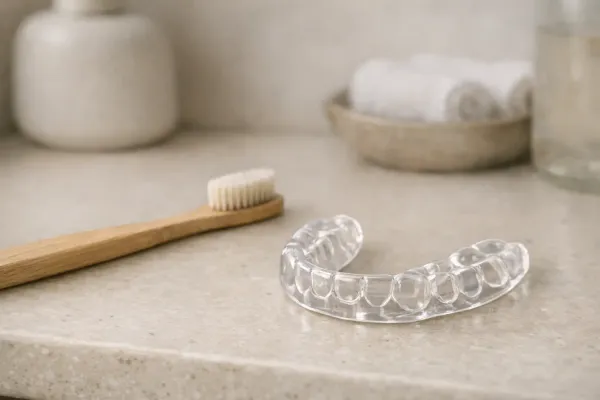
- Thin hard guard vs thick soft guard: a thin, hard acrylic guard adds the least bulk and changes your lip and jaw position the least. Thick soft or boil-and-bite guards tend to prop the mouth open more, and they invite chewing, which is the opposite of what a grinder needs.
Your CPAP machine is a useful referee here. Most machines log leak data. If your leak numbers jump on the nights you wear the guard, that is your answer, and it is worth showing to whoever manages your CPAP.
The part about flat guards and apnea
This is the one real caution. A small 2004 pilot study in the International Journal of Prosthodontics tested an upper occlusal splint (a standard flat night guard) in 10 people with sleep apnea, comparing a night with the splint to a night without. On average there was no statistically significant change in their apnea-hypopnea index, but 5 of the 10 had their index rise by more than 50%, and 4 moved into a worse apnea category on the splint night. Snoring time also went up.
That is ten people on one night, so it is a warning sign, not a verdict. The authors concluded that dentists should ask about snoring and apnea before recommending a splint. The study looked at the splint on its own, not a splint worn together with CPAP. CPAP holds your airway open with air pressure, which may offset some of this, but that has not been studied well enough to say for sure. That is exactly why your sleep doctor should know about the guard: they can check whether your numbers change.
A night guard is not a sleep apnea device
A regular night guard protects teeth from grinding. It does nothing to hold your airway open. The device that does is a mandibular advancement device (MAD), which holds the lower jaw forward. It looks like a guard, but it is a different appliance with a different job, and it should be fitted by a dentist working with your sleep physician.
Some people with OSA use a MAD instead of CPAP, and some use both. The same 2025 Journal of Prosthodontics review lists CPAP alone, CPAP with an occlusal splint, and CPAP with a MAD as options for people who have both conditions, and stresses that every option has limits and the choice depends on the individual.
If CPAP and a guard will not get along
Daybreak oral appliance therapy. Daybreak's treatment is an FDA-cleared, custom-fit mandibular advancement device, the CPAP alternative described above, prescribed through a doctor-directed telehealth process. If you have already been diagnosed with sleep apnea, they let you create a profile and skip their test to find out whether the device is right for you.
Not diagnosed yet, but you grind and snore or wake up wiped out? Their at-home sleep test ($159.95) is a finger sensor you wear for two nights in your own bed.
Know the full cost before you start. Daybreak says most insurance covers the device, but the $995 Treatment Essentials fee is not covered and is paid out of pocket. Do not stop CPAP on your own: any switch should go through your sleep physician.
See Daybreak for diagnosed patients
Affiliate links. If you buy through them we earn a commission, at no extra cost to you. How this works.
There is also a reasonably good side effect to know about. A 2022 study in Chronic Respiratory Disease of 48 adults with OSA found that bruxism episodes dropped significantly with both CPAP and a MAD. That does not mean your grinding will vanish, and it varies a lot from person to person, but some people find they grind less once their apnea is treated. Keep wearing the guard until your dentist says your teeth look quiet.
What to do
- Tell your sleep doctor you wear a night guard. Ask whether they want to check your CPAP data with and without it.
- Tell your dentist you use CPAP. Ask whether your current guard is thin enough and whether a different design makes more sense for you.
- Try a couple of nights and watch the leak data. Also notice if you wake with a dry mouth, which often means air is escaping through it.
- If you use a full-face mask and it keeps leaking with the guard, ask your CPAP supplier about refitting the mask or trying a different size or style.
- If your guard is thick or soft, consider swapping it for a thin hard one. The custom vs over-the-counter comparison covers the trade-offs.
FAQs
Can I wear a mouth guard with a full-face CPAP mask?
Often yes, but it takes more fiddling than with a nasal mask. A bulky guard can push your lips out or hold your mouth open and break the seal. A thin hard guard causes fewer problems. If your leak readings rise on guard nights, talk to your CPAP supplier and your dentist.
Does a night guard make sleep apnea worse?
It can in some people. A small 2004 pilot study found that a flat upper splint made breathing measures worse in 5 of 10 apnea patients, though the average change was not statistically significant. Let your sleep doctor know you wear one.
Can a night guard replace my CPAP?
No. A standard night guard protects teeth and does not keep your airway open. A mandibular advancement device is an oral appliance that can treat some cases of sleep apnea, but it is a different device and should be prescribed with your sleep physician involved.
Will CPAP stop me from grinding my teeth?
It might reduce it. A 2022 study of 48 adults with sleep apnea found bruxism episodes dropped significantly with both CPAP and a mandibular advancement device. The study reported average results, and not everyone will see the same drop, so keep the guard until your dentist sees less wear.
Why does my jaw hurt after wearing a night guard and CPAP?
A guard that is too thick, or a mask strapped tight to fight leaks, can both strain the jaw. Our guide on why your teeth and jaw hurt after wearing a night guard covers the usual causes. Pain that lasts more than a few days is worth a dental visit.