Daytime Mouth Guards: How to Know If You Need One, and Which to Buy
Looking for the appropriate daytime mouth guard for grinding teeth? Check out benefits, top products, and popular concerns about daytime mouthguards here.
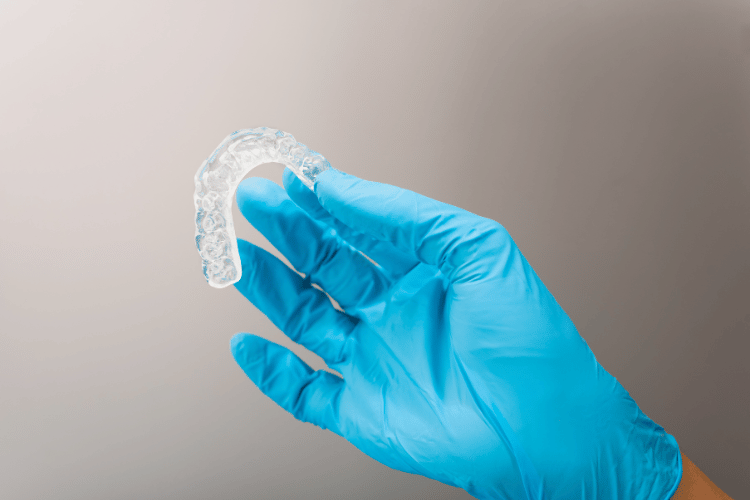
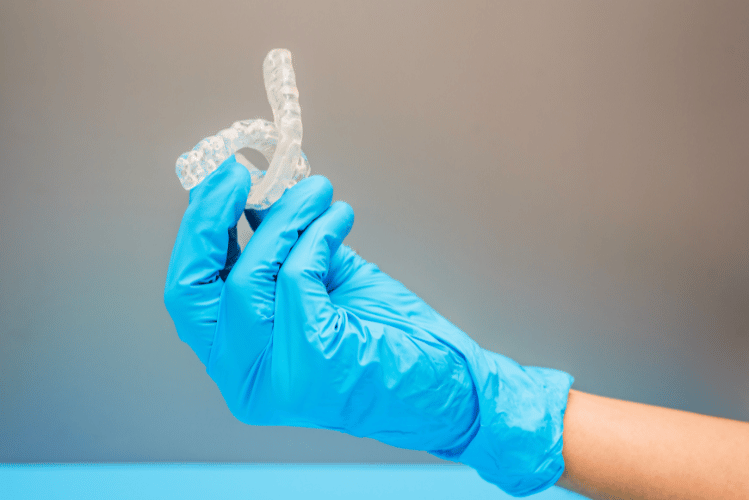
A daytime mouth guard is a thin, low-profile appliance you wear while you are awake, and it exists because awake clenching and sleep grinding are two different problems that happen to damage the same teeth.
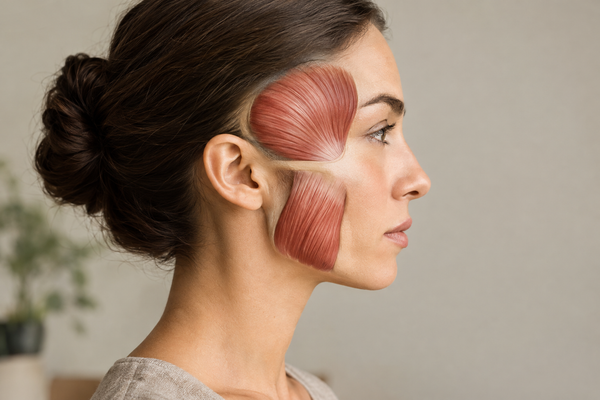
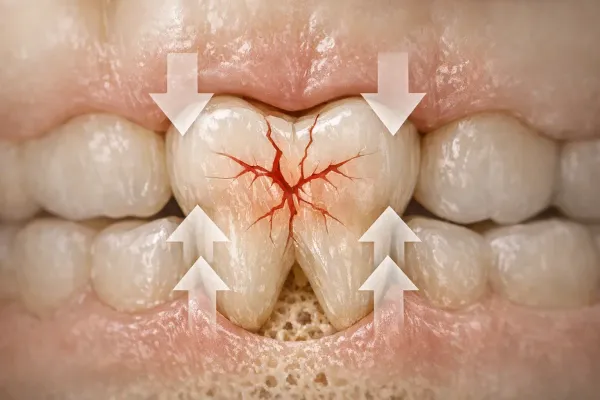
Here is the part almost nobody leads with: most people who clench during the day have no idea they are doing it. Sleep grinding gets diagnosed because a partner hears it or a dentist spots the wear. Awake clenching is silent, and it is mostly a low, sustained squeeze rather than the dramatic side-to-side grinding people picture. You cannot buy the right tool for a problem you have not identified, so let us start there.

How to tell whether you clench during the day
Run this for two days. You do not need an app, just an honest check whenever something prompts you.
- The resting position test. Right now, without adjusting anything, notice where your teeth are. At rest your teeth should not be touching at all. Lips together, teeth slightly apart, tongue resting on the roof of the mouth. If your molars are in contact, that is a clench, and you were not aware of it a second ago.
- The 3pm ache. Sleep grinders wake up sore. Awake clenchers feel worst in the afternoon and evening, because the load has been accumulating all day.
- Scalloped tongue edges. Look in a mirror. Wavy indentations along the sides of your tongue mean it has been pressed against your teeth, which usually travels with clenching.
- A line inside your cheek. A pale horizontal ridge along the inside of the cheek, level with where your teeth meet, is called linea alba. It is caused by suction and pressure.
- Trigger situations. Driving in traffic, concentrating on a screen, lifting something heavy, reading bad news. Clenching is often a bracing response, so it clusters around effort and stress rather than spreading evenly through the day.
Two or more of those, and you are probably clenching while awake. That matters for what you buy next, because the guard you would choose is not the one your dentist hands you for sleeping.
Why a night guard is the wrong tool for daylight
People try this first and give up within a week, then conclude guards do not work for them. The guard was not the problem, the category was.
A night guard is built for an unconscious wearer. It can be 2 to 3mm thick because nobody has to talk through it, nobody sees it, and comfort only has to be good enough not to wake you. Every one of those assumptions breaks in daylight. You cannot hold a meeting with a bulky appliance in your mouth, you produce noticeably more saliva, and you will take it out. The failure is predictable and it is not a discipline problem.
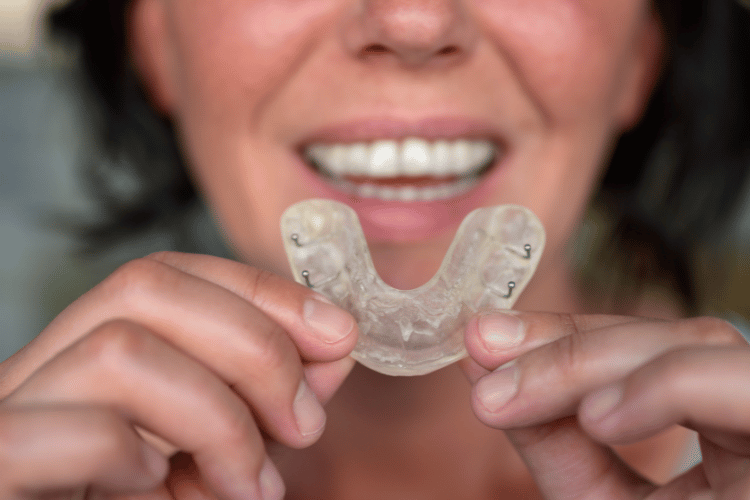
A daytime guard makes the opposite trade. It is thinner, usually around 1 to 1.5mm, often covering fewer teeth, and it accepts slightly less brute protection in exchange for being something you will actually keep in for eight hours.
What to look for
| Feature | What you want | Why |
|---|---|---|
| Thickness | ~1 to 1.5mm | Thick enough to separate the teeth, thin enough to speak clearly |
| Coverage | Front teeth or full arch, depending on severity | Less coverage is more discreet but protects less |
| Material | Hard or dual laminate | Soft material can invite chewing, which is the opposite of the goal |
| Fit | Custom from an impression or scan | A daytime guard that rocks is a daytime guard in your pocket |
| Visibility | Clear, no-show designs | The single biggest predictor of whether you keep wearing it |
The honest caveat on boil-and-bite for daytime use: they are usually made of soft EVA and they are bulky, which is exactly the wrong combination here. They are fine for finding out whether a guard helps at all before spending real money, and poor as the thing you settle on.
The daytime guards worth knowing about
Prices are what the makers list at the time of writing and move around, so check before you buy. Only two of these pay us anything, and we have said which.
| Guard | Price | Thickness | Notes |
|---|---|---|---|
| Sentinel No-Show Day Guard | $180 | Thin, no-show | Purpose-built as a day guard. In-house Florida lab. Impression kit or .STL scan. Affiliate |
| Pro Teeth Guard Ultra Thin | ~$145 to $220 | Thinnest of their four | Their thin option, doubles for daytime. 110% money-back guarantee. Affiliate |
| Chomper Labs | ~$149 to $169 | Soft, hard and hybrid | Ranks first for this search for a reason. Several styles. No relationship with us |
| JS Dental Lab Daytime Guard | ~$125 to $185 | 1.5mm | Long-established lab, sells a guard specifically labelled daytime. No relationship with us |
| Boil-and-bite (ConfiDental, DenTek and similar) | $15 to $30 | Bulky soft EVA | Use to test whether a guard helps at all, not as your answer |
If you want the short version: the custom options are all broadly similar in quality because they are all real labs doing the same job. What separates them is whether the guard was designed for daytime wear or is simply the thin end of a night guard range, how much the fit process asks of you, and what happens if it does not fit.
Our pick
Best purpose-built daytime guard
Sentinel No-Show Day Guard, $180. This is designed as a daytime appliance rather than a thin version of a night guard, which is the distinction that matters. Sentinel have made guards in-house in Florida for over a decade.
They accept a home impression kit or a digital scan (.STL) if your dentist already has one, which skips a step most direct-to-consumer labs make you repeat.
Read the refund terms first. Sentinel deduct $23 from refunds, an exchange ends refund eligibility on that order, and impressions have to go back within six months of purchase. Nothing unusual for a custom-made product, but they are the things people get caught by. Our full Sentinel review goes through the lot.
Affiliate link. If you buy through it we earn a commission, at no extra cost to you. How this works.
The alternative, if you also need a night guard
Pro Teeth Guard Ultra Thin, roughly $180 to $220. Their thin option doubles as a daytime guard, and it comes with a 60-day 110% money-back guarantee, so a failed experiment costs you less than nothing.
Choose this one if you clench both day and night and would rather order two appliances from the same lab off one impression. Choose Sentinel if daytime is your whole problem and you want something built specifically for it.
Affiliate link. If you buy through it we earn a commission, at no extra cost to you. How this works.
What a daytime guard will not fix
This is where we part company with everyone selling one, including the two links above.
A guard is a barrier. It stops your teeth wearing each other down, and for a lot of people it also breaks the habit loop, because the unfamiliar object reminds you that your jaw is clenched. What it does not do is address why you are clenching in the first place, and awake clenching is far more tightly bound to stress, posture and concentration than sleep bruxism is.
The thing that actually reduces awake clenching is awareness training, and it is unglamorous: set a recurring prompt, and each time it fires check whether your teeth are touching and let the jaw drop. Most people are shocked by how often they catch themselves in the first week. Pair that with the guard rather than substituting one for the other.
If your jaw locks, clicks painfully, or is getting worse, that is a dentist visit rather than a purchase. We are not dentists and this is not dental advice.
Frequently asked questions
Can you talk with a daytime mouth guard in?
With a well-fitted thin guard, yes, though most people have a lisp for the first day or two while the tongue adapts. If you still cannot speak clearly after a week, the guard is too thick or covers too much.
Can you eat or drink with one in?
Drink water, yes. Eat, no. Take it out for meals, and rinse it before it goes back in.
Is a daytime guard the same as an ultra thin night guard?
Often it is the same object sold under two names, and that is fine. What matters is thickness and coverage, not the label. A 1mm guard is a 1mm guard whichever section of the site it is listed under.
Do I need a separate guard for day and night?
If you do both, usually yes. A thin daytime guard is not enough material to stand up to heavy nocturnal grinding, and a night guard is too bulky to wear to work. Wearing one appliance for both also doubles the hours on it, so it wears out roughly twice as fast. See how long a night guard should last.
Will insurance cover a daytime guard?
Less often than for a night guard, because it is more likely to be coded as elective. FSA and HSA cards are usually the more reliable route. We break the numbers down in what bruxism treatment actually costs.
How do I clean it?
Same rules as any appliance, and they matter more here because a daytime guard goes in and out repeatedly. Never hot water, never toothpaste, never stored wet in a closed case. Full routine in how to clean your night guard.