Bruxless Review: How the FPS Anti-Bruxism Device Works, and What the Evidence Really Says
Bruxless uses proprioceptive stimulation to relax your jaw, not a guard to shield it. How it works, what the evidence shows, where to buy it and US availability.
Every few years a device turns up promising to fix bruxism at the source instead of just padding your teeth against it. Most of them are night guards with a new logo. Bruxless is genuinely a different idea, and it comes out of a French company with three decades of neurorehabilitation research behind it.
It is also, right now, a wellness product with no published clinical trial and no route to a US purchase. Both of those things can be true at once, and if you are considering spending 699 euros on one, you should know exactly which claims are backed by research and which are backed by a plausible mechanism and some early clinician feedback.
What Bruxless Actually Is
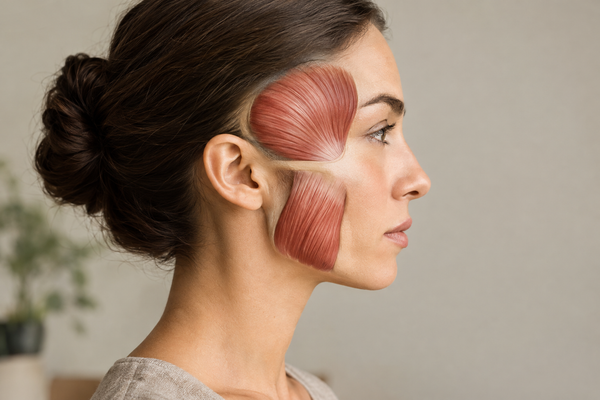
Bruxless is a connected chin strap, which the company calls a helmet, worn at night. Sensors sit against your jaw and monitor the activity of your masseter muscles, the thick muscles at the side of your face that do the heavy work in clenching and grinding. When the device detects a bruxism episode starting, it responds with targeted mechanical vibration.
It runs in three modes: a daytime mode you trigger when you feel your jaw tightening, an on demand mode, and an automatic mode that works through the night without you doing anything. A companion app logs the episodes so you can see whether your grinding is trending up or down over weeks rather than guessing from how sore your jaw feels.
The company behind it is BRUXLESS, a French company founded in 2021. Its sister company, Techno Concept, has been building proprioceptive stimulation equipment for clinical use for over thirty years, which is where the underlying technology comes from.
How It Works: Functional Proprioceptive Stimulation
The mechanism is the interesting part, and it is not what most anti-bruxism gadgets do.
Functional Proprioceptive Stimulation, or FPS, is focal vibration applied to the myotendinous junction, the point where muscle becomes tendon. Vibration at roughly 30 to 100 Hz is an unusually effective stimulus for a specific type of sensory receptor called the muscle spindle Ia afferent. These receptors report muscle stretch to your brain, and they are exquisitely sensitive to exactly this kind of vibration.
Here is the trick. When you vibrate a tendon at the right frequency, the spindle afferents fire as though the muscle were being stretched, even though it is not moving. Your brain receives a stretch signal that does not correspond to reality and generates what researchers call a kinaesthetic illusion, a vivid sensation of movement that is not happening.
Bruxless uses that illusion as a lever. Feed the brain a signal suggesting the jaw muscle is lengthening, and the motor system responds with an unconscious reflex that reduces the contraction. You do not wake up, you do not have to learn anything, and you are not being punished into stopping. The device is essentially having a quiet argument with your motor cortex while you sleep.
How That Differs From Biofeedback
Most electronic bruxism devices are biofeedback devices. They detect grinding and then deliver a stimulus, a sound, a buzz, a small electrical pulse, that is unpleasant enough to interrupt the episode. It works through your conscious or semi conscious awareness, essentially training you out of the habit.
FPS is aiming at a different level of the nervous system. It is not trying to alert you or to make grinding unpleasant. It is trying to trigger a reflex below the level of awareness. In principle that means it should not fragment your sleep the way an alerting stimulus can. In principle. We will come to the evidence.
If you want the fuller picture on the alternative approach, we have covered biofeedback for bruxism and wearable tech for detecting and reducing grinding separately.
What the Evidence Actually Shows
This is where you need to separate two questions that marketing tends to blur together. Is the underlying science real? And has this device been tested?
The science behind FPS is well established
Tendon vibration as a way of manipulating proprioception is not fringe. It has been studied since the early 1980s, and the effect on muscle spindle afferents is documented in microneurography work going back decades. More recent applications include a 2025 pilot study using early FPS in high spinal cord injury, and focal vibration has been shown to temporarily reduce spasticity across several neurological conditions.
Techno Concept's equipment has been used in hospital settings for stroke rehabilitation. So when Bruxless says the technology has thirty years of research behind it, that is fair, with one important caveat: that research is about neuromotor rehabilitation, not about bruxism.
The device itself has no published bruxism trial
We could not find a completed at time of writing (July 2026), published clinical trial of Bruxless for bruxism. Not in the literature, not in trial registries, and not on the company's own site.
What exists instead is a regulatory pathway in progress. The company has described preparing an application to its French notified body for authorization to run initial clinical trials, targeting Class IIa medical device status. Public reporting on the launch quotes a Toulouse dentist, Dr Ines Icard, saying she was pleasantly surprised by results obtained quickly and that patients found it simple and comfortable. That is clinician impression, not trial data, and it should be weighed as such.
This matters for a specific reason. The mechanism is plausible and the physiology is real, but plausible mechanisms fail in clinical testing all the time. Bruxism is also notoriously prone to placebo response and to natural fluctuation, which is exactly why the field insists on controlled trials with polysomnography or at minimum validated EMG measurement.
For contrast, here is what a tested device looks like
Biofeedback devices for bruxism have been through this process. A clinical investigation of one intraoral biofeedback system in 26 adults with confirmed sleep bruxism reported a 60.6 percent reduction in total sleep bruxism duration per hour against baseline, with no adverse events. A randomized controlled trial of a full occlusion biofeedback splint found reductions in bruxing burst duration that persisted after treatment stopped.
Even there, the honest summary is cautious. A systematic review and meta analysis of biofeedback for sleep bruxism rated the quality of evidence as low to moderate, citing imprecision and inconsistency between studies, and noted that evidence of long term effect is lacking.
So the comparison is not tested versus untested in some absolute sense. It is a field where the best evidence is still modest, and Bruxless has not yet entered it.
What This Means If You Are Considering One
A few things worth holding in mind.
- You are an early adopter, not a patient in a treatment pathway. The product is sold as a wellness solution, not as a certified medical device. That is the company's own description on its store.
- The price is real money. At 699 euros it sits well above every over the counter option and in the same range as a custom dentist made guard. Our breakdown of what bruxism treatment actually costs puts that in context.
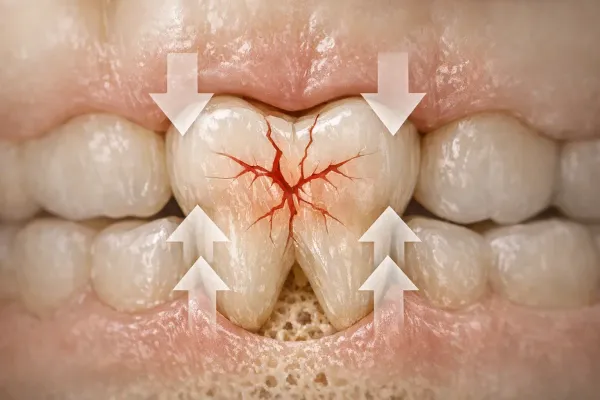
- It does not protect your teeth. This is the point people miss. A guard is a physical barrier between your molars. FPS aims to reduce the muscle activity, which is a better goal if it works, but on any night it does not work, nothing is standing between your teeth. If you already have significant wear, that is a conversation to have with your dentist before replacing a guard with anything.
- Bruxism has causes worth investigating. Devices manage the symptom. Sleep apnea, medications, stress and reflux all drive grinding, and none of them are addressed by a chin strap.
Where Bruxless Is Currently for Sale
Bruxless sells directly through its own website. As of July 2026, the position is:
- Price: 699 euros
- Sales territory: France and European Union
- Status: first deliveries were scheduled for the second quarter of 2026
- Regulatory: marketed as a wellness product. CE medical certification is described as in progress
In short, if you are in the EU you can buy one. If you are outside it, at time of writing you cannot, at least not through the official channel.
Will Bruxless Be Sold in the USA?
Not yet, and there is no announced date.
The honest answer has three parts.
First, the company has said FDA certification is in progress alongside CE medical certification. So US availability is an intention, not a fluke of distribution.
Second, nothing in the company's public materials commits to a US launch date, a US distributor or a US price. Coverage of the launch has consistently described a France first, then Europe, rollout.
Third, and most importantly for timing: the FDA pathway for a device like this is unlikely to be quick. The company has not yet completed the clinical trials it is seeking authorization to run in Europe. A US clearance route would ordinarily want that clinical evidence in hand. If you are waiting for a US launch, the realistic expectation is years rather than months, and it is contingent on trials that have not yet reported.
The Bottom Line
Bruxless is the most mechanistically interesting bruxism device we have looked at in a while. Using proprioceptive illusion to trigger a relaxation reflex is a genuinely clever application of well documented physiology, and the team behind it has real credibility in that physiology from a different field.
But interesting is not the same as proven. There is no published trial showing it reduces bruxism in humans, it is sold as a wellness product rather than a certified medical device, and it does not physically protect your teeth. At 699 euros, in the EU only, that is a bet on a mechanism rather than a purchase of a tested treatment.
If you are in the EU, curious, past the point where a guard alone is helping, and comfortable being early, it is a defensible experiment. If you want the option with the strongest evidence behind it today, that is still a properly fitted guard plus addressing whatever is driving the grinding. And if you are in the US, the decision is made for you for now.
We will update this article when trial results are published or when a US launch is announced.
The properly fitted guard, if that is the route you take
Pro Teeth Guard is a dental lab that has supplied dental offices for over 20 years and sells custom guards direct, at roughly $180 to $220. Home impression kit, 7 to 11 business days to build, free adjustments if the fit is off, and a 60-day 110% money-back guarantee.
It does nothing clever to your nervous system. It protects your teeth, which is the part Bruxless explicitly does not do. That is the whole argument for it while the evidence on the interesting devices is still pending.
Check current Pro Teeth Guard pricing
Affiliate link. If you buy through it we earn a commission, at no extra cost to you. How this works.