Can Stress Cause Bruxism? Unpacking the Connection
Explore how stress contributes to bruxism and ways to mitigate its effects.
Understanding Bruxism: What It Is and Why It Matters
Bruxism is the medical term for repetitive jaw muscle activity, usually in the form of clenching, grinding, or gnashing your teeth. It shows up in two major flavors. Awake bruxism happens while you are conscious, often during periods of intense focus or anxiety. Sleep bruxism sneaks in after lights out and is officially classified as a sleep-related movement disorder, which can also be influenced by sleep disorders like apnea.
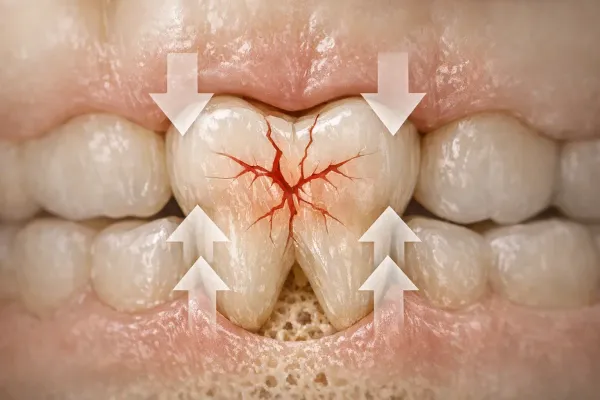
The classic signs are pretty hard to miss once you know them. You might notice flattened or chipped tooth edges, sensitivity to hot and cold, or tiny cracks in enamel. A cracked tooth is not just a painful inconvenience. Untreated, it can expose the inner pulp, setting you up for infection or even tooth loss. A research overview on preventive endodontics by Pryles, Blicher, and Gluskin highlights how microscopic cracks weaken teeth long before they break apart.
Grinding also stresses your jaw joints and the muscles in your face, neck, and shoulders. Over time, that extra tension can ripple into headaches, ear pain, and poor sleep quality. In an animal model, investigators from Thailand used 3D dental scanning to show that stress caused notable tooth wear in rats subjected to forced swimming tests, mirroring patterns seen in human bruxers (Plongniras et al.). The takeaway: what happens in your mouth rarely stays in your mouth.
That ripple even reaches the gums. Repeated pressure inflames periodontal ligaments, nudging gums to recede. A 2025 paper by Morris et al. goes one step further, showing that micro-fractures and reduced saliva flow shift the oral microbiota toward more inflammatory species. Inflammation then pushes stress markers higher, which feeds right back into muscle tension and fresh rounds of grinding.
Left unchecked, bruxism can demand root canals, crowns, or even extractions. Add the accumulating discomfort and you have a quality of life issue, not just a dental footnote. Knowing the root drivers, especially the role of stress, arms you with more than a nightguard. It gives you a strategy.
The Link Between Stress and Bruxism
You already know stress can speed up your heart, tighten your shoulders, and hijack your focus. Now add grinding teeth to that list. Human and animal studies have independently verified that psychological stress, anxiety, and depressive symptoms correlate strongly with bruxism. This connection is also seen in how stress and anxiety lead to nighttime teeth clenching.
In a broad systematic review covering more than two dozen trials, Belenda González, Montero, and Gómez Polo found a consistent uptick in bruxing behaviors among adults with high self-reported stress, clinically diagnosed anxiety, or depression. The odds ratios were especially high in shift workers and college students pulling all-nighters. Stress seems to push you into jaw clenching the same way it can nudge you toward nail-biting or knuckle-cracking.
Hormonal and Neural Pathways: Cortisol and the Limbic System
The biochemical smoking gun is cortisol. A 2024 clinical trial by Kadıoğlu et al. tracked salivary cortisol overnight and found that people with active bruxism kept cortisol levels elevated long after calm sleepers hit their nightly dip. High cortisol sensitizes motor neurons, so even tiny sparks from the brain can fire jaw muscles.
Brain imaging backs that up. Using functional MRI, Uchima Koecklin et al. (2024) showed that the limbic system, your anxiety hub, lights up seconds before jaw-muscle surges during sleep. When emotional circuits refuse to log off, the mandible takes the graveyard shift.
Anxiety also shreds sleep architecture. Micro-arousals you never remember yank you from deep, muscle-relaxing stages into lighter sleep where jaw activity is common. Each arousal is an unplanned rep at the gym for your masseters, and the reps pile up fast.
Animal evidence backs up the human data. The rat study mentioned earlier by Plongniras et al. placed rodents under chronic mild stress protocols. Over a few weeks, the rats developed measurable enamel wear, mirroring the stress intensity curve. While rats are not humans, their molar structures respond similarly to mechanical overload, offering a clear biological thread.
Stress does not act in isolation. Anxiety amplifies the muscle hyperactivity cycle. Depression flattens motivation, which can delay dental visits and compound damage. Individuals juggling high work demands or life transitions often report bruxism flares, reinforcing the mind-mouth feedback loop noted in the review by Belenda González et al.
Bottom line: calming your stress response is not fluffy self-care. It is a frontline defense against grinding your own teeth down to pegs.
Role of Circadian Rhythms in Bruxism
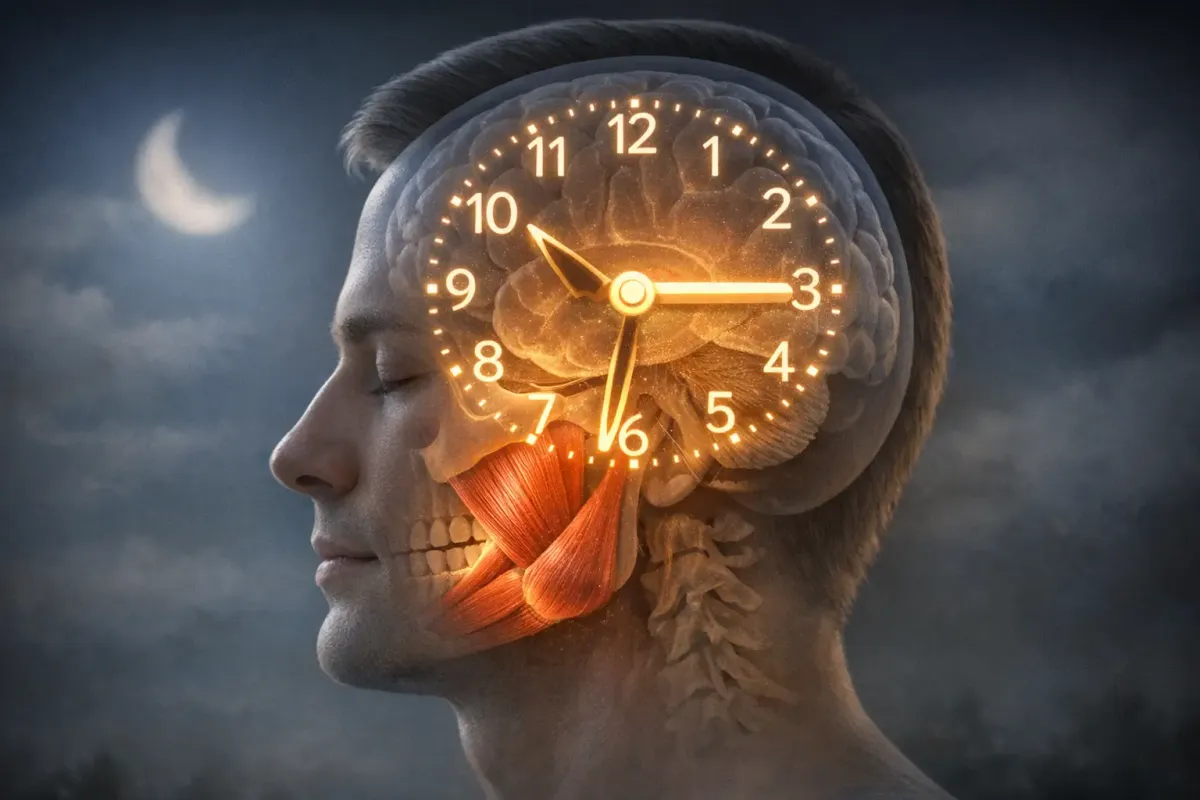
You have an internal clock ticking away in nearly every cell, including the ones in your jaw muscles. These circadian clocks regulate when hormones rise, when muscles relax, and when you drift into deep sleep. Misalign that clock and your body’s nightly repair program can go haywire, jaw included. This can be further complicated by poor sleep hygiene.
A cutting-edge review by Meira E Cruz argues that circadian disruptions, such as jet lag, shift work, or late-night screen time, alter muscle tone and pain perception, creating fertile ground for sleep bruxism. Think of it as your jaw missing the memo about when to power down.
- Hormonal timing. Melatonin usually peaks at night, promoting muscle relaxation. Circadian misalignment drops melatonin levels at precisely the time your jaw should be chilling out, leaving those muscles primed for action.
- Sleep architecture. Deep non-REM sleep stages are naturally calmer. When circadian rhythm is off, you spend less time in deep sleep and more in the lighter stages where bursts of jaw activity are common.
From a clinical standpoint, this means a dentist or sleep specialist should ask about your work schedule and light exposure, not just your caffeine intake. Strategic interventions, light therapy in the morning, limiting blue light at night, and stable sleep routines, can dial your clock back into sync and cut down nocturnal grinding.
Diagnostic devices such as portable electromyography (EMG) patches plus consumer wearables now help track muscle bursts across the sleep-wake cycle, offering concrete feedback on whether a circadian fix is working. Bottom line: if you keep different hours every day, your jaw muscles might be stuck in the wrong time zone.
Bruxism and Temporomandibular Disorders (TMDs)
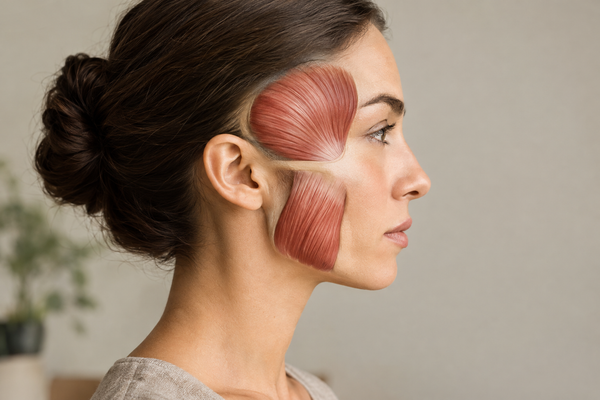
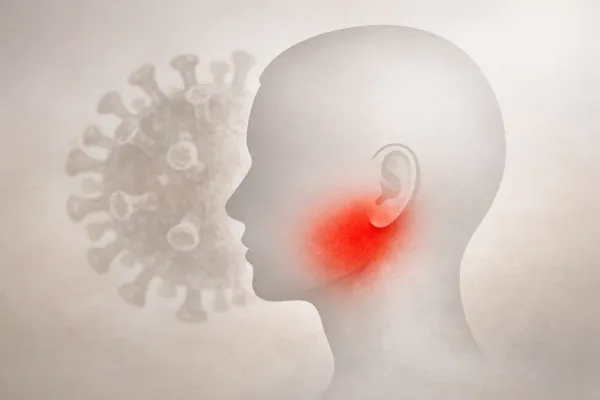
If bruxism is the act, temporomandibular disorders are often the consequence. The temporomandibular joint (TMJ) hinges your jaw to your skull, allowing you to chew, speak, and yawn. Overloading this joint with chronic grinding can inflame its delicate cartilage and ligaments. Symptoms like earaches and jaw discomfort may arise.
A study on combat sport athletes by Bursztyn, Szaryński, and Sikorski noted higher TMJ injury rates in boxers who also reported heavy clenching during sparring. The force levels recorded in EMG tests during bruxism can rival those generated by a punch, only the stress is applied hour after hour.
The causal arrow points in both directions. People with TMD pain often subconsciously brace or clench to guard the sore joint. That guarding becomes a new source of mechanical stress, driving further degeneration. A Mendelian randomization study by Du, Hu, and Niu supports a bidirectional link: genetic variants tied to TMD also increase the odds of bruxism, and vice versa.
- Popping or clicking sounds in the jaw
- Earaches or fullness not explained by ENT issues
- Neck or shoulder pain, especially after waking
- Restricted jaw opening or locking
Since oral, musculoskeletal, and neurological pathways all play a role, interdisciplinary care is key. Dentists, physical therapists, and pain specialists can coordinate splints, muscle release techniques, and cognitive behavioral therapy to break the cycle.
Recognizing and Diagnosing Stress-Related Bruxism
Clenching loves the dark and is easy to miss unless you go looking. Add these red flags to your mental checklist:
- Morning temple headaches or jaw fatigue
- Chipped, flattened, or temperature-sensitive teeth without clear daytime trauma
- Earaches or a stuffy ear feeling with no infection
- Clicking or popping in the TMJ
- Reports from a sleep partner of grinding sounds that could sand wood
Dentists still start with a visual exam, but gadgets now offer hard numbers. The Bruxoff device pairs surface electrodes with a bite-force sensor to log overnight contractions. In a 2023 study by Crăciun et al., the system cleanly separated mild grinders from severe ones. Portable EMG patches do similar work at home.
When pain refuses to explain itself, cone-beam CT scans can map joint spaces for hidden damage, and thin pressure transducers placed between teeth for a single night reveal bite-force peaks. Layer on an anxiety screener like the GAD-7, and you have a data trail that links psychological load to mechanical mayhem.
Preventative Measures and Treatments for Stress-Induced Bruxism
Lifestyle Changes
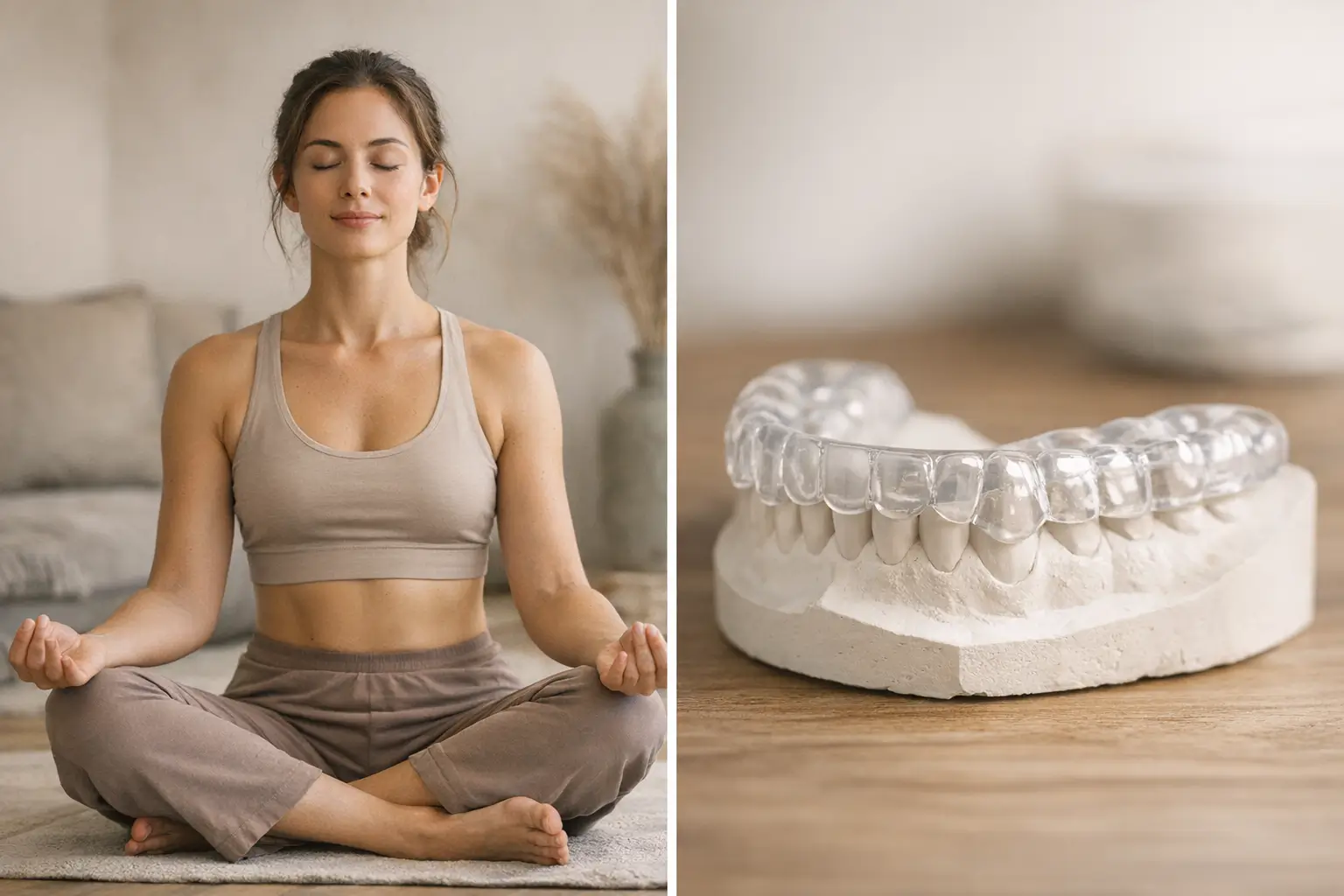
- Stress management. Daily exercise, mindfulness meditation, and breathing drills can lower cortisol. A brisk 30-minute walk or a ten-minute guided meditation is often enough to ease jaw tension. For more tips, explore natural ways to relieve jaw tension.
- Sleep hygiene. Stick to a consistent bedtime, cool your room to 65-67°F, and ditch screens an hour before lights out. This steadies melatonin production and reduces arousal-linked grinding.
- Limit stimulants. Caffeine and nicotine both raise muscle excitability. Cut off coffee after lunch and consider nicotine replacement if you smoke.
- Jaw awareness. Place reminder stickers on your computer or phone that say, “Lips together, teeth apart.” This cue trains you to keep a small gap between your teeth during the day.
- Diet tweaks. Hard nuts and chewy candy force prolonged jawwork. Swap in softer foods during flare-ups to give the TMJ a breather. Consider the role of diet in managing bruxism to understand which foods might help.
- Warm compress ritual. A ten-minute warm pack on the cheeks before bed boosts blood flow and relaxes face muscles, cutting the odds of a midnight clampdown.
Therapies and Medical Interventions
- Occlusal splints. Also called nightguards, these custom acrylic trays shield enamel and spread bite forces. They do not stop bruxism but act as a crash helmet for your teeth. The American Dental Association lists them as first-line protection on its bruxism page.
- Cognitive Behavioral Therapy (CBT). CBT targets the stress-thought patterns driving muscle tension. Randomized trials in the systematic review by Belenda González et al. saw a 40 percent reduction in self-reported grinding frequency.
- Physical therapy. Therapists use myofascial release, posture training, and gentle jaw exercises to relax overworked muscles. Home routines often include warm compresses and controlled mouth opening drills. Explore jaw relaxation techniques to relieve nighttime clenching.
- Pharmacologic options. Short courses of muscle relaxants or low-dose tricyclic antidepressants can dampen nocturnal jaw bursts. Always weigh side effects with your prescriber.
- Botulinum toxin (Botox). Strategic micro-doses weaken the masseter and temporalis muscles just enough to curb forceful clenching. Although the toxin wears off in 3-4 months, repeat injections show promising long-term safety profiles.
- Address inflammation. Mechanical stress upregulates pro-inflammatory pathways in gum tissue, as shown by Zhang, Sougawa, and Mao. Anti-inflammatory rinses or topical NSAIDs may cut local soreness, making it easier to relax the jaw.
- Biofeedback devices. Daytime jaw sensors that beep when muscles tighten train you to release tension on the spot, a method validated in the 2023 monitoring work by Crăciun et al.
- Orthodontic or occlusal adjustments. Fixing bite misalignments, replacing cracked fillings, or smoothing high crowns removes mechanical triggers that keep the jaw on edge.
Pick the combo that fits your stress profile, dental status, and budget. The goal is not perfection but progress, each millimeter of enamel you save is future dental work you avoid.
Pediatric Bruxism: Early Diagnosis and Prevention
Kids grind too, and the stakes are high. Baby teeth are softer than permanent teeth, so wear tracks can form quickly. More importantly, childhood bruxism often predicts adult bruxism if left unaddressed.
A narrative review by Al-Jewair, Khalid, and Koch estimates that 14-20 percent of school-age children show signs of sleep bruxism. Most outgrow it, but those who carry it into adolescence face higher odds of TMD, headaches, and malocclusion.
Risk factors overlap with adults: stress from school, screen-time related circadian disruption, and airway issues like enlarged tonsils. A meta-analysis on harmful oral habits found pacifier use beyond age three and thumb-sucking both raise the bruxism risk profile (Gyra, Kumar, and Janakiram).
What parents can do:
- Maintain a calming bedtime routine with dim lights and reading instead of video games.
- Schedule dental visits every six months for early enamel wear checks.
- Consider myofunctional therapy if a child breathes through the mouth at night.
- Teach relaxation: simple belly-breathing or gentle jaw massages before bed.
- Use soft silicone nightguards only if recommended by a pediatric dentist, since growth plates are still active.
Early action not only protects tiny teeth but also sets lifelong stress-coping habits, cutting the adult bruxism pipeline at its source.
Conclusion: Managing Stress to Control Bruxism

Stress may start in the mind, but it often ends in the mouth. The evidence paints a clear connection between psychological load and the grinding, clenching, and cracking we call bruxism. By taming stress, syncing your body clock, and using targeted therapies, you give your jaw a fighting chance to rest. Your teeth, joints, and morning mood will thank you.