
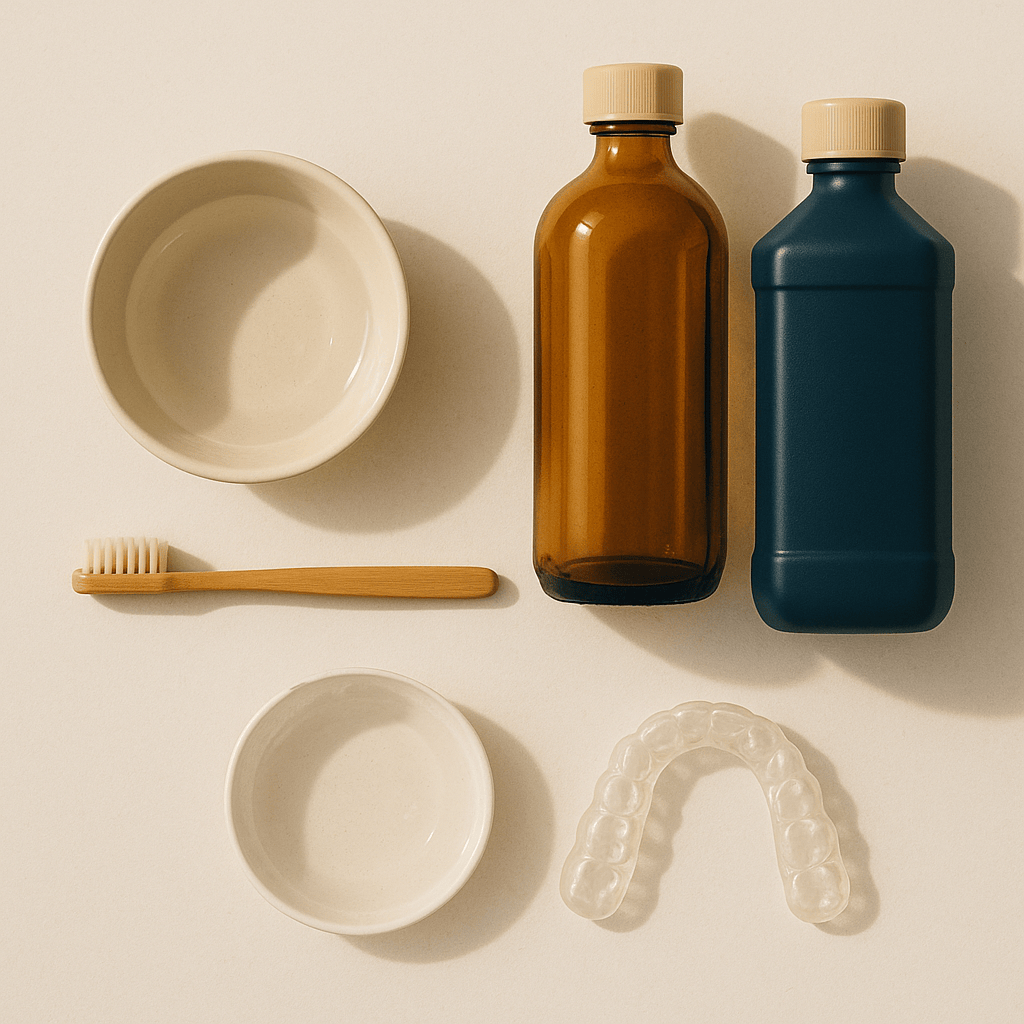
Waking up with jaw soreness or ear pain from teeth clenching isn’t just unpleasant—it’s a sign that your night guard is hard at work protecting your smile. But even the best night guard can only do its job if it’s kept clean and bacteria-free. In this post, we’ll focus on one of the cheapest, simplest, and most effective methods: cleaning your night guard with vinegar. We’ll also examine why regular cleaning matters, other cleaning strategies, and step-by-step instructions for the vinegar method, so you can keep your appliance—and your mouth—healthy.
Why You Need to Clean Your Night Guard
Night guards are preventative tools recommended for those struggling with bruxism (teeth grinding and jaw clenching). Bruxism can cause headaches, jaw pain, and even ear pain in severe cases—sometimes making you wonder, can bruxism cause ear pain? The answer, unfortunately, is yes. Chronic jaw tension can refer pain to the ears or even cause TMJ issues, linking unaddressed bruxism to a cycle of discomfort.
Even if you’re seeing relief from these symptoms thanks to your guard, a dirty night guard can introduce new problems. Bacteria, plaque, and debris build up nightly, creating a breeding ground for odor, stains, and sometimes even oral infections. A poorly maintained appliance might also trigger unpleasant tastes, bad breath, or gum irritation—undoing some of the benefits you wear it for.
The Case for Daily and Deep Cleaning
Cleaning your guard regularly (ideally, a quick rinse and brush each morning, with a weekly “deep clean”) will help you:
- Prevent bacteria, fungus, and plaque buildup
- Reduce stains and odors
- Prolong the lifespan of your night guard
- Protect your oral and overall health
Other Ways to Clean a Night Guard (and What to Avoid)
Before we dive into the vinegar method, it’s helpful to know what else is out there—and what to avoid.
Safe Cleaning Options

- Hydrogen Peroxide: An easy household disinfectant for soaking night guards.
- Baking Soda Paste: Gently removes surface stains and neutralizes odors.
- Denture or Retainer Tablets: Effervescent cleansers you can buy at most pharmacies.
- Mild, Alcohol-Free Soap: With a soft toothbrush, this can remove everyday grime.
- Professional Night Guard Cleaners: Formulated foams or sprays designed for oral appliances.
What to Avoid
- Toothpaste: Too abrasive—may scratch and damage soft plastic, creating more places for germs to hide.
- Boiling Water/Dishwashers: Excess heat can warp your guard, compromising its fit and effectiveness.
- Harsh Chemicals (Bleach, Alcohol): Can damage materials or leave harmful residues.
Vinegar stands out as a cheap, accessible, and safe household disinfectant, making it a top pick for a weekly deep cleaning.
How to Clean a Night Guard with Vinegar: Step-by-Step
White vinegar is made of about 5% acetic acid, which has natural disinfectant properties strong enough to break down buildup and reduce bacteria—but gentle enough for most appliance materials. Here’s how you can make the most of this simple method:
- Gather Your Supplies:
- Distilled white vinegar (avoid apple cider vinegar or flavored types)
- Small clean glass or bowl
- Warm water
- Soft-bristled toothbrush (dedicated for night guard use)
- Optional: Hydrogen peroxide for extra disinfection (see tip below)
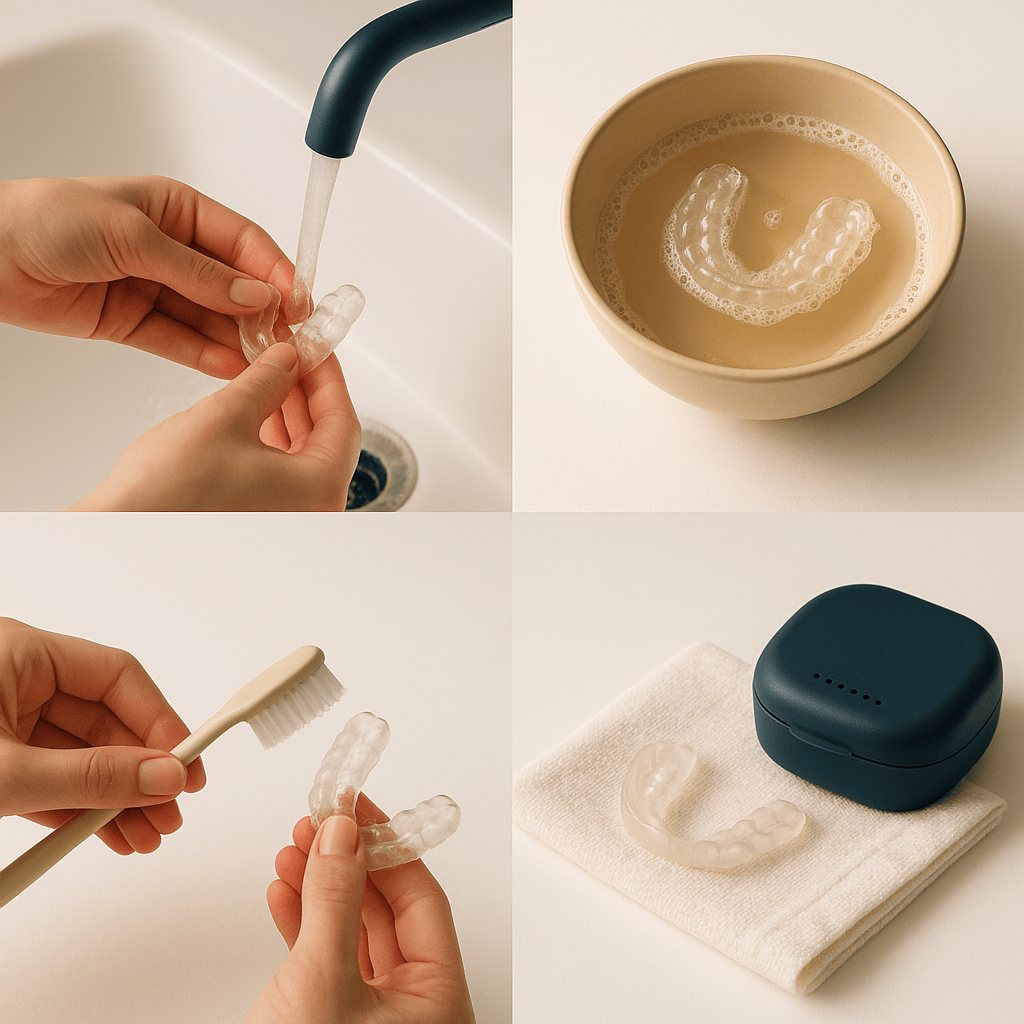
Rinse Your Night Guard:
When you remove your guard in the morning, rinse it under lukewarm water to remove saliva and loose debris.
Prepare the Vinegar Solution:
Mix equal parts distilled white vinegar and water in your bowl—just enough to fully submerge the night guard.
Soak:
Place your night guard in the vinegar solution. Let it soak for 20–30 minutes. This will help break down plaque, tartar, and kill a significant amount of bacteria.
Brush Gently:
After soaking, use your soft-bristled toothbrush to carefully scrub the night guard, especially in crevices or textured areas.
Rinse Thoroughly:
Rinse the guard under running lukewarm water for at least one minute to remove vinegar residue and dislodged debris.
Optional: Hydrogen Peroxide Rinse
For added disinfection, soak the night guard in 3% hydrogen peroxide for another 10–15 minutes after the vinegar. (This step is backed by many dentists but always check with yours if unsure.)
Dry Completely:
Lay your guard on a clean, dry surface and allow it to air dry fully before storing it in a ventilated case. Don’t store your appliance wet, as this can promote mold or odor.
Tips for Best Results
- Don’t over-soak—excessive time in vinegar (over 1 hour) can weaken some plastic types.
- Clean your storage case weekly (mild soap and water), so you’re not returning your fresh guard to a breeding ground for germs.
- Replace your guard promptly if it becomes cracked, discolored, or develops persistent odors after thorough cleaning.
The Big Picture: Night Guards, Hygiene, and Your Oral Health
A clean night guard is a key component in your fight against bruxism and its related issues—from jaw pain and TMJ symptoms to concerns like jaw pain due to wisdom teeth. While cleaning your night guard won’t cure bruxism (and we’re actively working toward that goal!), it does prevent additional sources of irritation, bad breath, and the risk of infections.
If you’re considering new solutions like mouth guards, oral exercises, or even jaw botox for teeth grinding, remember they all depend on careful maintenance.
Conclusion: Simple Steps, Big Benefits
Regular vinegar cleaning is one of the easiest, most affordable, and most effective ways to keep your night guard—and your mouth—in optimal shape. Coupled with daily rinsing and brushing, it will help your appliance last longer and serve you better as you work toward resolving bruxism for good.
Have more questions about bruxism, night guard options, or how to stop waking up with a sore jaw or ear pain from jaw clenching? Explore our library for evidence-based answers or reach out—our mission is to provide the clarity and guidance you need while we pursue a cure.
 Grind My Teeth
Leave a comment