Does Teeth Grinding Change Your Face Shape? Before & After
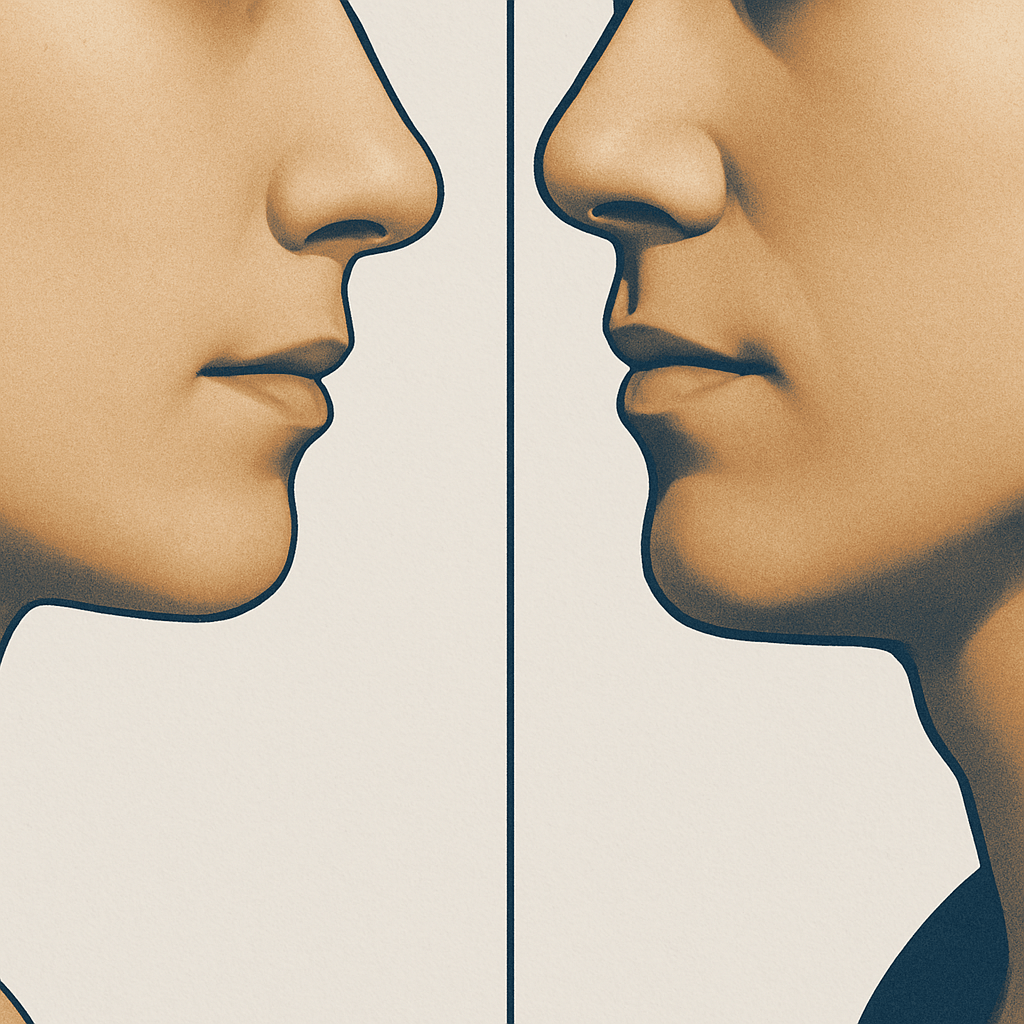
If you've been grinding your teeth for years and feel like your face looks different, you're not imagining things. Bruxism can genuinely change your face shape over time. The jaw can appear wider, the lower face can look shorter, and some people develop noticeable asymmetry. These changes don't happen overnight, but they do happen.
Here's the science behind how bruxism changes your face, what "before and after" actually looks like, and what you can do about it.
How Bruxism Changes Your Face: The Main Mechanism
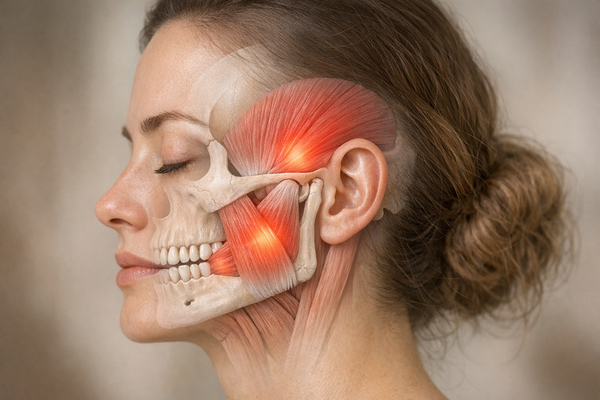
The primary way teeth grinding changes your face shape is through masseter hypertrophy. The masseter is the thick muscle on each side of your jaw responsible for chewing and clenching. It's one of the strongest muscles in the human body relative to its size. When you grind or clench chronically, you're essentially giving this muscle an involuntary workout, sometimes for hours every night.
A 2019 study published in the Journal of Oral Rehabilitation found that individuals with sleep bruxism had significantly larger masseter muscle cross-sectional areas compared to controls. The effect is the same as what happens to any muscle under repeated load: it grows. The clinical term is hypertrophy, and in the masseter, it produces a visibly wider, more square jawline.
This is why so many people searching for answers about what causes teeth grinding eventually land on cosmetic concerns. The functional problem creates a visible one.
Why the Masseter Responds So Dramatically
The masseter is built for force production. During normal chewing, it generates around 70 pounds of force. During bruxism episodes, that number can exceed 250 pounds. Research from Nishigawa et al. (2001) measured nocturnal bruxism forces and found peak clenching loads that far surpassed anything produced during normal eating.
Put differently, grinding your teeth at night can subject your jaw muscles to loads three to four times higher than regular use. Over months and years, the muscle adapts the only way it knows how: it gets bigger. And because the masseter sits right at the angle of the jaw, that growth shows up as a wider, blockier face.
Bruxism Face Shape Changes: What People Actually Notice
The "before and after" of bruxism-related face changes is rarely dramatic in a single photo. It's more of a slow drift that people pick up on over time. Here's what chronic grinders commonly report.
A Wider, More Square Jawline
This is the most common change. The enlarged masseters create bulk at the jaw angles, turning an oval or tapered face shape into something more rectangular. People often describe it as their face looking "heavier" or more masculine. In clinical settings, bilateral masseter hypertrophy is one of the first things dentists and oral surgeons look for when assessing long-term bruxism patients.
A Shorter Lower Face
This one is less obvious but just as real. Chronic grinding wears down tooth enamel, and over years, teeth can lose significant vertical height. When your teeth get shorter, your bite closes further than it should, which compresses the lower third of your face. The result is a proportionally shorter distance between your nose and chin. If you've noticed your chin looks like it's "moving up" or your lips look thinner when your mouth is closed, worn-down teeth from grinding may be the reason.
A study in the Journal of Prosthetic Dentistry demonstrated that patients with severe attrition (tooth wear) showed measurable reductions in lower facial height, which contributed to an aged appearance regardless of the patient's actual age.
Facial Asymmetry
Not everyone grinds evenly on both sides. If you tend to clench or grind more on one side, the masseter on that side can become noticeably larger than the other. This creates facial asymmetry, where one side of the jaw appears fuller or more angular. Asymmetric grinding patterns are common in people who also have a dominant chewing side or who have had dental work (crowns, missing teeth) that shifts the bite to one side.
Research published in Cranio: The Journal of Craniomandibular Practice has linked unilateral bruxism habits to measurable differences in masseter thickness between the left and right sides.
Changes Around the Temples and Cheeks
The masseter isn't the only muscle involved in clenching. The temporalis muscle, which fans across the side of your head above your ear, also hypertrophies in chronic bruxers. This can create a fuller appearance at the temples. Some people also notice more prominent cheekbones or a "puffier" midface from the general increase in muscle bulk across the jaw and chewing complex.
Bone Remodeling: The Deeper Structural Change
Muscle hypertrophy gets most of the attention, but there's a second mechanism at work that's harder to reverse: bone remodeling.
Wolff's Law states that bone adapts to the loads placed on it. When the masseter exerts chronic excessive force on the mandible (lower jaw), the bone at the attachment points can thicken and remodel over time. This means the jaw itself, not just the muscle over it, can become structurally wider and more prominent.
A 2014 study in Archives of Oral Biology found that patients with long-standing bruxism showed increased mandibular cortical bone density and thickness compared to non-bruxers. This bony change is slower to develop than muscle hypertrophy, but it's also slower to reverse, if it reverses at all.
This is one reason why people who have been grinding for decades may find that their face shape doesn't fully return to baseline even after treatment. The muscle can shrink, but the bone may retain some of its adapted shape.
Does Clenching Your Jaw Make It Bigger? Daytime vs. Nighttime
Yes. And it doesn't matter whether the clenching happens during the day or at night. Daytime clenching (awake bruxism) and nighttime grinding (sleep bruxism) both load the masseter enough to cause hypertrophy. Some research suggests that awake bruxism involves more sustained isometric clenching, while sleep bruxism involves more rhythmic grinding, but both produce the forces needed to enlarge the muscle.
People who take stimulant medications like Adderall often experience intensified daytime clenching, which can accelerate these facial changes. Stress-related daytime clenching is equally common and equally capable of producing masseter hypertrophy over time.
Can You Reverse Bruxism Face Changes?
The short answer: partially, and it depends on how long the grinding has been going on.
Masseter Hypertrophy Is Reversible
If you stop the chronic overloading, the masseter will gradually atrophy (shrink) back toward its normal size. This is the same principle as any muscle. Stop training it and it gets smaller. The challenge is that most people can't simply "stop" grinding, especially if it happens during sleep. A night guard can reduce grinding forces and help the muscle gradually downsize, though it doesn't eliminate clenching entirely.
Botox for Masseter Reduction
The fastest and most effective way to reverse masseter hypertrophy is masseter Botox. Botulinum toxin injections partially paralyze the masseter muscle, reducing its ability to contract forcefully. Over the following weeks, the muscle atrophies from disuse, producing a slimmer jawline.
A systematic review in Toxins (2020) confirmed that botulinum toxin injections significantly reduced masseter muscle thickness and improved facial contour in patients with masseter hypertrophy. Most patients see visible slimming within four to six weeks, with results lasting three to six months per treatment cycle.
Repeated treatments tend to produce longer-lasting results because the muscle progressively atrophies with each cycle. Some patients eventually space treatments out to once or twice a year.
Bone Changes Are Harder to Reverse
Bone remodeling from years of chronic bruxism doesn't fully reverse on its own. While bone does respond to reduced loading over time (again, Wolff's Law works in both directions), the process is slow and may not return the jaw to its original dimensions. For patients with significant bony enlargement, surgical options like mandibular angle reduction exist but are invasive and rarely necessary for bruxism-related changes alone.
Tooth Wear Is Not Reversible
Enamel doesn't grow back. If grinding has shortened your teeth and compressed your lower facial height, the only way to restore those proportions is through dental work: crowns, veneers, or full-mouth rehabilitation to rebuild the lost tooth structure. This can meaningfully restore lower face height and improve facial proportions, but it requires significant dental investment.
The Psychological Side of Bruxism Face Changes
Cosmetic concerns about bruxism are legitimate and more common than most dental professionals acknowledge. Research in the Journal of Oral and Facial Pain and Headache has found that patients with visible bruxism-related facial changes report higher levels of body image dissatisfaction and social anxiety related to their appearance.
Women in particular tend to seek treatment for masseter hypertrophy because a wider, more angular jaw is often perceived as less feminine. Men sometimes notice changes but are less likely to seek cosmetic treatment unless the asymmetry is pronounced.
If your face shape is bothering you and you know you grind, it's worth bringing up with your dentist or a specialist. The cosmetic concerns are valid, and they often overlap with functional problems (TMJ pain, tooth damage, headaches) that also need attention.
What to Do If You Think Bruxism Is Changing Your Face
If you suspect your face shape has changed from grinding or clenching, here's a practical path forward.
- Confirm the bruxism. See a dentist who can check for wear patterns, tooth damage, and masseter enlargement. Many people grind without realizing it, especially during sleep.
- Protect your teeth now. A custom night guard won't reverse existing damage, but it reduces the forces that drive continued muscle growth and tooth wear. It's the minimum baseline treatment.
- Address the root cause. Stress management, sleep hygiene, and medication review (if you're on stimulants or SSRIs) can all reduce bruxism severity. Treating the cause is more sustainable than managing the symptoms.
- Consider masseter Botox. If cosmetic changes are a primary concern, Botox is the most effective intervention for slimming an enlarged jaw. It also reduces grinding force, providing functional and cosmetic benefits simultaneously.
- Evaluate dental restoration. If tooth wear has shortened your lower face, talk to a prosthodontist about rebuilding vertical dimension with crowns or overlays.
The Bottom Line
Bruxism can and does change your face shape. The most common change is a wider, more square jaw from masseter hypertrophy, but tooth wear, bone remodeling, and asymmetric grinding patterns all contribute to how your face looks over time. The good news is that the most visible change (muscle enlargement) is the most reversible, either by stopping the grinding habit or through targeted Botox treatments. The less good news is that bone remodeling and tooth wear are harder to undo and may require more involved interventions.
The earlier you address bruxism, the less your face will change and the easier those changes will be to reverse. If you're already noticing differences in the mirror, that's your signal to take action.