

If you’ve ever heard your child grinding their teeth at night, you’re not alone—and you’re not imagining it. Bruxism in children is surprisingly common, especially during certain stages of development. While adult bruxism often calls for a night guard, parents often wonder: can children wear night guards safely?
The short answer: yes, but only in specific cases and with the right type of guard. Not every child who grinds needs treatment, but for some, a custom pediatric night guard can offer serious relief and protection.
In this article, we’ll cover when it’s appropriate for children to wear a night guard, what signs to look for, what options exist, and why timing matters so much during growth and development.

Why Do Children Grind Their Teeth at Night?
To understand when a child might need a night guard, it helps to know why kids grind their teeth in the first place. The causes of pediatric bruxism can be quite different from those in adults.
Common reasons children grind their teeth:
- Dental development — Teeth coming in or falling out can trigger grinding
- Misaligned bite (malocclusion)
- Stress or anxiety — especially during big life changes
- Sleep disorders like sleep apnea
- Hyperactivity or neurological conditions
- Response to pain — such as an earache or teething
- Reaction to certain medications
In many cases, the grinding is temporary and resolves on its own. But when symptoms persist or cause damage, it may be time to explore treatment options—including a night guard.
How Common Is Teeth Grinding in Kids?
According to the American Academy of Sleep Medicine, as many as 30% of children grind their teeth at some point—most commonly between the ages of 3 and 10.
The behavior often peaks when:
- The baby teeth are fully in
- Children begin losing their primary teeth
- They’re experiencing emotional changes (like starting school)
The good news? Most children grow out of it, especially once permanent teeth are in and their bite stabilizes.
Is It Safe for Children to Wear a Night Guard?
Yes—but there are important caveats.
Unlike adults, children’s mouths are still growing and changing. A guard that fits today may be outdated in a few months. That’s why off-the-shelf or adult-sized night guards are never appropriate for kids.
Key considerations:
- A night guard must be custom-made for a child’s mouth
- It should accommodate growth and tooth movement
- It must not impede speech or breathing
- Parents should monitor the fit over time
For some kids, particularly those with frequent pain, dental damage, or underlying issues like sleep apnea, a pediatric night guard prescribed by a dentist can make a big difference.
Signs Your Child Might Need a Night Guard
Not every child who grinds their teeth needs treatment. But if you’re seeing certain symptoms, it’s worth bringing up with your child’s dentist.
Signs to watch for:
- Grinding sounds during sleep
- Complaints of jaw soreness or tiredness in the morning
- Tooth wear, chips, or flattened surfaces
- Increased tooth sensitivity
- Frequent morning headaches
- Disturbed sleep or waking up tired
Your child may not be able to articulate these symptoms, especially if they’re very young—so listen for sounds, and look for signs like chewing behavior during the day or excessive wear on baby teeth.
What Kind of Night Guard Is Best for Children?
Children who do need a guard should always use one that’s:
✅ Custom-fit by a dentist
✅ Designed for young, developing mouths
✅ Checked regularly for fit and function
🔹 Best option:
Custom pediatric dental night guard
- Made from a mold of your child’s teeth
- Usually soft or dual-laminate material
- Designed to fit comfortably and grow with the child for a period

🔸 Avoid:
- Boil-and-bite guards made for adults
- One-size-fits-all solutions sold online
- Any device not recommended by a dentist
Why? Because ill-fitting guards can do more harm than good—causing irritation, interfering with tooth development, or even creating breathing issues.
Are There Alternatives to Night Guards for Kids?
In many cases, dentists recommend watchful waiting or try non-invasive alternatives before turning to a night guard.
Alternatives may include:
- Stress reduction techniques (journaling, drawing, bedtime routines)
- Addressing sleep apnea or airway obstructions
- Behavioral therapy for anxiety or ADHD
- Orofacial myofunctional therapy to retrain oral habits
- Bite adjustments if misalignment is severe
If your child’s bruxism is tied to stress, focusing on calming routines and open conversations about their feelings can go a long way.
At What Age Can a Child Start Wearing a Night Guard?
There’s no hard rule—but most pediatric dentists avoid prescribing night guards for kids under age 6, unless there’s:
- Clear dental damage
- Chronic jaw pain
- A diagnosed sleep disorder
For children ages 6–12, a night guard may be appropriate if symptoms are moderate to severe and other strategies haven’t worked.
For teens with permanent teeth in place, a guard may look more like an adult appliance—but it still needs to be custom-fitted.
What If My Child Has Braces or Orthodontic Appliances?
If your child is in orthodontic treatment, wearing a night guard can be tricky.
- A traditional guard might interfere with tooth movement
- Some orthodontists recommend temporary guards worn over braces in specific cases
- Invisalign trays can sometimes double as light protection
Always consult both your dentist and orthodontist before introducing any appliance while braces or spacers are in place.
How to Talk to Your Child About Wearing a Night Guard
Kids may be resistant to wearing something in their mouth at night—especially if they associate it with discomfort or “being different.” Here are a few tips to make the transition easier:
- Let them choose the case color or design
- Explain the guard in kid-friendly terms (“This helps your teeth sleep too”)
- Praise their effort in the morning
- Let them test it out for short periods before full overnight wear
Some parents also find success with a reward chart or positive reinforcement during the first week of use.
When to See a Dentist
You should schedule a dental visit if:
- Grinding has been going on for more than a few months
- Your child complains of pain or sensitivity
- You notice visible damage to their teeth
- Your child has trouble sleeping or breathing at night
- You’re concerned about how grinding might affect their development
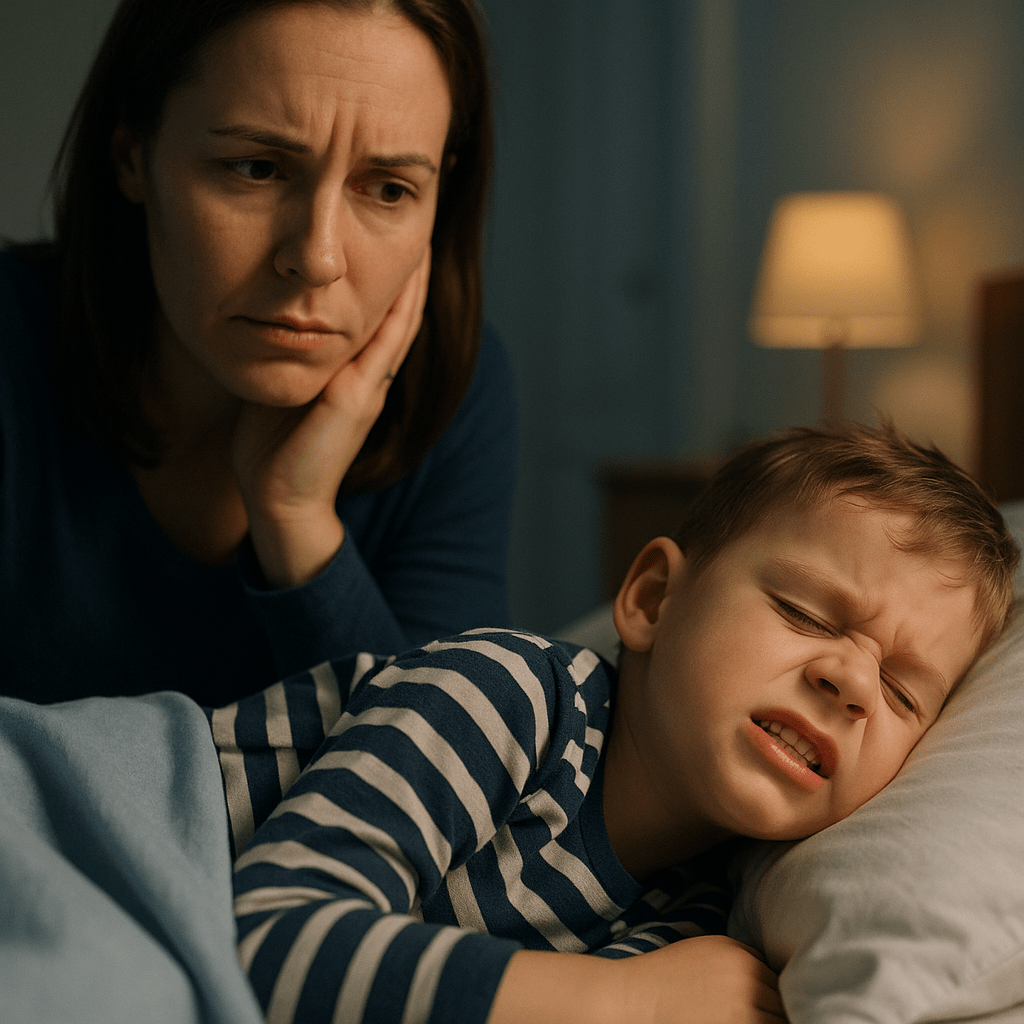
A pediatric dentist can evaluate whether a guard is needed—or suggest alternatives tailored to your child’s age and needs.
Final Thoughts: Can Kids Safely Wear Night Guards?
Yes—but only with guidance from a dentist. Many kids will grind their teeth at some point during childhood, and most will grow out of it without intervention. But for children experiencing pain, disrupted sleep, or tooth damage, a well-fitted night guard can offer protection and relief.
If you’re hearing grinding sounds at night or your child is waking up with unexplained symptoms, don’t panic. Just bring it up at their next dental checkup—and remember that with the right guidance, bruxism in children is manageable and often temporary.
 Grind My Teeth
Leave a comment