Innovative Mouth Guards: Exploring the Latest Designs for Bruxism Relief
Discover cutting-edge mouth guard designs for effective bruxism relief.
You probably landed here because you're tired of your teeth playing rock tumbler while you sleep. Whether it's loud enough to wake the dog or your dentist noticed cracks in your crowns, you're seeking scientifically backed answers, not sales hype. Good news: research is unveiling clever mouth guard designs that can quiet the grind and even track your jaw's activity overnight. This article guides you through the evidence, gadgets, and materials so you can choose a device that truly helps.
We'll rely on peer-reviewed studies, reference respected dental organizations, and sprinkle in a dash of healthy skepticism. No fluff—just the facts you need, served with a side of irreverence.
Understanding Bruxism and Its Impact on Dental Health
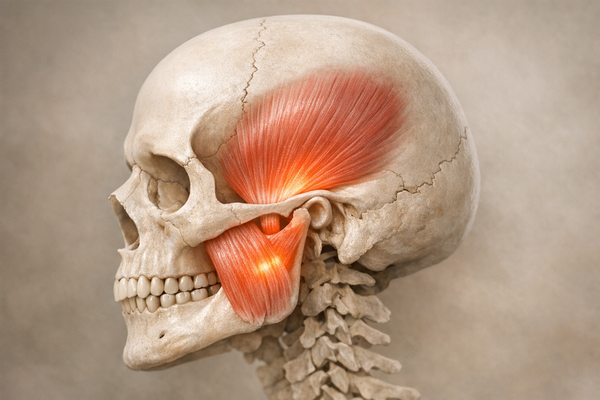
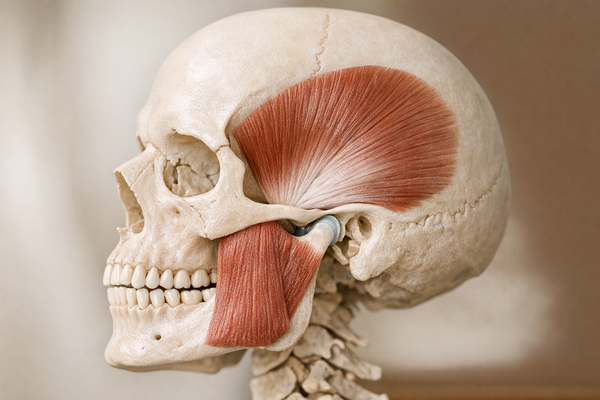
First, a quick primer. Bruxism is a fancy term for grinding or clenching your teeth. You can do it while awake, but most people worry about the sleep version. Researchers still debate the exact triggers, but common culprits include chronic stress, misaligned bites, some medications, and certain sleep disorders. Explore more about the causes of teeth grinding and how they might affect you.
Layer in lifestyle factors like triple espressos after 3 p.m., energy drinks at the gym, or that "one last" glass of cabernet, and your jaw's excitatory muscles stay revved long after lights-out. Hormonal shifts, particularly during pregnancy or menopause, can also increase nocturnal muscle activity. The bottom line: the list of triggers is longer than most people assume, which is why a single cure rarely exists.
Why should you care? The forces generated during a grinding episode can reach up to 250 pounds per square inch—roughly the bite force of a bulldog. Over time, that pressure chips enamel, flattens cusps, loosens fillings, and even fractures implants. A study tracking zirconia crowns, Priyanka Gubrellay et al. 2025, found that bruxers were twice as likely to experience premature crown failure compared to non-grinders. If you've spent serious cash on restorative work, bruxism puts your investment at risk.
The problem isn't confined to the mouth. A 2025 systematic review by Eduardo Machado and colleagues confirmed a significant link between chronic insomnia and sleep bruxism. Poor sleep quality leads to more grinding, which worsens jaw pain and further disrupts sleep. It's a vicious cycle that leaves you tired and your teeth traumatized. Learn more about surprising causes of teeth grinding during sleep and how they can impact your health.
Signs that bruxism is at play include:
- Flattened chewing surfaces or chipped edges
- Morning headaches or tight jaw muscles
- Sensitivity to hot, cold, or sweets due to enamel loss
- Tiny vertical cracks in front teeth
- Loose or broken dental restorations
A quick at-home check: rest the tip of your tongue between your front teeth throughout the day. If you frequently find it squashed, you're likely a daytime clencher too. The habit rarely stops when you do. For more insights on this condition, check out stress and anxiety triggers of jaw clenching.
You might think a cracked filling is just cosmetic. In reality, repeated microfractures can reach the root, setting the stage for pulp inflammation and possible root canal therapy. That brings us to mouth guards, the frontline defense most dentists recommend for nocturnal grinders. If you're curious about the best over-the-counter night guards, you'll find some top picks for value and comfort.
The Evolution of Mouth Guard Technology
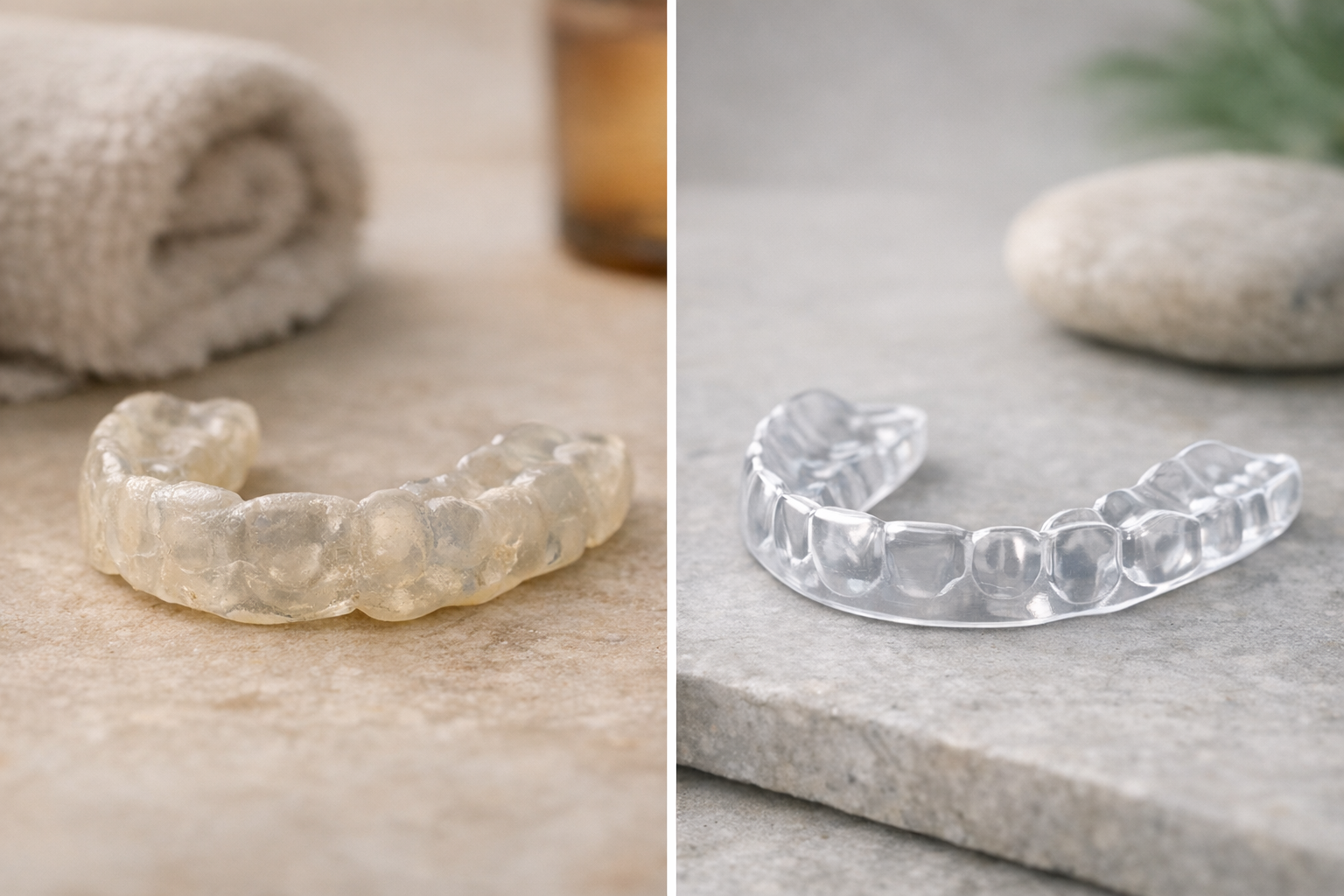
Traditional night guards were just heat-softened plastic you bit into at home. They were cheap but bulky, smelled like a kiddie pool, and offered questionable protection. Custom guards made by dental labs fit better but required messy dental impressions and weeks of turnaround time.
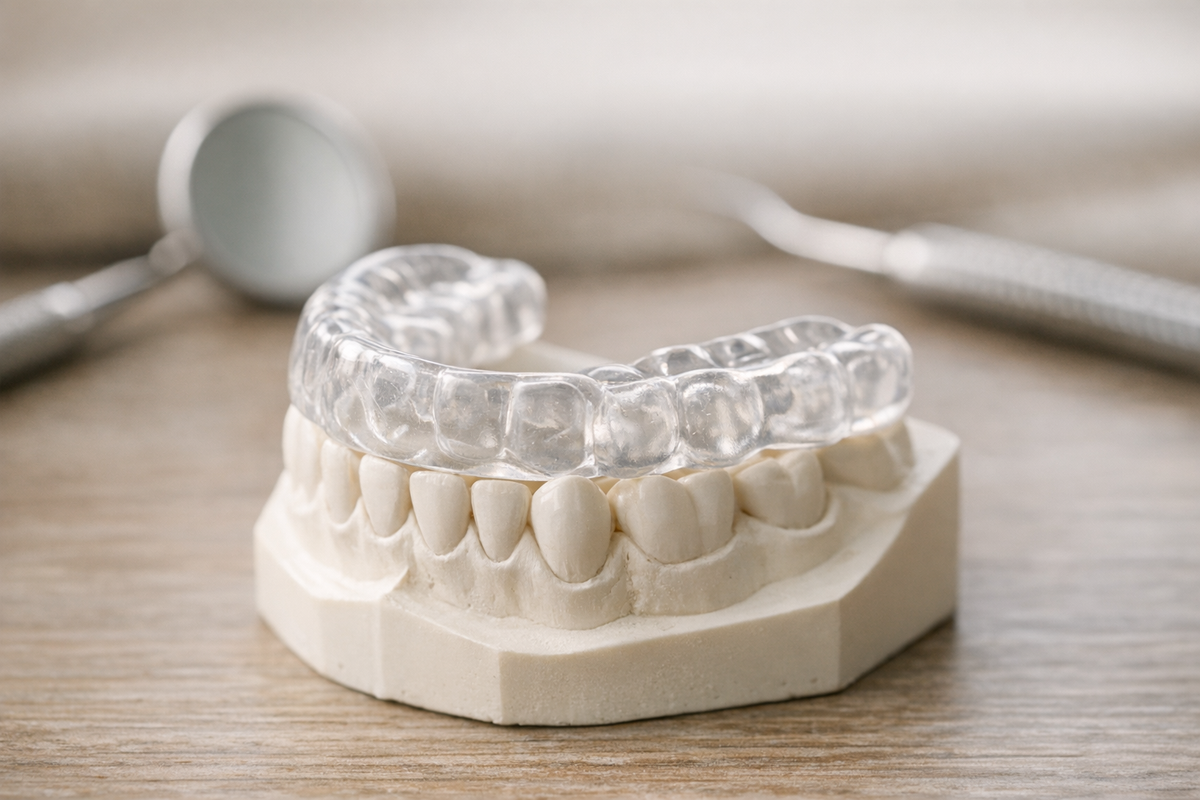
Enter the digital workflow. Intraoral scanners create a 3D map of your teeth in minutes. A design file is then fed to a 3D printer, which layers liquid resin or thermoplastic into a custom fit that hugs every contour of your teeth. The result is thinner, stronger, and less likely to slip.
A comprehensive review by Šimunović et al. 2025 outlined how 3D printing slashes material waste and allows for rapid design tweaks. Bite thickness can be varied down to tenths of a millimeter, and contact points can be reinforced as needed. No more "one-size-sort-of-fits-all" approach.
Lab techs now routinely mill guards directly from PMMA discs. Milling carves out the design rather than building it layer by layer, yielding a crystalline finish that resists stains. Expect to pay roughly $300–$600 for either method—still less than a single crown replacement.
The push for innovation isn't driven by convenience alone. A comparative in-vitro study measured shock absorption across three mouth guard types and showed that 3D printed guards dissipated impact energy more efficiently than their vacuum-formed counterparts Arfi et al. 2024. In plain words, the newer designs cushion your enamel better during a nighttime grind session.
Instrumented Mouthguards: Beyond Protection
You've probably seen pro football players wearing mouthguards with wires. These belong to an emerging class called instrumented mouthguards (iMGs). Packed with accelerometers and gyroscopes, they measure head impacts in real time.
Applications in Sports
Sports scientists love iMGs because the data can flag dangerous hits that lead to concussions. Haughey, Tierney, and Farrell 2026 reviewed the technology and noted growing evidence correlating acceleration thresholds with biochemical markers of brain injury. In Australian football, researchers recorded head acceleration events during play and compared saliva samples for neural injury proteins, uncovering a consistent relationship Evans et al. 2025. The mouthguard became both a helmet and a laboratory.
Battery life has improved from mere hours to several nights of continuous logging thanks to low-power Bluetooth-LE chips. That makes overnight bruxism monitoring feasible without an external pack strapped to your cheek.
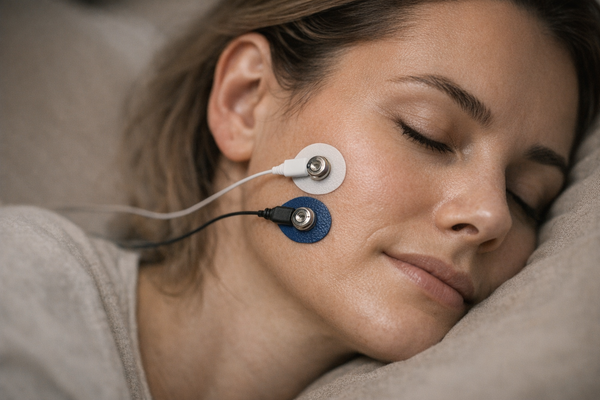
This opens intriguing possibilities for nocturnal jaw monitoring. The sensors tracking a linebacker's collision can also detect the force spikes of a grinding episode. An iMG with Bluetooth could upload nightly data to a phone app, giving you and your dentist a hard count of grinds and their force. For a deeper dive into managing bruxism with wearable tech, explore the potential benefits of smart devices.
Potential for Bruxism Management
The idea is still in its infancy, but engineers are refining algorithms originally designed for sports impacts to distinguish clenching from chewing or talking. Conceptual papers like Tooby, Till, and Gardner 2024 discuss threshold calibration—when is a force spike significant enough to count as harmful? Answering that question will let future mouth guards serve as both a cushion and a diagnostic tool. Imagine a notification saying, "You had 68 grind episodes last night, peaking at 145 N. Maybe call your dentist."
For now, the cost keeps iMGs in sports medicine, but consumer versions are likely around the corner. As prices drop, the same sensor tech used to protect quarterbacks may help protect your enamel.
Custom-Fitting and Material Innovations
Customization isn't just about comfort; it directly affects how well a guard deflects stress away from vulnerable tooth surfaces. Three key breakthroughs make the newest guards feel more like a second skin than athletic gear.
3D-Printed Custom Mouth Guards
The process starts with digital scanning, eliminating gag-worthy impression trays. The design software segments the arch, mapping zones needing extra vertical dimension to open the bite. According to Šimunović et al. 2025, printers can vary shore hardness within a single guard. Translation: the molar area that takes the brunt of grinding can be firmer, while the front remains flexible for speech.
Orthodontists have used similar multi-material prints for aligners, so the capability already exists in many dental labs. The next logical step is integrating it into night guards.
Material Durability and Comfort
Old-school EVA plastics turn cloudy, pick up odors, and can warp in hot water. New resins are less porous, reducing bacterial colonization. In the shock comparison study Arfi et al. 2024, guards printed with hybrid polyurethane-acrylate absorbed up to 25 percent more impact energy than standard materials without added bulk.
Additional perks:
- Higher tensile strength means fewer bite-throughs
- Better thermal stability allows safe sterilization in warm soapy water
- Clear, glass-like appearance makes the guard nearly invisible
Some labs are experimenting with antimicrobial impregnations like silver ions or zinc oxide to curb the funk that builds after months of nightly use. The American Dental Association notes that microbial biofilm on oral appliances can seed gum inflammation, so any built-in defense is welcome. You still need to brush the guard daily, but the material itself no longer acts like a bacteria Airbnb. For tips on maintaining your guard, check out how to clean your night guard effectively.
Integration of Technology in Modern Night Guards
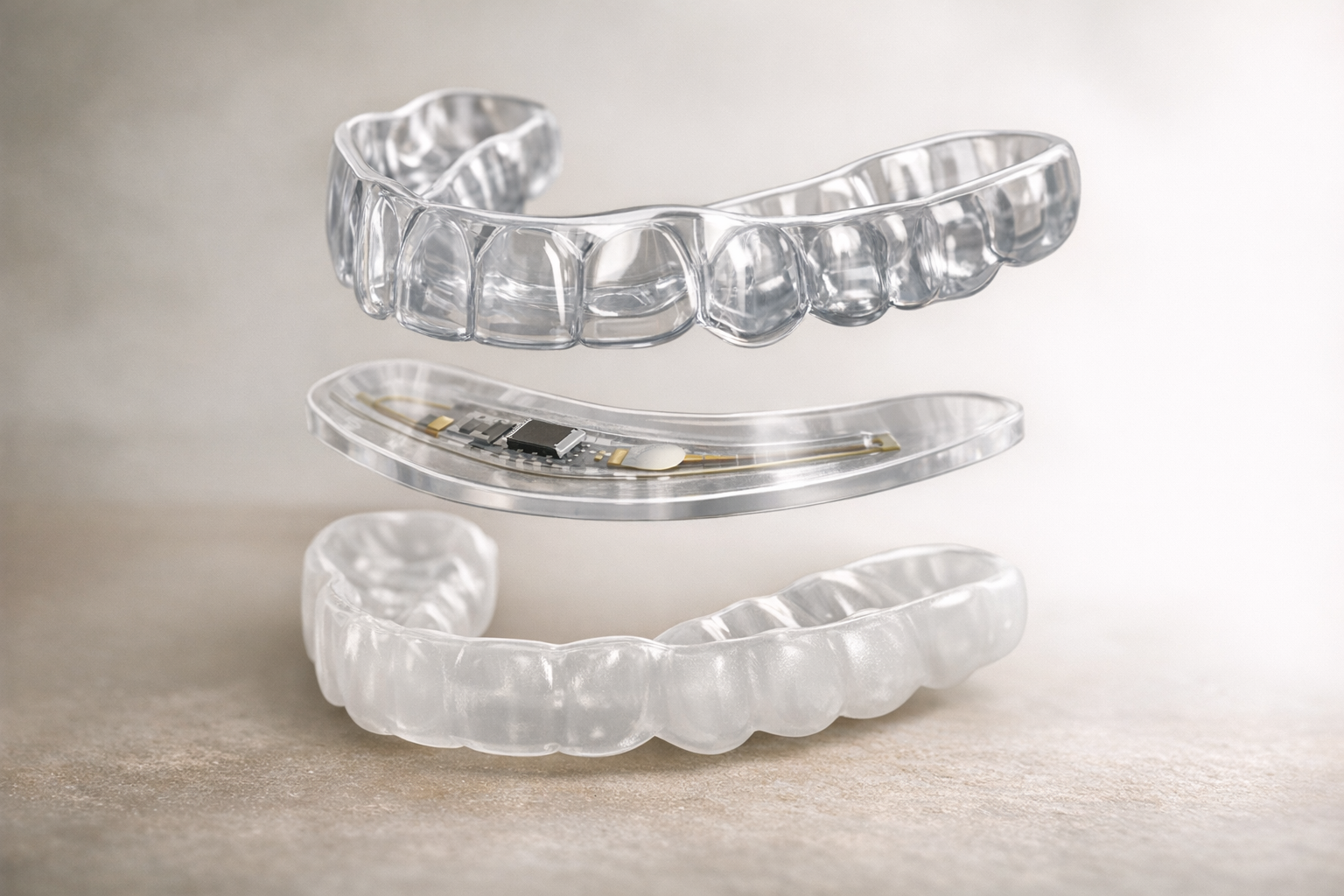
Beyond sensors, modern guards can employ simple electronics to nudge behavior. Some prototypes use micro-vibrations to send a gentle pulse when clenching is detected, similar to smartwatches that buzz when you sit too long.
Data logging is even more practical. A thumbnail-sized chip in the palatal region records force spikes and timestamps. Dentists can download the data chairside, getting an objective readout instead of relying on patient recall.
Haughey et al. 2026 suggest biofeedback-enabled devices could form part of a broader treatment plan, pairing nighttime data with daytime stress management. Meanwhile, Tooby et al. 2024 emphasize the need for standardized thresholds so alerts don't fire every time you adjust your pillow.
Early adopters are already syncing guard data to sleep-tracking apps like Oura or Apple Health, overlaying grind events with REM cycles. The mash-up reveals surprising patterns—many people do most of their damage during short arousals after apnea events. Fix the airway issue, and the grind graph often flattens.
The National Institute of Dental and Craniofacial Research points out that jaw overuse disorders often involve both muscular and neurological components. Continuous monitoring lets clinicians tailor therapy—maybe that includes jaw exercises, medication, or simply adjusting bite thickness. Either way, the guard evolves from a passive barrier into an interactive therapeutic tool.
The Role of Mouth Guards in Preventive Endodontics
You likely associate root canals with massive cavities, yet cracked teeth are becoming a leading cause of endodontic therapy. According to Lucier Pryles, Blicher, and Gluskin 2026, microcracks from chronic bruxism allow bacteria to infiltrate the pulp chamber even if the enamel looks intact. The authors argue that modern mouth guards should be viewed as preventive endodontic devices, not merely orthodontic accessories.
Here's how a well-designed guard works to prevent cracks:
- Redistributes occlusal load from point contacts to broader surfaces.
- Absorbs peak forces, reducing stress concentration at restoration margins.
- Maintains a slightly open bite, relaxing overworked masseter muscles and limiting jaw excursion.
When you combine those features with durable materials and accurate 3D fit, you reduce the likelihood of vertical root fractures—cases that often end with tooth extraction. The Cleveland Clinic notes that losing a molar can shift surrounding teeth, triggering cascading orthodontic issues. A $200 guard seems like a bargain compared to implants or bridges down the road. If you want to learn more about mouth guards for specific conditions, find out about the best mouth guards for TMJ relief.
Preventive endodontics also involves early diagnosis. Instrumented guards could log a sudden spike in grinding intensity that signals increased stress or a new medication side effect. Catch that trend early, and you might spare your pulp from damage.
Conclusion
The humble mouth guard is experiencing a transformation. 3D printing delivers a trim, custom fit. Multi-material resins boost comfort while resisting wear. Embedded sensors borrowed from sports medicine whisper nightly grind counts to your phone. Add biofeedback, and the device even trains you to unclench before damage is done.
If you wrestle with bruxism, the takeaway is simple: schedule a scan, ask about high-performance resins, and decide whether you want data logging or just cushioning. Clean the guard daily, replace it when gouges appear, and keep your dentist in the loop. Your future self—and your dental bill—will thank you.