Athlete's Guide to Jaw Pain Relief: Managing TMJ for Peak Performance
Discover tips for athletes to manage jaw clenching and improve performance.
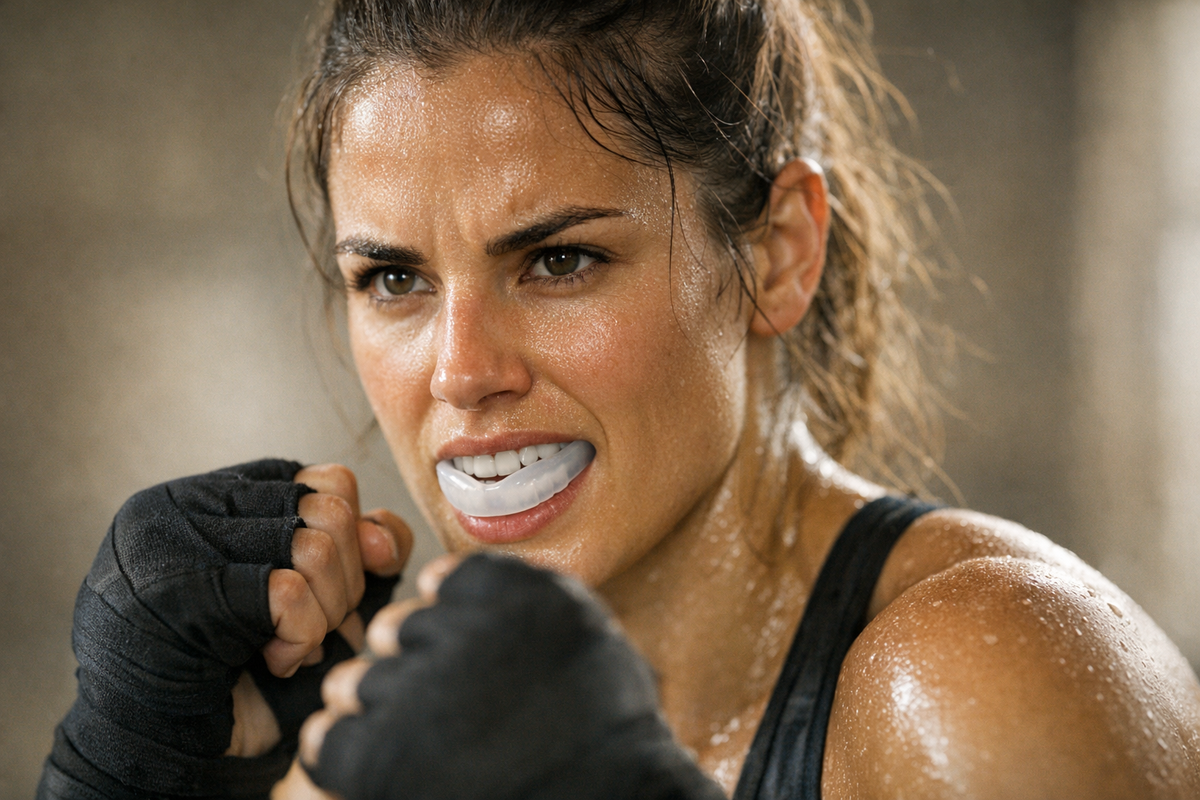
You train hard, sleep (mostly) well, and log your macros like a human spreadsheet. Yet, somewhere between sprints and protein shakes, your jaw seems to have its own workout plan. The result? Throbbing joints, morning headaches, and the not-so-melodic grinding of teeth. Temporomandibular joint (TMJ) disorders may not appear on the average training log, but they can steal speed, power, and focus. This guide explores the science of jaw clenching, translating it into plain English, and providing practical tools to help you focus on your next personal record instead of your next pain flare-up.
The good news: evidence-based strategies exist, from resistance training for your chewing muscles to lifestyle tweaks that calm your nervous system. You do not have to choose between performance and comfort. Read on, apply what fits, and let your jaw relax while the rest of you goes all-in.
Understanding Jaw Clenching in Athletes
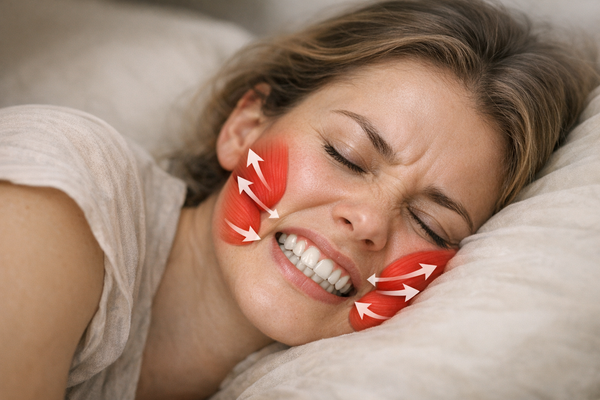
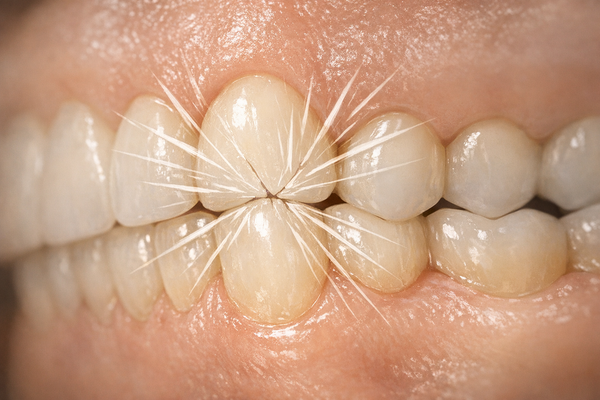
Jaw clenching, or bruxism when it occurs involuntarily, is the rhythmic grinding or pressing of teeth. On the field, court, or track, this habit often ramps up during high-intensity efforts and stressful moments. Researchers have noticed that athletes show a surprisingly high rate of bruxism compared to the general population. A study by Okshah et al. in 2025 pooled data from more than 1,200 competitors and found that roughly one in three reported daytime or nighttime clenching. That number increases in sports with explosive movements where adrenaline spikes and the bite reflex follows suit.
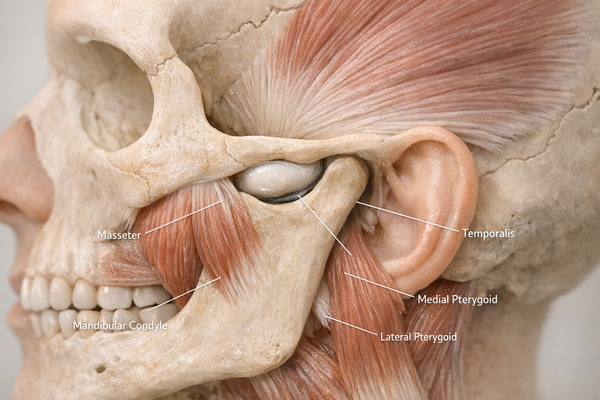
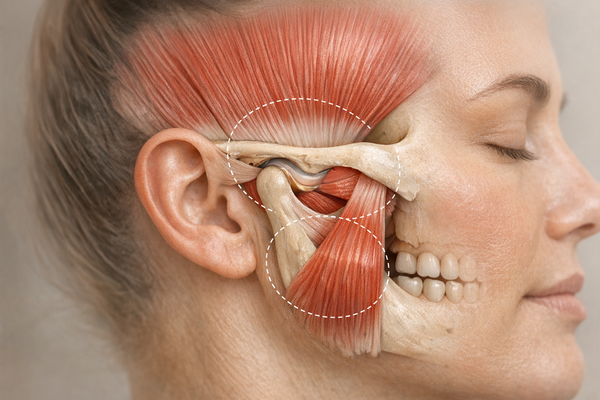
The temporomandibular joint acts like a hinge that lets your mandible move in multiple directions. When you clench repetitively, the surrounding muscles—masseter, temporalis, pterygoids—stay in a semi-contracted state. Over time, they shorten, fatigue, and tug on the joint disc, leading to pain and sometimes a jaw that locks up right when you want to celebrate a win with a steak dinner.
This pattern is observed in specific athletic communities too. Ribeiro and colleagues conducted an observational study in 2024, focusing on CrossFit athletes, and found clinical signs of bruxism in 48% of participants. The authors linked the habit to the high-stress, high-load nature of workouts and the culture of pushing through discomfort.
Clenching is not inherently bad. Research shows potential performance perks. One experiment reported improved grip strength and balance when athletes clenched intentionally. However, constant or unconscious clenching outside of specific drills leaves no recovery time. It's like holding a plank 24/7—core of steel maybe, but the soreness would impact your mobility work.
Key takeaways:
- Jaw clenching frequency rises with competitive stress and intense training loads.
- High-incidence sports include weightlifting, CrossFit, combat sports, and sprinting events.
- Short intentional clenching might boost power, but chronic clenching contributes to TMJ disorders.
- Managing the habit preserves the hinge that makes power-chewing post-game pizza possible.
Identifying the Symptoms and Causes of TMJ Disorders
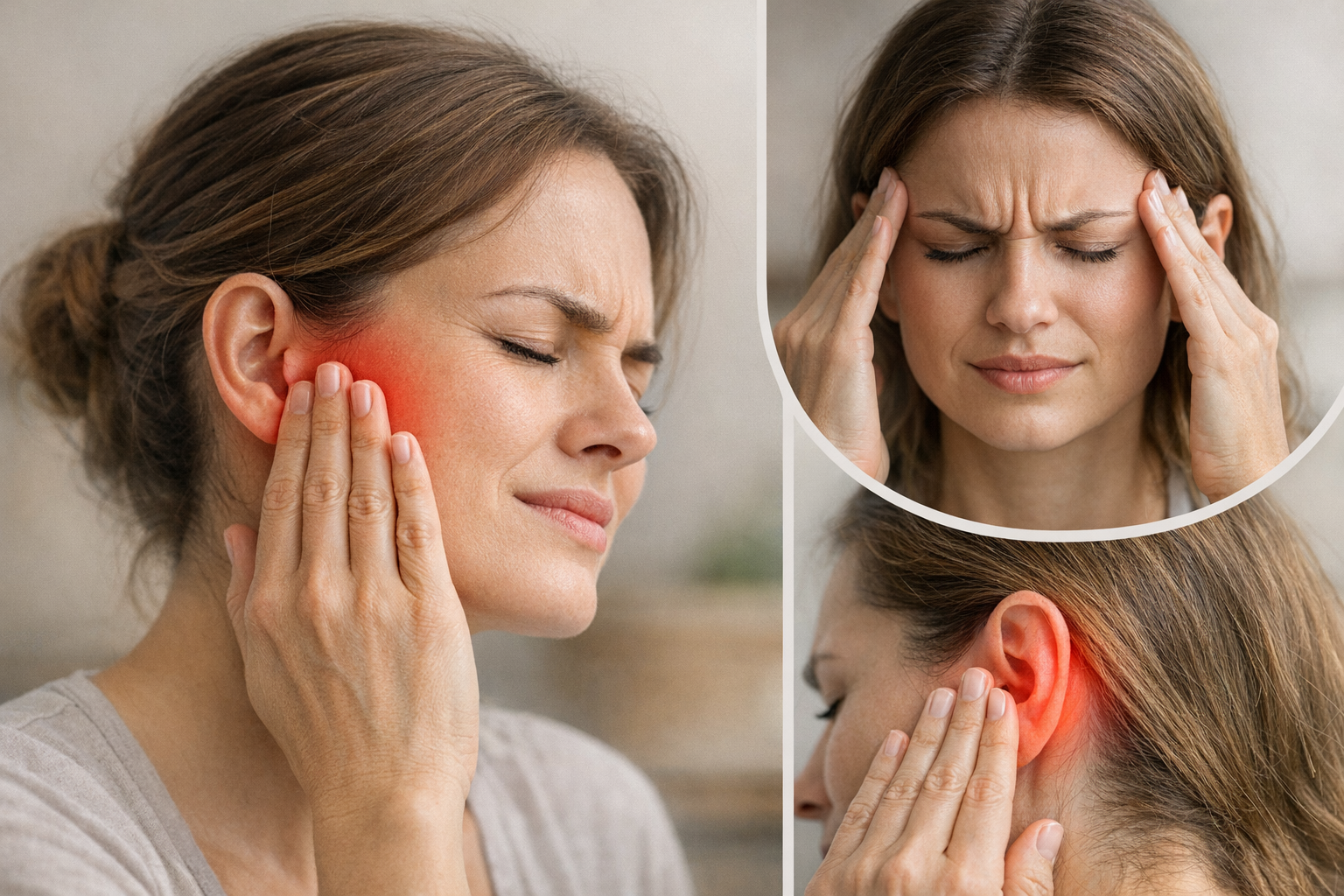
Temporomandibular disorders (TMD) act like cranky roommates in a tiny apartment: they affect the joint, the muscles, and even nearby nerves. Catch them early, and you dodge long recovery timelines. According to a narrative review by Dąbkowska et al. in 2025, the most common athlete-reported symptoms include:
- Clicking, popping, or grinding noises during chewing or yawning
- Jaw pain that spikes when biting into tough foods or yelling mid-game
- Tension headaches, often mistaken for dehydration or screen fatigue
- Earaches or a feeling of fullness in the ear canal
- Reduced range of motion, like being unable to open wide enough for a mouthguard fitting
While the symptoms show up at the jaw, the root causes are diverse:
- Bruxism-related overuse. Continuous grinding loads the joint beyond its design specs.
- Psychological stress. Pre-competition jitters flood your system with cortisol, tightening facial muscles.
- Direct trauma. A stray elbow in basketball or an uppercut in sparring can injure the joint capsule.
- Posture issues. Rounded shoulders and forward head posture change mandibular alignment, increasing strain.
- Occlusal misalignment. When upper and lower teeth do not meet evenly, the joint compensates under tension.
How do you tell normal post-match soreness from a true TMJ problem? The Mayo Clinic suggests performing a “three-finger test.” You should comfortably fit three finger widths between incisors when opening wide. Anything less, especially with pain or noise, deserves follow-up with a dentist or physical therapist.
Untreated TMD sets off a vicious cycle. Restricted jaw motion limits proper nutrition if you start avoiding hard foods, and inadequate calorie intake sabotages recovery. Pain also affects sleep quality, another pillar of athletic output. Break the chain early with identification and targeted strategies, some of which you will meet in the next sections.
Effective Exercises for Jaw Tension Relief
Your jaw muscles respond to training principles just like quads or delts. Controlled loading builds strength and flexibility, while eccentric stretches improve tissue resilience. A systematic review by Asquini et al. in 2025 concluded that resistance exercises for masticatory muscles reduce pain scores and improve mouth-opening range in TMD patients. Athletes can use these drills for preventative care or as part of rehab.
Masticatory Muscle Resistance Training
Goal: Strengthen the jaw opener muscles to balance the overactive closers.
- Isometric mouth opening
• Place two fingers under your chin. Try to open your mouth while resisting with gentle upward pressure. Hold 5 seconds, repeat 10 reps, 2 sets daily. - Isometric mouth closing
• Press the thumb under the chin inside the mouth. Attempt to close against resistance for 5 seconds. Repeat 10 reps, 2 sets. - Lateral deviation strength
• Using a wine cork or stacked tongue depressors, bite lightly on one side for 5 seconds. Switch sides, 10 reps each. - Controlled opening with tongue up
• Touch tongue tip to the spot just behind upper front teeth. Slowly open until pain-free limit, then close. 15 slow reps, focus on smooth motion.
Programming tips:
- Add sessions after warm-up when blood flow is high.
- Pain should not exceed 3 on a 0-10 scale. Dial back resistance if it does.
- Track progress with the three-finger test monthly.
- Combine with diaphragmatic breathing drills to down-regulate tension.
Coupling these exercises with regular neck mobility work multiplies benefits. The jaw, neck, and shoulder girdle form one kinetic chain. Addressing only the hinge while ignoring the hinges above and below sets up a scenario where pain migrates rather than disappears.
The Role of Mouthguards in Preventing Injuries
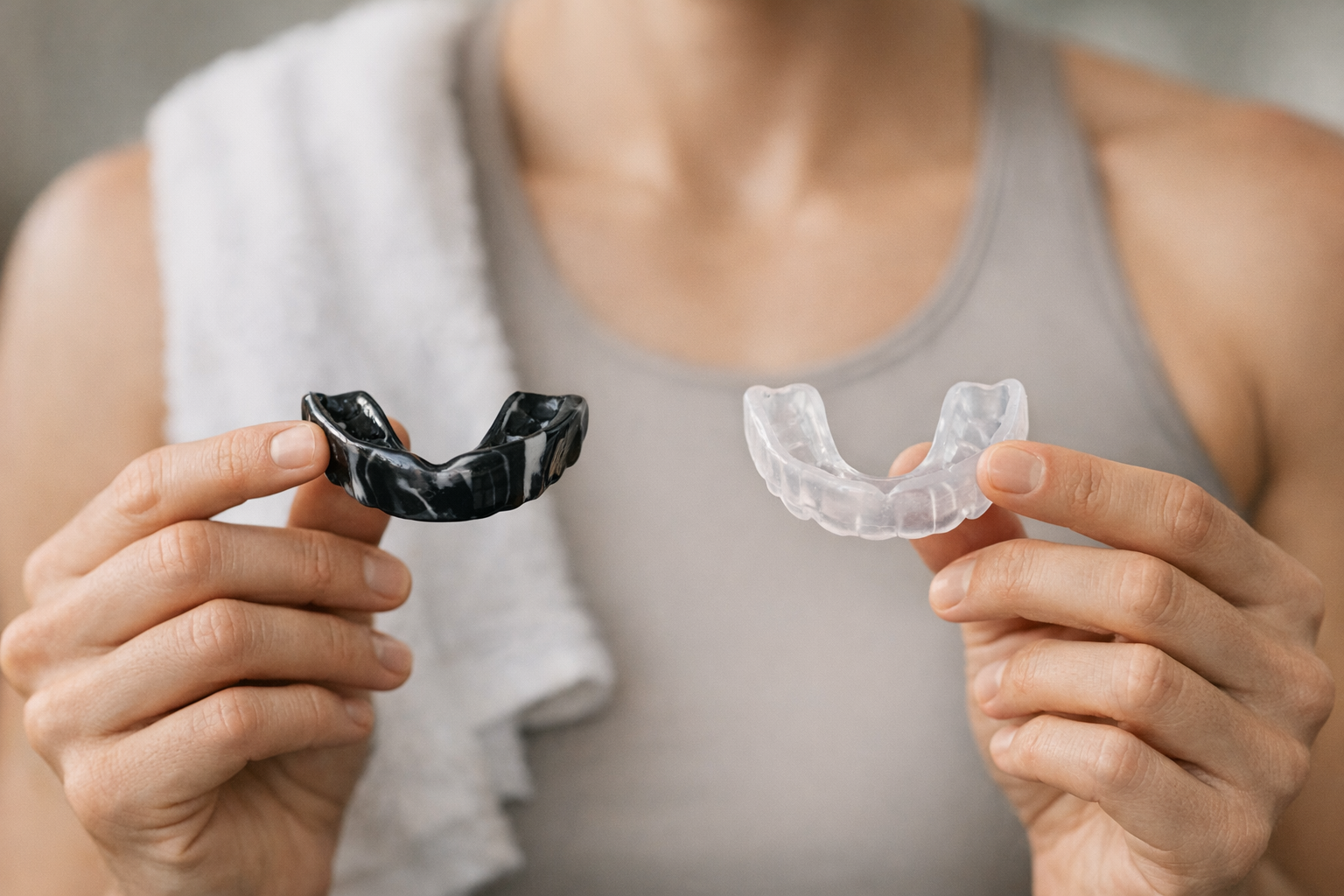
Many athletes already wear mouthguards to protect their teeth from impact, but the right design can also mitigate damage from bruxism and even give a legal performance boost. A study by Fiamengui et al. in 2025 tested custom appliances in martial artists prone to nighttime grinding. Users showed fewer micro-fractures in enamel and reported decreased morning jaw soreness after 12 weeks.
Performance research backs functional benefits too. In baseball players, Allen and Garner’s 2024 experiment found that jaw clenching using a properly fitted mouthpiece increased bat swing velocity by 3 percent. The theory hinges on concurrent activation potentiation: clenching excites the motor cortex, recruiting more muscle fibers in distant limbs.
Benefits of Customized Mouthguards
- Impact cushioning. The guard spreads collision forces across a larger area, lowering risk of dental trauma.
- Bite alignment. A lab-made insert corrects minor occlusal imbalances, reducing unilateral loading on the joint.
- Reduction of grinding surfaces. Soft or dual-laminate material absorbs grinding friction, saving enamel.
- Neuromuscular priming. Intentional clenching against the guard can improve strength output without harming joint cartilage.
- Nighttime application. Some guards double as sleep splints, a two-for-one solution if you also grind in bed.
Fit matters: Over-the-counter “boil and bite” models help in a pinch but often create uneven thickness and peripheral pressure points. A dentist-fabricated guard uses dental impressions or digital scans to ensure even occlusal contact, stable seating, and minimal interference with breathing—crucial for anaerobic bursts.
Usage pointers:
- Wear during high-impact training, sparring, and games.
- If you clench in the weight room, pop it in for big lifts.
- Inspect monthly for bite marks and replace when grooves deepen.
- Clean with non-abrasive soap and cool water after every session.
One caveat: intentional clenching should be strategic, not constant. Use short bouts (<5 seconds) before a max lift or sprint start, then release. Think of it as flicking a neurological light switch, not taping it in the on position.
Incorporating Self-Myofascial Release for Relief
Foam rollers and massage balls rarely make contact with the jaw, but self-myofascial release (SMR) principles adapt well to craniomandibular muscles. A systematic review by Martínez-Aranda et al. in 2024 shows SMR improves range of motion, reduces pain perception, and may translate into better power output when used in warm-ups.
Tools: lacrosse ball, soft-tissue release tool, or your own knuckles.
- Masseter sweep
• Place ball between cheek and wall. Roll vertically from cheekbone to jaw angle for 60 seconds. Light pressure—avoid numbness. - Temporalis glide
• Using fingertips, perform small circles above the ear where the muscle fans out. Two minutes per side. - Suboccipital release
• Lie on the floor with two tennis balls in a sock under the base of the skull. Nod slowly for 90 seconds to relax the top-down tension chain. - Intraoral pterygoid press (advanced)
• Wearing a glove, slide the thumb inside the cheek. Press gently on the inner jaw ridge, hold 30 seconds, three points per side.
Pair SMR with nasal breathing to shift the autonomic nervous system from sympathetic (fight-or-flight) toward parasympathetic (rest-and-digest). The Cleveland Clinic notes that muscle relaxation not only eases pain but also reduces clenching frequency.
Apply SMR 2-3 times per week, or daily during flare-ups. Keep pressure moderate; bruising facial muscles is counter-productive and may worsen inflammation. If you notice tingling, lighten up or reposition.
Lifestyle Adjustments to Minimize Jaw Clenching
You can grind away an expensive mouthguard in a month if lifestyle factors keep the nervous system on high alert. Tackling stress, sleep, and posture closes the loop on your physical interventions.
Athletes in the Okshah et al. 2025 review cited psychological stress as the top trigger for both daytime and nocturnal bruxism. That aligns with sports psychology findings: when cortisol climbs, so does muscle tone, including the jaw. Here are some adjustments you can make:
- Stress management “micro breaks”
• 5-minute guided breathing with a fitness app between meetings or classes. Progressive jaw relaxation: open wide, then let the mandible hang for 10 seconds. - Sleep hygiene
• Set a fixed bedtime; even weekend Netflix marathons end at the same hour. Cool, dark room: 65–68°F, blackout curtains, phone docked away from bed. Limit caffeine after lunch and alcohol on game night; both disrupt sleep architecture and ramp up clenching. - Posture patrol
• Stack ears over shoulders when texting. Thoracic spine extensions against a foam roller 3 sets of 10 nightly. - Nutrition strategy
• Magnesium-rich foods (spinach, pumpkin seeds) support neuromuscular relaxation. Hydration: even mild dehydration increases muscle cramps, including in the jaw. - Mindful chewing
• Swap tough jerky for sliced chicken breast during flare-ups. Chew evenly on both sides to distribute load.
Consider enlisting a sports psychologist for cognitive behavioral therapy if stress triggers stubborn bruxism. They can equip you with mental rehearsal tools that calm nerves before competition, taking your jaw off high alert.
Conclusion: Achieving Peak Performance Without the Pain
Your jaw is not separate from your sport—it is another joint that demands smart programming. Clenching may offer a fleeting power bump, but unchecked it breeds pain, lost training days, and compromised nutrition. Start by recognizing symptoms early, then deploy a layered game plan: resistance drills for the chewing muscles, strategic mouthguard use, self-myofascial release, and lifestyle tweaks that keep stress in check. Backed by current research and field-tested by athletes like you, these tactics help you lift, sprint, and spar without the distracting soundtrack of grinding teeth. The result is a quieter night’s sleep, a stronger bite when it counts, and one less excuse standing between you and your next personal best.