
Night guards are invaluable allies for anyone dealing with teeth grinding (bruxism), jaw clenching, or related sleep issues. They’re designed to protect your teeth, alleviate jaw discomfort, and help prevent problems like tooth wear, tension headaches, and even ear pain. But just as you wouldn’t go weeks without cleaning your toothbrush, caring for your night guard is crucial if you want it to remain effective—and safe—for nightly use.
Whether your night guard is custom-fitted or store-bought, following the best cleaning and care practices can help you avoid bacterial buildup, bad odors, stains, and other common pitfalls that may impact your oral health. In this evidence-based guide, we’ll walk you through practical tips for daily and deep cleaning, how to spot when it’s time for a replacement, and steps to keep your night guard—and your mouth—fresh and healthy.

Why Cleaning Your Night Guard Matters
- Prevents Bacterial Buildup: Every night, your night guard sits in a warm, moist environment—perfect for bacteria to multiply if not cleaned properly. Bacteria can lead to bad breath, gum irritation, and even oral infections.
- Extends Lifespan: Regular care prevents discoloration, material breakdown, and warping—helping you keep your investment for as long as possible.
- Avoids Bad Odors and Stains: A dirty night guard can develop stubborn smells and stains that make using it unpleasant (and less hygienic).
- Protects Your Oral Health: Proper cleaning routines support overall oral hygiene, crucial if you’re wearing your guard to prevent issues like jaw clenching, ear pain, or seeking treatments like jaw Botox for teeth grinding.
Everyday Cleaning: Simple Steps with Big Benefits
A daily cleaning routine doesn’t need to be complicated. Here’s a quick expert-approved process:
1. Rinse Right After Use
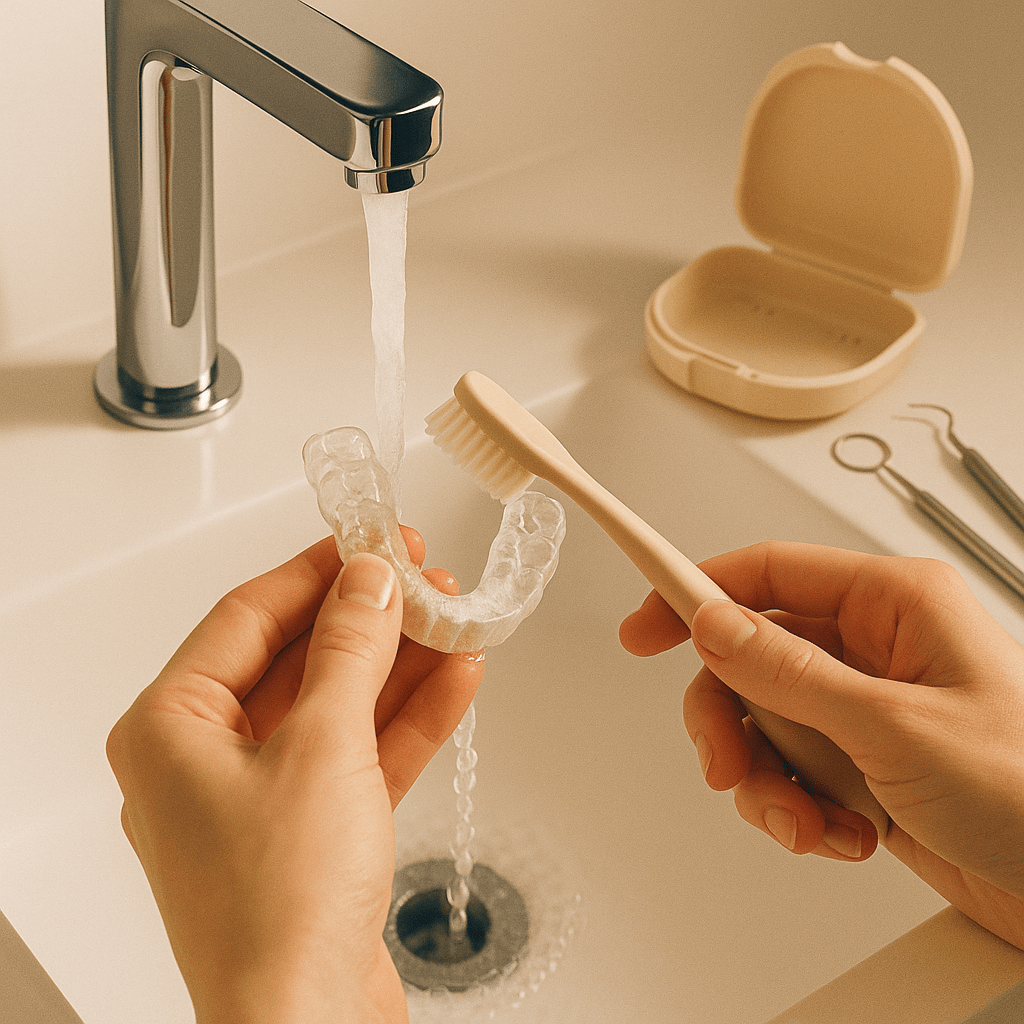
When you remove your night guard in the morning, immediately rinse it under lukewarm (not hot) water. This helps wash away saliva, debris, and most soft plaque before it hardens.
2. Brush Gently—No Toothpaste
Use a separate, soft-bristle toothbrush to brush your night guard. Avoid using toothpaste, which is too abrasive and can scratch or degrade the material, leading to places for bacteria to hide. Instead, use mild, unscented dish soap or castile soap with lukewarm water. Some people also use a paste of baking soda and water as a gentle alternative.
3. Allow It to Dry Completely
Bacteria thrive in moist environments. After daily cleaning, place your night guard on a clean, dry cloth or paper towel in a safe location (out of reach of pets, who often mistake guards for chew toys). Let it fully air dry—this usually takes about 30 minutes—before storing it in its case.
4. Store in a Clean, Ventilated Case
Always store your night guard in its designated case when not in use. Choose a case with ventilation holes to allow airflow and avoid trapping moisture, which can encourage bacterial growth. Keep the case out of direct sunlight and away from heat or humidity.
Tip: Don’t keep your guard wrapped in a napkin or placed loosely on a nightstand, where it’s easily lost or accidentally discarded.
Weekly & Monthly Deep Cleaning: How to Clean Night Guard with Vinegar or Hydrogen Peroxide
Daily care is your first line of defense, but deep cleaning your night guard will help remove stubborn plaque, stains, and bacteria. This can be done as often as weekly, but at least once a month is recommended.
How to Clean Night Guard with Vinegar: Step-by-Step

- Soak in White Vinegar: Place your night guard in a glass (not metal) bowl and cover the guard completely with distilled white vinegar. Soak for up to 30 minutes—set a timer to prevent over-soaking.
- Rinse Thoroughly: Remove the guard and rinse under lukewarm water. Rinse the bowl, too.
- Optional Hydrogen Peroxide Rinse: For added disinfection and odor removal, soak the guard in 3% hydrogen peroxide for another 30 minutes. This helps neutralize any leftover vinegar taste and further kills bacteria.
- Final Rinse & Dry: Rinse one last time in water, then dry as usual before storing.
Note: Avoid using mouthwash, denture tablets, or bleach on your night guard (unless your dentist specifically recommends it). Most cleaning tablets are too harsh, and hot water can warp the material.
Mistakes to Avoid
- Don’t use hot water: It softens and warps most night guard materials.
- Don’t use abrasive toothpaste or hard brushes: These can cause micro-scratches that trap bacteria.
- Never put your night guard in the dishwasher: High temperatures and detergents will damage it.
- Don’t store it in a sealed, unventilated container: Moisture encourages bacterial and mold growth.
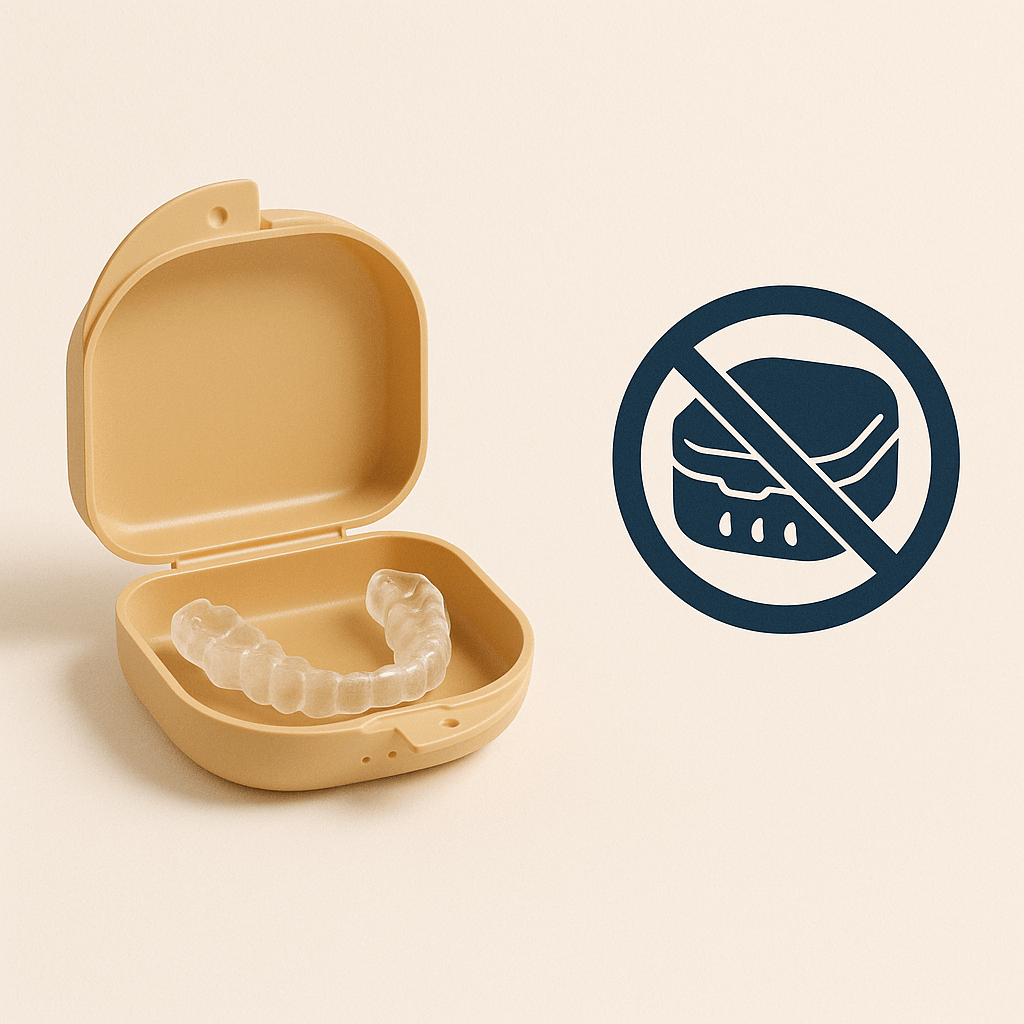
- Don’t forget to clean the case: Wash the storage case regularly with dish soap and allow it to dry fully.
When Should You Replace Your Night Guard?
Even the most well-maintained night guard won’t last forever. Check your guard regularly for:
- Visible cracks, tears, or rough edges
- Loss of snug fit or comfort
- Persistent, hard-to-remove odors or discoloration
- Damage after restorative dental work (fillings, crowns)
If in doubt, bring your guard to your next dental visit for a professional inspection. Custom guards often last longer than over-the-counter versions, but replacement is necessary when fit or material is compromised.
Smart Tips for Keeping Your Night Guard (and Mouth) Fresh
- Brush and floss before wearing: Placing your guard over clean teeth prevents trapping bacteria overnight.
- Keep pets away: Dogs love chewing night guards—keep it out of reach for their (and your) safety.
- Bring your guard to dental appointments: Especially if you’re having work done or want its condition checked for fit.
Why Good Night Guard Hygiene Matters for Bruxism and Jaw Pain
If you’re using a night guard to relieve jaw clenching, nighttime teeth grinding, or even ear pain related to bruxism, investing a few minutes each day in proper cleaning helps your oral appliance stay protective rather than contributing to additional problems. Remember, poor night guard hygiene can worsen gum irritation, contribute to oral infections, or offset the very benefits you’re seeking—whether you’re preventing tooth wear, treating jaw pain due to wisdom teeth, or weighing options like jaw Botox.
Conclusion: Make Night Guard Cleaning Part of Your Healthy Routine
Your night guard plays a vital role in preserving your smile, protecting you from the side effects of bruxism, and even contributing to more restful sleep. With a few simple, evidence-based habits—daily rinsing, gentle cleaning, proper drying—you can extend the life of your guard, avoid bad breath and bacteria, and keep your mouth healthy for the long haul.
Still have questions about bruxism, jaw clenching, or the right night guard for your needs? Subscribe for more research-backed, practical guides—or visit our resource center for detailed comparisons and solutions. We’re here to help you take the next step toward better oral and sleep health.
 Grind My Teeth
Leave a comment