

If you clench your teeth at night—but don’t grind them—you might wonder if a night guard is necessary. After all, most conversations about night guards focus on grinding, not clenching. But here’s the truth: nighttime clenching can be just as damaging to your teeth, jaw joints, and sleep quality.
In this article, we’ll explore the differences between clenching and grinding, why clenching matters, and whether a night guard is the right solution. We’ll also cover the types of night guards best suited for clenchers, alternative treatments, and how to tell if you’re actually clenching in your sleep.
What’s the Difference Between Clenching and Grinding?
It’s easy to confuse the two, but bruxism—the umbrella term—actually includes both.
- Grinding (bruxing) means moving your teeth back and forth or side to side with pressure.
- Clenching means tightly biting down or holding your jaw in tension without movement.
Both usually happen unconsciously, especially during sleep. But they have slightly different causes and effects—and may respond to different types of treatment.

Is Clenching Really a Problem If I’m Not Grinding?
Yes. Clenching can be just as harmful as grinding, and in some cases, even more so.
Here’s what long-term clenching can do:
- Jaw pain or stiffness (especially in the morning)
- Temporomandibular joint disorder (TMD/TMJ) symptoms like clicking or popping
- Tooth sensitivity or microfractures
- Headaches caused by tension in the jaw and temples
- Neck and shoulder tension
- Sleep disruption for you (and sometimes your partner)
Grinding tends to cause wear and flattening of the teeth, while clenching puts more stress on the jaw joints and muscles. If left untreated, both can lead to chronic pain and permanent damage.
How Do I Know If I’m Clenching at Night?
Many people who clench their teeth at night have no idea they’re doing it—until a dentist spots the signs or symptoms begin.
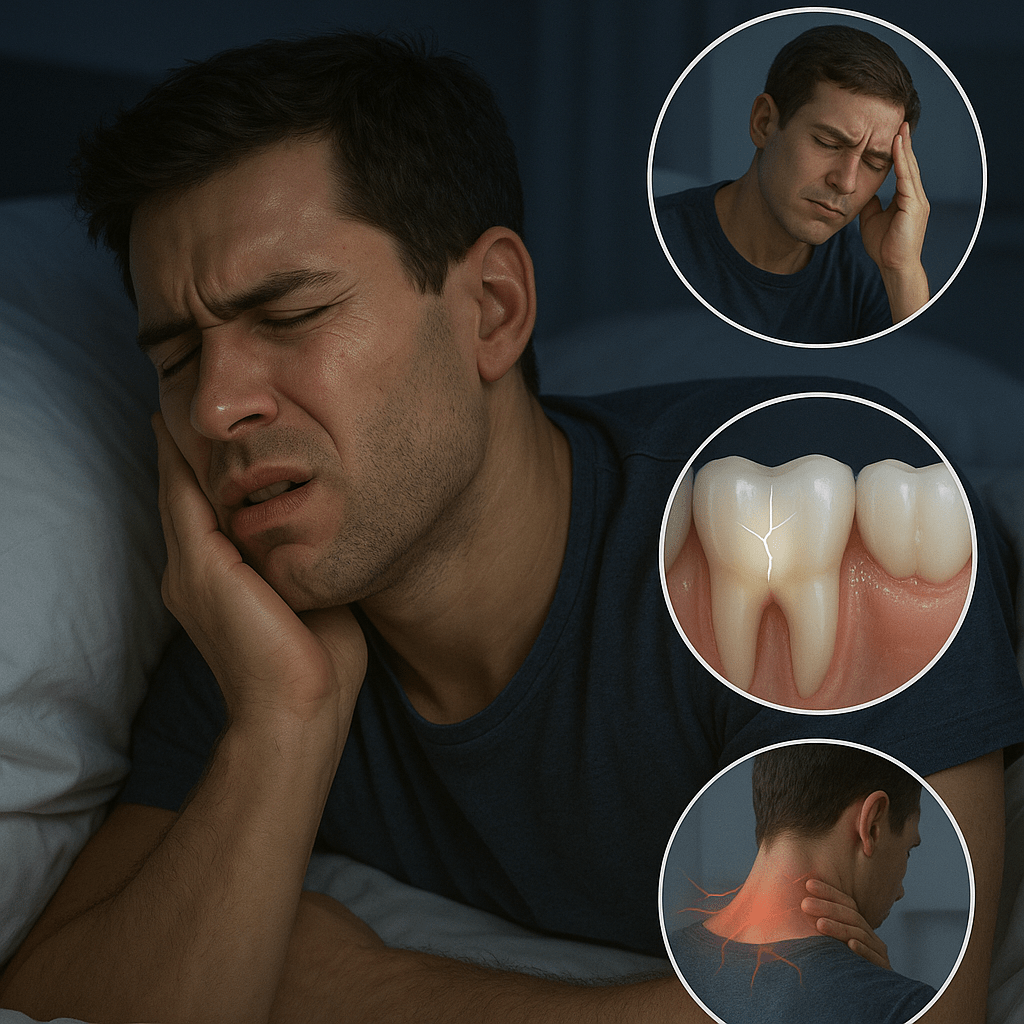
Here are common signs you might be clenching in your sleep:
- You wake up with a tight or sore jaw
- Morning tension headaches
- General feeling of fatigue, even after sleeping
- Tooth sensitivity, especially to pressure or cold
- A dentist has noticed wear, cracks, or gum recession
- Your partner notices your jaw tensing or clicking while you sleep
If you’re unsure, talk to your dentist. They can often tell based on the condition of your teeth and jaw.
Can a Night Guard Help With Clenching?
Yes—but not all night guards are equally effective for clenching.
A night guard creates a protective barrier between your upper and lower teeth. While it doesn’t stop the muscle movement of clenching, it:
- Distributes the force across a larger surface area
- Reduces stress on your teeth and jaw joints
- Can give your jaw a more relaxed resting position
- Provides cushioning that helps muscles release tension
Some people even find that the act of wearing a guard reduces the frequency of clenching—possibly due to improved jaw alignment or a slight behavioral change from having something in the mouth.
What Type of Night Guard Is Best for Clenching?
If you clench (but don’t grind), you likely need a different type of guard than someone who grinds aggressively.

🔹 Best option:
Hard or dual-laminate custom night guards
- Custom-made by a dentist or lab based on your bite
- Durable enough to withstand constant pressure
- May include design features to slightly reposition the jaw or relieve TMJ tension
🔸 Avoid:
Soft, over-the-counter boil-and-bite guards
- Too squishy — can increase muscle activity for clenchers
- May not hold up to repeated use
- Often cause more drooling or discomfort, especially if the fit isn’t exact
A hard acrylic or hybrid guard offers better protection for clenchers because it keeps the jaw more stable and reduces muscle engagement over time.
Can a Night Guard Stop Clenching?
A night guard won’t stop your body from attempting to clench—but it can reduce the damage and frequency over time. However, for long-term relief, it’s important to also look at root causes of clenching.
What Causes Nighttime Clenching?
Understanding the why behind your clenching can help you choose the right treatment strategy.
Common triggers include:
- Stress or anxiety
- Sleep apnea or airway obstruction
- Misaligned bite (malocclusion)
- Medication side effects (e.g., SSRIs)
- Caffeine or alcohol use before bed
Additional Treatments to Consider
A night guard is often the first line of defense, but combining it with other approaches can deliver better results—especially if your clenching is severe.
✅ Stress Reduction Techniques
- Meditation, journaling, or therapy
- Muscle relaxation exercises before bed
- Avoiding screens and overstimulation at night
✅ Physical Therapy or Massage
- A physical therapist trained in TMJ can teach jaw relaxation techniques
- Trigger point massage in the neck and jaw may reduce tension
✅ Posture and Ergonomics
- Poor head and neck posture during the day contributes to tension at night
✅ Dental Adjustments
- In cases of bite misalignment, minor adjustments or orthodontics may help
✅ Oral Appliance Therapy
- In cases tied to sleep apnea, a mandibular advancement device (different from a night guard) may be more appropriate
What If My Night Guard Makes Clenching Worse?
Some users report that wearing a night guard actually increases their clenching. This usually happens with:
- Poorly fitting or soft guards
- OTC guards not designed for clenching
- Guards that alter jaw position in an uncomfortable way
If this happens, talk to your dentist or switch to a custom-fit hard acrylic guard. A properly fitted night guard should never increase pain or tension.
When to See a Dentist or Specialist
If your symptoms are severe—or if you’ve tried a night guard without success—it may be time to consult:
- A dentist with TMJ or occlusal training
- A sleep specialist, especially if you snore or wake up gasping
- A myofunctional therapist for muscle retraining
Bottom Line: Should You Use a Night Guard for Clenching?
If you only clench your teeth (and not grind), a night guard can still offer real benefits:
✅ Protects your teeth from pressure and microfractures
✅ Reduces tension on the jaw joints
✅ May help train your muscles to relax over time
✅ Can improve sleep quality by reducing pain
Just make sure you choose the right type of guard—ideally a hard or dual-laminate guard made to fit your bite. And don’t stop there: address underlying causes like stress or sleep issues for best results.
Final Thoughts
Nighttime clenching might not make noise like grinding—but it can quietly wear away your comfort, jaw health, and even your sleep. A properly designed night guard can be a simple, effective tool to protect your teeth, reduce tension, and help you wake up pain-free.
If you think you’re clenching at night, talk to your dentist about getting a custom night guard—or explore safe, high-quality options online designed specifically for clenching.
 Grind My Teeth
Leave a comment