

Night Guards Should Relieve Pain, Not Cause It
If you grind your teeth at night or suffer from TMJ, your dentist may recommend a night guard to protect your teeth and jaw. But what if you wake up with more pain after using it?
Many people ask, “Why do my teeth and jaw hurt after wearing my night guard?”
The short answer: the night guard should help, not hurt — but if it’s causing discomfort, something’s likely wrong.
In this article, we’ll explain:
✅ What night guards are supposed to do
✅ Why they sometimes cause pain
✅ How to fix night guard-related discomfort
✅ When to see your dentist
Let’s dive in.
What Is a Night Guard, and Why Do You Need One?
Night guards (also called dental splints or occlusal guards) are custom-made plastic devices that fit over your upper or lower teeth.
They are typically used to treat:
- Bruxism (teeth grinding or clenching at night)
- TMJ disorders (temporomandibular joint issues)
By placing a barrier between your teeth, night guards reduce:
✅ Tooth wear and damage
✅ Jaw tension and pain
✅ Headaches from clenching
But if your guard is causing pain, it defeats the purpose — and you need to figure out why.
Why Do My Teeth or Jaw Hurt After Wearing a Night Guard?
There are several common reasons your night guard might cause discomfort:
1️⃣ Incorrect Fit
The #1 reason is a poor fit.
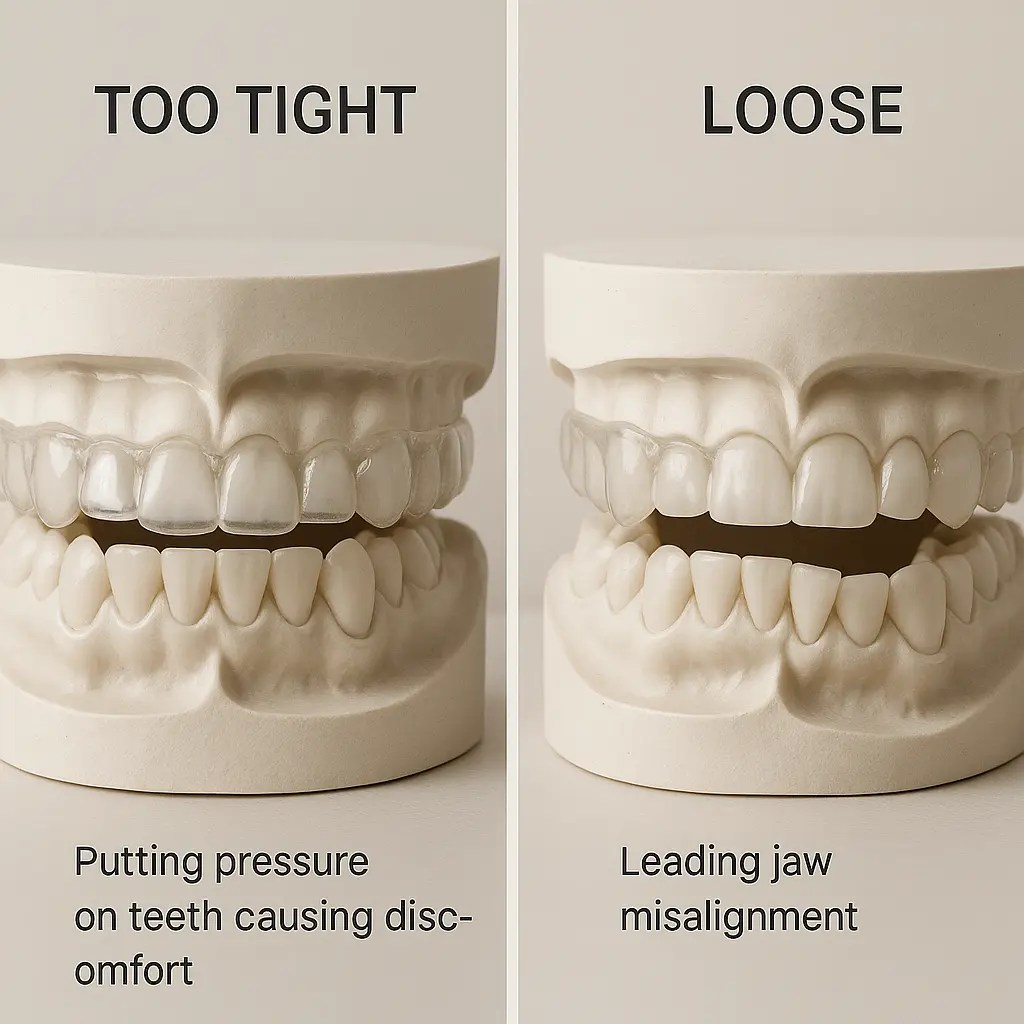
- If the night guard is too tight, it puts excessive pressure on your teeth, causing soreness and pain.
- If it’s too loose, your jaw may shift unnaturally, leading to muscle tension and joint discomfort.
This is especially common with over-the-counter (OTC) boil-and-bite guards, which can warp or not fit properly.
2️⃣ Normal Adjustment Period
Just like braces or new glasses, your body needs time to adjust to wearing a night guard.
In the first few days or weeks, you might feel:
- Mild jaw tightness
- Slight tooth soreness
- A sensation of clenching more than usual
Pro tip: If the discomfort fades after a few weeks, it’s likely just part of the normal adjustment.
3️⃣ Existing Dental Problems
Sometimes the pain isn’t caused by the guard at all — it just brings attention to hidden dental issues.
- Cavities
- Gum disease
- Cracked teeth or abscesses
If you notice sharp pain, gum swelling, or sensitivity that persists even without the guard, book a dental exam ASAP.
How to Fix Night Guard Pain
Here’s what you can do if your night guard is causing discomfort:
✅ Check the Fit: Visit your dentist to ensure the guard is molded correctly. Custom guards can be adjusted, and sometimes a new material or design (such as a soft vs. hard guard) is better suited for your needs.
✅ Ease Into Wearing It: Start by wearing it for short periods while awake, then gradually extend use overnight.
✅ Address Underlying Issues: If pain persists, get a full dental checkup to rule out cavities, gum issues, or bite problems.
✅ Switch to a Custom Guard: If you’re using an OTC guard, consider investing in a professionally made one. The difference in comfort and effectiveness is often worth it.
Is It Normal to Feel Pain When Using a Night Guard?
Minor soreness during the first 1–2 weeks can be normal as you adjust.
However, persistent, sharp, or worsening pain is NOT normal and should always be checked by a dentist.
Remember:
A night guard should protect your teeth, not damage them.

When Should You See a Dentist About Night Guard Pain?
👉 If pain persists beyond 2–3 weeks
👉 If you notice tooth shifting, gum irritation, or headaches
👉 If your guard feels loose, too tight, or cracked

Never ignore dental pain — early intervention can prevent bigger (and more expensive) problems down the line.
Final Thoughts: You Deserve a Pain-Free Night Guard Experience
A well-fitted night guard is one of the best tools to protect your teeth and jaw from damage caused by bruxism or TMJ.
If you’re experiencing pain, don’t give up — work with your dentist to get the fit and material just right. With a few adjustments, you can sleep soundly knowing your smile is safe.
Want to Learn More?
Check out our other articles:
 Grind My Teeth
Leave a comment