
The Hidden Link You Might Be Missing

Waking up with a sore back? Before blaming your office chair or that intense weekend workout, consider this surprising culprit: teeth grinding. As a young professional spending long hours at a desk, understanding this connection could be a game-changer for your daily comfort.
How Your Jaw Affects Your Back: The Science
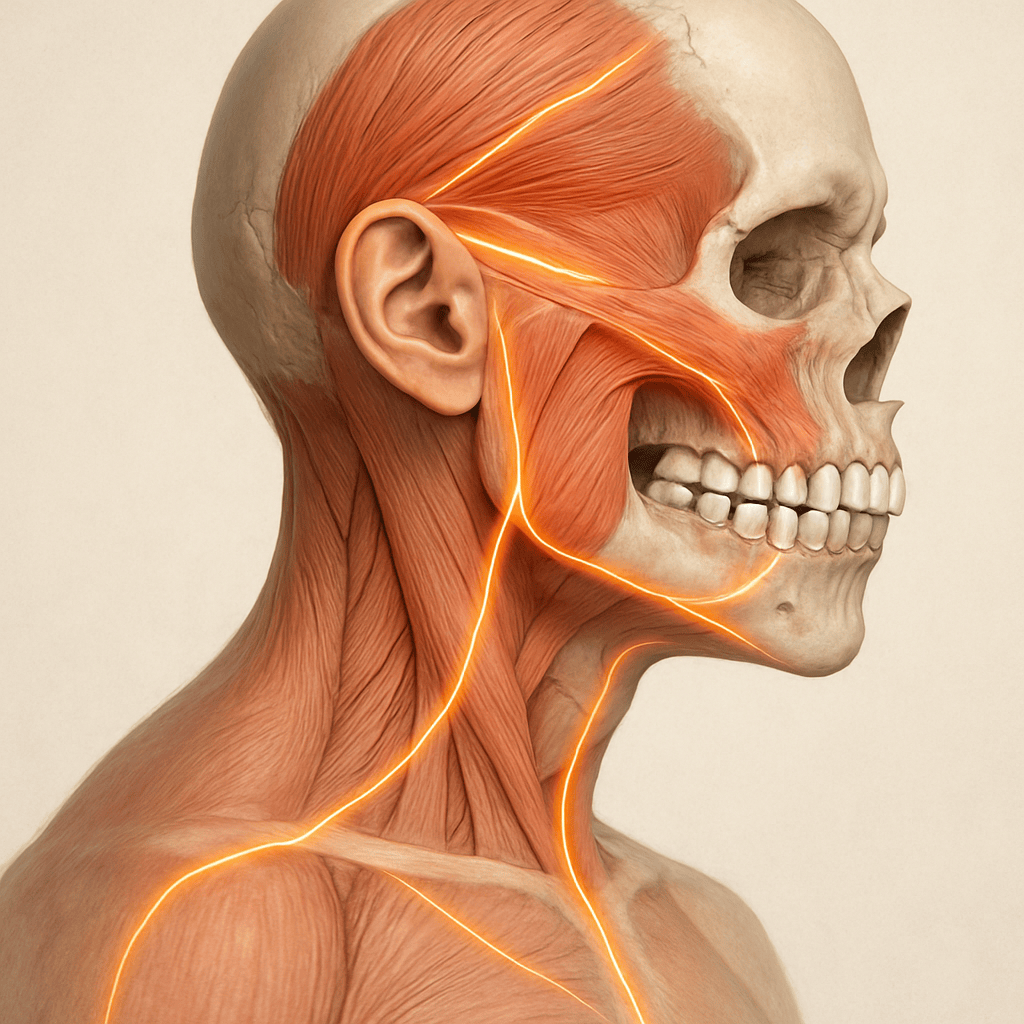
Your jaw connects to your skull through the temporomandibular joints (TMJs) – those little “sliding hinges” right in front of your ears. When you grind your teeth at night (a condition called bruxism), you’re essentially giving these joints and surrounding muscles an intense, unwanted workout. Research shows that these jaw muscles don’t work in isolation. According to a 2019 study in the Journal of Oral Rehabilitation, they’re connected to a network of muscles that extends down your neck and into your upper back [1].
The Domino Effect Explained
When you grind your teeth, here’s what happens:
- Jaw muscles tighten – Your masseter muscle (the one that helps you chew) gets overworked
- Connected muscles join in – Your temporalis muscle (connecting to your temple) tenses up
- Headaches develop – These tense muscles can trigger migraines (studies published in the journal Pain have confirmed the connection between migraines and back pain) [2]
- Neck and back muscles compensate – Your body tries to maintain head support, causing tension throughout your upper body
Spot the Warning Signs
As someone working at a desk all day, you might notice:
- Morning neck stiffness (that wasn’t there before)
- Upper back pain that seems to come from nowhere
- Headaches that start at the base of your skull
- Pain that radiates to your shoulders
Why You Might Be Grinding Your Teeth
Stress is a major factor – and let’s face it, office deadlines can definitely contribute! According to the American Dental Association, up to 15% of adults experience sleep bruxism [3]. Other potential causes include:
- Too much coffee (that office pot might be partly responsible!)
- Evening wine or cocktails
- Certain medications
- Genetics
- Those lengthy Zoom meetings (tension from concentration)
Simple Solutions You Can Try Tonight
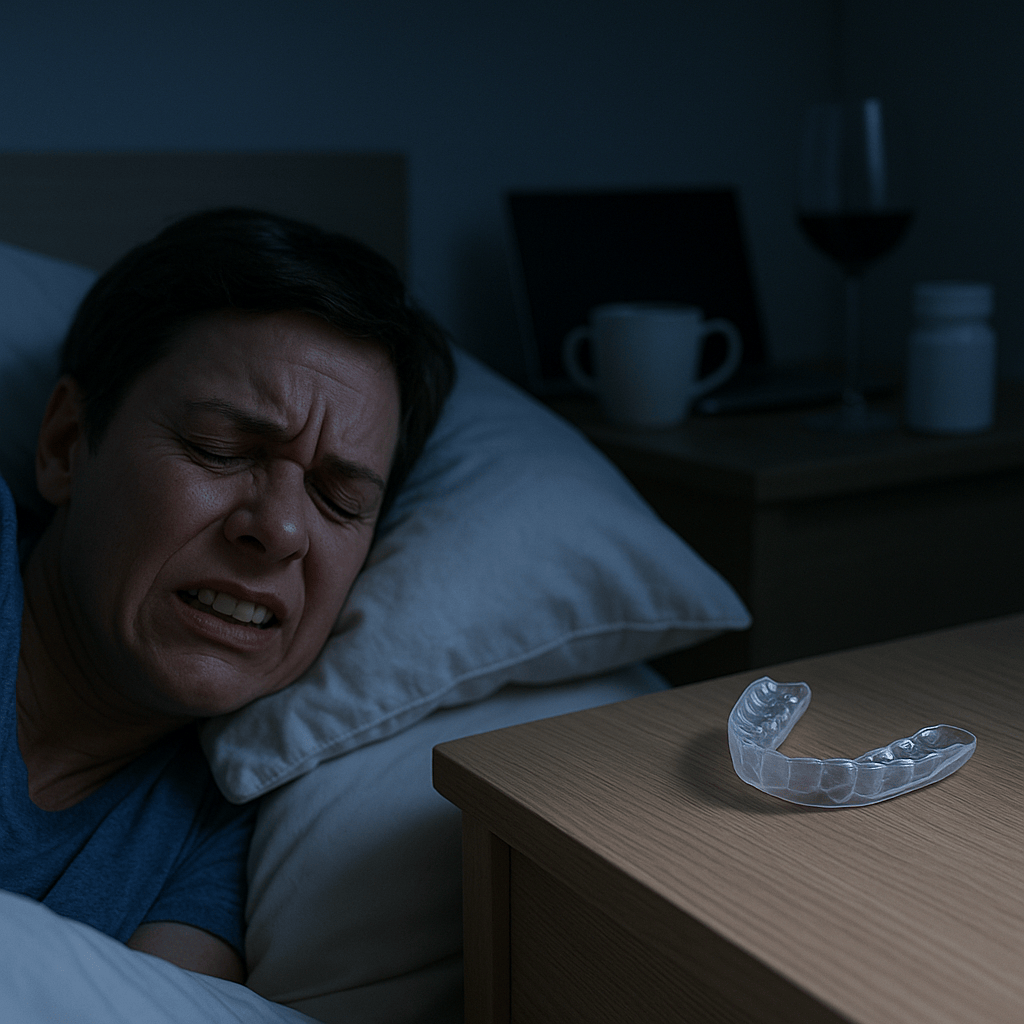
- Consider a night guard – A custom-fitted one from your dentist works best, but pharmacy options can help too
- Pre-bedtime relaxation – A warm bath or 10-minute meditation app session can reduce grinding
- Watch your daytime habits – Chewing gum or nibbling on pens during meetings can reinforce jaw clenching
- Desk ergonomics check – Proper monitor height and chair support reduce overall body tension
- Quick desk stretches – Set a timer to do neck and jaw relaxation exercises every hour
When to Seek Professional Help
If reducing teeth grinding doesn’t improve your back pain within a few weeks, it’s time to consult with a healthcare provider. Persistent back pain needs proper diagnosis, especially if you’re experiencing:
- Pain that wakes you at night
- Numbness or tingling in arms or legs
- Pain that worsens even with rest and better habits
Addressing this jaw-back connection now, in your 20s or 30s, can prevent more serious issues as you age. Your future self will thank you!
References: [1] Wieckiewicz M, et al. (2019). Reported concepts for the treatment modalities and pain management of temporomandibular disorders. Journal of Oral Rehabilitation, 46(8), 774-796.
[2] Ashina S, et al. (2018). Prevalence of neck pain in migraine and tension-type headache: A population study. Cephalalgia, 38(13), 1345-1354.
[3] American Dental Association. (2020). Bruxism (Teeth Grinding). Retrieved from https://www.ada.org/en/member-center/oral-health-topics/bruxism
 Grind My Teeth
Leave a comment