
If you wake up with a sore jaw or headaches and suspect you grind your teeth at night, you might wonder: Could the way I sleep be making it worse?
Surprisingly, the answer is yes. Your sleep position can play a role in how often and how intensely you grind your teeth (also known as bruxism). In this article, we’ll break down the connection between sleep posture and bruxism, the best and worst positions, and what adjustments might help.
What’s the Link Between Sleep Position and Teeth Grinding?
Nighttime bruxism is often influenced by:
- Jaw alignment
- Muscle tension
- Airway restriction
- Nervous system activation during sleep
Your sleep position affects all of these. For example, sleeping on your stomach or side can put uneven pressure on your jaw or push your head into awkward angles, increasing muscle tension. Certain positions may also restrict your airway, triggering stress responses in the brain that contribute to grinding.
The Best and Worst Sleep Positions for Bruxism
Let’s break it down.
1️⃣ Back Sleeping (Supine Position)

✅ Best for jaw alignment
Sleeping on your back allows your head, neck, and spine to stay neutral, reducing pressure on the jaw and surrounding muscles. It also lowers the risk of jaw compression and can help prevent teeth clenching.
⚠ Watch out if you have sleep apnea:
If you snore or have mild sleep apnea, back sleeping might worsen airway restriction, which can increase grinding in some people.
2️⃣ Side Sleeping
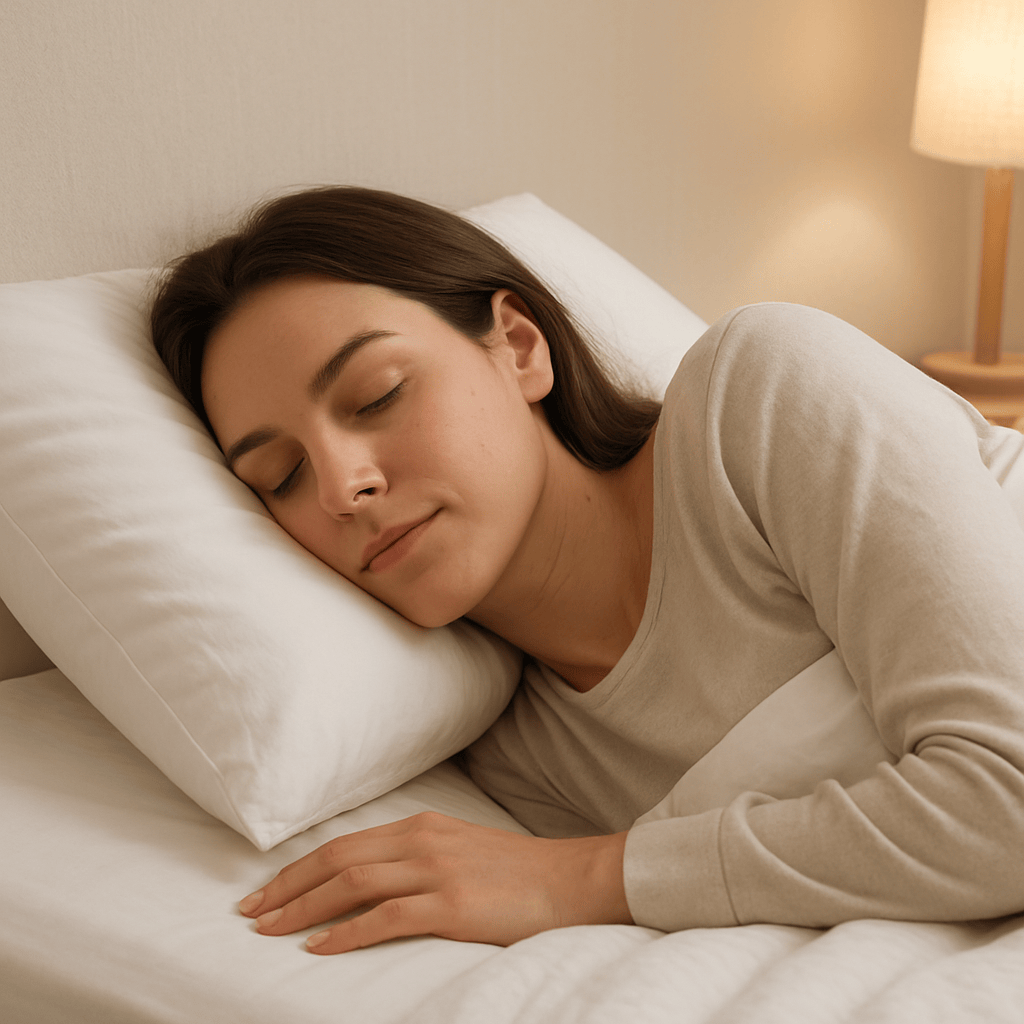
✅ Generally okay, with caution
Side sleeping is popular and often recommended for people with sleep apnea. However, depending on your pillow and head position, it can sometimes cause uneven jaw pressure, especially if you sleep with your face pressed into the pillow.
👉 Tip: Use a supportive pillow to keep your head and neck aligned and avoid pressing your jaw hard against the mattress or pillow.
3️⃣ Stomach Sleeping (Prone Position)

❌ Worst for bruxism
Stomach sleeping forces your head to twist to one side and can put significant pressure on your jaw joints. This unnatural alignment increases muscle tension and may worsen grinding.
👉 Tip: If you’re a stomach sleeper, consider gradually shifting to side or back sleeping. Start by propping a body pillow alongside you to discourage rolling onto your stomach.
Can Changing Your Sleep Position Help Reduce Grinding?
For some people — yes. While sleep position isn’t the only factor behind bruxism, improving your posture can help:
- Reduce unnecessary jaw pressure
- Support relaxed muscles
- Minimize nighttime stress triggers
Keep in mind, though, that sleep position alone won’t “cure” teeth grinding. It’s best paired with:
- Wearing a night guard
- Reducing daily stress
- Practicing good sleep hygiene
Additional Sleep Tips for Bruxism Relief
✅ Choose a pillow that supports your neck and keeps your head aligned.
✅ Avoid high or stacked pillows that push your head forward.
✅ Keep your bedroom cool, dark, and quiet to promote deeper, more restorative sleep.
✅ Consider relaxation techniques (like meditation or stretching) before bed to reduce jaw tension.
Final Thoughts
While you can’t consciously control your jaw movements while you sleep, you can adjust your sleep position and environment to minimize triggers. By combining smart posture choices with other bruxism management strategies, you can improve your chances of waking up pain-free.
Want to learn more about nighttime habits that affect teeth grinding?
Check out: Our most recent articles
 Grind My Teeth
Leave a comment