

Teeth clenching and bruxism pose significant challenges to oral health. They can lead to various issues such as tooth wear and jaw discomfort.
Invisalign treatment, renowned for its effectiveness in straightening teeth discreetly, has sparked curiosity about its potential role in addressing clenching and bruxism.
So, can Invisalign help with clenching?
In this comprehensive guide, we explore the mechanisms by which Invisalign may help alleviate clenching and bruxism. We also cover the relationship between clenching and malocclusion.
Read on for valuable insights and considerations.
Understanding Invisalign Aligners
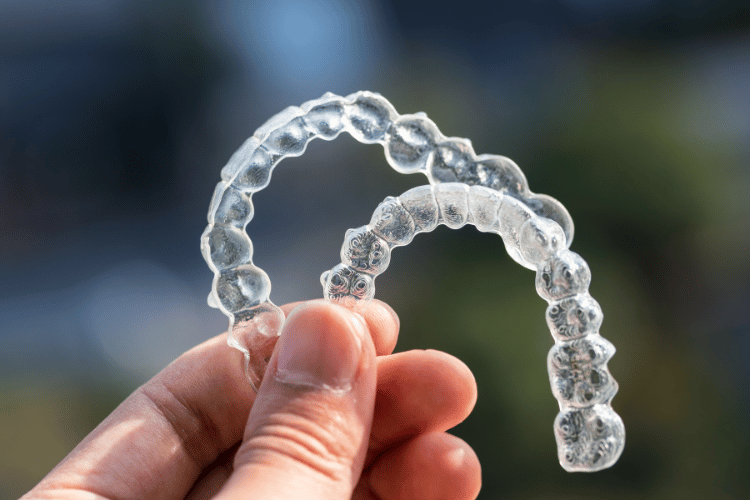
Invisalign aligners are transparent, custom-made orthodontic devices that offer a discreet and convenient alternative to traditional braces.
Made from medical-grade thermoplastic polymers of high molecular weight, these aligners are designed to fit snugly over the teeth and gently exert controlled forces to gradually shift them into proper alignment.
Each set of aligners is custom-designed using advanced 3D imaging technology, which ensures a precise fit for optimal treatment outcomes.
How Invisalign Achieves Straighter Teeth
The journey typically begins with a comprehensive examination, including dental impressions, photographs, and X-rays, to create a detailed treatment plan. This plan maps out the projected movement of the teeth throughout the course of treatment.
Based on the treatment plan, a series of custom aligners are created. Each set of aligners is worn for about 1-2 weeks, gradually moving the crooked teeth closer to their desired positions.
As the teeth progress, new sets of aligners are provided to continue the alignment process. The treatment duration varies based on individual needs, but it typically lasts around 12-18 months.
Benefits of Invisalign Over Traditional Braces
Invisalign treatment offers many benefits compared to traditional braces. Here are some of the most notable benefits of Invisalign aligners:
- Enhanced aesthetics with virtually invisible aligners.
- Increased comfort without metal brackets or wires.
- Removability for easy eating, drinking, brushing, and flossing.
- Reduced treatment time in certain cases.
- No dietary restrictions or complex cleaning routines.
- Custom-made aligners for a precise fit.
- Reduced likelihood of oral irritation or soreness.
- Minimal impact on daily activities and speech.
- Clear treatment progress with sequential aligner sets.
Can Invisalign Help With Clenching and Bruxism?

Orthodontic and dental experts have shared their opinions on the potential impact of Invisalign treatment on clenching and bruxism. And while individual experiences may vary, their insights provide valuable perspectives on the matter.
According to some orthodontists, addressing malocclusion through Invisalign treatment can potentially alleviate clenching and bruxism symptoms.
By improving the alignment of the teeth and jaws, Invisalign helps establish a more harmonious bite relationship, reducing potential triggers for clenching and grinding.
Straightening misaligned teeth may also help distribute biting and chewing forces more evenly, thereby relieving stress on the jaw muscles and joints.
A number of case studies have examined the potential effectiveness of Invisalign in managing bruxism symptoms. While research in this specific area is still evolving, initial findings seem to be promising.
Relationship Between Clenching/Bruxism and Malocclusion
Malocclusion refers to the misalignment of the teeth and jaws, which can manifest in various forms such as overcrowding, overbite, or underbite.
Malocclusion can disrupt the natural harmony of the bite, leading to potential complications, including clenching and bruxism.
When the teeth and jaws do not align properly, it can create imbalances in the way the upper and lower teeth come together.
Such imbalances include:
Uneven Distribution of Forces
Malocclusion can result in irregular contact between the teeth during biting and chewing. This can lead to uneven distribution of forces, causing specific teeth or areas of the mouth to bear excessive pressure.
The body’s natural response to this imbalance may involve clenching or grinding of the teeth as a way to alleviate discomfort or achieve a more stable bite.
Jaw Joint and Muscle Imbalances
Misaligned teeth can create jaw imbalances in the muscles and joints. The misalignment may cause certain muscles to work harder or be placed under increased tension.
Thi can lead to muscle fatigue and discomfort, and it can further contribute to the development or exacerbation of clenching and bruxism habits.
Abnormal Wear Patterns
The presence of malocclusion can result in abnormal wear patterns on the teeth, which can further perpetuate clenching and bruxism.
The irregular contact between misaligned teeth can lead to excessive forces on certain areas, accelerating tooth wear and potentially intensifying clenching and grinding habits.
Addressing malocclusion through an orthodontic treatment option, such as Invisalign, aims to correct the alignment of teeth and jaws, potentially reducing the triggers and severity of clenching and bruxism.
However, it is important to note that individual cases may vary, and a comprehensive evaluation by a dental professional is necessary to determine the most suitable treatment approach for each individual.
Mechanisms of Invisalign in Addressing Clenching
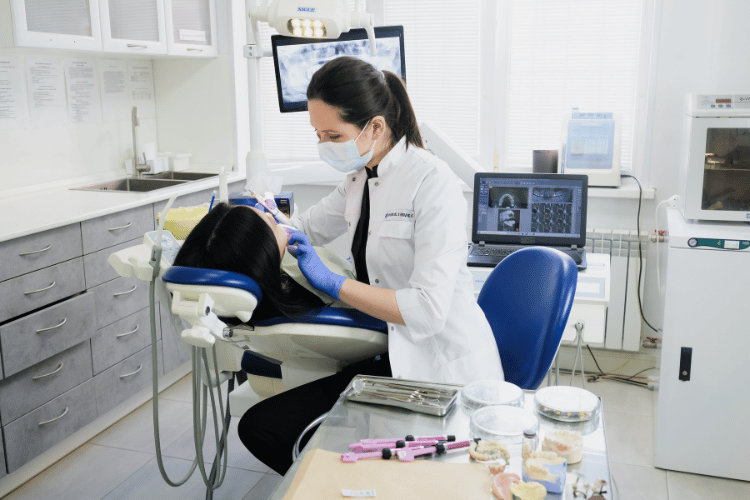
Proper bite alignment plays a big role in the management of clenching. Invisalign treatment can contribute to aligning the bite and reducing the potential triggers for clenching.
By gradually shifting the position of the teeth, Invisalign aligners aim to achieve a more harmonious bite relationship.
This improved bite alignment can help distribute the biting forces evenly across the teeth, reducing the need for compensatory teeth grinding or clenching.
When the teeth come together in proper alignment, it allows the muscles involved in jaw movement to function more efficiently.
The balanced occlusion achieved through Invisalign treatment may alleviate muscle tension and imbalances, potentially leading to a reduction in clenching and bruxism habits.
How Invisalign Can Correct Malocclusion and Alleviate Bruxism
By correcting the misalignment of teeth and jaws, Invisalign treatment can help alleviate bruxism symptoms in the following ways:
- Improved Tooth Positioning: Invisalign aligners gradually guide the teeth into their optimal positions. This can help establish a better alignment between the upper and lower teeth, reducing the potential triggers for clenching and grinding.
- Reduced Occlusal Interferences: Malocclusion can create interferences when the teeth come together, leading to imbalanced forces and muscle strain. Invisalign treatment aims to eliminate these occlusal interferences, allowing for a more harmonious bite relationship and reducing the need for compensatory clenching or grinding.
- Minimized Tooth Wear: Misaligned teeth can experience abnormal wear patterns due to irregular contact and excessive force. By correcting the alignment, Invisalign can help distribute biting forces more evenly, reducing the risk of excessive tooth wear associated with bruxism.
Potential Benefits of Invisalign for Jaw Relaxation and Tension Reduction
Beyond addressing the alignment of teeth, Invisalign treatment may provide additional benefits for jaw muscle relaxation and tension reduction:
- Reduced Muscle Strain: Invisalign treatment aims to achieve an optimal bite relationship, which can help relieve strain on the jaw muscles. By promoting a more balanced occlusion, Invisalign may help reduce muscle fatigue and tension associated with clenching and grinding.
- Improved Jaw Joint Function: Malocclusion can affect the functioning of the temporomandibular joint (TMJ), leading to discomfort and limited jaw movement. Invisalign treatment, by aligning the bite and reducing occlusal interferences, may contribute to improved jaw joint function and reduced TMJ-related symptoms.
- Muscle Relaxation Through Reduced Stress: Misaligned teeth and the associated bite imbalances can create jaw pain and stress in the jaw muscles. By addressing malocclusion, Invisalign treatment aims to reduce the stress on these muscles, potentially promoting relaxation and tension reduction.
While Invisalign treatment shows promise in addressing clenching and bruxism symptoms, it’s important to consult with a dental professional or orthodontist who can evaluate your specific situation and provide personalized recommendations.
They can determine whether Invisalign or other complementary approaches are suitable for managing your individual needs and symptoms.
Additional Strategies for Managing Clenching and Bruxism
In addition to Invisalign treatment, individuals dealing with clenching and bruxism can consider implementing the following strategies:
- Stress Reduction Techniques: Practicing stress management techniques such as relaxation exercises, meditation, and counseling can help reduce stress levels, which may contribute to bruxism.
- Improved Sleep Hygiene: Establishing a consistent sleep routine, creating a calm sleep environment, and avoiding stimulating activities before bedtime can promote better sleep quality and potentially keep you from grinding your teeth at night with no need for night guards.
- Lifestyle Modifications: Avoiding excessive alcohol and caffeine consumption, which can exacerbate bruxism, can be beneficial. Additionally, quitting smoking, if applicable, may contribute to overall oral health improvement.
- Regular Dental Check-Ups: Routine dental examinations can help monitor the progress of Invisalign treatment, evaluate changes in bruxism symptoms, and ensure that any potential dental issues are promptly addressed.
By incorporating these strategies into the treatment plan, alongside Invisalign, individuals may enhance their overall management of clenching and bruxism, promoting better oral health and well-being.
Conclusion
While Invisalign treatment shows promise in addressing malocclusion and its potential impact on clenching and bruxism, it’s important to note that individual experiences may vary.
Expert opinions, research studies, and patient testimonials suggest that Invisalign treatment can potentially alleviate clenching and bruxism symptoms by improving bite alignment, reducing occlusal interferences, and promoting muscle relaxation.
However, a comprehensive approach that includes collaboration between orthodontists and dental professionals, along with considering additional strategies, is crucial.
While Invisalign treatment may contribute to managing clenching and bruxism, it’s best to consult with dental professionals for personalized recommendations based on individual circumstances.
 Grind My Teeth
Leave a comment